


Primary sourceDocument21 August 1805
Treaty of Grouseland
21 August 1805
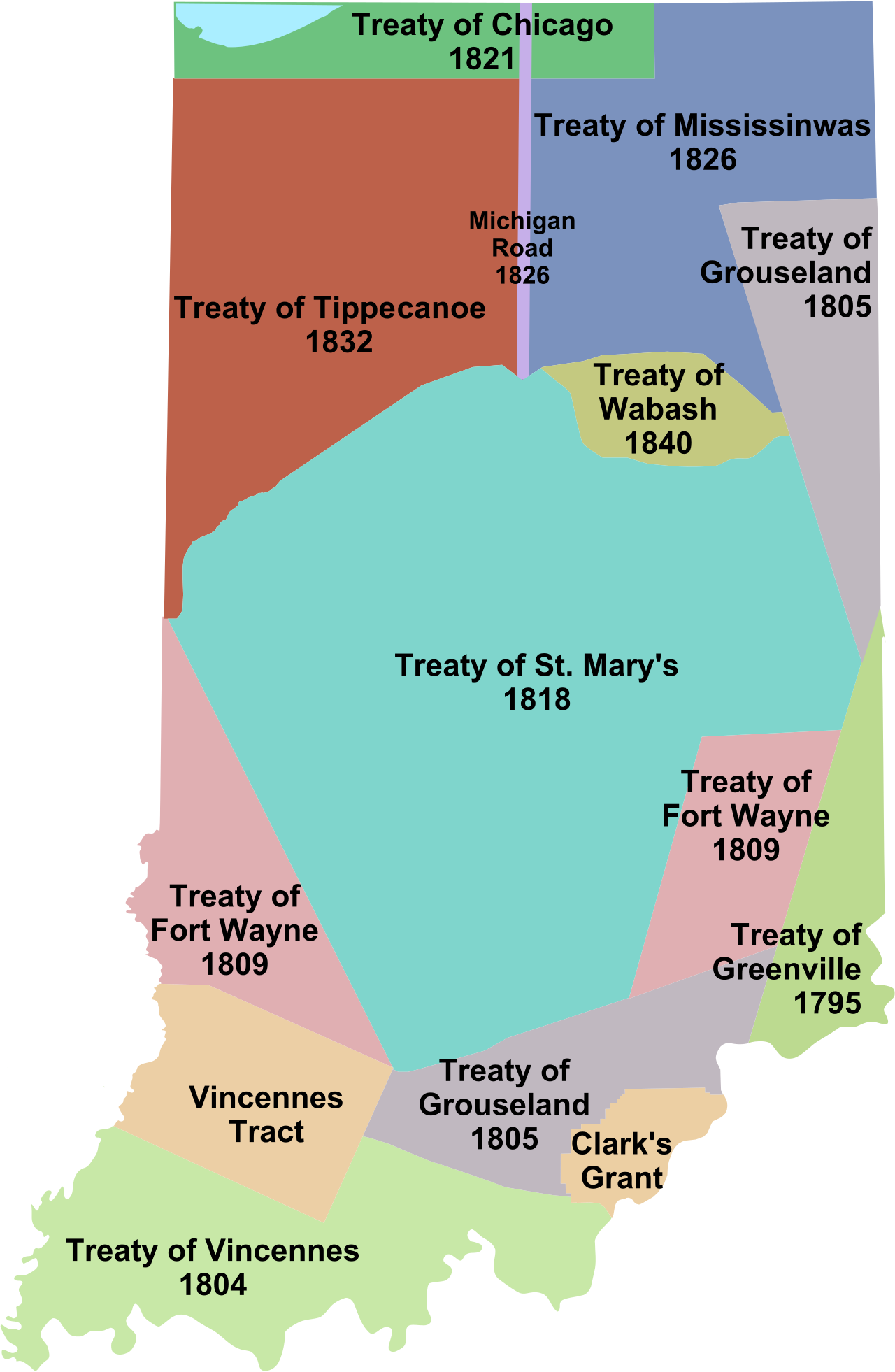
An 1805 treaty negotiated by William Henry Harrison at his own home, securing large areas of southern Indiana land from several Native American tribes.
Harrison negotiated and signed this treaty at his own home as governor of the Indiana Territory, gaining large land cessions.
About this source
What it is
The Treaty of Grouseland was negotiated in 1805 by Governor William Henry Harrison of the Indiana Territory with Native American leaders, including Little Turtle and Buckongahelas, representing tribes such as the Delaware, Miami, and Potawatomi. It was signed on 21 August 1805 at Harrison's home, Grouseland, in Vincennes, Indiana.
Why it matters
This treaty followed the earlier Treaty of Vincennes and the Treaty of Greenville, and was part of a series of land purchases that opened Indiana to settlement, raising tensions between settlers and Native tribes. It shows Harrison's role in negotiating with Native leaders on behalf of the United States, often amid pressure from settlers already moving onto Native land.
Look closer
- Why might Harrison have chosen to negotiate this treaty at his own home rather than elsewhere?
- What does the map's division of land into treaty-dated regions tell you about the pace of land transfer from Native nations?
- Whose perspective is missing from how this treaty is usually described?
This document is part of the curated material that grounds the AI version of William Henry Harrison on Humy.ai — when students ask about related events, the AI can quote it and cite it.
More William Henry Harrison sources
Meet the AI William Henry Harrison →Primary source
Inaugural Address of William Henry Harrison
William Henry Harrison · 4 March 1841
 Document
Primary source
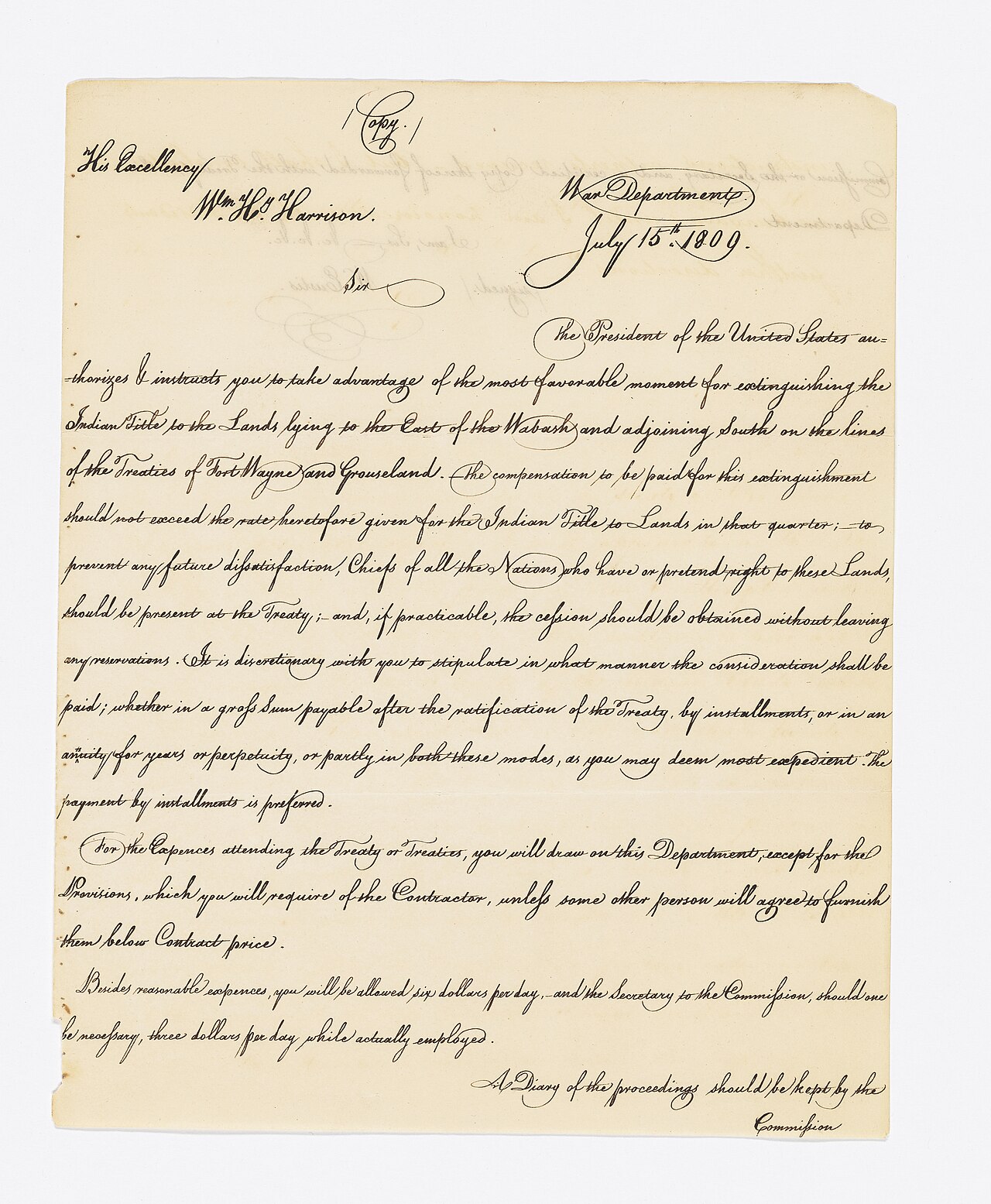
Treaty of Fort Wayne
1809
 Painting
Primary source
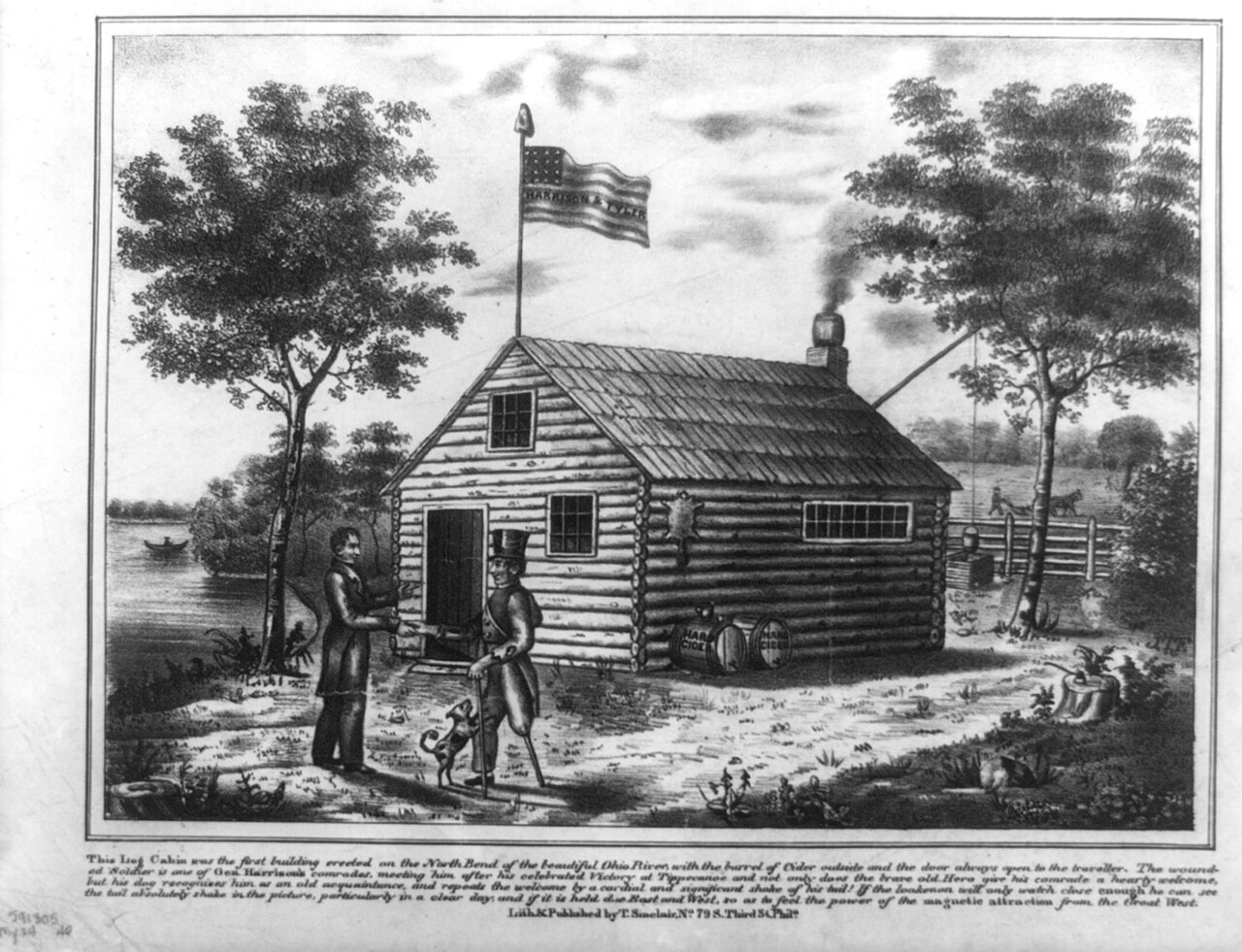
Harrison at cabin on North Bend of Ohio
Thomas Sinclair · 1840
 Document
Primary source
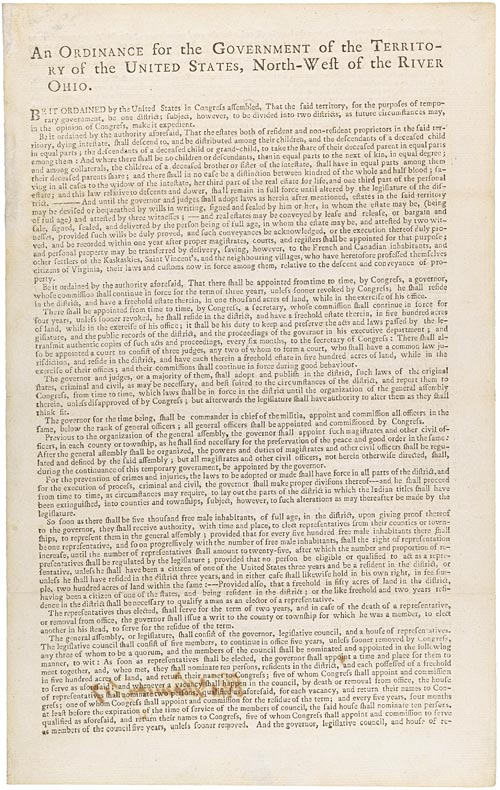
Northwest Ordinance
Confederation Congress · 13 July 1787
 Painting
Primary source
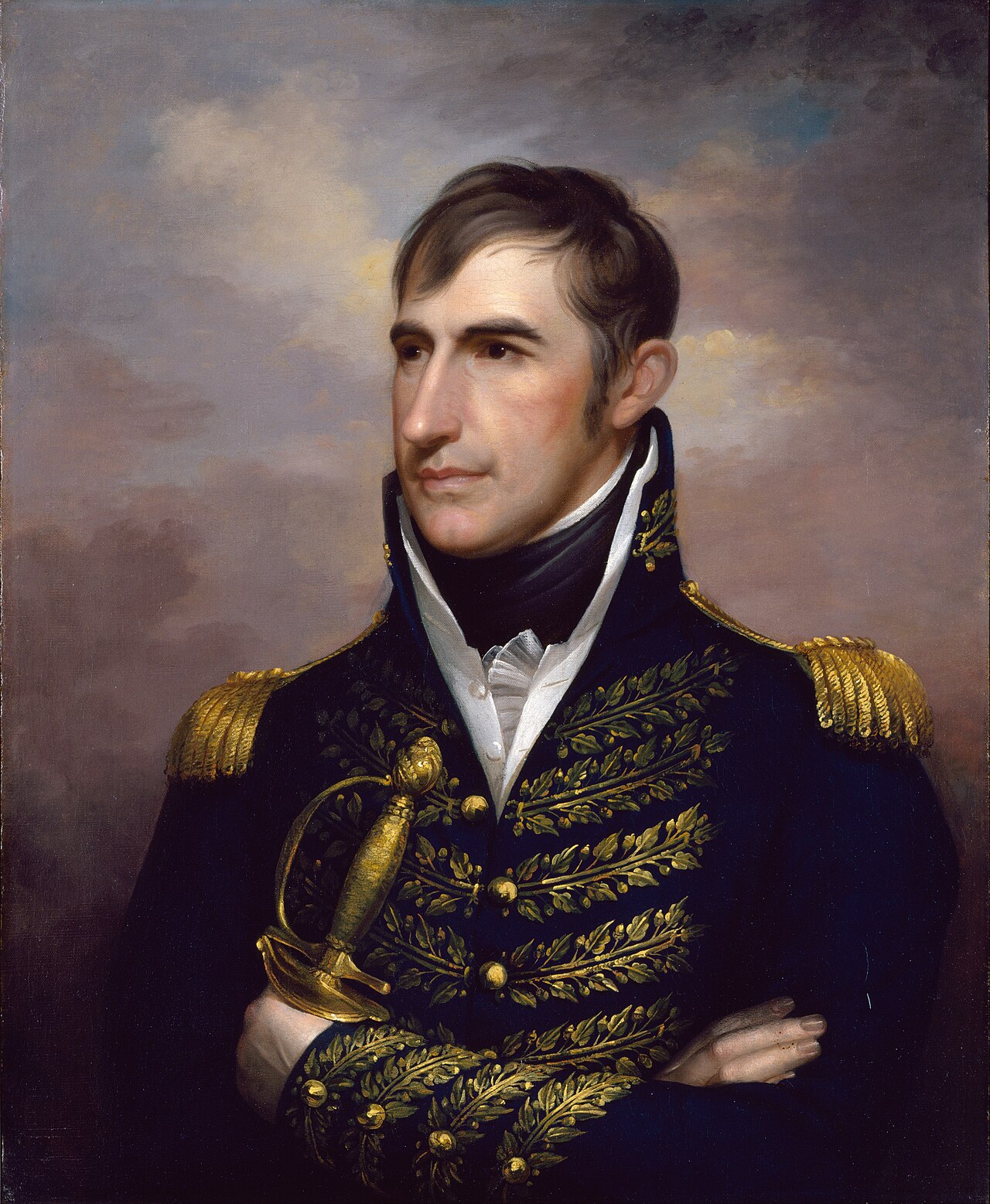
William Henry Harrison
Rembrandt Peale · 1813
Ready when you are
Start chatting with William Henry Harrison now.
20 messages free · No credit card · Available in 50+ languages.