


Primary sourceDocument1796-1797
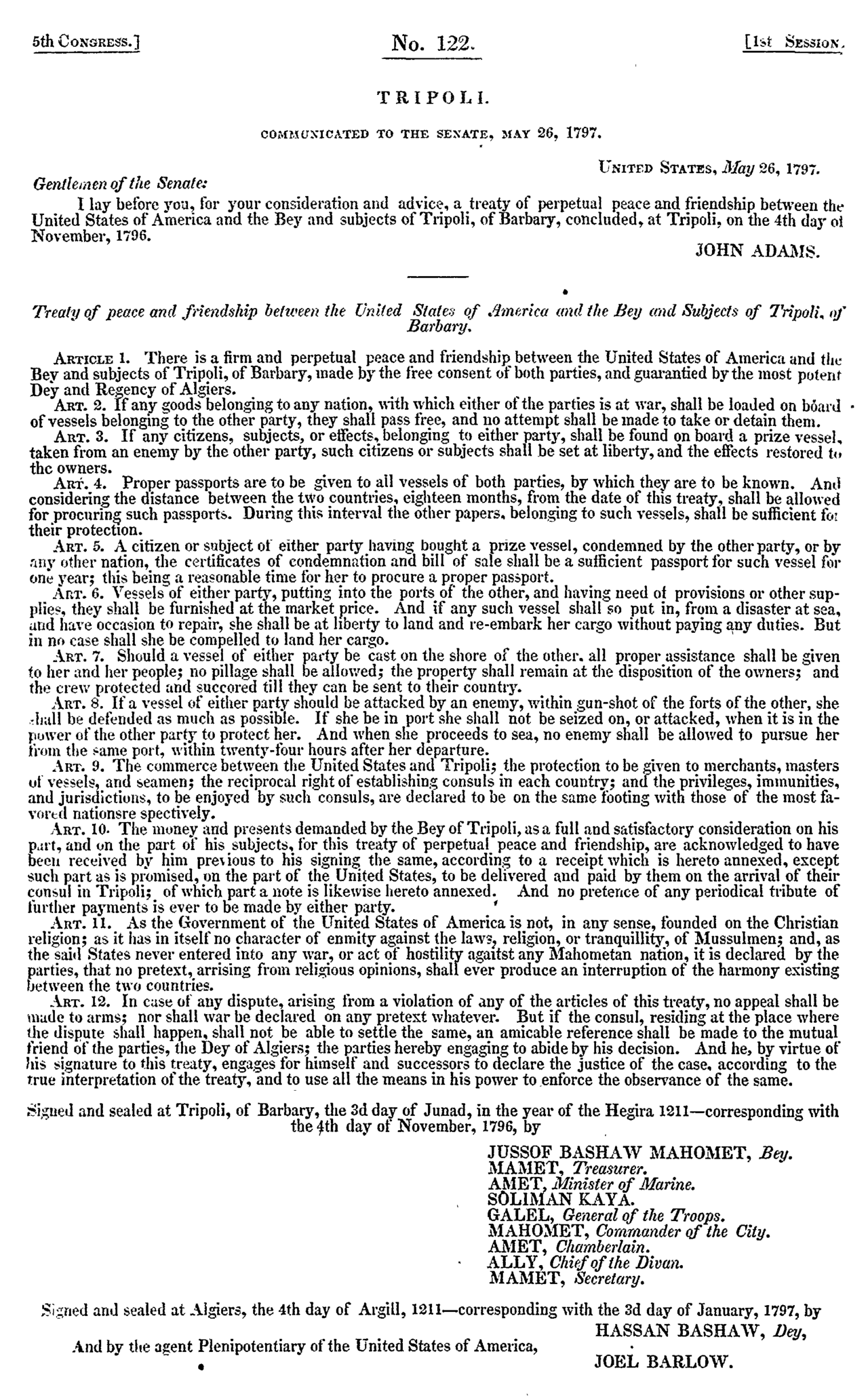
Treaty of Tripoli
Joel Barlow · 1796-1797
A 1796-97 peace treaty between the United States and Tripoli, signed and proclaimed by President John Adams after unanimous Senate ratification.
Adams signed and proclaimed this treaty as president, showing his role in early American diplomacy and foreign policy.
About this source
What it is
This is a treaty of peace and friendship between the United States and Tripoli, negotiated by diplomat Joel Barlow and signed in Tripoli in 1796. It was ratified unanimously by the Senate and signed into law by President John Adams in 1797.
Why it matters
The treaty aimed to protect American shipping from Barbary corsairs who had been capturing and enslaving sailors. It is often discussed because Article 11, in the English version approved by the Senate and signed by Adams, states the U.S. government is not founded on the Christian religion. This clause is central to debates about the separation of church and state. The treaty also shows how the young United States, without a strong navy, had to negotiate and pay for peace with Barbary rulers.
Look closer
- Why might a new nation without a navy choose negotiation over war?
- What does Article 11 suggest about how the founders viewed religion and government?
- Why is it important that the Arabic original and English translation may differ?
This document is part of the curated material that grounds the AI version of John Adams on Humy.ai — when students ask about related events, the AI can quote it and cite it.
More John Adams sources
Meet the AI John Adams →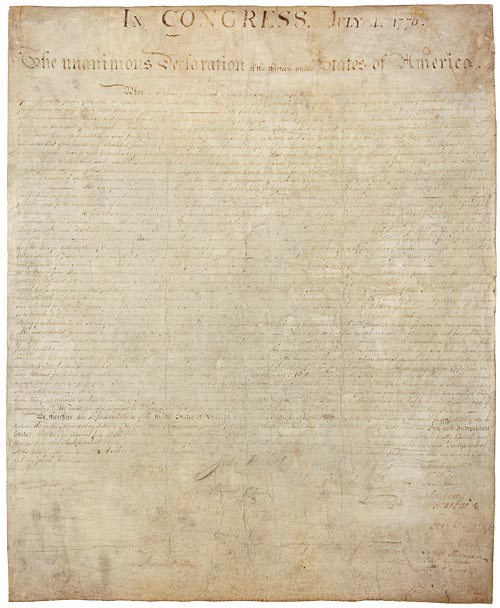 Document
Primary source
Declaration of Independence
Continental Congress (drafted by Thomas Jefferson) · 1776
 Painting
Primary source
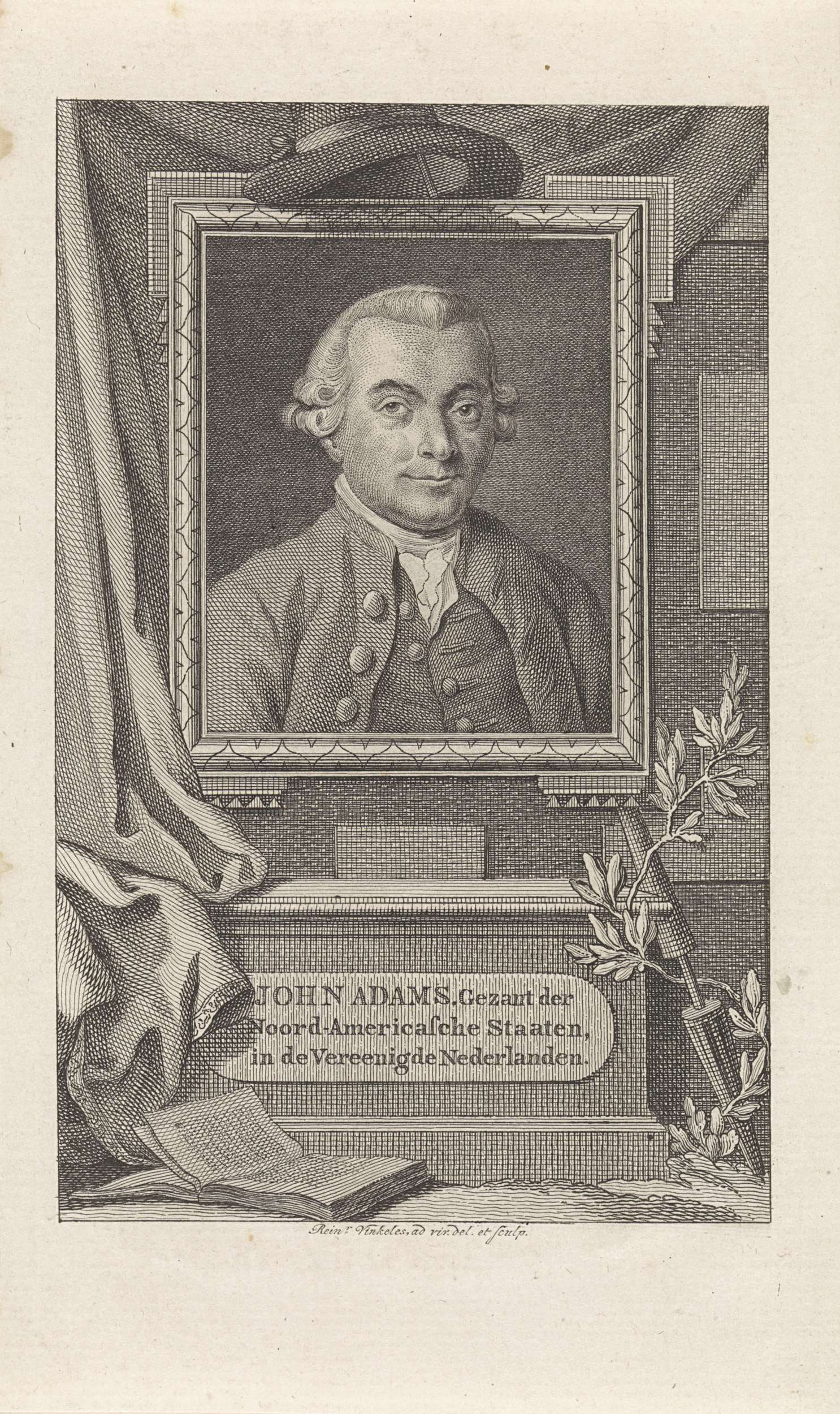
Portrait of John Adams, American Diplomat
1790
 Painting
Primary source
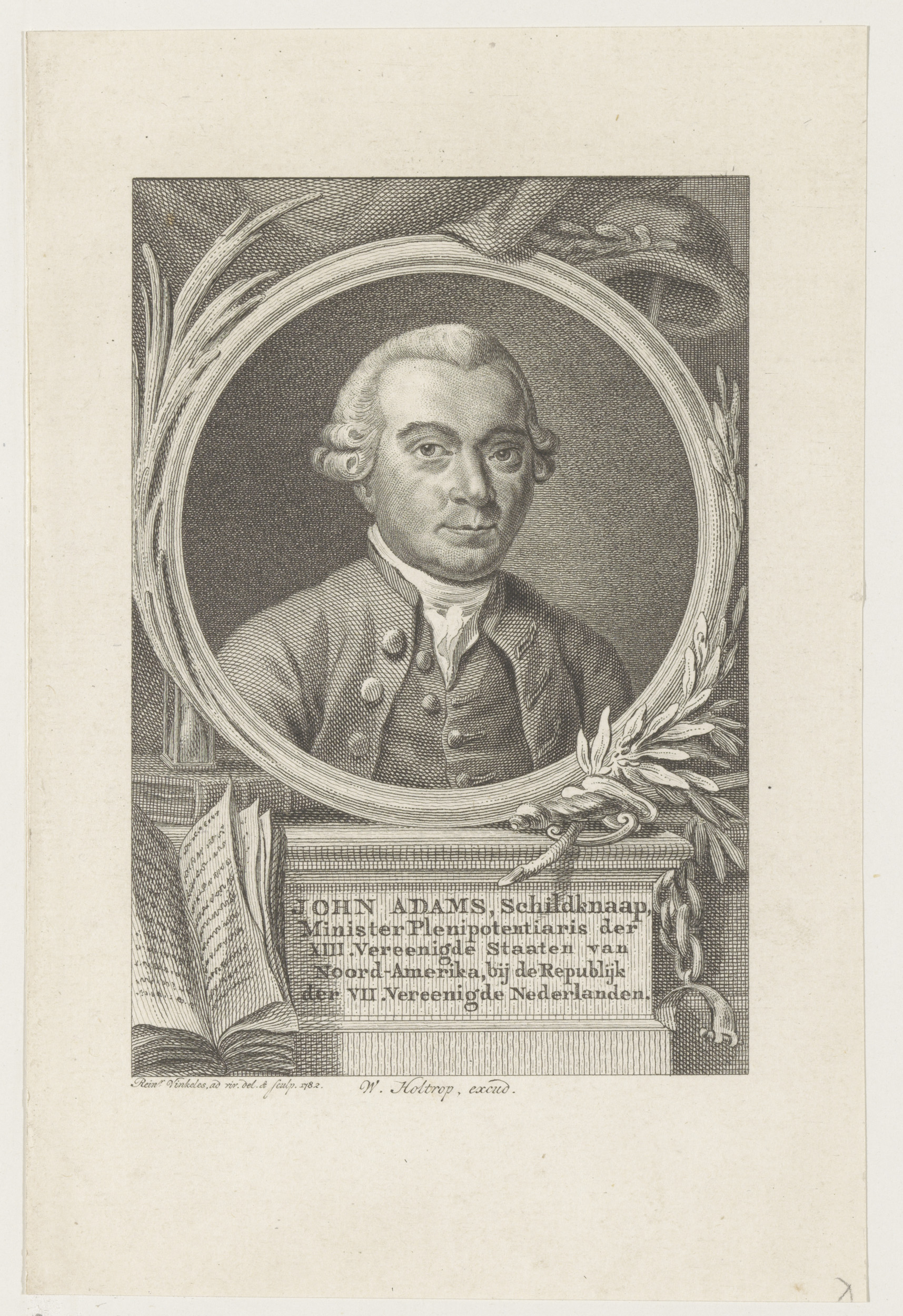
Allegorical Portrait of John Adams
1782
 Painting
Primary source
Engraving of John Adams by J. T. Smith
J. T. Smith · 1795
 Document
Primary source
Treaty of Paris
3 September 1783
Ready when you are
Start chatting with John Adams now.
20 messages free · No credit card · Available in 50+ languages.