


Primary sourceArtifactc. 900
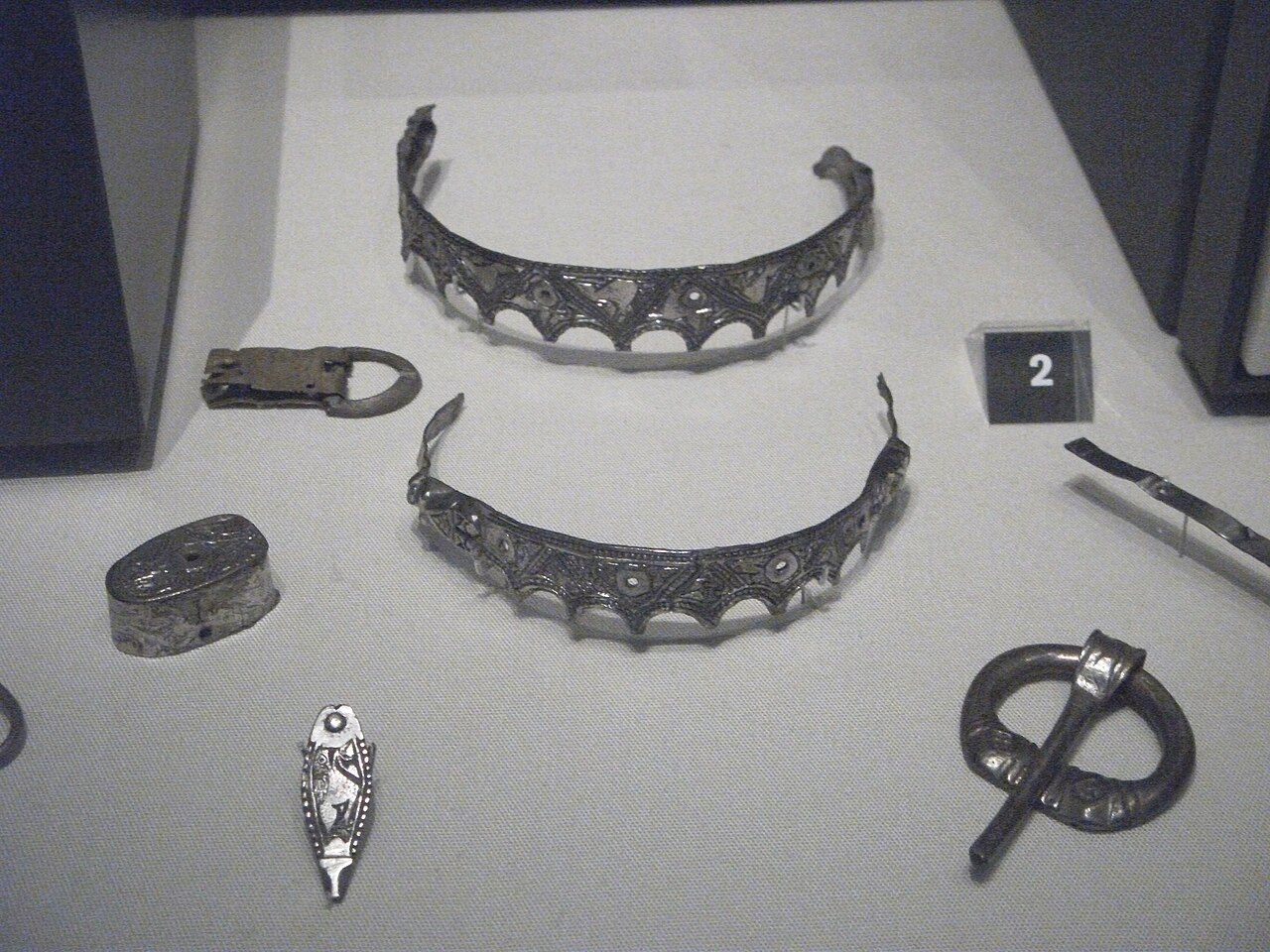
Trewhiddle Hoard
c. 900
A hoard of Anglo-Saxon silver objects buried in Cornwall during the Viking raids of Alfred's era, now in the British Museum.
A silver hoard buried during Viking raids on Wessex, evidence of the dangers and art of Alfred's era.
About this source
What it is
This hoard of silver objects, including bands, a buckle, a mount, a pendant, and a ring brooch, was buried during the period of Viking raids on England. It is now displayed in the British Museum.
Why it matters
The hoard gives its name to the Trewhiddle style of Anglo-Saxon metalwork, which was common in the decorative art of Alfred's time. Hoards like this were often buried for safekeeping during the Viking raids that threatened Wessex during Alfred's reign, making them powerful evidence of the dangers people faced in this period.
Look closer
- Why might someone bury valuable silver objects rather than keep them at home?
- What does the variety of objects in the hoard tell us about everyday Anglo-Saxon life?
- What does the fact that this hoard was never recovered by its owner suggest about the dangers of the time?
This artifact is part of the curated material that grounds the AI version of Alfred the Great on Humy.ai — when students ask about related events, the AI can quote it and cite it.
More Alfred the Great sources
Meet the AI Alfred the Great →
Ready when you are
Start chatting with Alfred the Great now.
20 messages free · No credit card · Available in 50+ languages.