


Primary sourceArtifact
Trilingual Inscription of Cyrus at Palace P, Pasargadae
Cyrus the Great
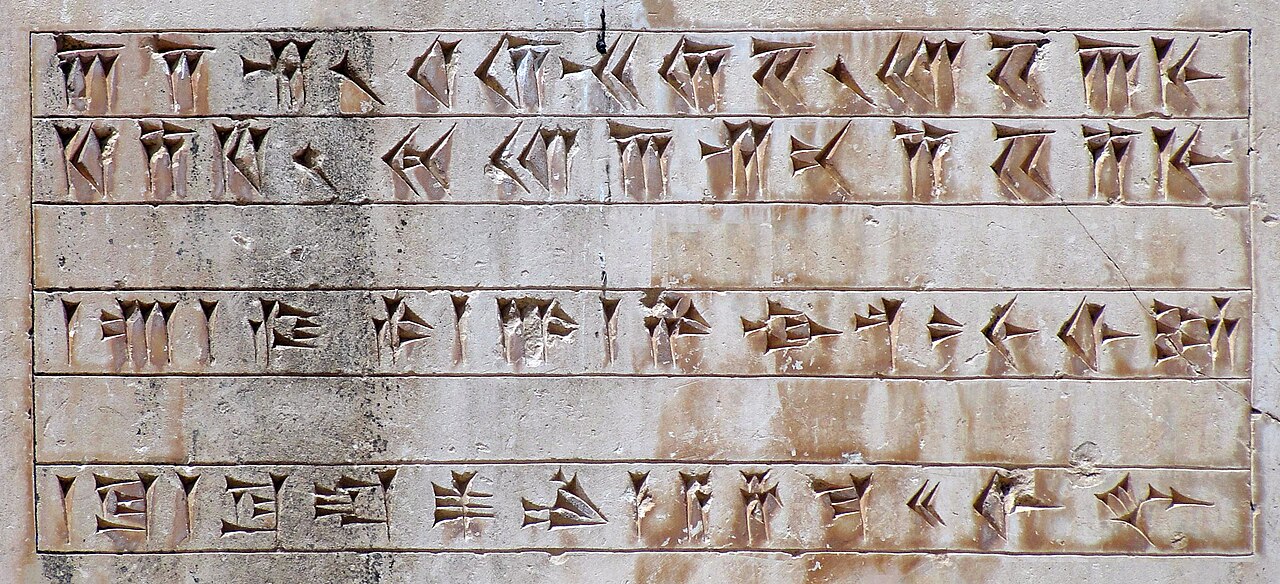
A photograph of Cyrus the Great's own carved inscription at his palace in Pasargadae, written in Old Persian, Elamite and Akkadian, declaring 'I, Cyrus, the King, the Achaemenian.'
Cyrus's own carved words from his palace, directly naming himself as king in three languages.
About this source
What it is
This photograph shows part of a stone inscription carved into Palace P at Pasargadae, the capital city built by Cyrus the Great. The inscription, known to scholars as CMa, repeats the same short royal declaration in three languages: Old Persian, Elamite and Akkadian. It reads, in translation, "I, Cyrus, the King, the Achaemenian."
Why it matters
This is one of the few surviving examples of Cyrus's own words, carved during his lifetime in his own palace. Writing the same message in three languages reflects the multicultural character of the early Achaemenid Empire, which brought together many peoples and languages under one ruler.
Look closer
- Why might Cyrus have chosen to carve his title in three different languages rather than just one?
- What does this short, simple statement tell us about how Cyrus wanted to be remembered?
- What is missing from this inscription that you might want to know about Cyrus's reign?
This artifact is part of the curated material that grounds the AI version of Cyrus the Great on Humy.ai — when students ask about related events, the AI can quote it and cite it.
More Cyrus the Great sources
Meet the AI Cyrus the Great →

Ready when you are
Start chatting with Cyrus the Great now.
20 messages free · No credit card · Available in 50+ languages.