


Primary sourcePhotograph1973
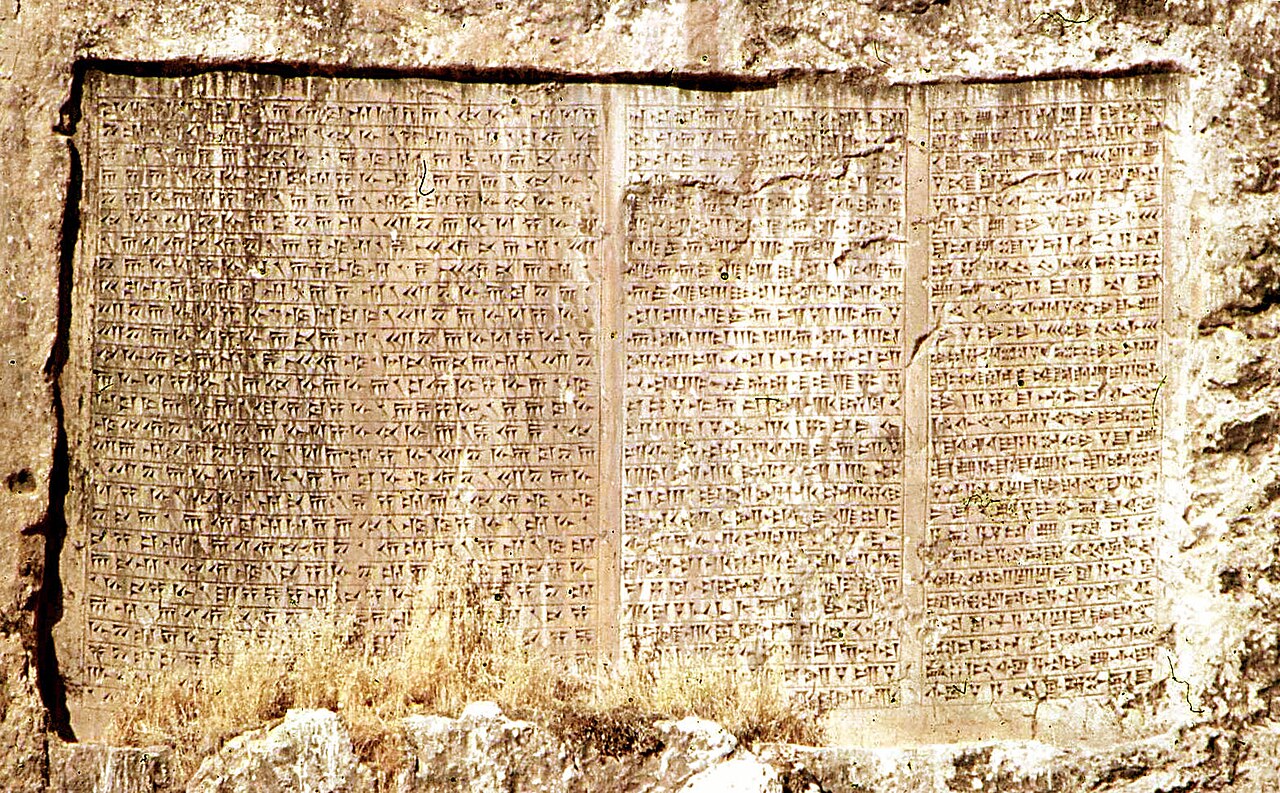
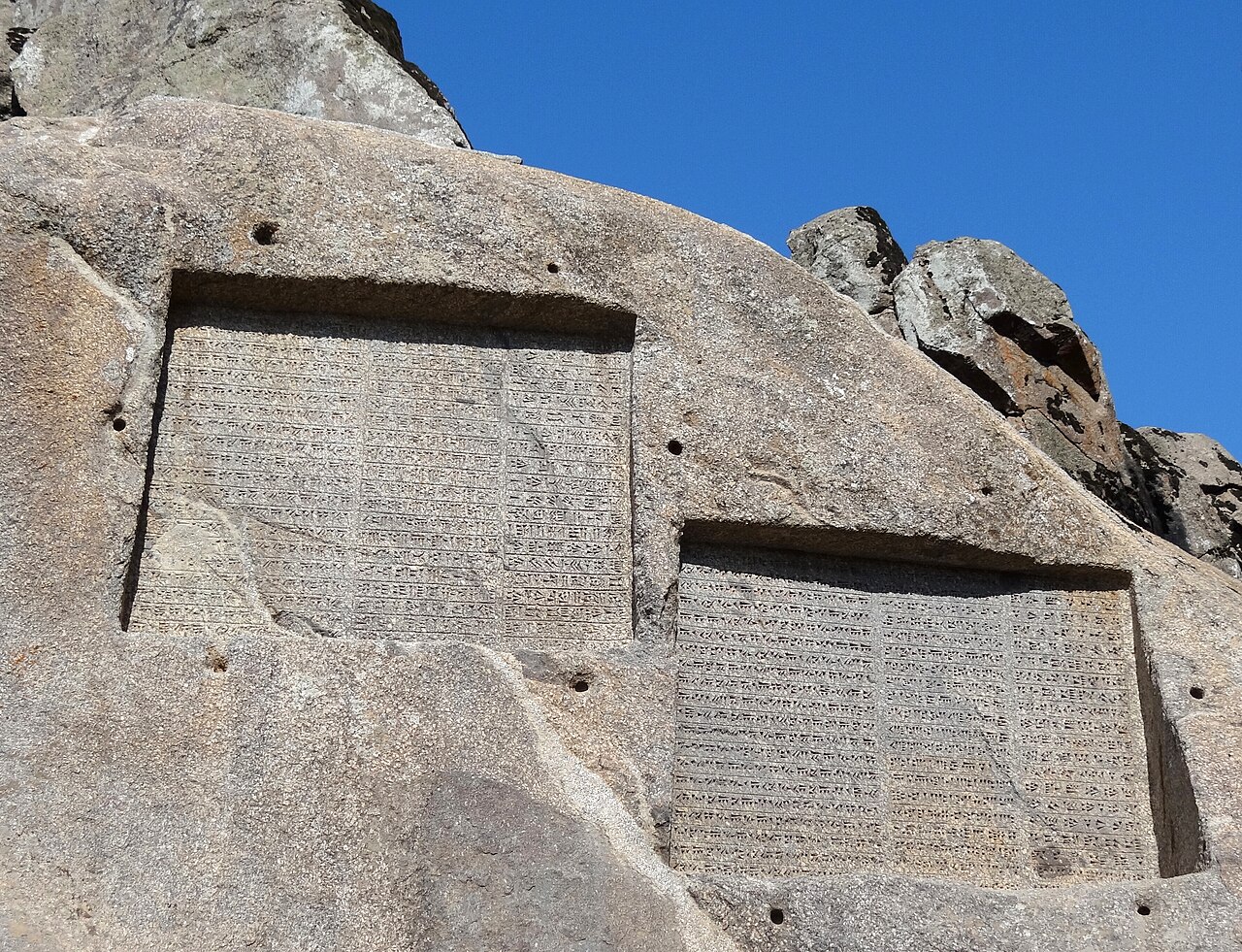
Trilingual inscription of Xerxes at Van
John Hill · 1973
A 1973 photograph of a rock-cut royal inscription of Xerxes I at Van, written in Old Persian, Babylonian and Elamite. It records the king's own words in three languages.
Records one of Xerxes' own royal inscriptions, so it shows how he presented himself to his subjects in his own words.
About this source
What it is
This is a photograph taken by John Hill in 1973. It shows a large rock-cut inscription in cuneiform script, carved into a weathered stone surface in three columns. Dry grass grows at the base and rocks lie below. The inscription is trilingual, written in Old Persian, Babylonian and Elamite, read from left to right.
Why it matters
Royal inscriptions like this one were carved to announce a king's power and to present his words to later readers. Because the text appears in three languages, it shows how the Persian empire used several languages of its subjects to communicate. The photograph is a modern record of the carving, so students should read the inscription itself as the king's words and the photo as a 1973 copy of it.
Look closer
- Why might a king have wanted his message written in three languages?
- Which parts of the stone are worn or damaged, and how might that affect what we can read?
- What does the inscription say about Xerxes, and what might it leave out?
This photograph is part of the curated material that grounds the AI version of Xerxes I on Humy.ai — when students ask about related events, the AI can quote it and cite it.
More Xerxes I sources
Browse all 97 →
Ready when you are
Start chatting with Xerxes I now.
20 messages free · No credit card · Available in 50+ languages.