


Secondary sourcePhotograph8 April 2009
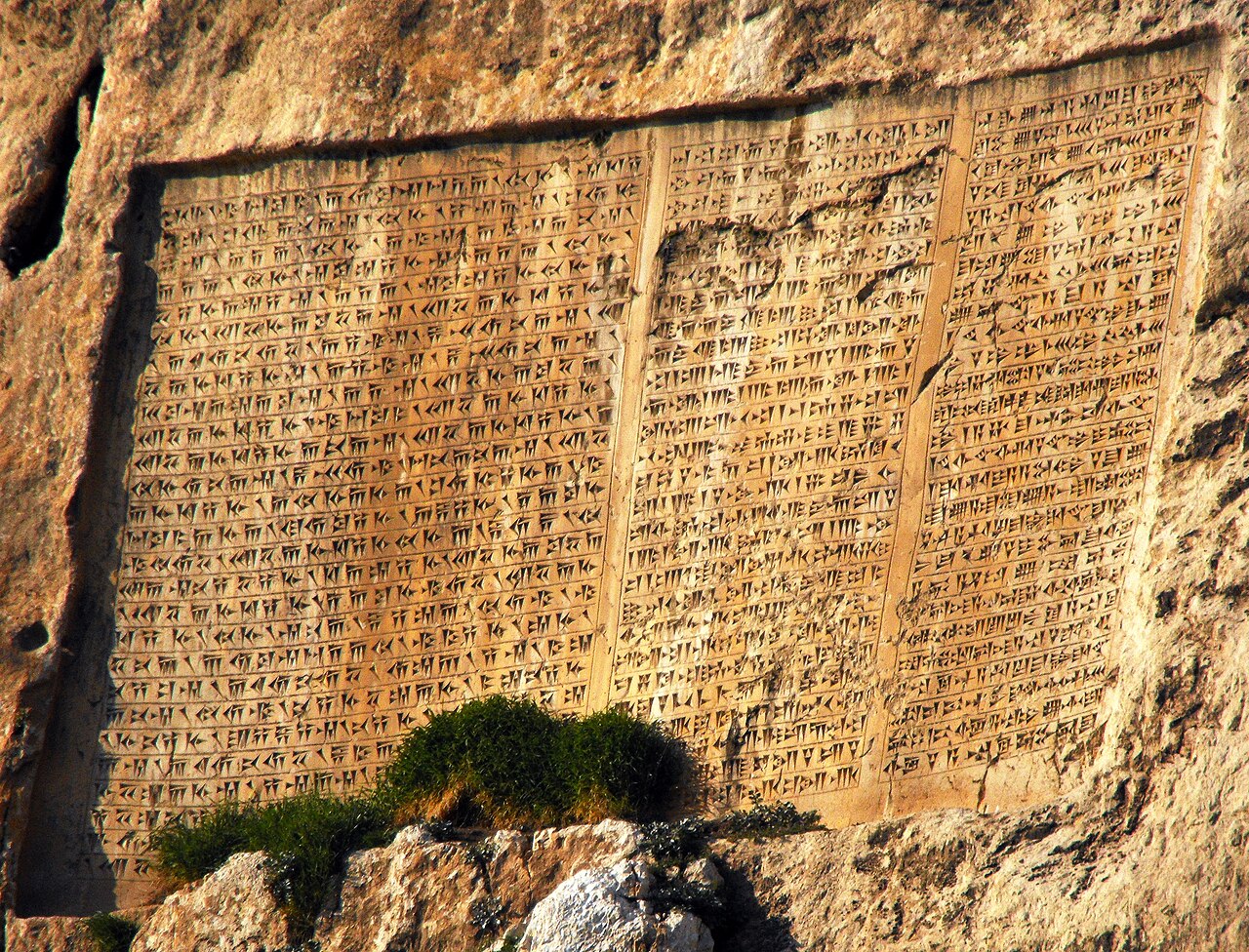
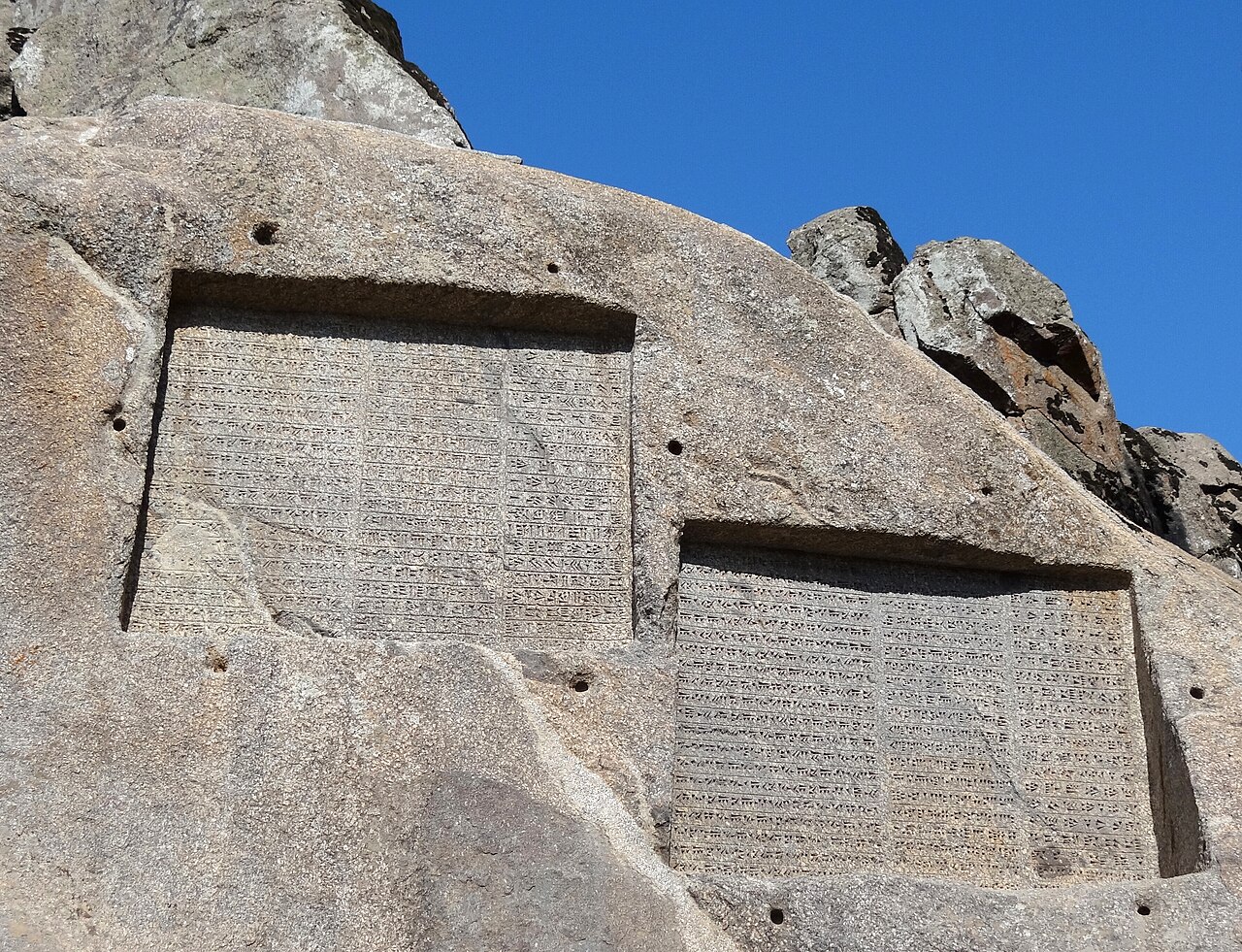
Trilingual Inscription of Xerxes at Van Castle
Andrez1 · 8 April 2009
A modern photograph of a rock-cut inscription at Van, Turkey, carrying Xerxes's own trilingual text.
The photograph documents an inscription carved in Xerxes's name, recording his own royal proclamation.
About this source
What it is
This photograph, taken in 2009, shows a rock-cut inscription at Van Castle in Turkey. The inscription contains text in three languages attributed to the Persian king Xerxes, carved directly into the cliff face.
Why it matters
Because the inscription was carved during Xerxes's reign, it is a primary source for his own words and claims as ruler. Monuments like this were placed in prominent, visible locations to assert royal authority across the vast Achaemenid Empire, reaching far beyond the Persian heartland into conquered regions.
Look closer
- Why might a king choose a cliff face in a distant province to display his words?
- What does carving text in three languages suggest about the empire's population?
- What can't you learn about Xerxes's rule just from this monument alone?
This photograph is part of the curated material that grounds the AI version of Xerxes I on Humy.ai — when students ask about related events, the AI can quote it and cite it.
More Xerxes I sources
Browse all 97 →
Ready when you are
Start chatting with Xerxes I now.
20 messages free · No credit card · Available in 50+ languages.