


Primary sourceArtifact
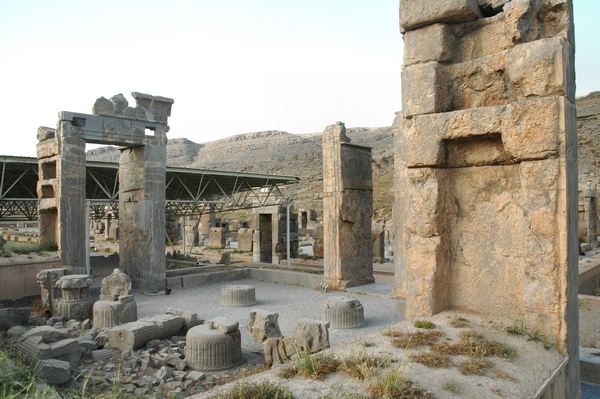
Tripylon of Persepolis
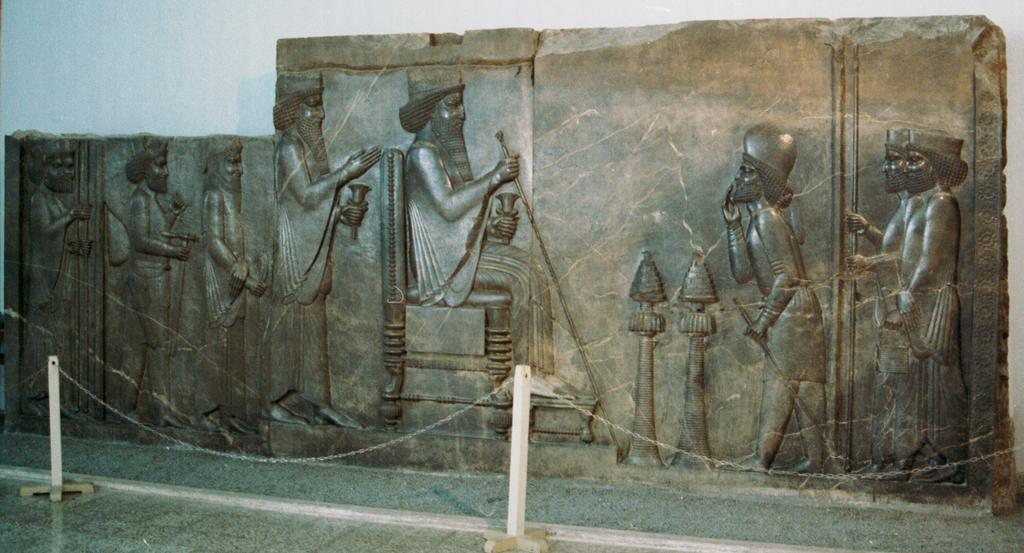
A ceremonial hall at Persepolis commissioned by Xerxes, with staircase reliefs showing nobles in procession reflecting court ritual.
Xerxes commissioned this hall, whose reliefs reflect the court ceremony of his reign.
About this source
What it is
The Tripylon was a ceremonial hall at Persepolis commissioned by Xerxes I. Its staircases were decorated with reliefs showing nobles in procession.
Why it matters
The building and its reliefs reflect the formal ritual and hierarchy of the Achaemenid court under Xerxes, showing how ceremony and image were used to express royal power and order among the empire's elite.
Look closer
- What might a procession of nobles carved in stone tell us about court life?
- Why would a ruler commission a separate hall just for ceremony?
- What is missing from the ruins today that once made this space feel grand?
This artifact is part of the curated material that grounds the AI version of Xerxes I on Humy.ai — when students ask about related events, the AI can quote it and cite it.
More Xerxes I sources
Browse all 97 →

Ready when you are
Start chatting with Xerxes I now.
20 messages free · No credit card · Available in 50+ languages.