


Primary sourceArtifact1912
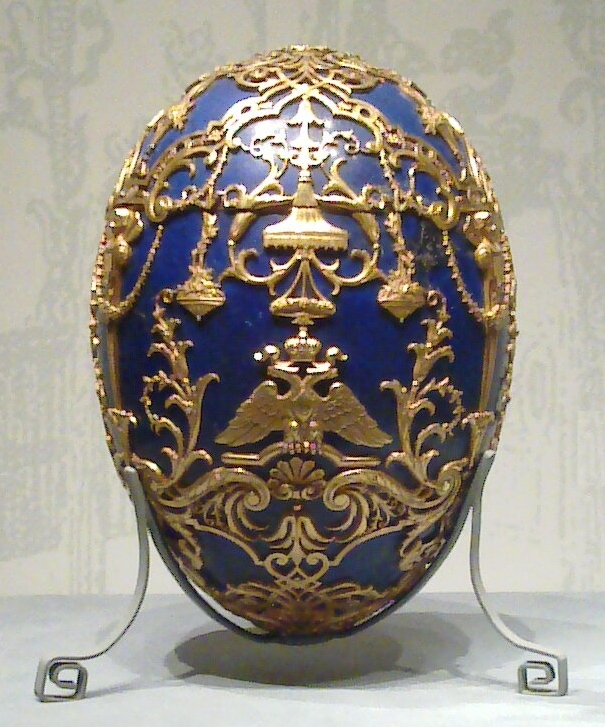
Tsarevich Egg
Henrik Wigström · 1912
A 1912 Fabergé egg commissioned by Nicholas II's wife honoring their son Alexei, whose hidden illness shaped the family's fate.
Commissioned at Nicholas II's imperial court as a gift marking his son Alexei's survival of illness.
About this source
What it is
Made in 1912 under Peter Carl Fabergé, with craftsmanship by Henrik Wigström, this egg was created for Empress Alexandra Fyodorovna as a tribute to her son, Tsarevich Alexei. It is now in the Virginia Museum of Fine Arts in Richmond, Virginia.
Why it matters
Hidden inside is a portrait of Alexei, who suffered from haemophilia so severe that his death certificate had once been prepared. The egg was made as thanks for his survival. Alexei's illness later drew the controversial figure Grigori Rasputin into the imperial household, with lasting consequences for how the Romanov family was seen by the Russian public.
Look closer
- Why would a family keep a child's illness secret from the public?
- What does the choice to commemorate a near-death with a jewelled egg tell you about this family's world?
- What is missing from this luxurious object about the political troubles facing Russia at the time?
This artifact is part of the curated material that grounds the AI version of Tsar Nicholas II on Humy.ai — when students ask about related events, the AI can quote it and cite it.
More Tsar Nicholas II sources
Meet the AI Tsar Nicholas II →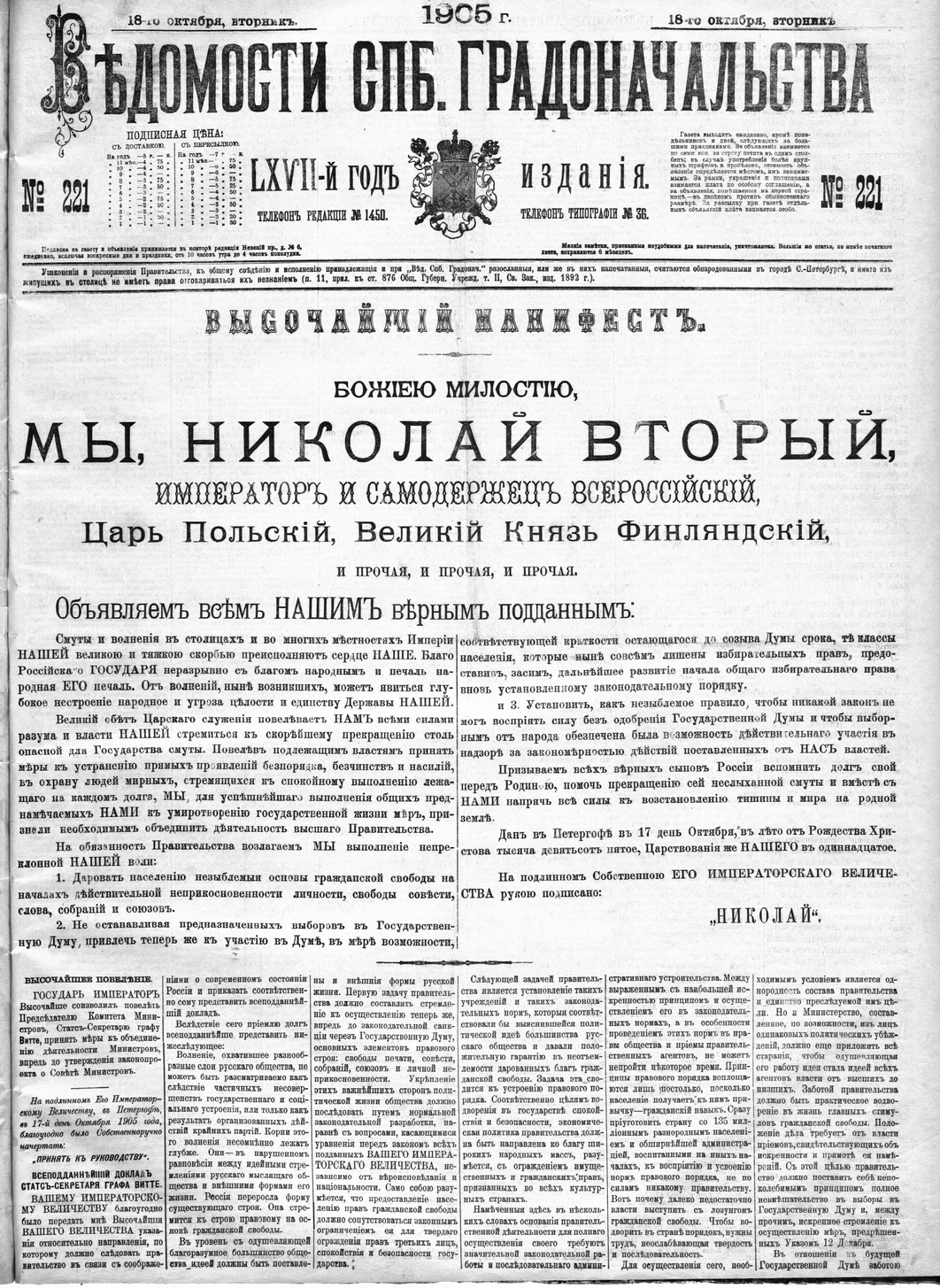 Newspaper article
Primary source
October Manifesto
Nicholas II of Russia · 30 October 1905
 Document
Primary source
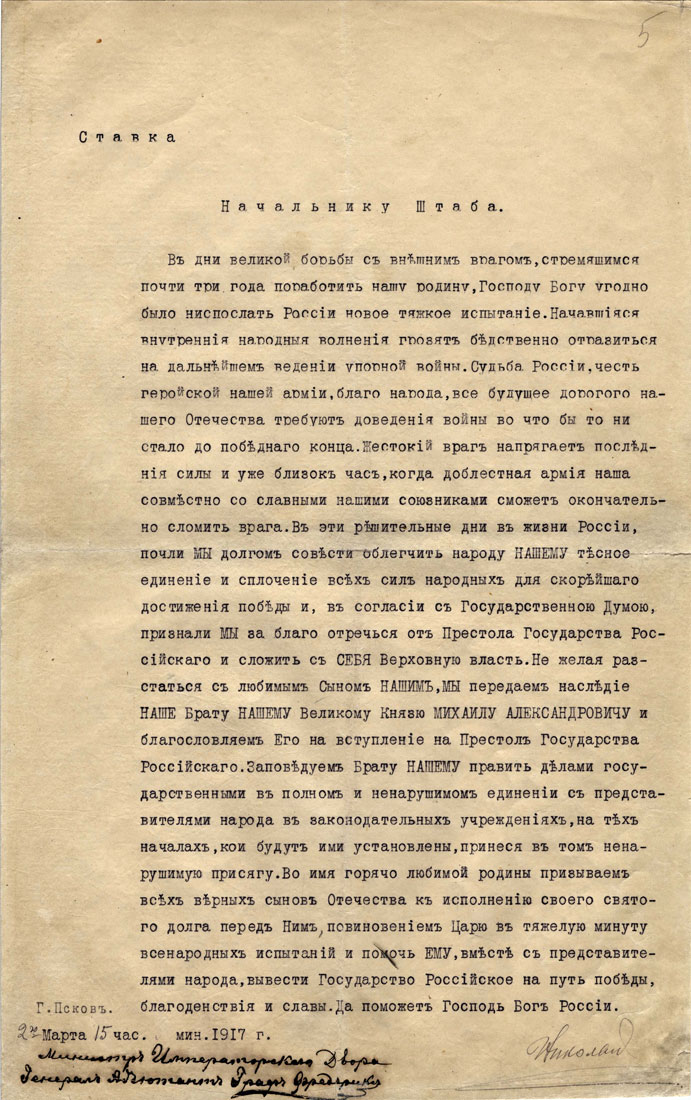
Nicholas II of Russia's abdication
Nicholas II of Russia · 2 March 1917 (O.S.) / 15 March 1917 (N.S.)
 Document
Primary source
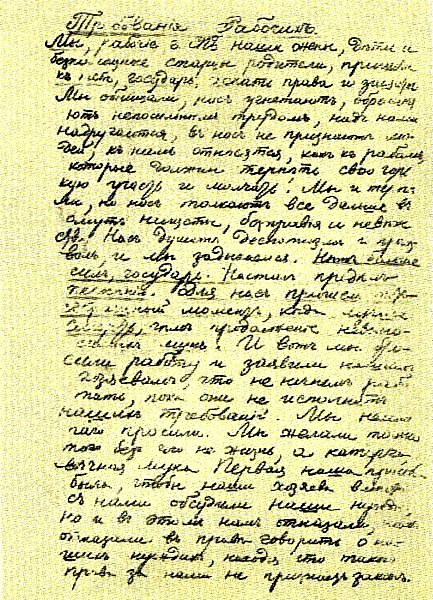
St. Petersburg Workmen's Petition to the Tsar
Georgy Gapon · January 1905
Primary source
Russian Constitution of 1906
Nicholas II of Russia · 6 May 1906
 Letter
Primary source
Willy–Nicky Correspondence
Nicholas II of Russia and Wilhelm II · July–August 1914
Ready when you are
Start chatting with Tsar Nicholas II now.
20 messages free · No credit card · Available in 50+ languages.