


Primary sourcePhotograph1604
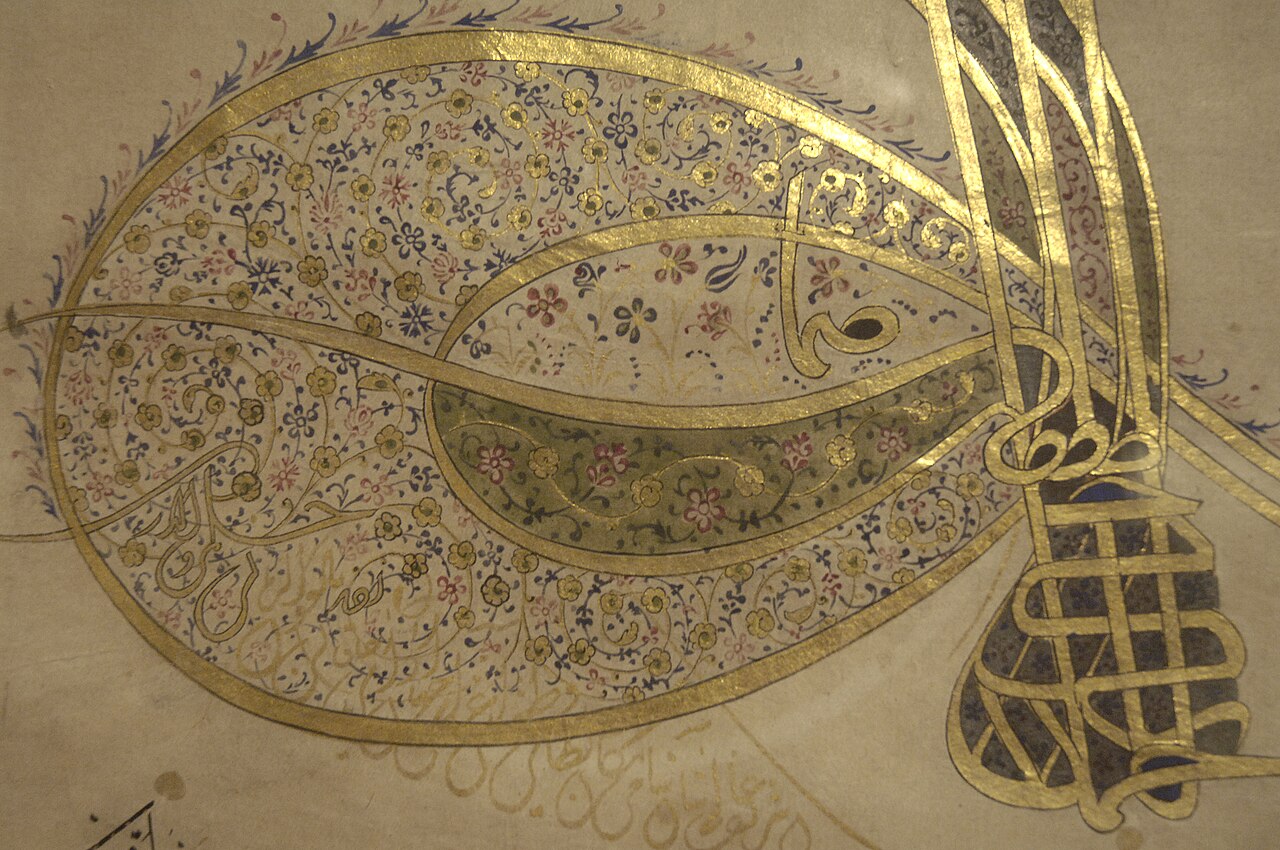
Tughra of Sultan Ahmed I, 1604
1604
A photograph of an elaborately decorated gold tughra of Ahmed I, his official seal and signature, held in an Istanbul museum.
This gilded tughra was Ahmed I's personal seal, affixed to his official documents and coins.
About this source
What it is
This photograph, taken by the Commons contributor Dosseman, shows a gilded tughra of Sultan Ahmed I dated 1604, displayed at the Istanbul Turkish and Islamic Arts Museum. The tughra is a calligraphic monogram affixed to official documents, carved into seals and stamped on coins.
Why it matters
Each sultan chose his tughra's exact form at his accession from designs prepared by court calligraphers, and the style evolved over generations, reaching its classical form under Suleiman the Magnificent. Elaborate gilded versions like this one were also treated as works of art, showing how Ottoman rulers combined political authority with artistic display.
Look closer
- What colours and patterns decorate this version of the tughra?
- Why might a sultan want his signature to be a work of art rather than a simple mark?
- What skills would the court calligraphers who made this have needed?
This photograph is part of the curated material that grounds the AI version of Ahmed I on Humy.ai — when students ask about related events, the AI can quote it and cite it.
More Ahmed I sources
Browse all 51 →
Ready when you are
Start chatting with Ahmed I now.
20 messages free · No credit card · Available in 50+ languages.