


Primary sourceDocumentc. 1555
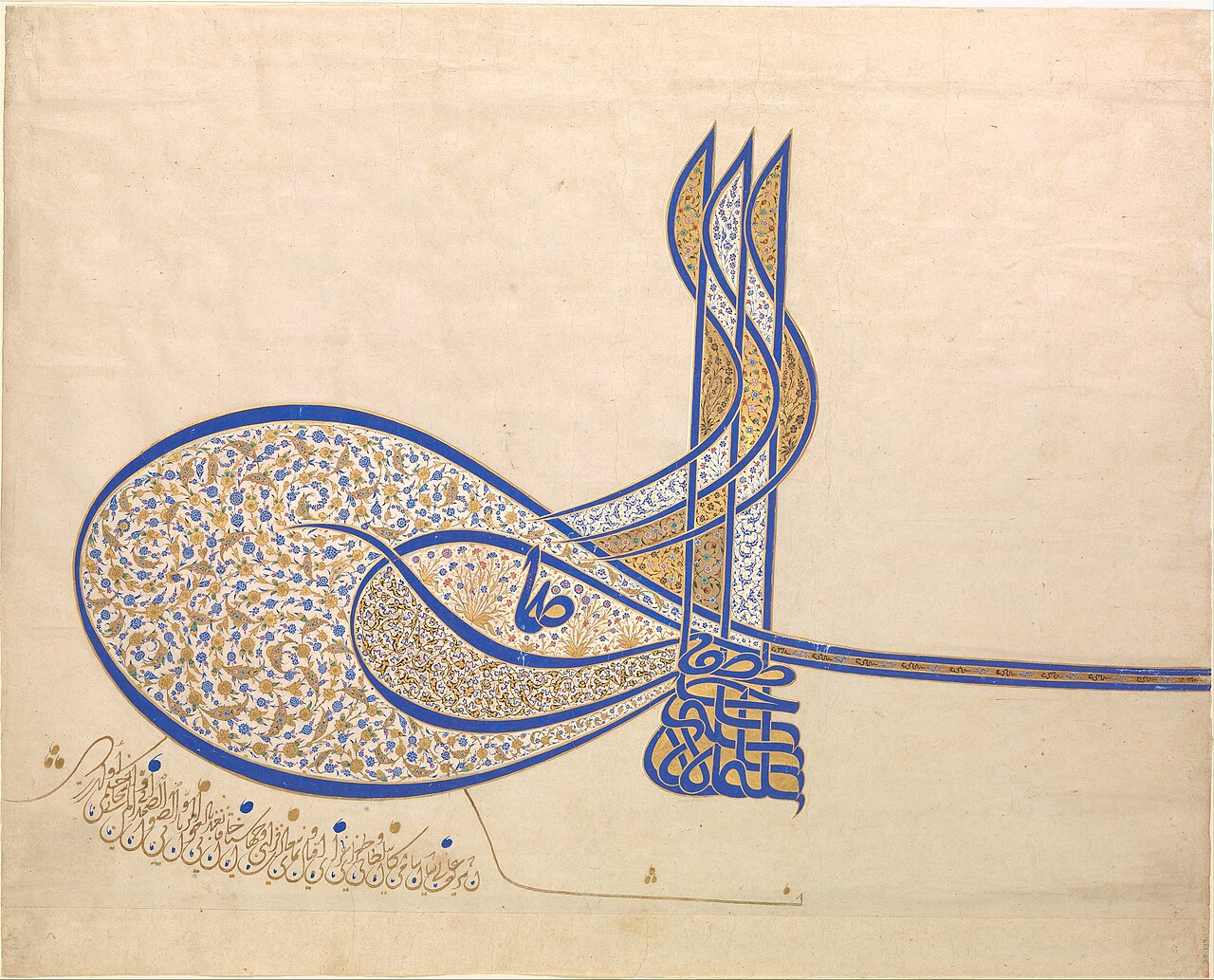
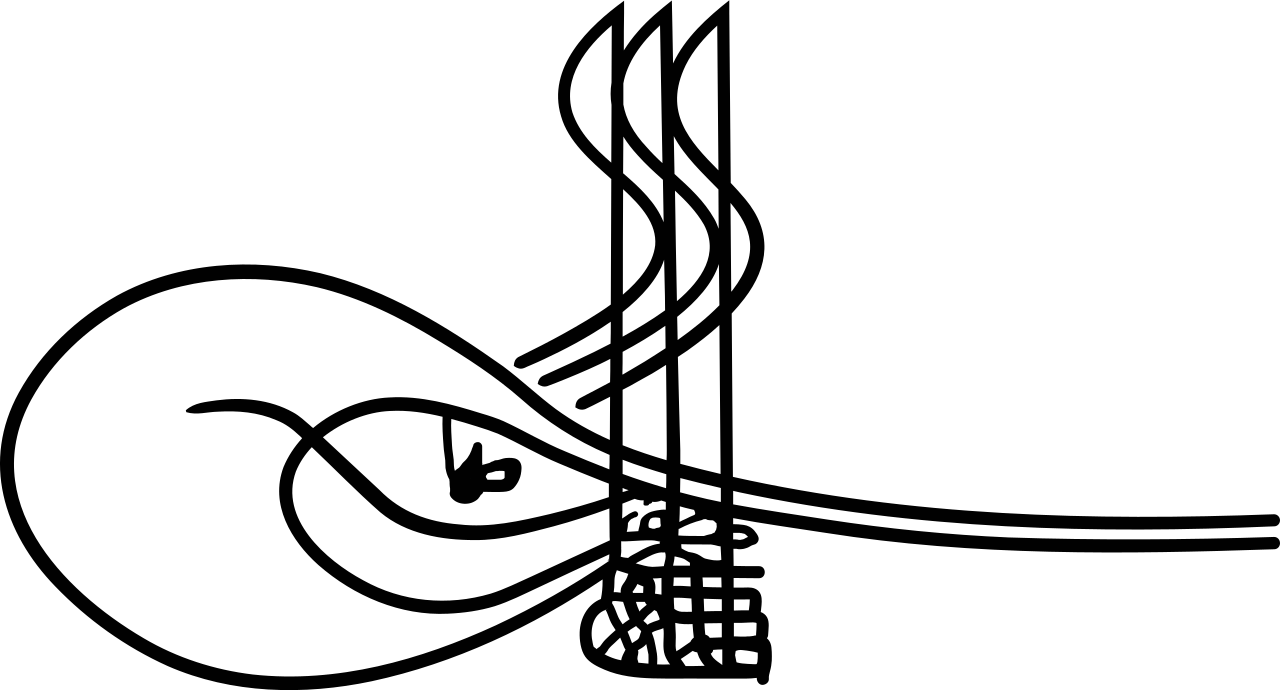
Tughra of Sultan Suleiman the Magnificent
c. 1555
The sultan's own calligraphic monogram, used to authenticate his imperial decrees.
This is Suleiman's own official signature, used to authenticate decrees issued in his name.
About this source
What it is
A tughra is the official calligraphic signature of an Ottoman sultan, stamped or painted at the top of decrees to make them legally valid. This example, from around 1555, is attributed to Suleiman the Magnificent and is held as part of a manuscript collection.
Why it matters
Every sultan had his own tughra, and no document was official without it. It shows how Ottoman rulers combined art and power: the beautiful gold and blue arabesque design was also a tool of government, proving that a command truly came from the sultan himself.
Look closer
- What shapes and colours make this design stand out from ordinary handwriting?
- Why might a ruler want his signature to be so elaborate and hard to copy?
- What kinds of documents do you think needed this mark?
This document is part of the curated material that grounds the AI version of Suleiman the Magnificent on Humy.ai — when students ask about related events, the AI can quote it and cite it.
More Suleiman the Magnificent sources
Meet the AI Suleiman the Magnificent →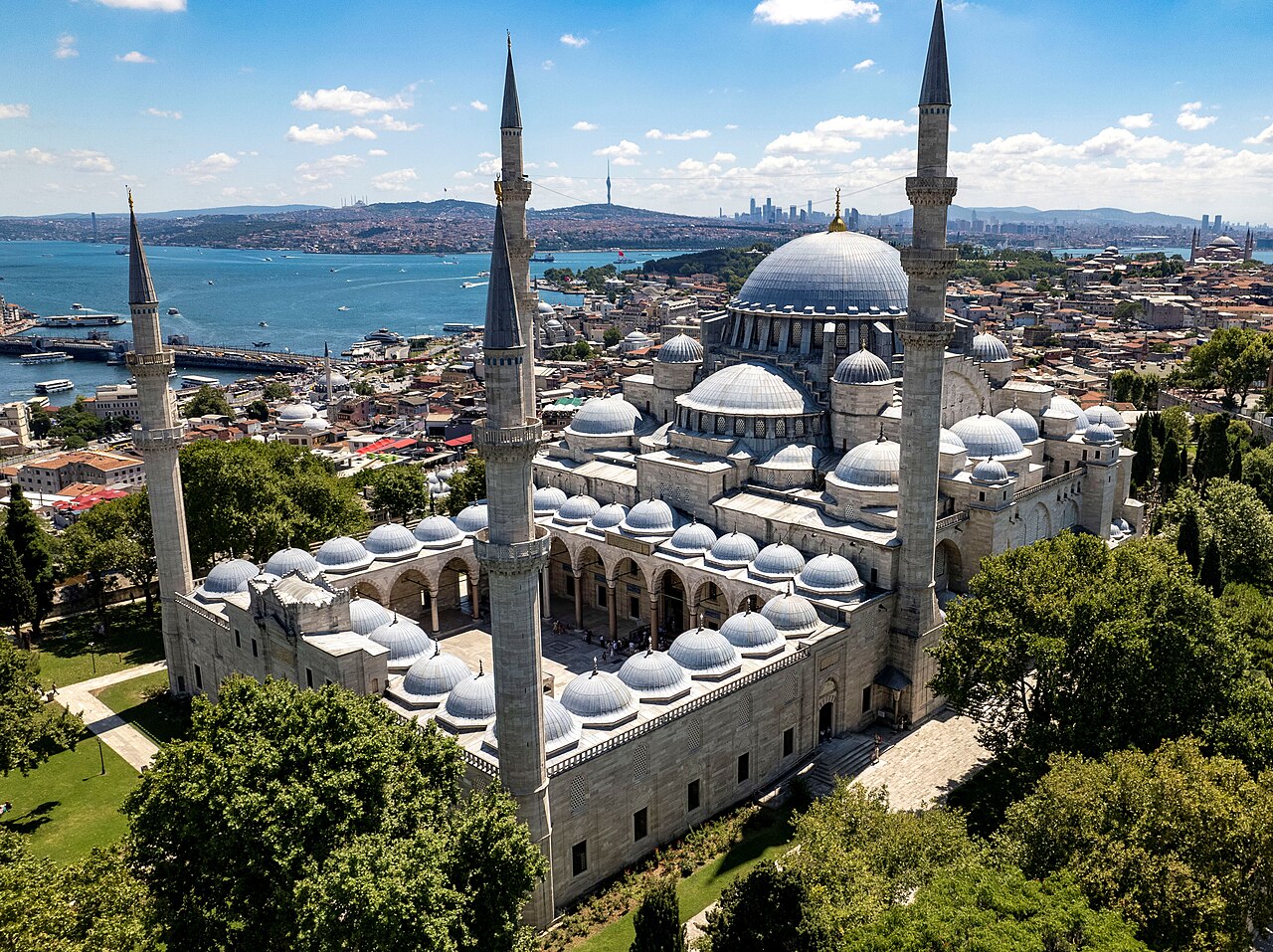 Artifact
Primary source
Süleymaniye Mosque
Mimar Sinan · 1550-1557
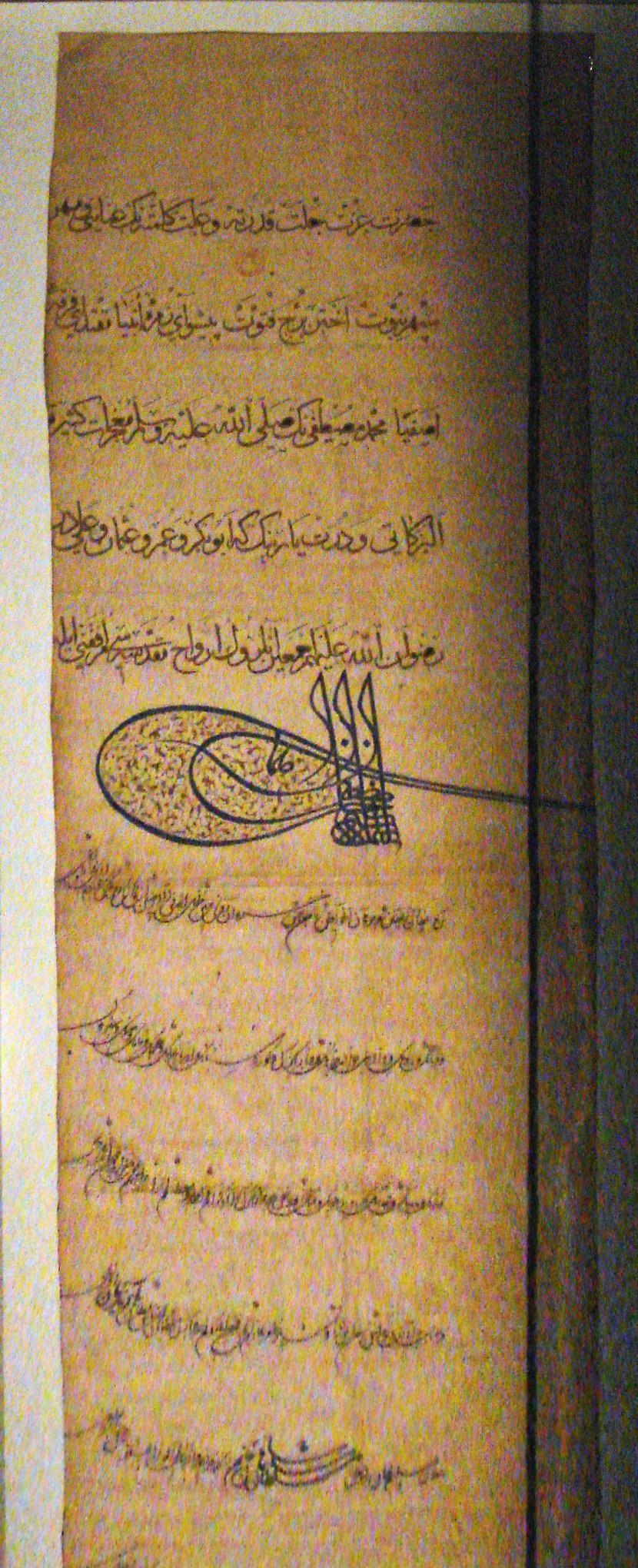 Letter
Primary source
Letter to the King of France
Suleiman the Magnificent · 1526
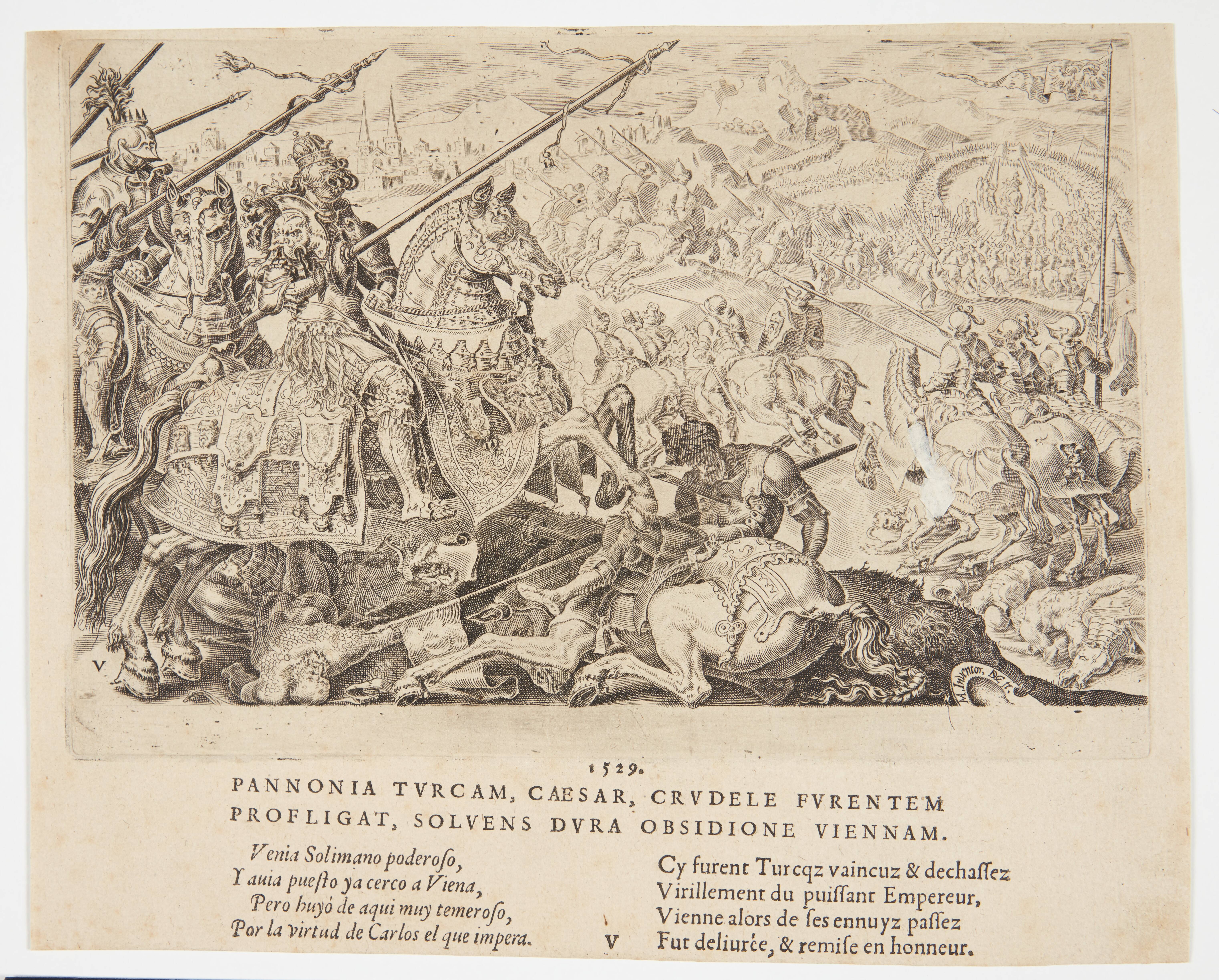 Painting
Primary source
Suleiman the Magnificent Forced to Raise the Siege of Vienna
1555
 Painting
Secondary source
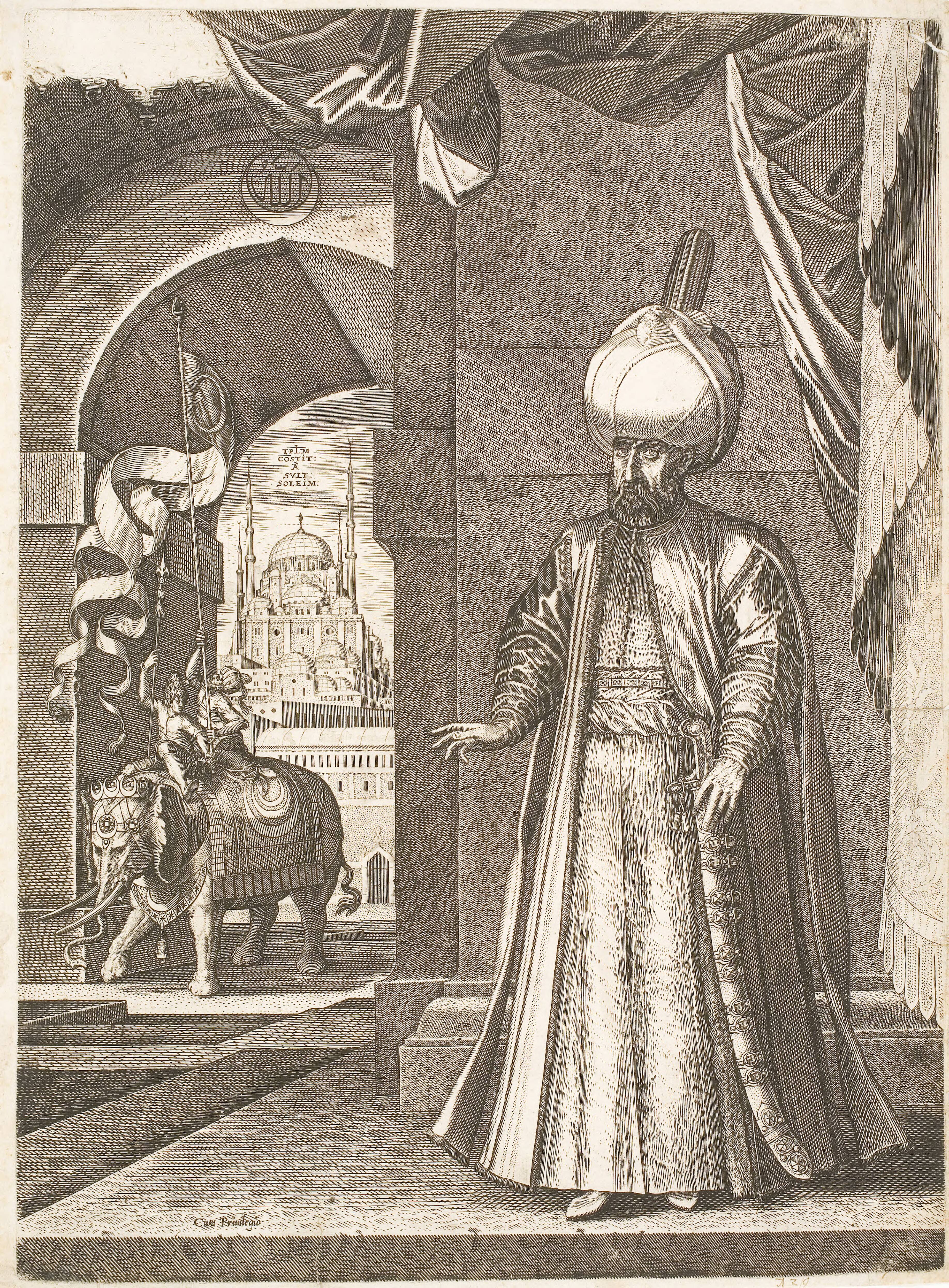
Standing Portrait of Sultan Suleiman the Magnificent
1574
 Artifact
Primary source
Tughra of Suleiman the Magnificent
Ready when you are
Start chatting with Suleiman the Magnificent now.
20 messages free · No credit card · Available in 50+ languages.