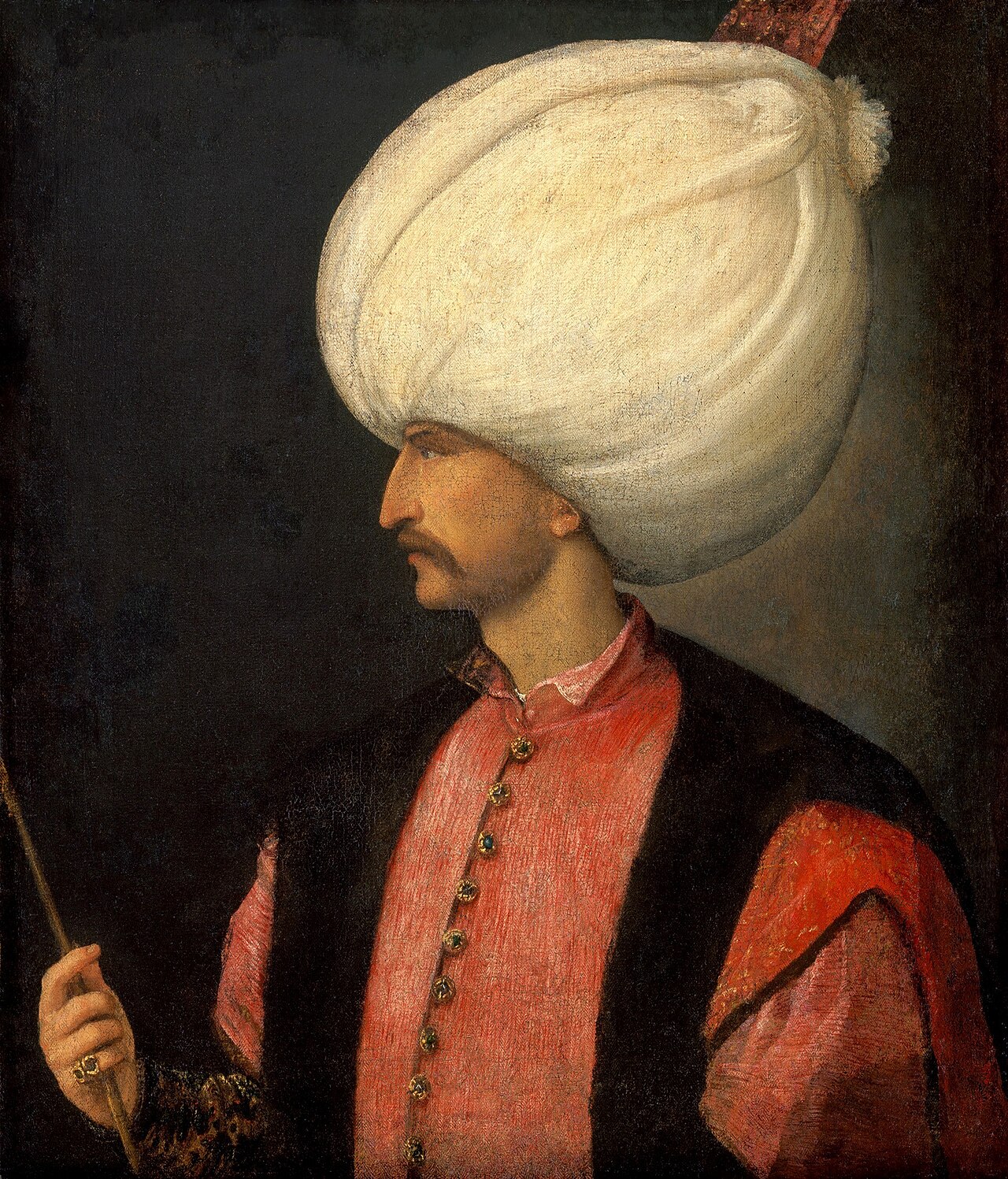

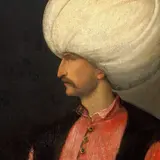
Portrait of Suleiman the Magnificent

AI Historical Figure

Suleiman the Magnificent

Ottoman Sultan known for expansion and cultural achievements.

Chat with Suleiman the Magnificent via text or voice — in 42 languages, drawing on a curated biography and 86 historical sources. Available 24/7.

Start chatting with Suleiman the Magnificent20 messages free · No credit card
Lived
1494–1566
From
Türkiye
Known for
Rulers & royaltyPolitics & government
Suleiman the Magnificent

Suleiman the Magnificent

Online · responds in seconds

Hello — I'm Suleiman the Magnificent. Ottoman Sultan known for expansion and cultural achievements. What would you like to ask me?

20 messages free · No credit card · Powered by Humy.ai

Live preview · Switch between 42 languages above · Send a message to continue in the app

Multilingual

Talk to Suleiman the Magnificent in 42 languages

Ask Suleiman the Magnificent questions in any language below, and the rest of Humy's app speaks it too. Pick yours to open the chat in that language.

Also in German (Austria), German (Switzerland), English (UK), English (Australia), English (Canada).

The sources behind this AI

86 sources · 28 paintings · 20 books · 13 documents · 12 letters · 11 artifacts · 1 photograph · 1 newspaper article

Suleiman the Magnificent doesn’t improvise from thin air. The AI is grounded in 86 curated historical sources students can inspect. Open any of them to see what informs the conversation.

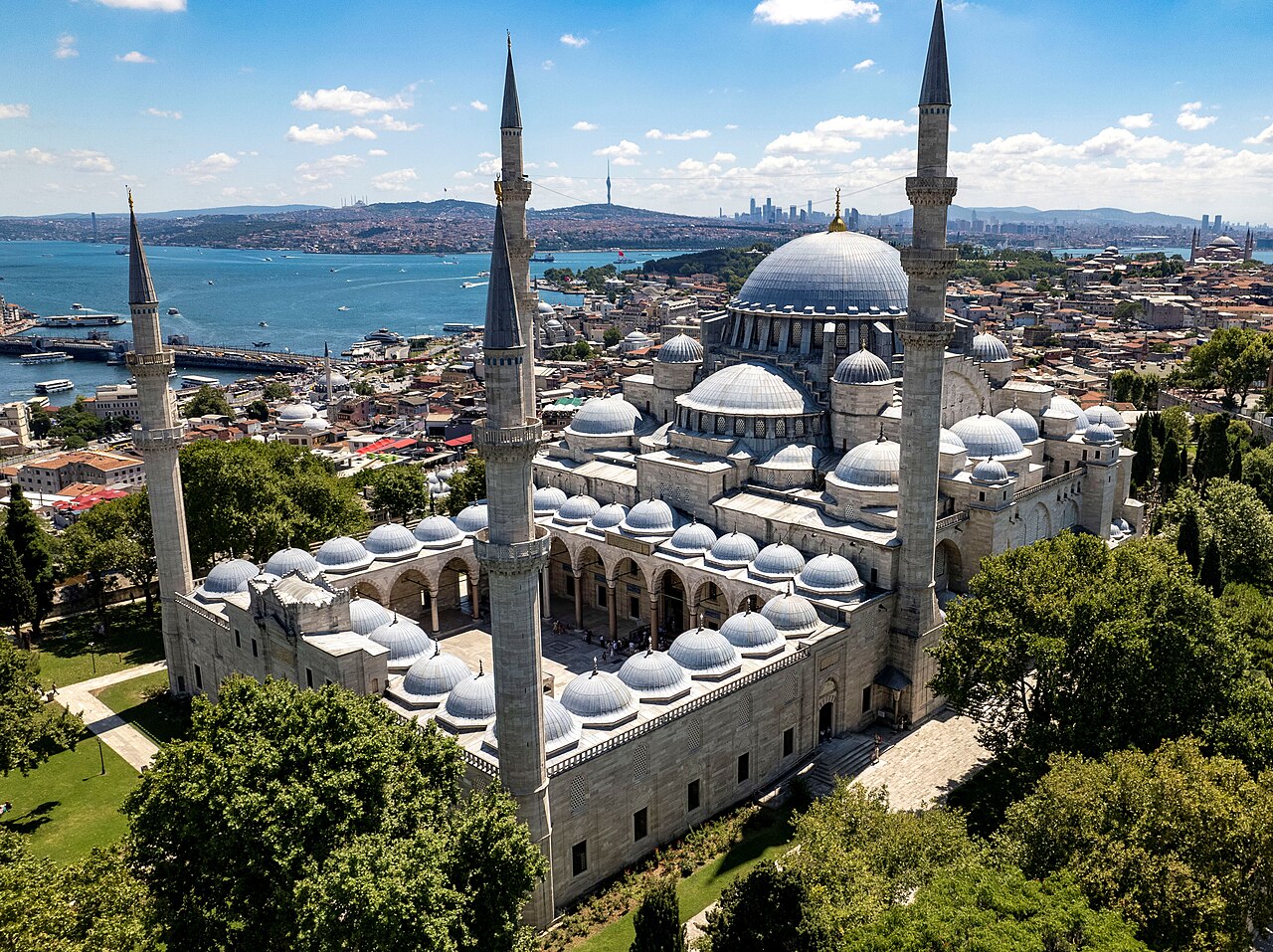
Aerial view of the Süleymaniye Mosque in Istanbul, with a large central dome, several smaller domes, and four tall slender minarets, set among trees beside the Bosphorus with the city and water visible behind.Artifact

Primary source

Süleymaniye Mosque

Mimar Sinan · 1550-1557

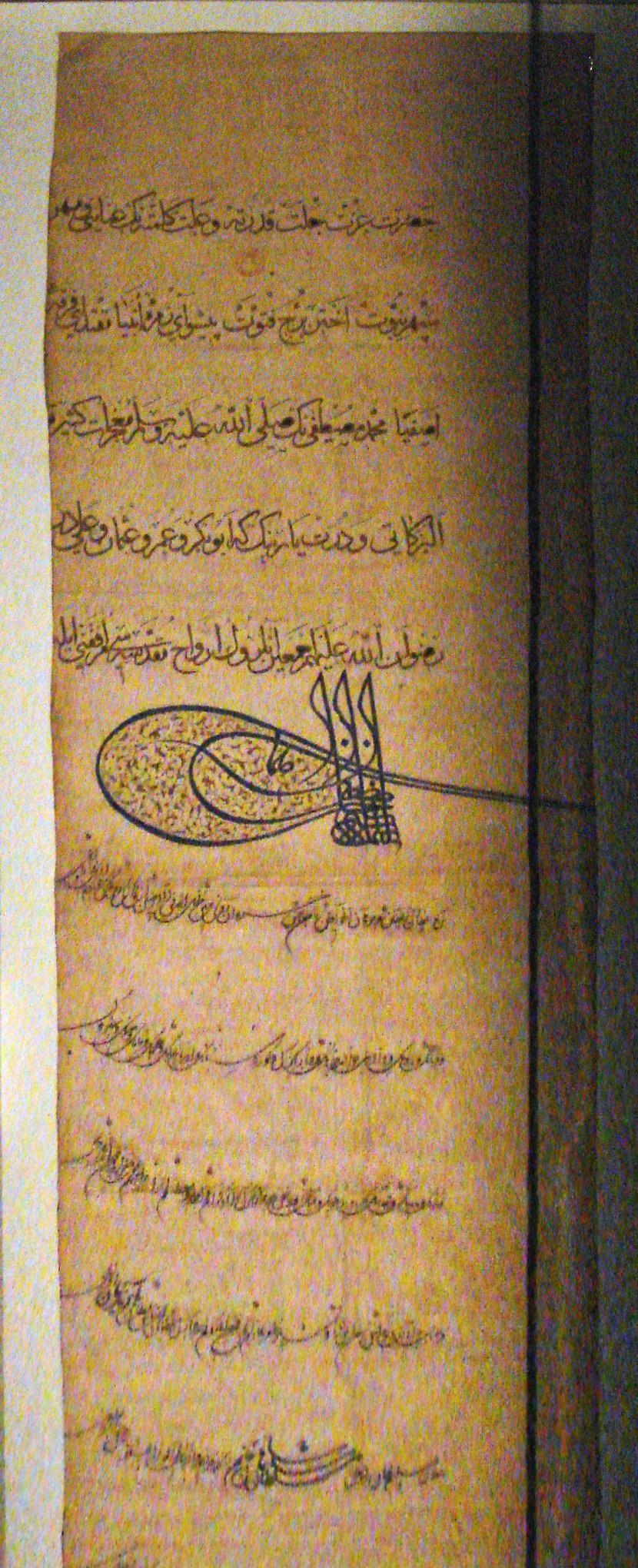
Photograph of a long vertical manuscript scroll on yellowish paper, with several lines of Arabic-script calligraphy at the top and a gold-dusted tughra (ornate calligraphic monogram) with three upright vertical strokes in the centre, followed by more lines of script below. Dark wooden background on the right.Letter

Primary source

Letter to the King of France

Suleiman the Magnificent · 1526

Print depicting the siege of Vienna, showing Suleiman the Magnificent's forces being forced to withdraw.Painting

Primary source

Suleiman the Magnificent Forced to Raise the Siege of Vienna

1555

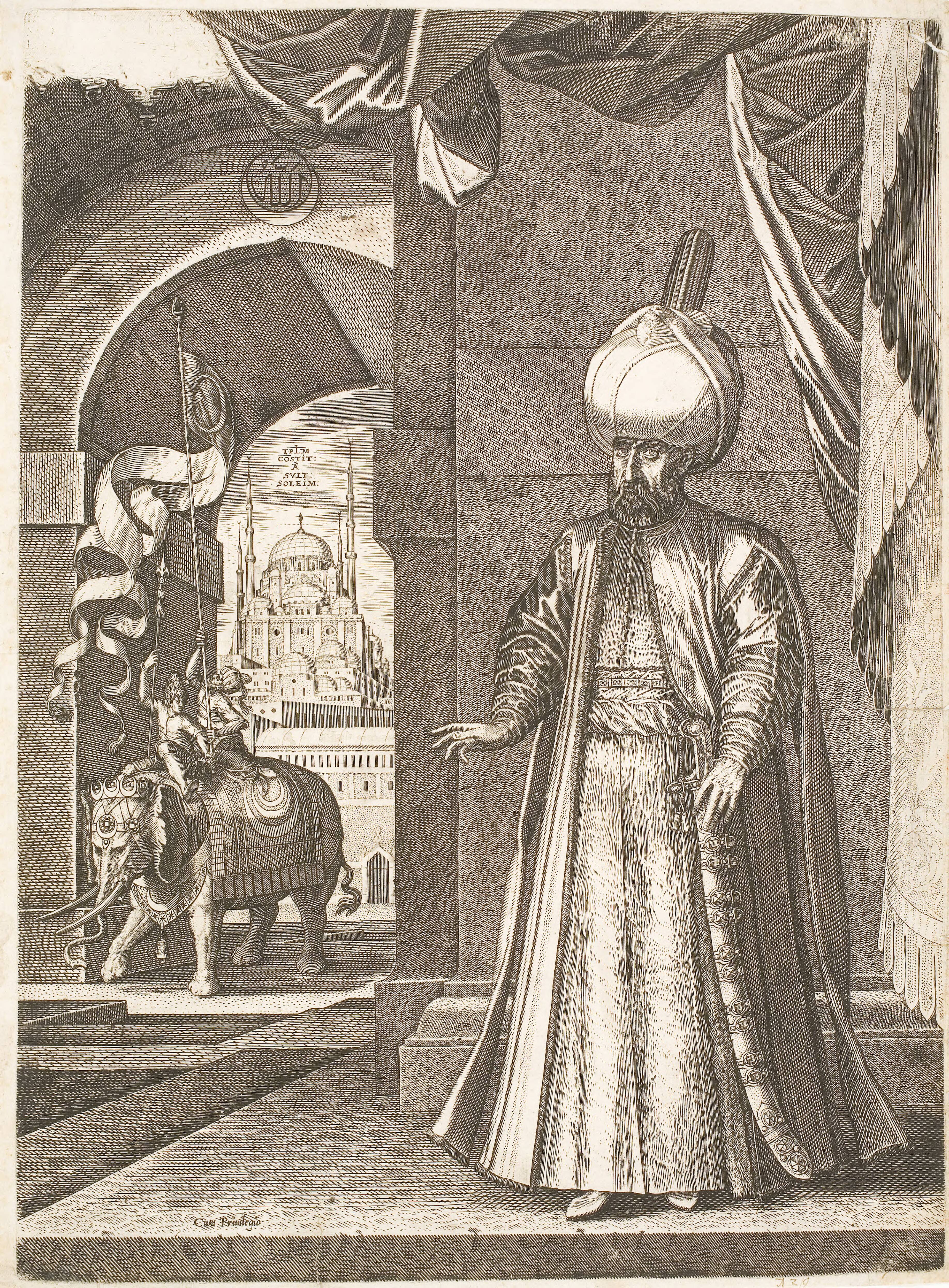
Standing portrait of Sultan Suleiman the Magnificent in ceremonial dress.Painting

Secondary source

Standing Portrait of Sultan Suleiman the Magnificent

1574

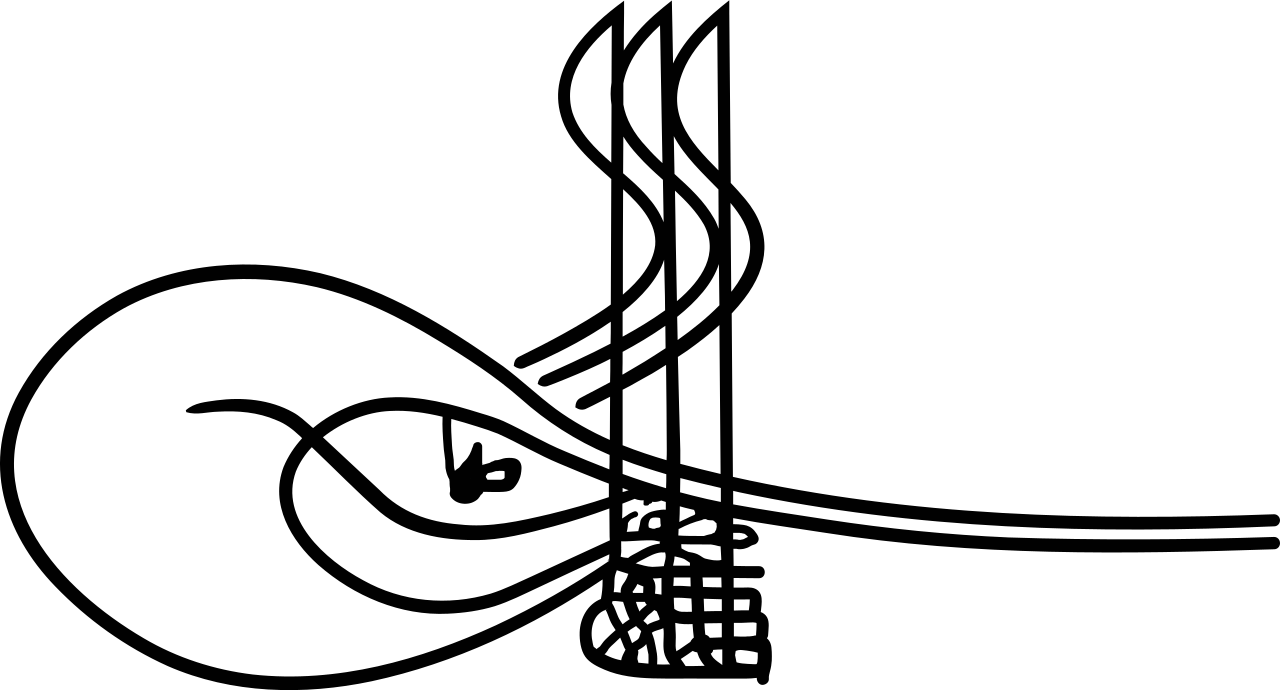
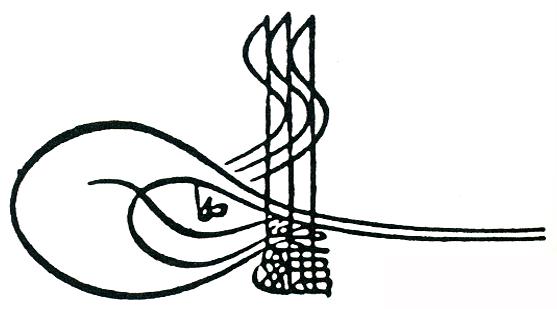
Black line drawing on white background of an Ottoman tughra. It has three tall vertical strokes with S-shaped curls at the top, a large looping outline on the left, an inner loop with a small hook-like mark, and a lattice-like pattern at the bottom.Artifact

Primary source

Tughra of Suleiman the Magnificent

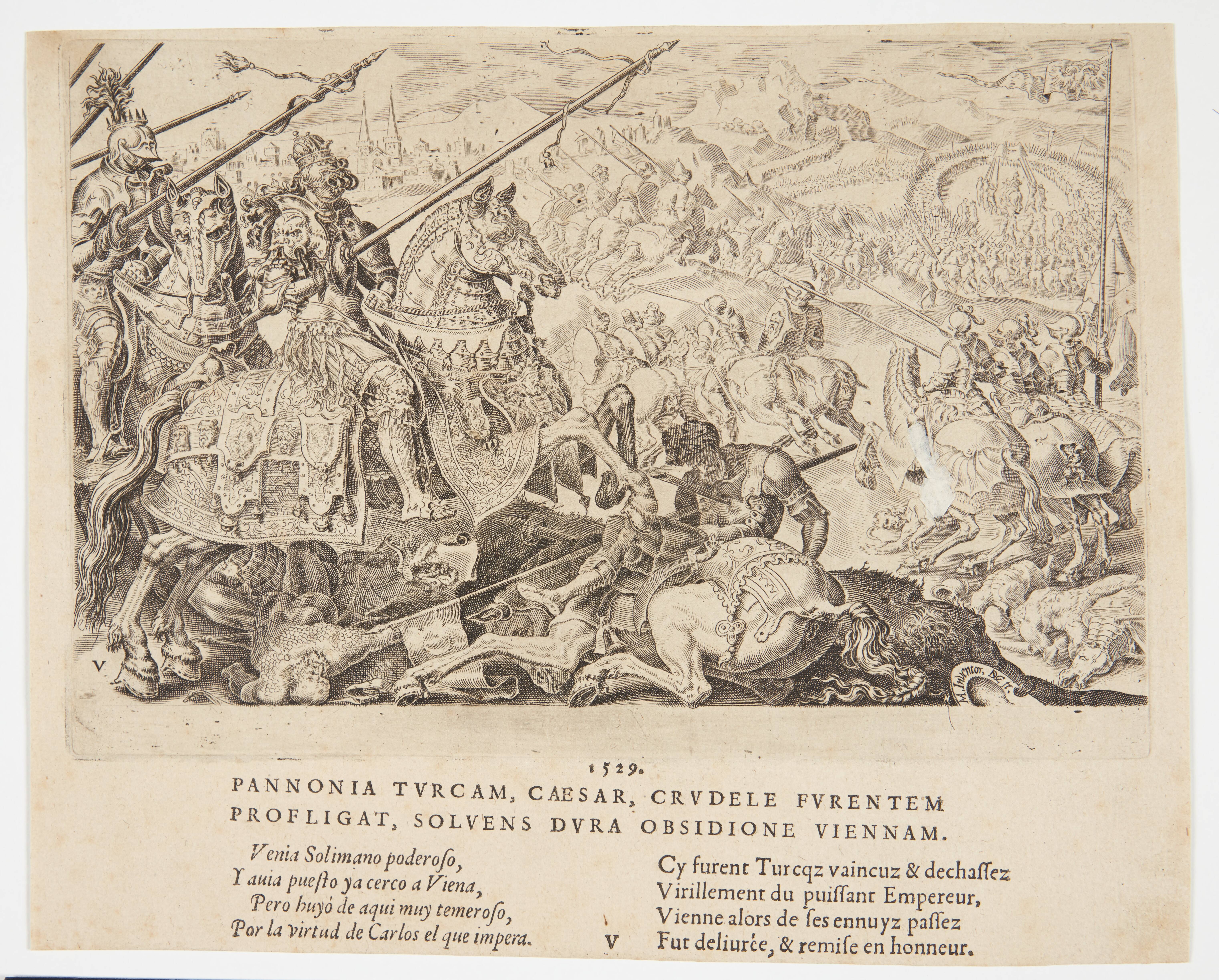
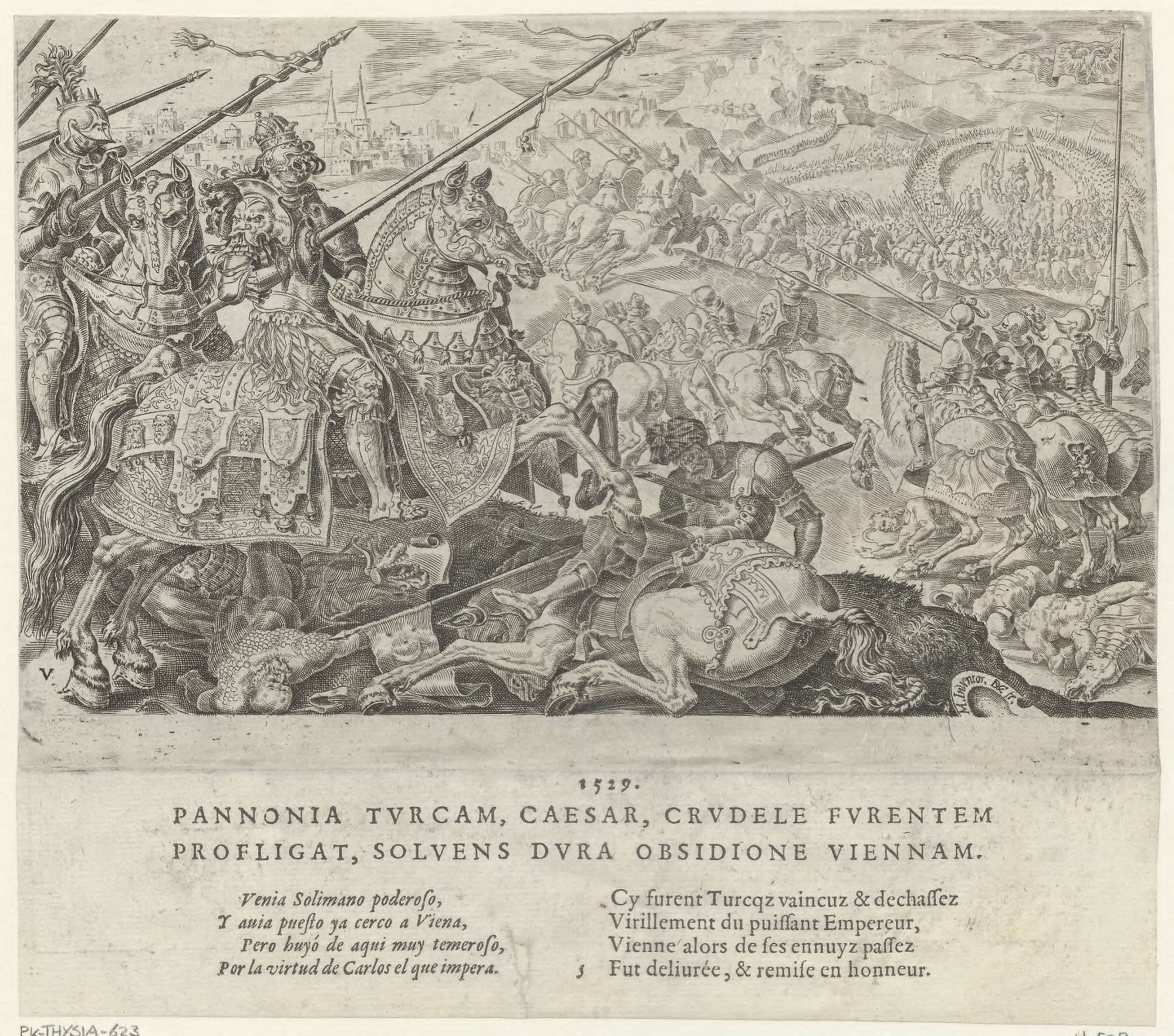
Engraved print of a battle scene with mounted knights in armor and lances in the foreground, troops fighting among fallen men and horses, a city with spires at upper left, and a Latin and Spanish-French caption below reading 1529, Pannonia Turcam Caesar...Viennam.Painting

Primary source

The Victories of Emperor Charles V: Suleiman Forced to Raise the Siege of Vienna

D. V. Coornhert · 1556

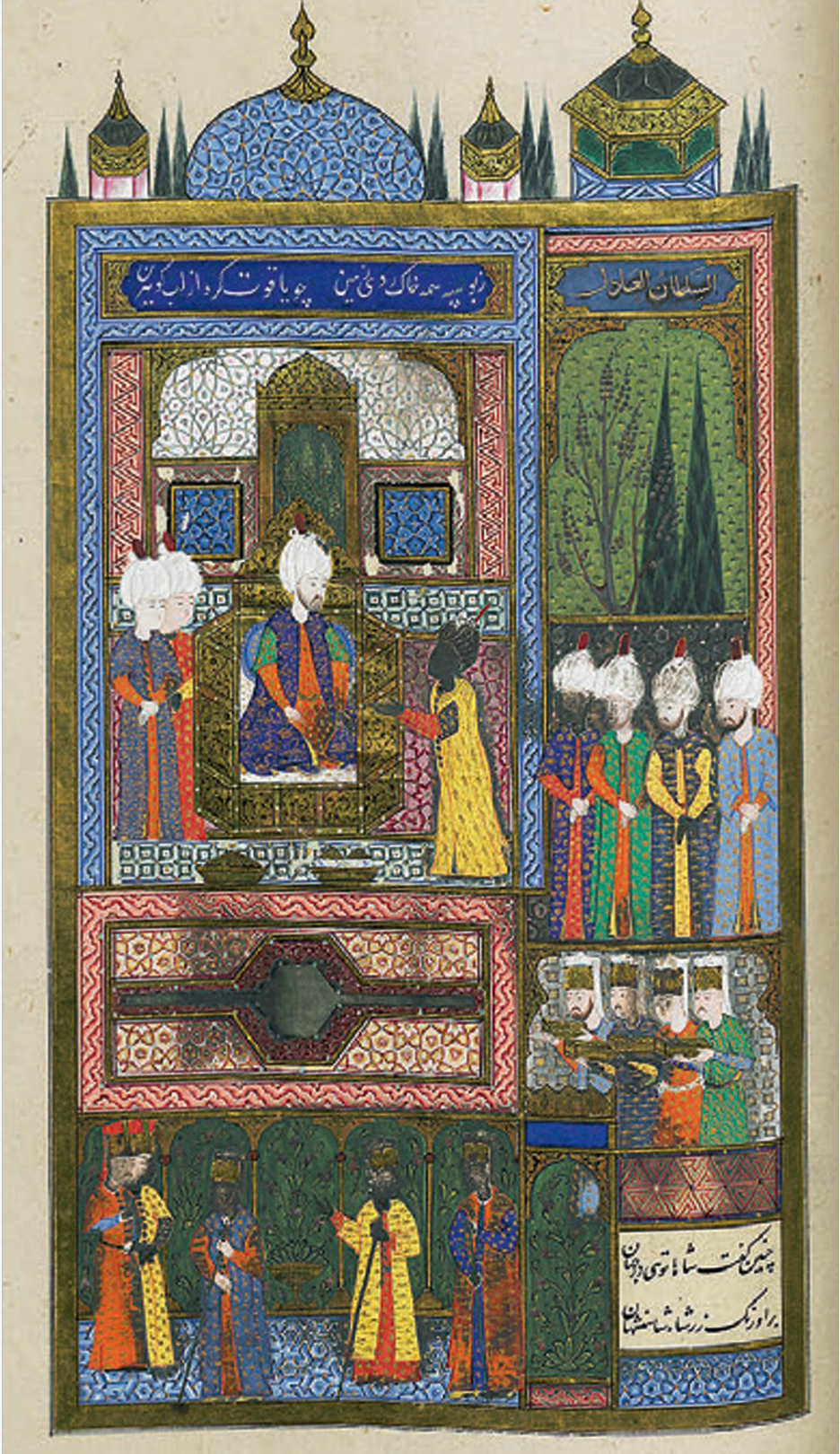
Miniature painting from a 16th-century Ottoman manuscript showing a seated ruler in a gilded throne room receiving a figure in yellow robes, with turbaned attendants standing beside him, a green tree and cypresses at right, and Arabic-script inscriptions, with figures bearing gifts along the bottom.Book

Primary source

Süleymanname of Arifi

Fethullah Arifi Çelebi · c. 1558

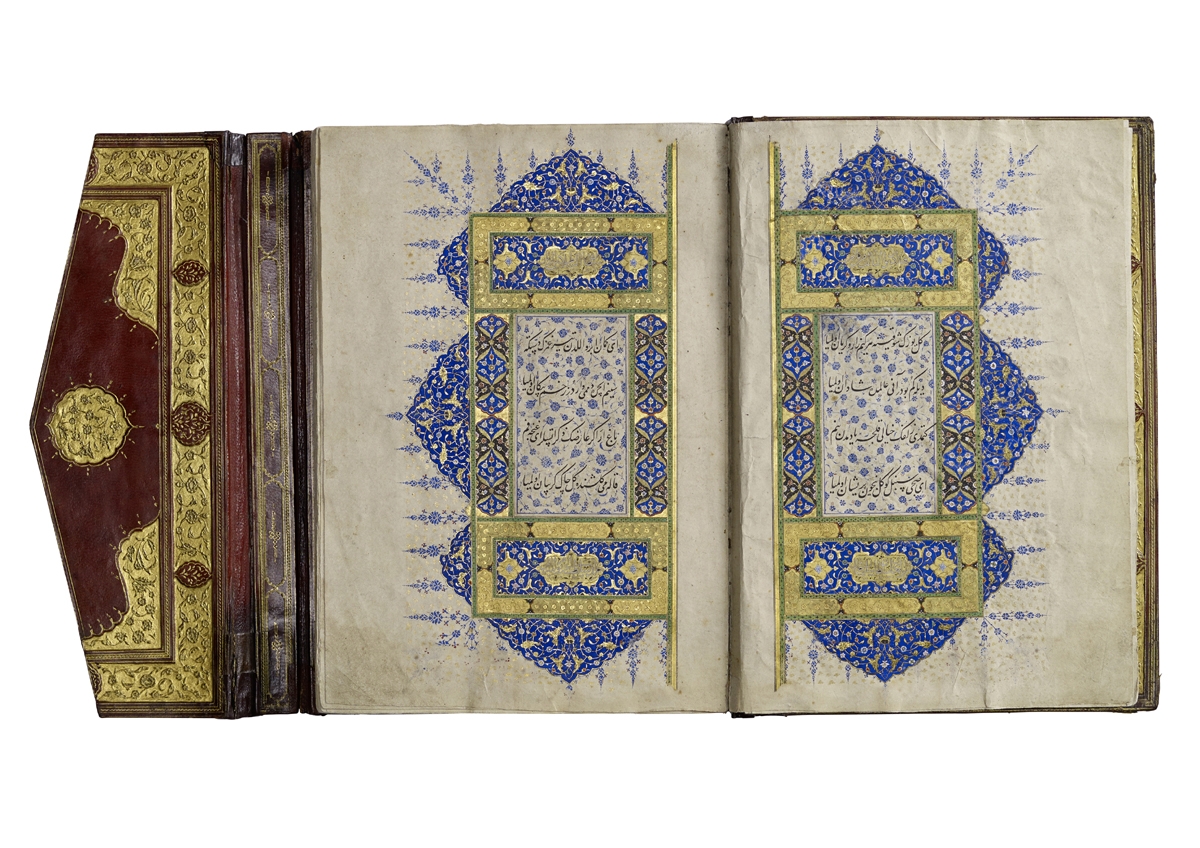
An open illuminated manuscript bound in red leather with gold-tooled decoration, displayed flat. Both pages have cream paper with ornate blue and gold illuminated panels and columns of Arabic-script calligraphy in central cartouches.Book

Primary source

Divan of Muhibbi

Suleiman the Magnificent (as Muhibbi)

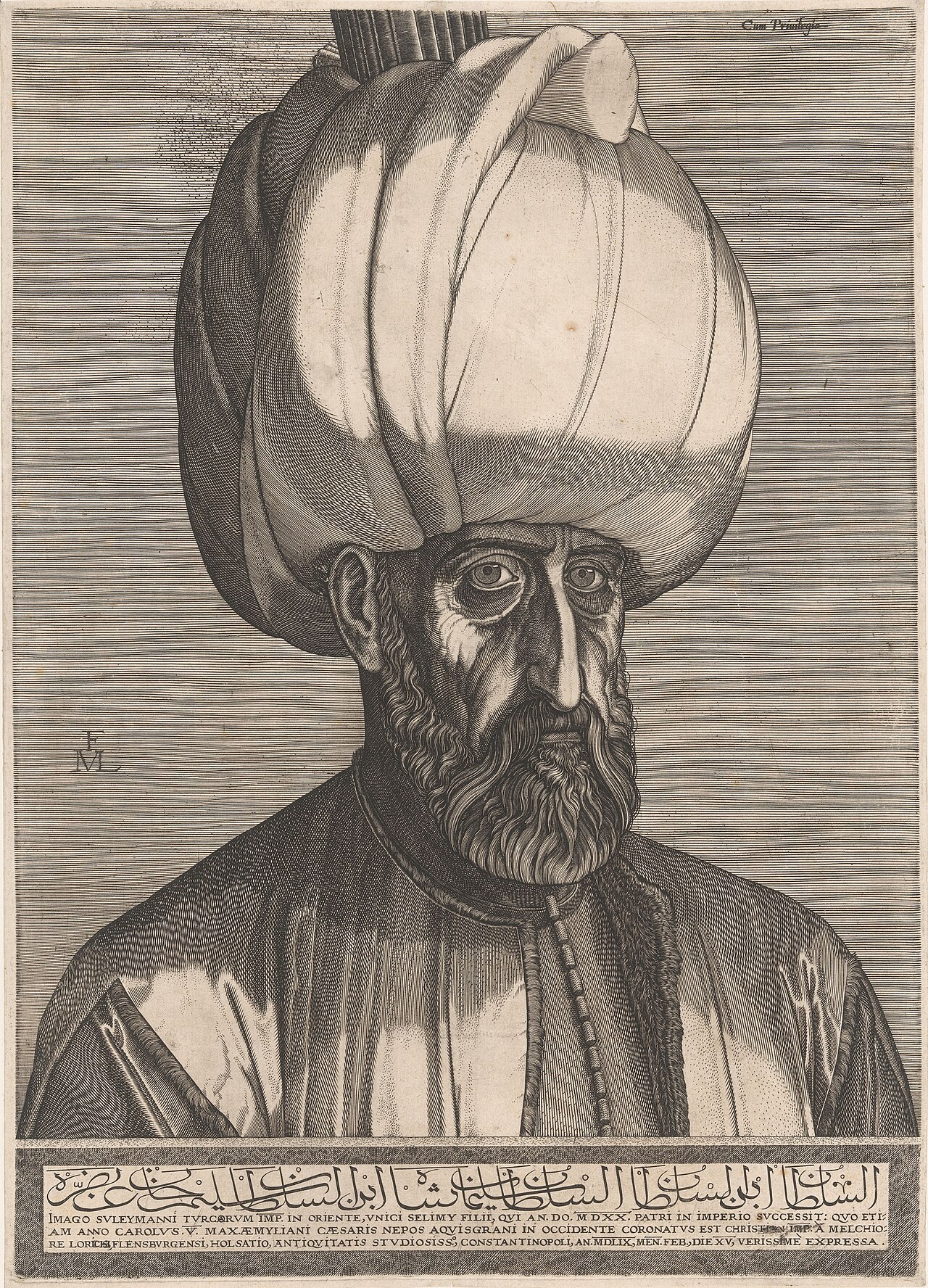
Engraved portrait print of a bearded older man in a large white turban and a dark fur-trimmed robe, shown from the chest up facing forward. Below is a rectangular inscription panel in Arabic script and Latin text.Painting

Primary source

Portrait of Sultan Suleyman I

Melchior Lorck · 1562

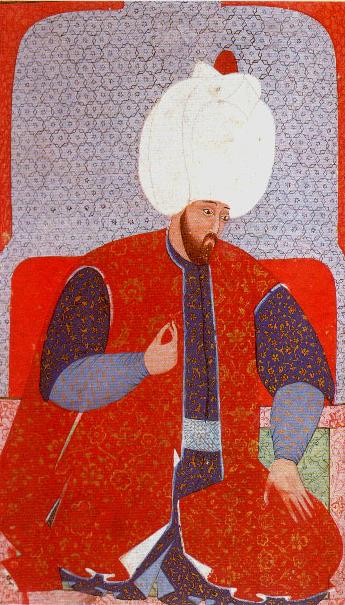
Painted miniature of a bearded man with a large white turban topped by a small red cap, seated on a red cushioned chair. He wears a red robe with gold patterns, a blue-patterned sash, and blue sleeves. The background is a grey-lavender geometric patterned wall.Painting

Primary source

Semailname Portrait of Suleiman

Nakkaş Osman

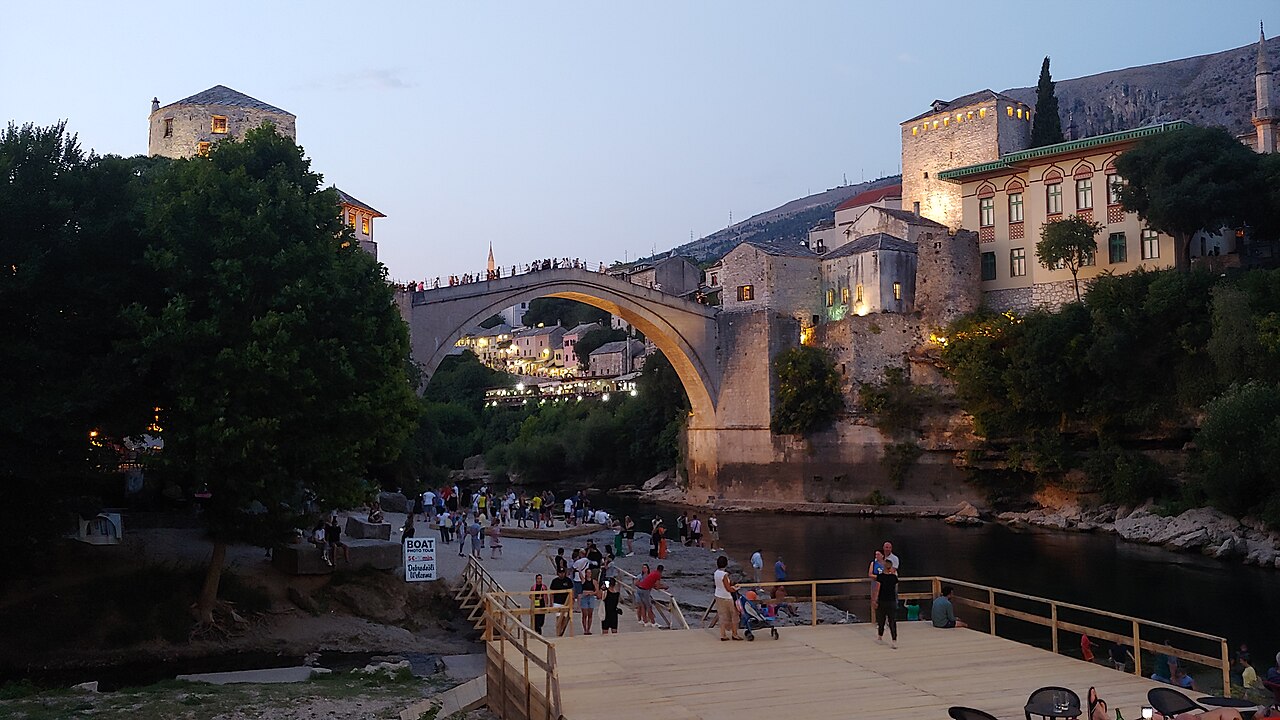
Stari Most, the Old Bridge in Mostar, a stone arch bridge spanning the Neretva river at dusk. People stand on the bridge and gather on the riverbank and a wooden platform below, with lit buildings on the hillside.Artifact

Primary source

Stari Most

Mimar Hayruddin · 1566

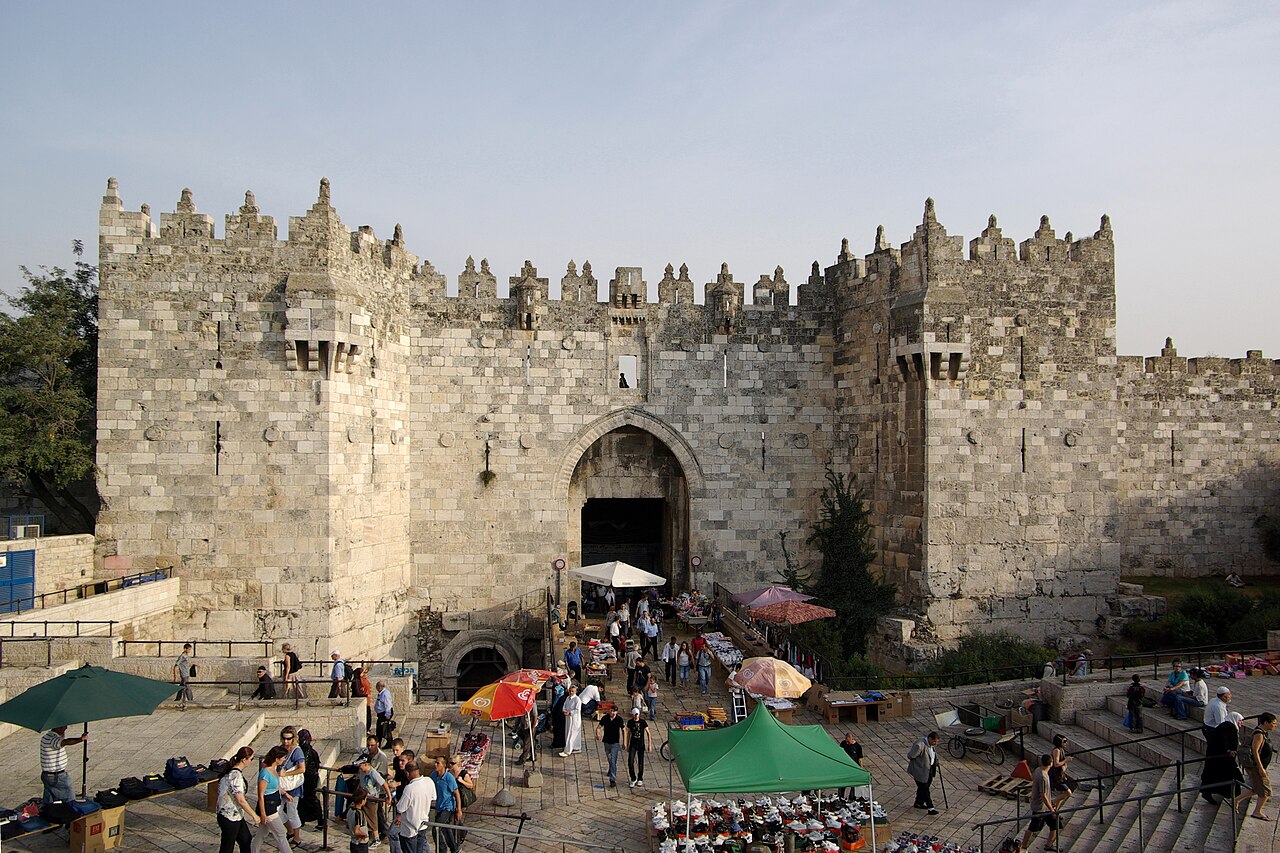
Front view of the Damascus Gate in Jerusalem's old city walls: a large pale stone gateway with a pointed arch opening, crenellated battlements and flanking towers. Pedestrians and market stalls with umbrellas stand in the plaza before it.Artifact

Primary source

Damascus Gate

1537

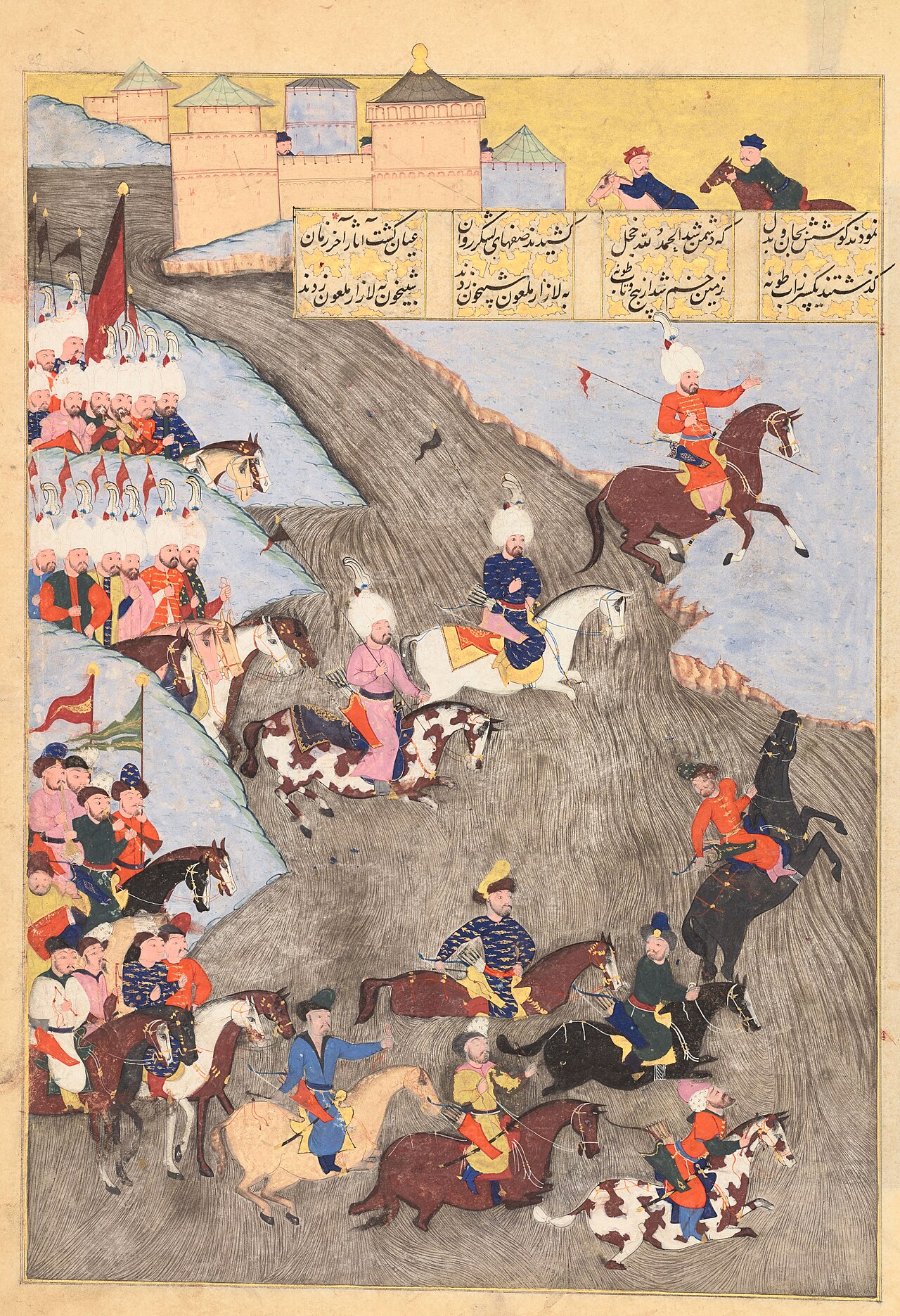
Painted manuscript miniature of a battle scene: horsemen in turbans and red and blue robes cross a grey river on horseback, with armed troops on the left bank and a fortified city with towers and a gold-ground Persian inscription band at top. Some riders are falling or fallen from horses.Painting

Primary source

History of Sultan Süleyman

Seyyid Lokman · 1579

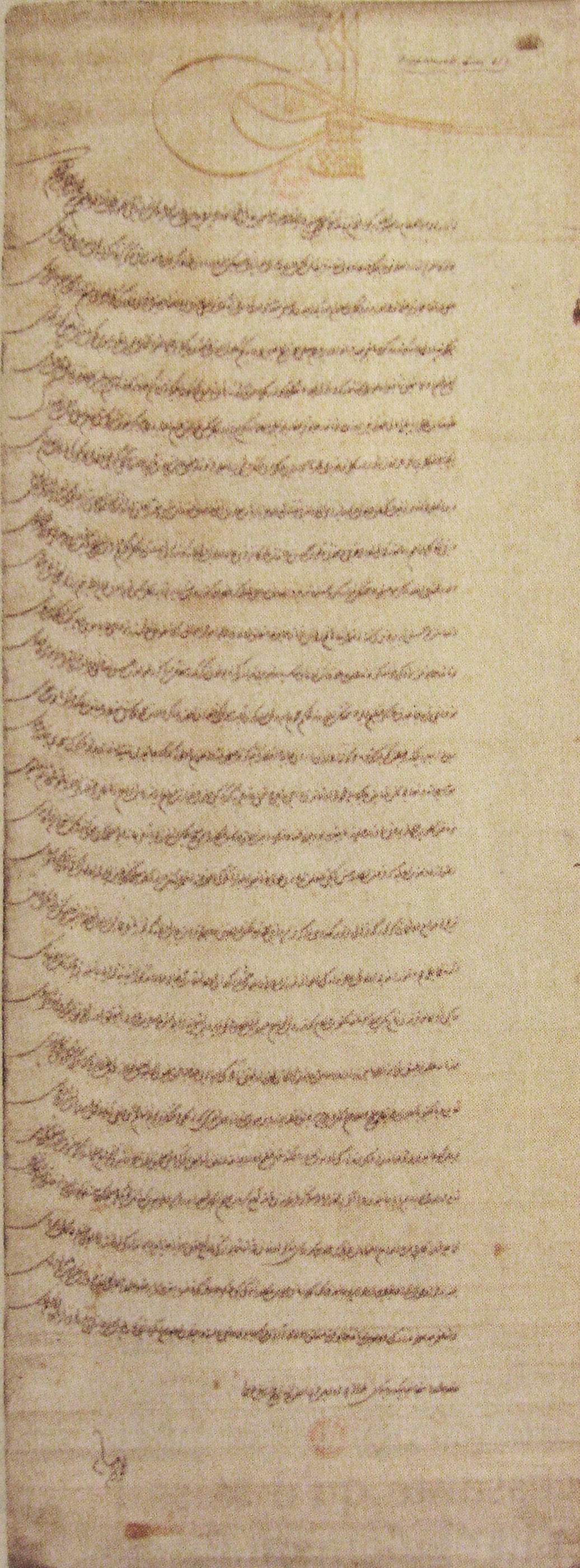
Scan of a long vertical Ottoman document on aged cream paper, with a gold tughra (ornate royal monogram) at the top, followed by about 35 lines of brown cursive Arabic-script handwriting and a small red seal near the bottom.Letter

Primary source

Letter of Soliman to Francis about the Siege of Nice

Suleiman the Magnificent · mid-February 1543

Letter

Primary source

Letter to Shah Tahmasp I

Suleiman the Magnificent · 1554

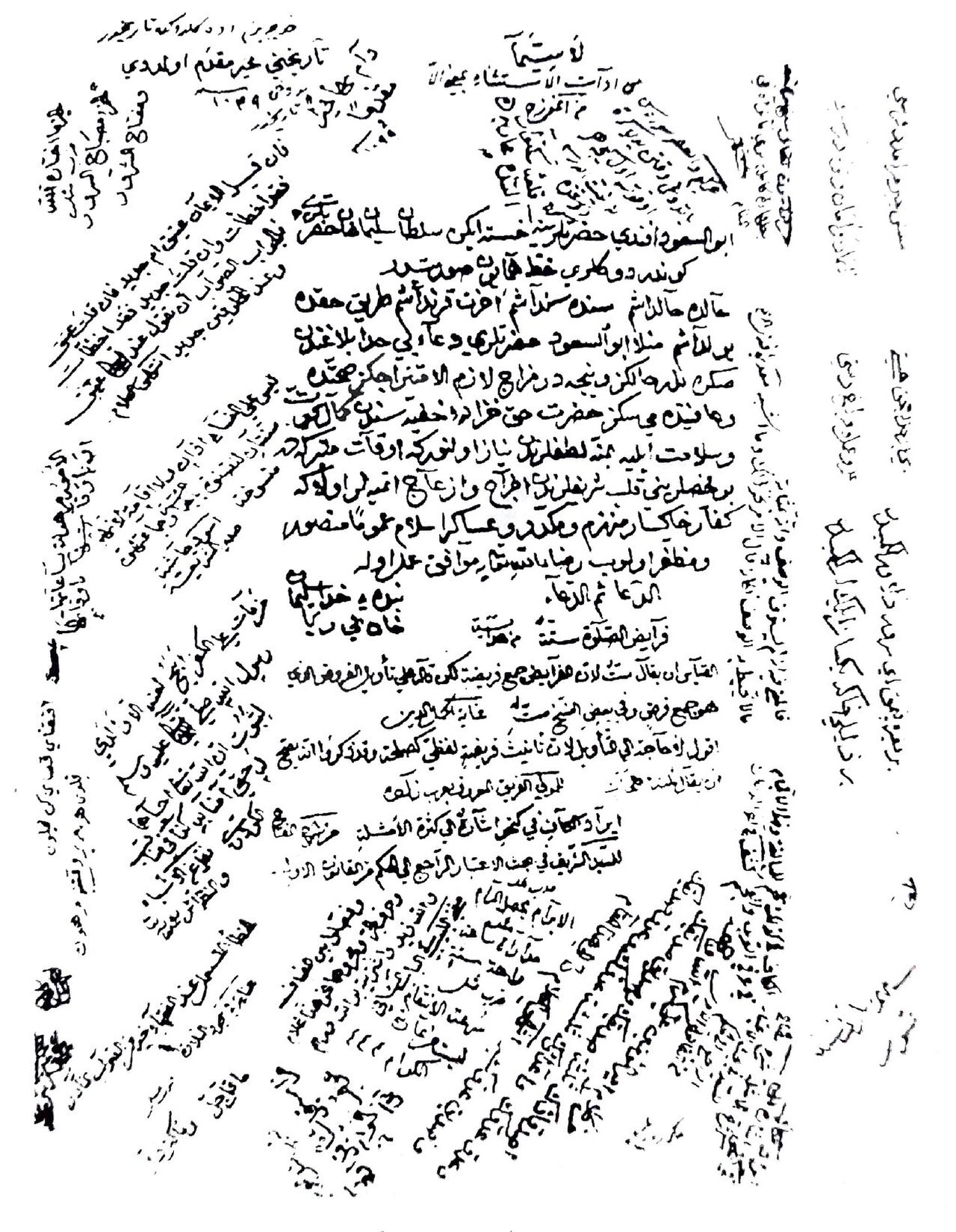
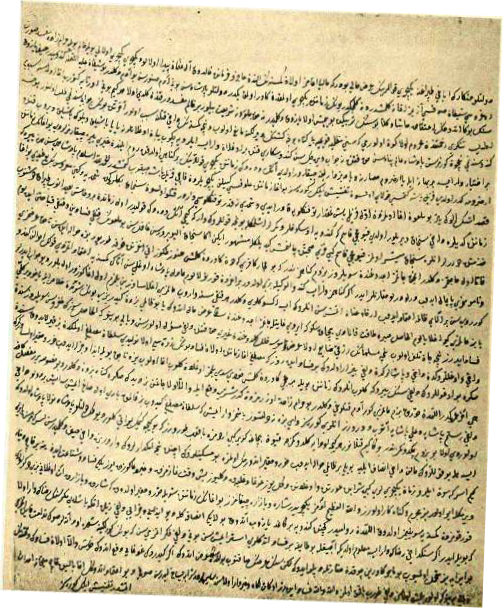
Scanned page of a handwritten Ottoman Turkish letter in black ink on white paper, written in Arabic script with dense lines of text, marginal notes, and several crossed-out or annotated sections.Letter

Primary source

Letter of Suleiman the Magnificent to Ebussuud Efendi

Suleiman the Magnificent · 1566

Letter

Primary source

Letter to the Emir of Mecca on his Accession

Suleiman the Magnificent · 1520

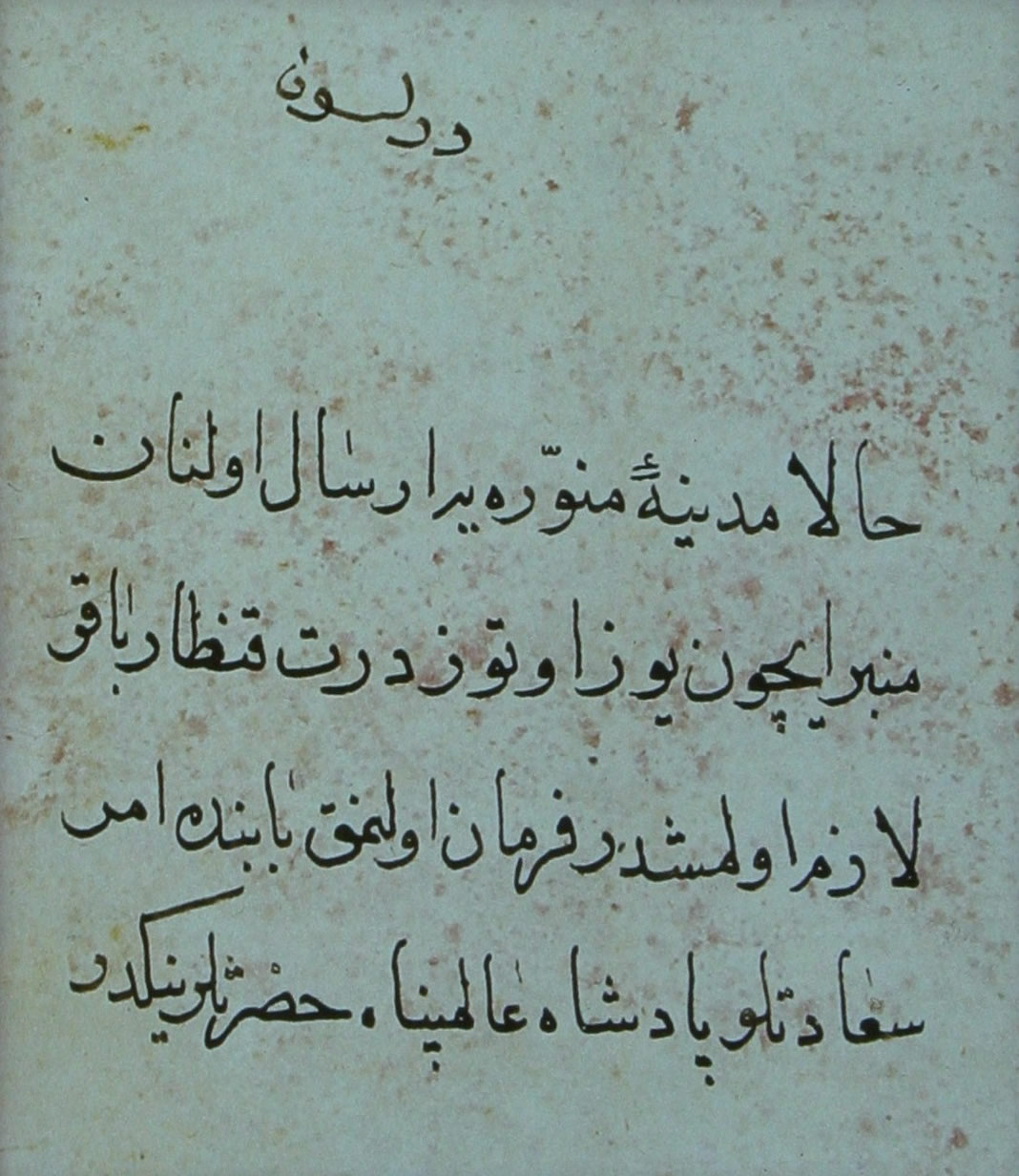
Photograph of a handwritten Ottoman Turkish document in black ink on a pale greenish-grey paper with reddish speckles. A short heading appears at the top, followed by four lines of cursive Arabic-script text in verse-like arrangement, ending with a closing line containing a sultan's title.Document

Primary source

Suleiman's Handwritten Note on Copper for the Medina Minbar

Suleiman the Magnificent and unknown official

Scan of a handwritten Ottoman Turkish manuscript page in brown ink on yellowed paper, written in dense, slanted Arabic-script lines across the full page. The text is a letter of complaint.Letter

Primary source

Janissaries' Complaint Letter to Suleiman I

Janissaries · 1558

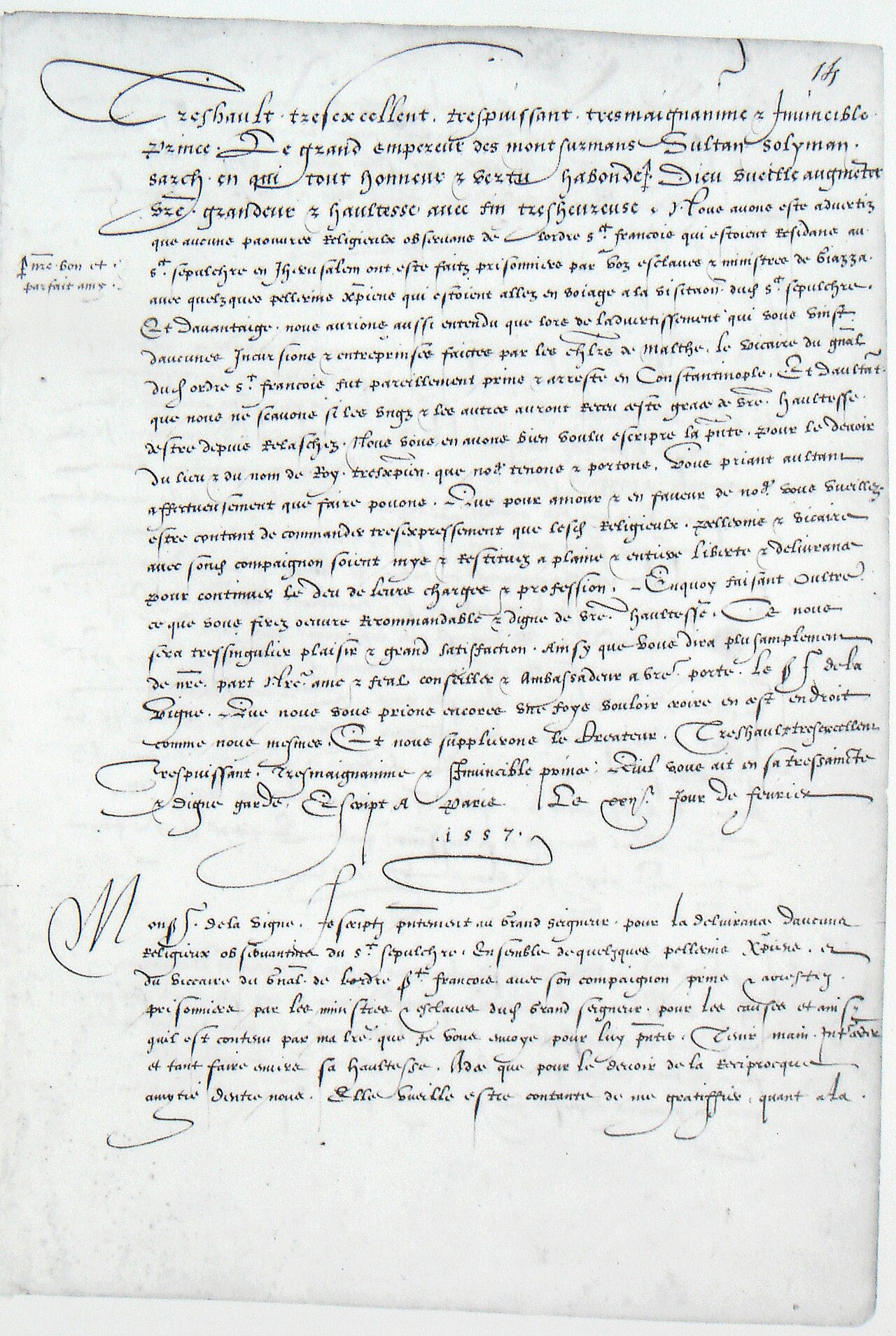
Scan of a handwritten 16th-century French letter on aged paper, with ornate decorated opening capitals, dated 1557, addressed to the Ottoman sultan Suleiman and a second letter below addressed to the Sieur de la Vigne.Letter

Primary source

Letter from Henry II of France to Suleiman and Ambassador de la Vigne

Henry II of France · 22 February 1557

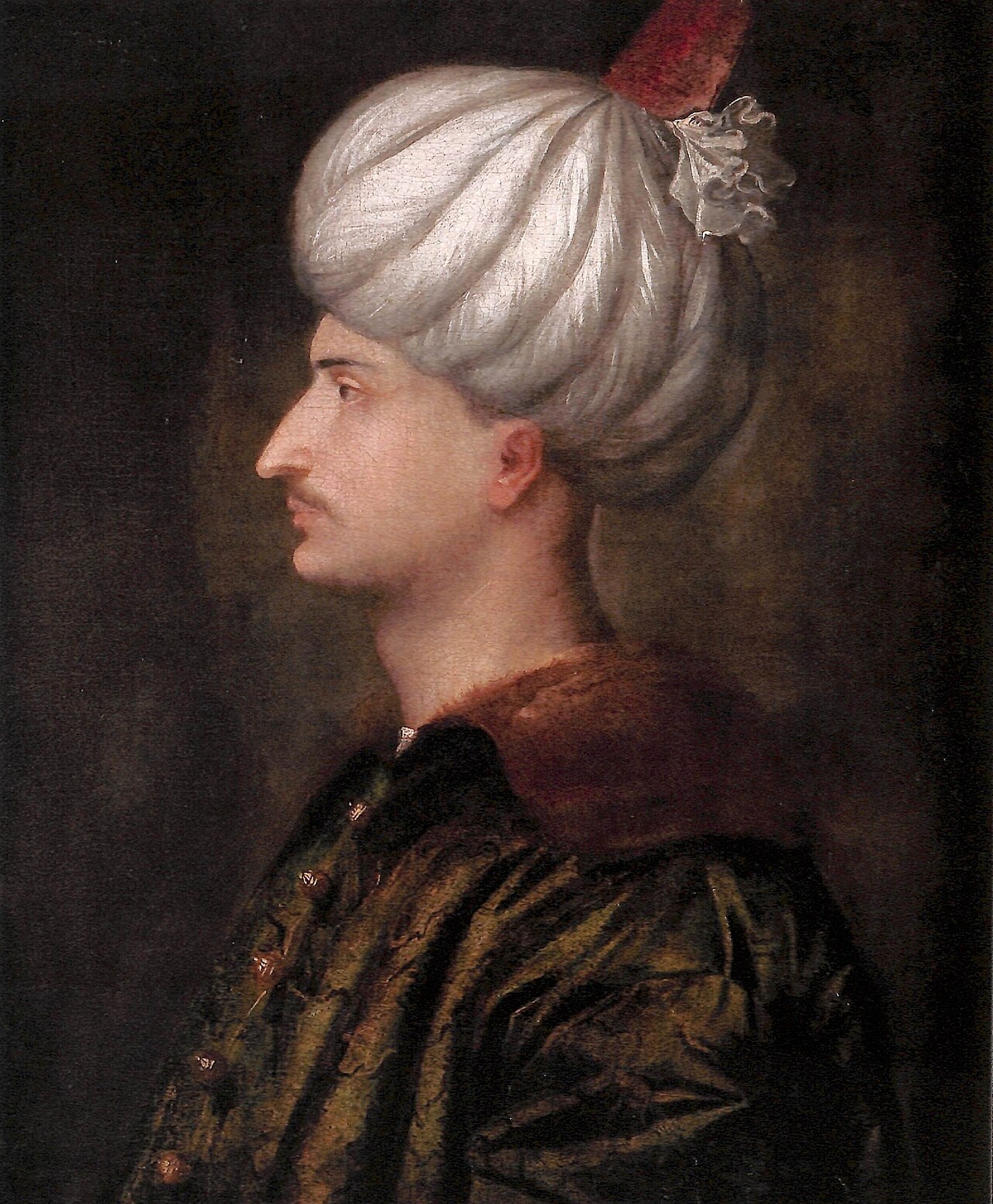
Oil painting in profile of a man with a pointed nose and thin mustache, wearing a large white turban with a red felt cap on top and a tassel-like ornament, and a dark green-gold patterned robe with a rust-red collar against a dark background.Painting

Secondary source

Portrait of Suleiman the Magnificent

Workshop of Titian · 1539

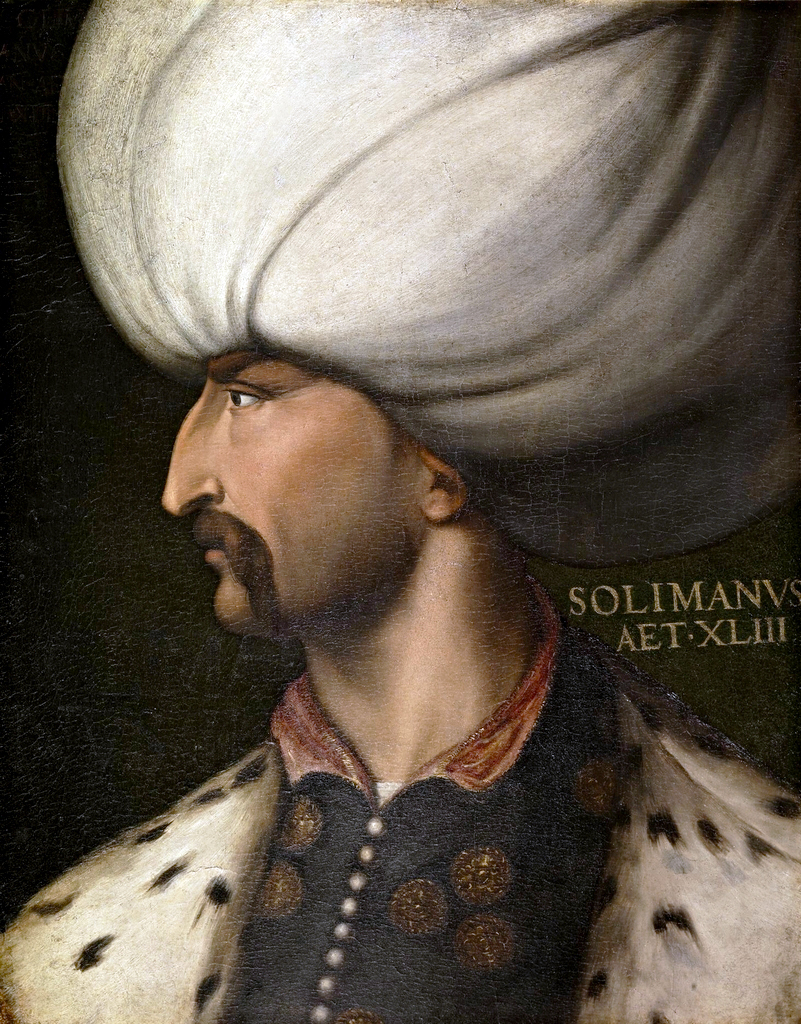
Profile painting of a bearded man in a large white turban and dark robe with gold buttons and white fur-trimmed collar, facing left. Inscription reads SOLIMANVS AET XLIII on the right.Painting

Secondary source

Portrait of Suleiman the Magnificent

Cristofano dell'Altissimo · 1560

Painting of a bearded man in profile facing left, wearing a large white turban with a red plume, a red shirt with gold buttons, and a dark robe with red sleeves. He holds a thin staff in his left hand against a dark background.Painting

Secondary source

Sultan Suleiman in Profile

c. 1530

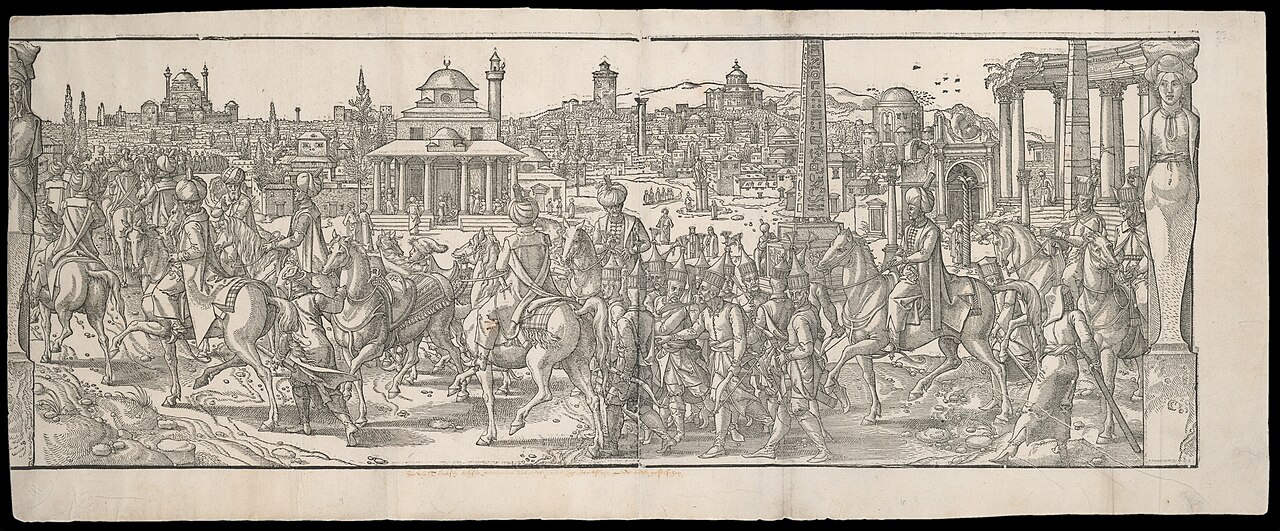
Long horizontal woodcut frieze, printed on paper, showing a procession of mounted riders, turbaned men and foot soldiers moving across a plaza toward a city skyline with domes, minarets and columns, with a tall obelisk and classical ruins at right.Painting

Primary source

Ces Moeurs et fachons de faire de Turcz

Pieter Coecke van Aelst · 1553

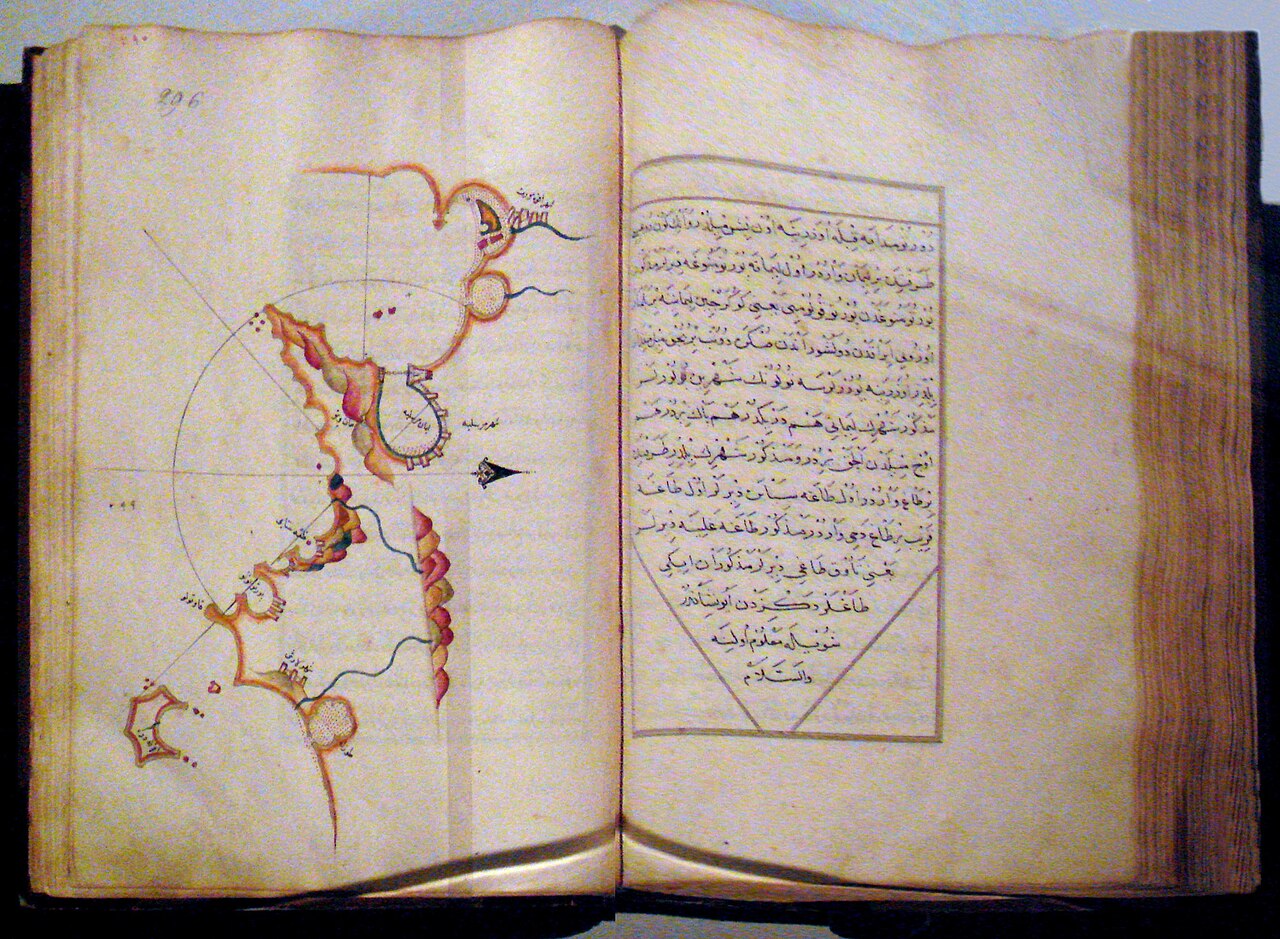
Open manuscript book with hand-painted map on the left page showing a coastline with colored shapes, a compass rose, and a small fortification, and Ottoman Turkish handwritten text in a framed panel on the right page.Book

Primary source

Kitab-ı Bahriye

Piri Reis · 1521 (expanded 1526)

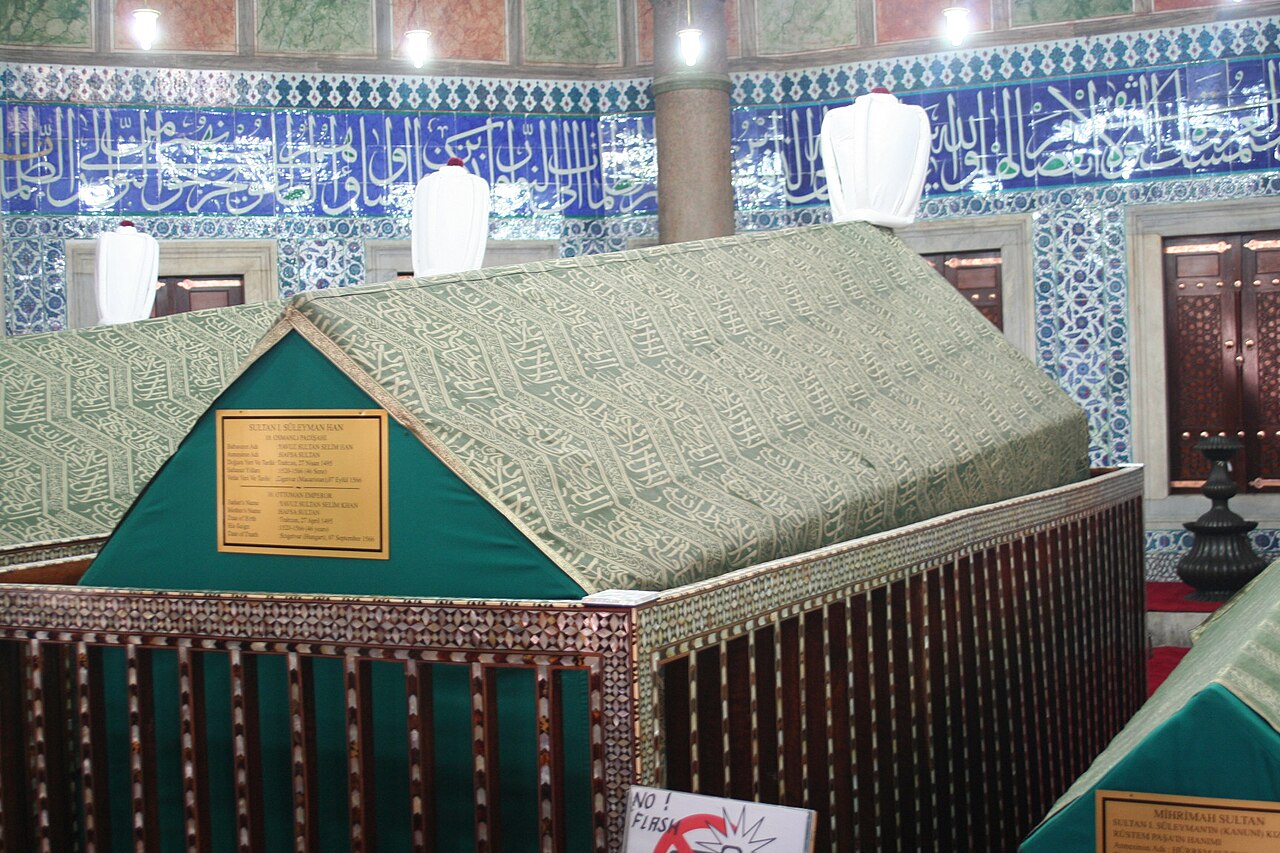
Tomb of Suleiman the Magnificent under a green cloth covering with gold calligraphy, inside a wooden latticed enclosure with a gold plaque. Blue tiled walls with Arabic inscriptions behind it, and white turbans on the tomb tops.Artifact

Secondary source

Grave of Suleiman the Magnificent

Sinan

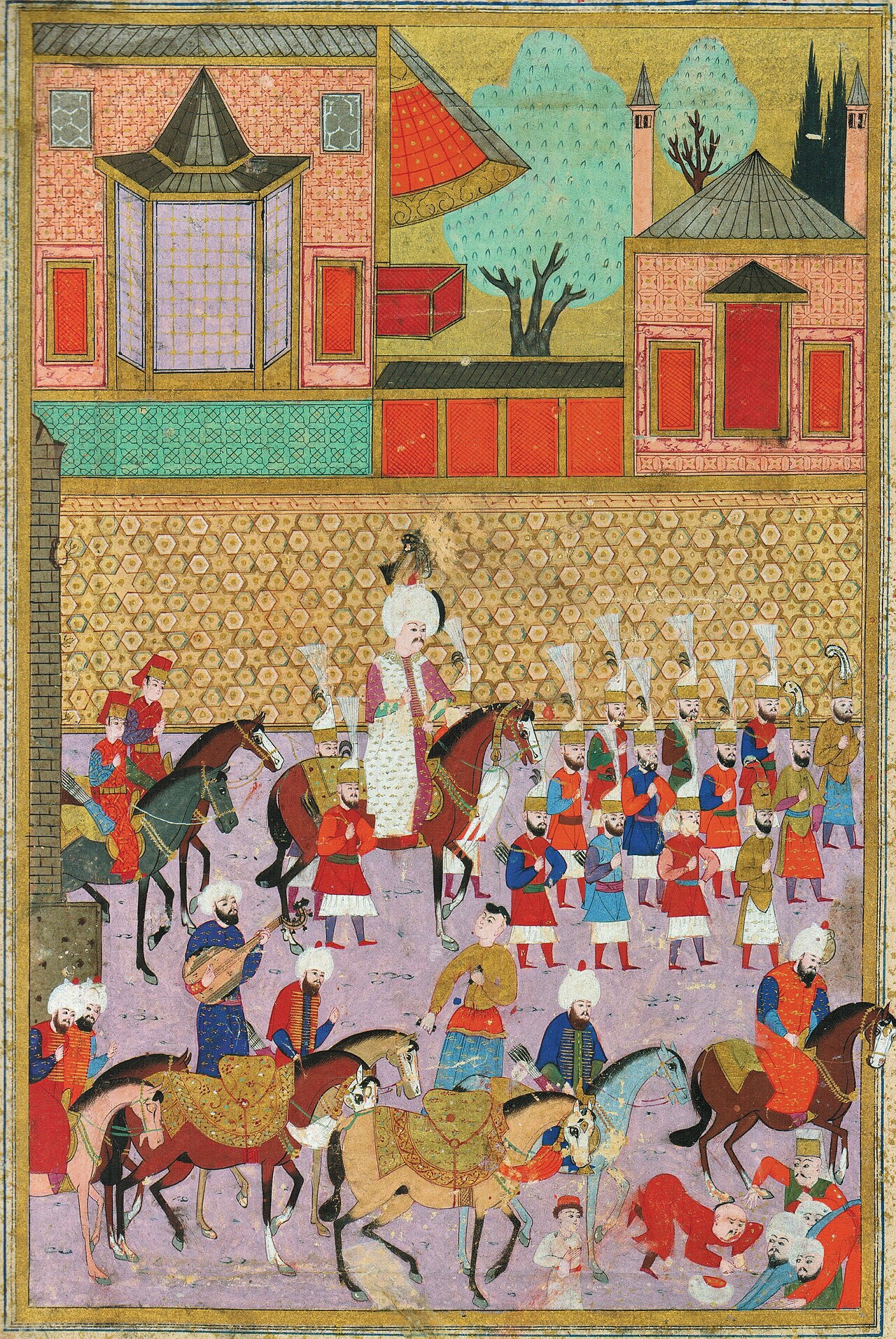
Miniature painting in a manuscript page with a gold-patterned wall and pink and red buildings. A man in a white turban and long white robe rides a horse at center, surrounded by attendants, musicians, and mounted riders.Book

Secondary source

Hünername

Nakkaş Osman · 1584–1588

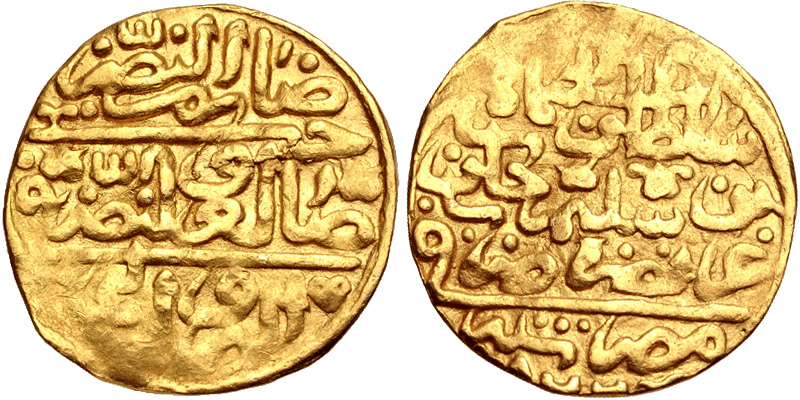
Two sides of a gold coin. The obverse shows Arabic inscriptions in a central field with horizontal lines and a date line at the bottom. The reverse shows a dense Arabic inscription in lines across the field, with a horizontal bar and text around the lower edge. The coin has a slightly irregular edge.Artifact

Primary source

Gold Sultani Coin of Suleiman I

Ottoman imperial mints · 1520/1521 (AH 926)

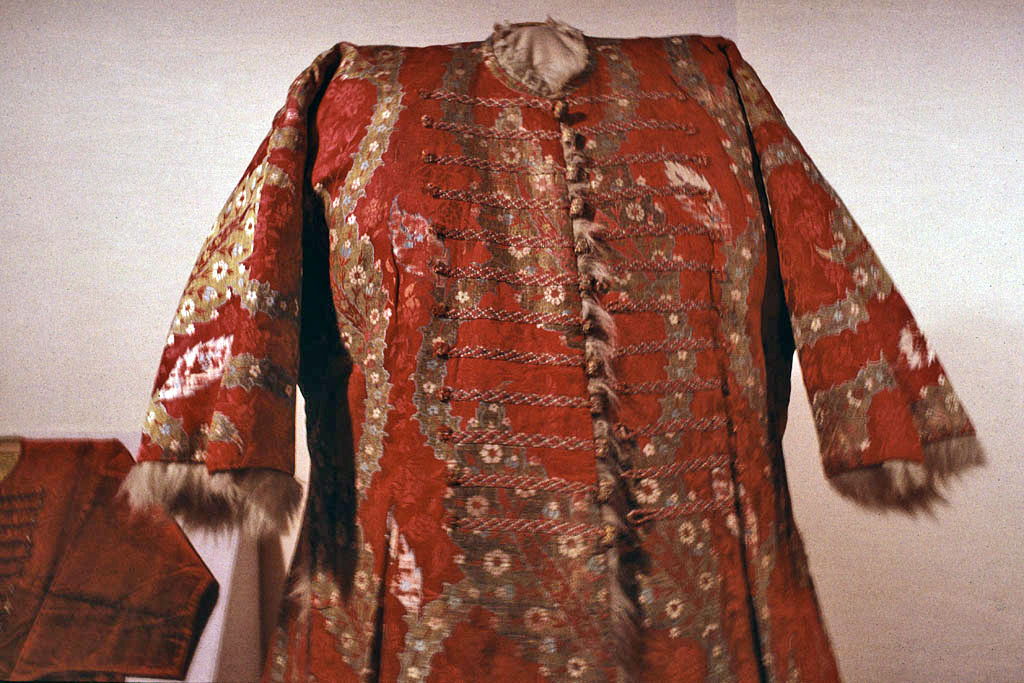
A red silk brocade kaftan displayed on a mannequin, with gold and silver-toned floral patterns, braided frogging across the chest, a row of small buttons down the front, and fur trim at the collar and cuffs.Artifact

Primary source

Ceremonial Kaftan from the Ottoman Imperial Treasury

Ottoman imperial workshops · mid-16th century (1550-1600)

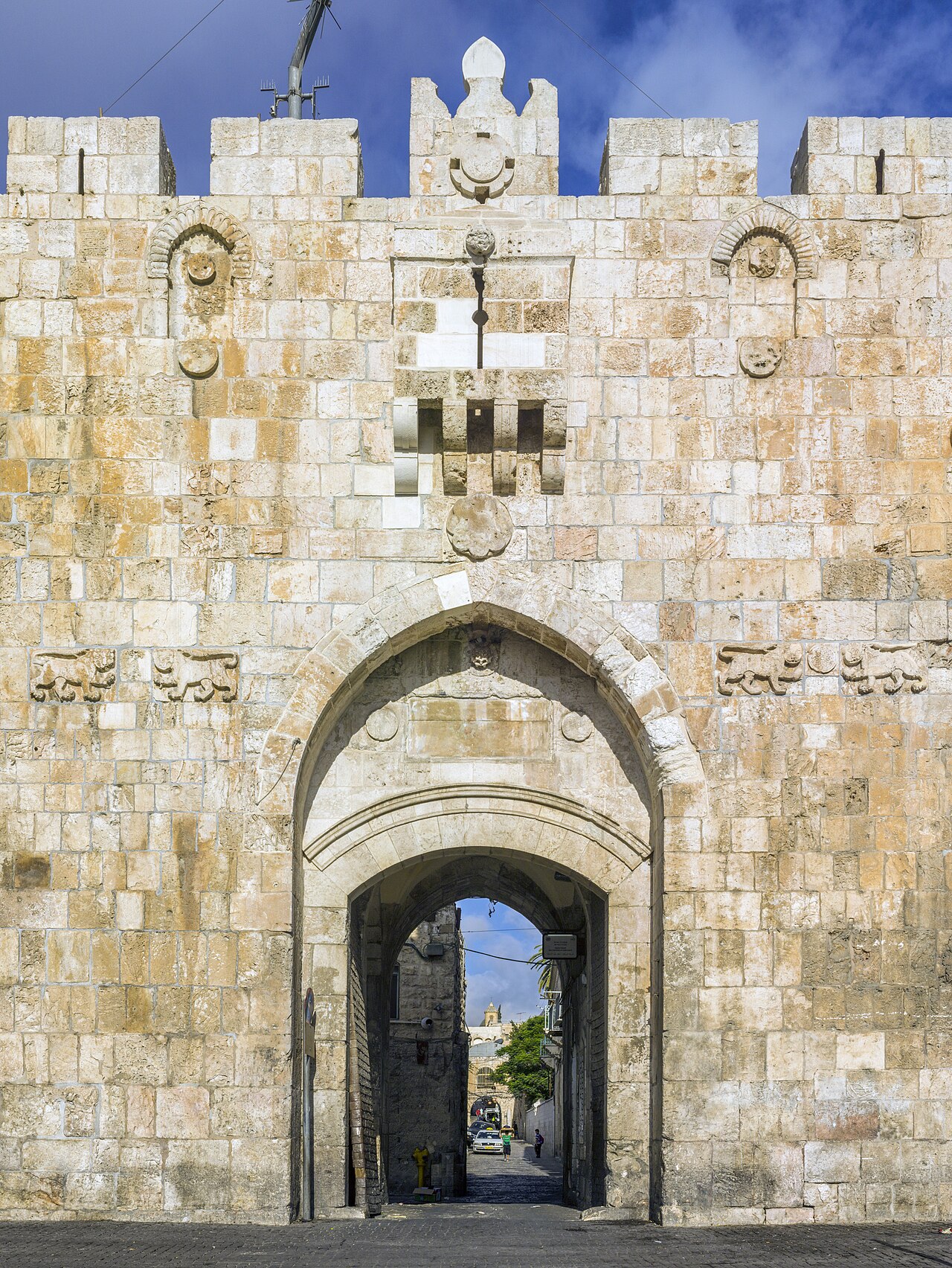
Front view of a tall pale limestone city wall gate with a pointed arch opening, carved lion reliefs on both sides of the arch, battlements above, and a blue sky. Through the archway a narrow street is visible.Artifact

Primary source

Lions' Gate

1538

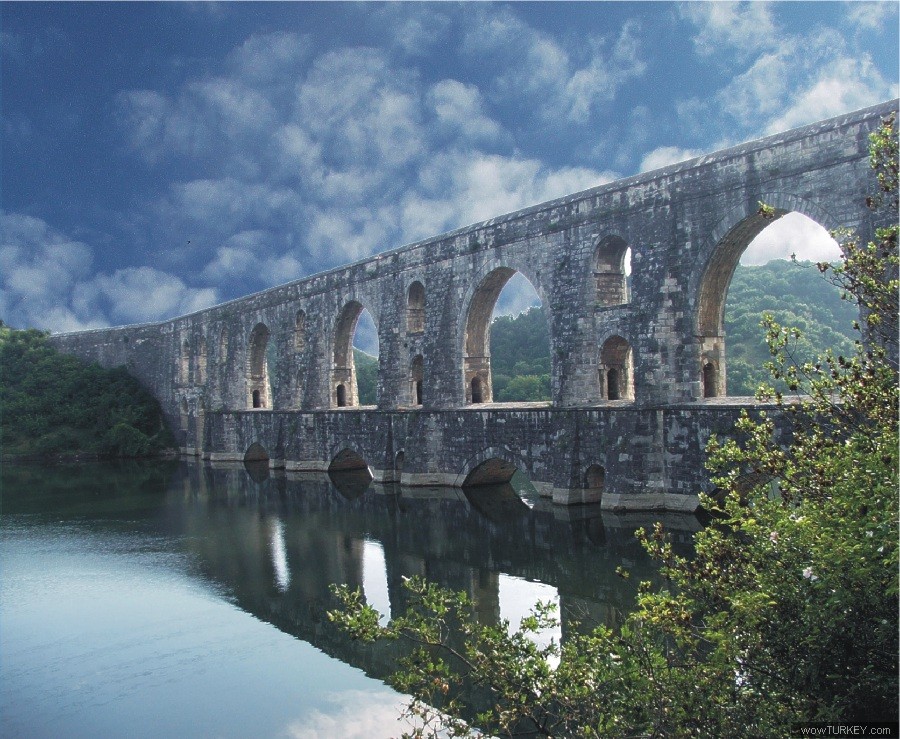
A long, multi-arched stone aqueduct of pale grey masonry crosses over calm water under a blue sky with clouds. Its tall arches are reflected in the lake, and green trees and hills stand along the banks.Artifact

Primary source

Mağlova Aqueduct

Mimar Sinan · 1555–1562

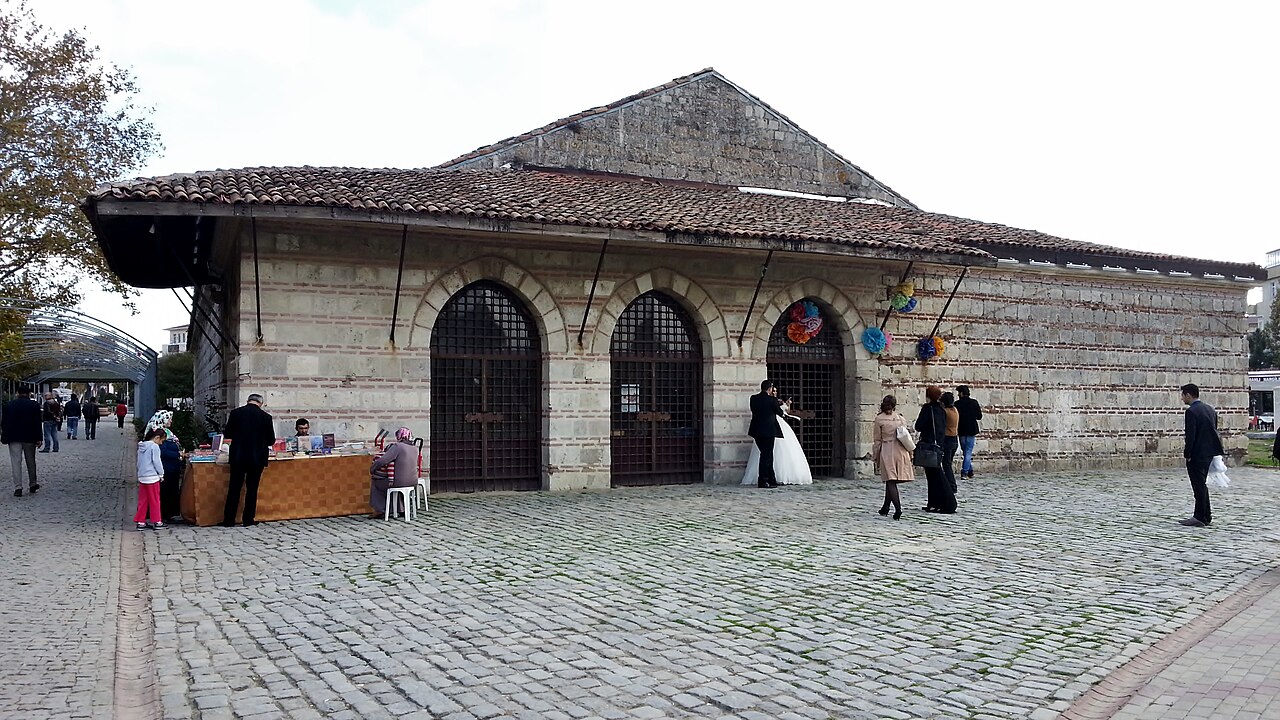
Stone caravanserai with a tiled roof and three large arched wooden-barred gates. Outside on a cobbled plaza, a vendor stands at a stall, a seated woman sits, a bride and groom pose by the center arch, and several people walk nearby.Artifact

Primary source

Büyükçekmece Caravanserai

1566

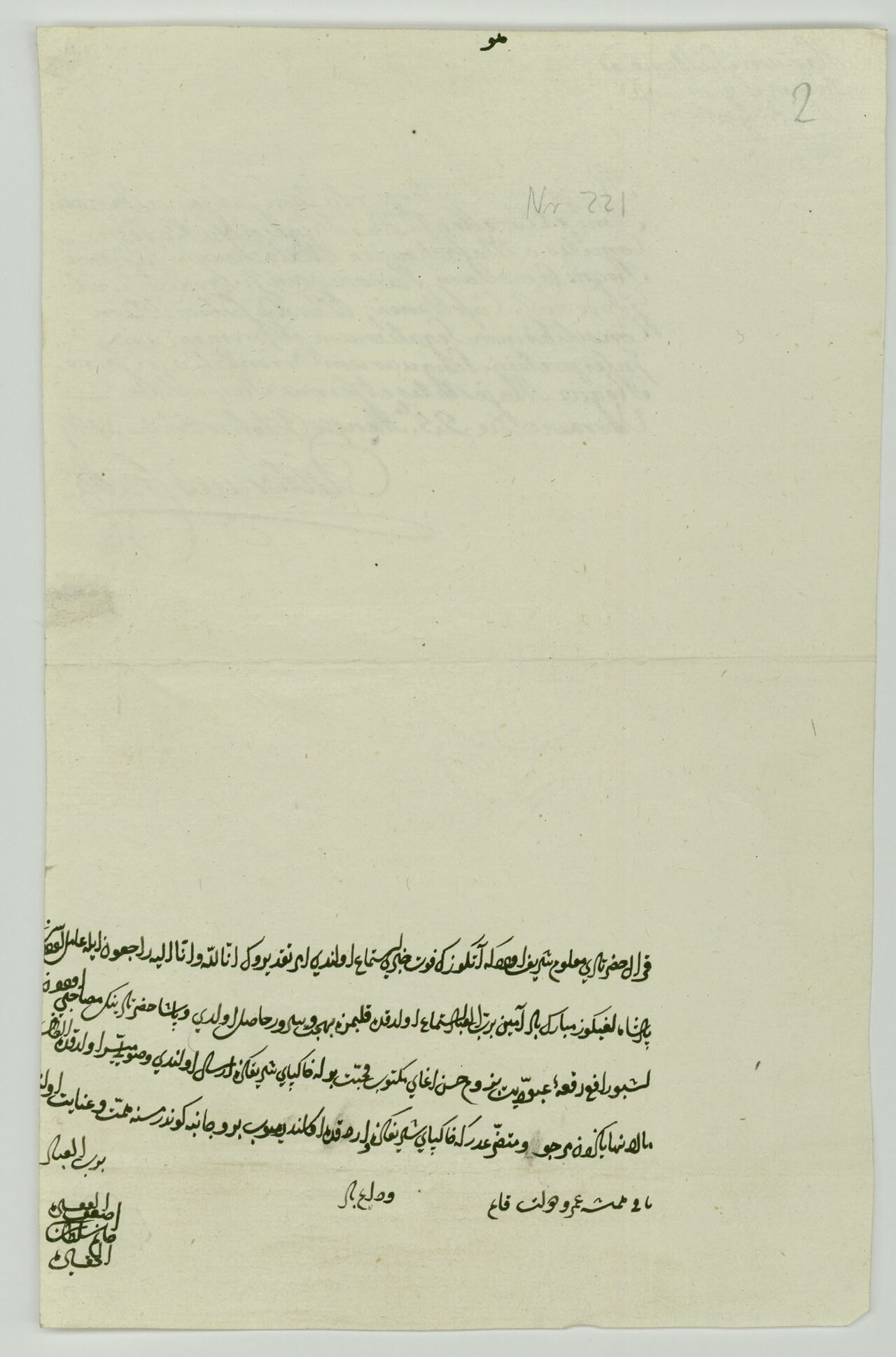
Scan of a handwritten Ottoman Turkish letter in brown-black ink on aged cream paper. The Arabic-script text is written in lines in the lower half of the page, with a seal-like signature block at lower left. Faint writing shows through from the reverse side, and a handwritten number 221 appears at upper right area with a page number 2 in the corner.Letter

Primary source

Letter from Mihrimah Sultan to Sigismund II Augustus

Mihrimah Sultan · 1548

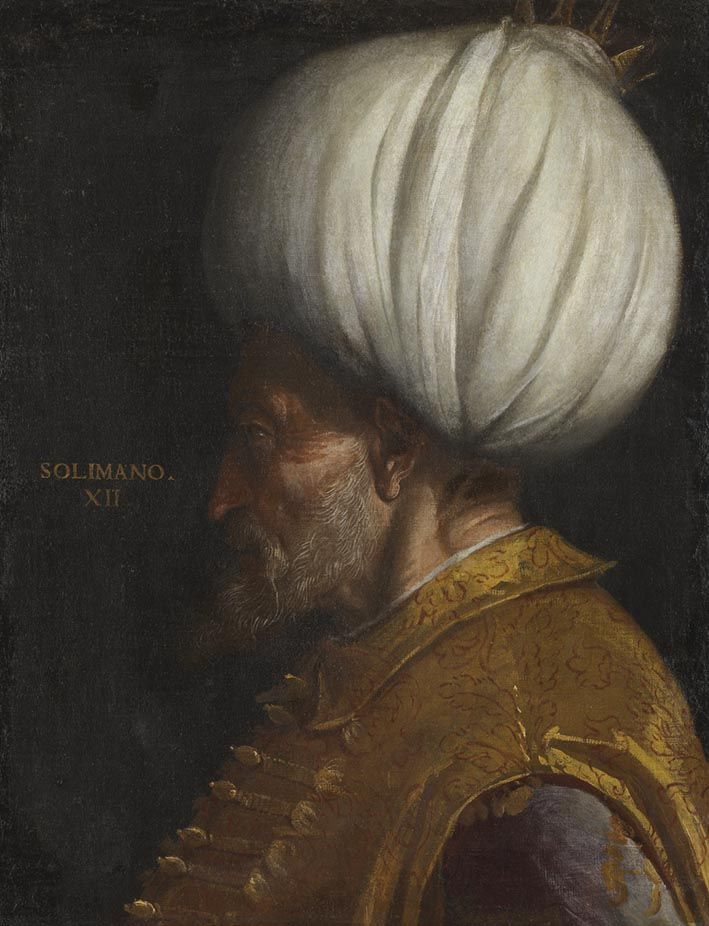
Painting in profile of a bearded older man in a large white turban decorated with gold plumes, wearing an ornate gold embroidered robe with a fur-like collar. Dark background with gold inscription reading 'SOLIMANO XII' on the left.Painting

Primary source

Sultan Soliman II

Follower of Paolo Veronese · 1558

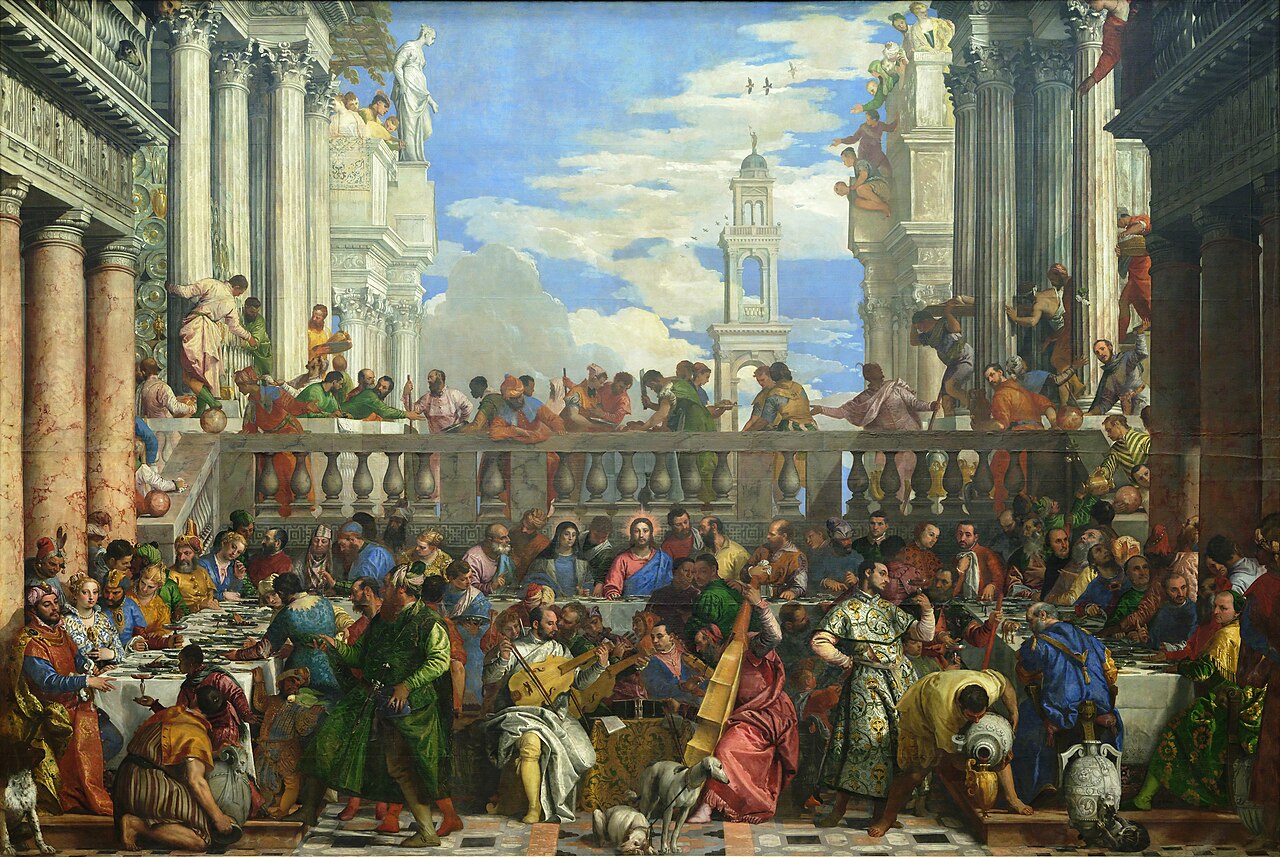
Large Renaissance painting of a crowded banquet set under classical colonnades, with many figures in rich robes at long tables, musicians playing in the foreground, servants pouring wine, and a bell tower visible against a blue sky.Painting

Secondary source

The Wedding at Cana

Paolo Veronese · 1562–1563

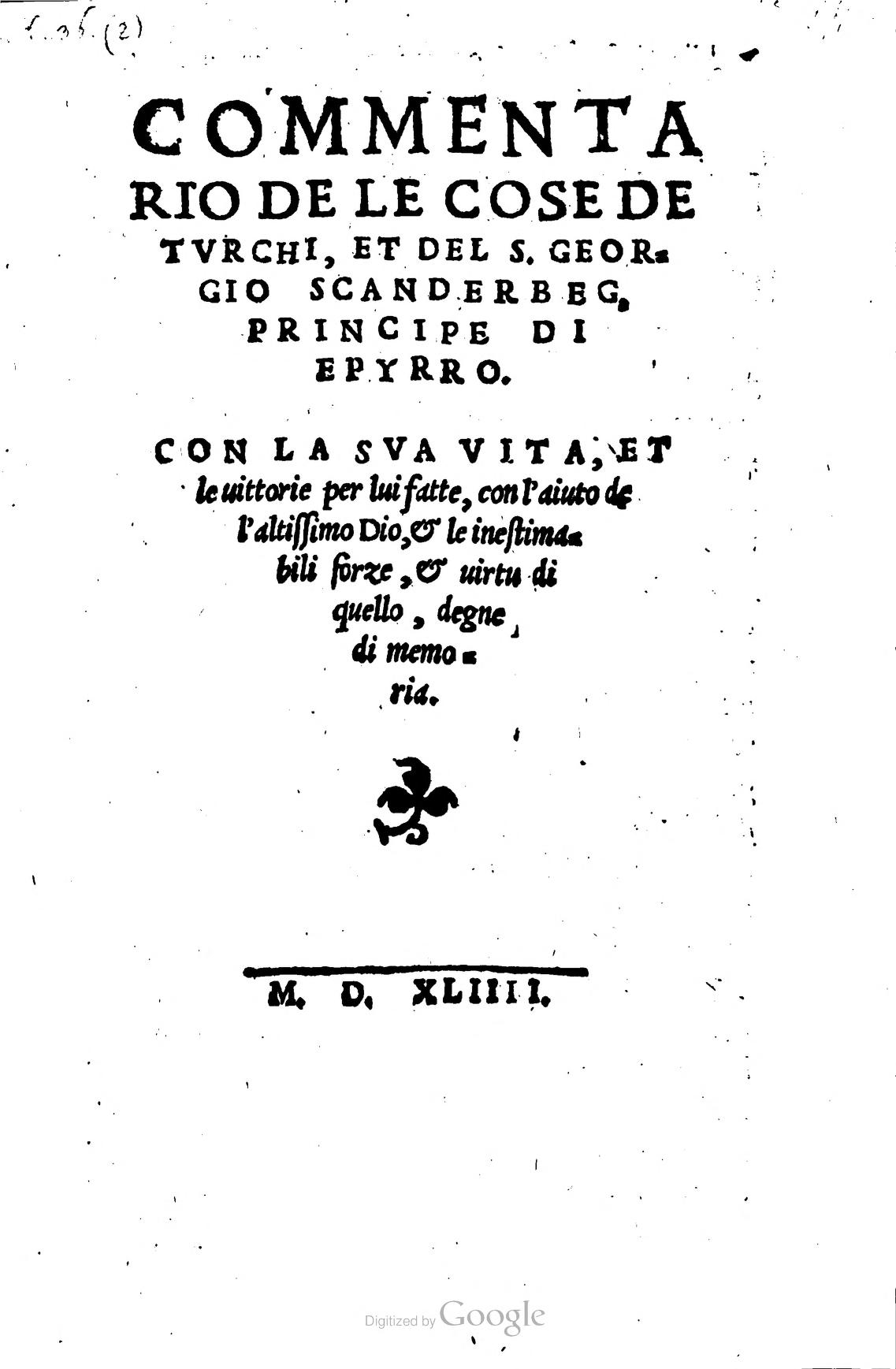
Title page of a 1544 Italian book, printed in black type. Large heading reads COMMENTARIO DE LE COSE DE TURCHI, ET DEL S. GEORGIO SCANDERBEG, PRINCIPE DI EPYRRO, followed by a subtitle in italic, a decorative fleuron, and the date MDXLIIII. Faint Google digitization watermark at bottom.Book

Secondary source

Comentario de le cose de' Turchi

Paolo Giovio · 1532

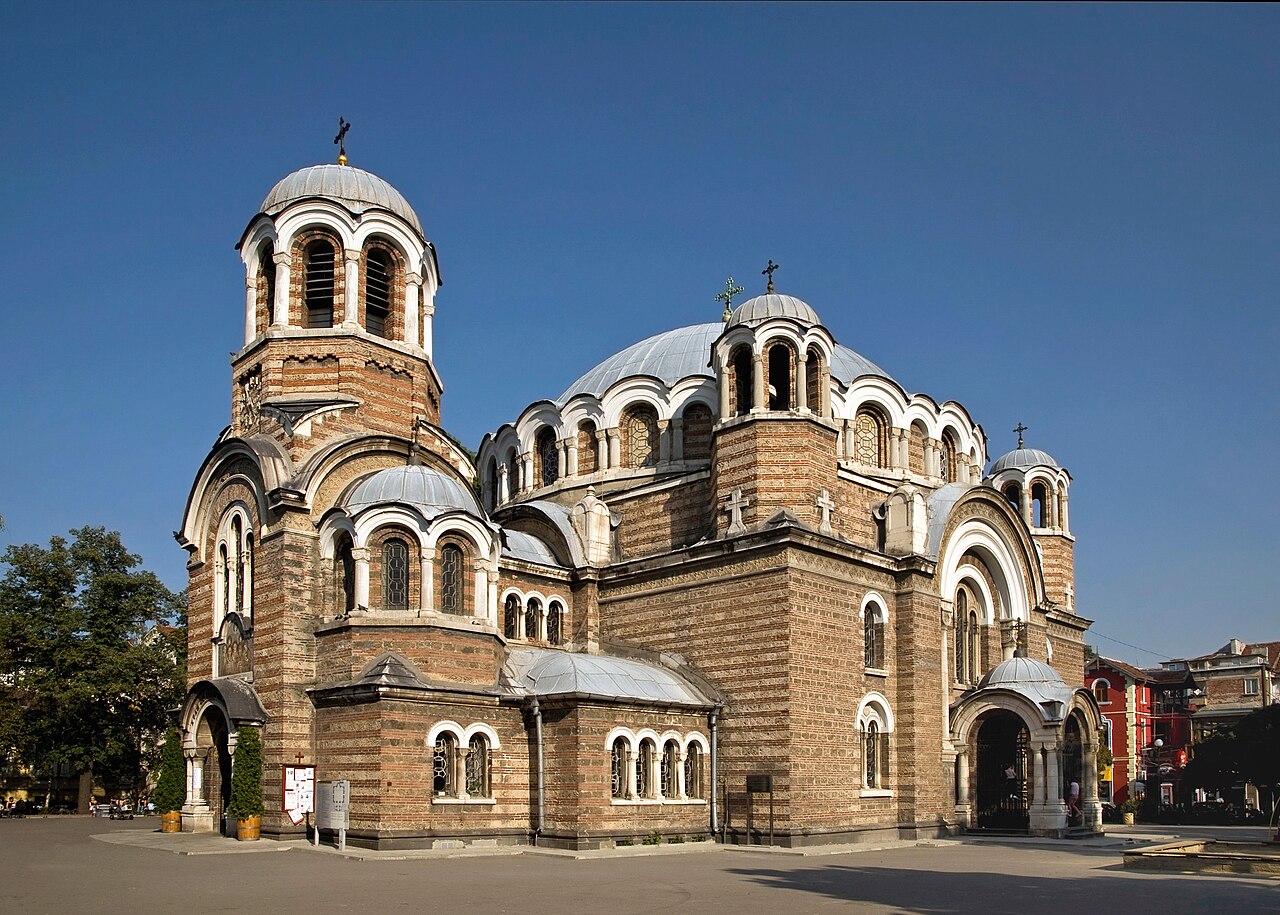
Exterior of a brick church with a striped brick-and-stone facade, multiple domes with metal roofs, and a tall bell tower with arched windows, under a clear blue sky. Trees and a paved plaza are in front.Artifact

Secondary source

Seven Saints Church

Mimar Sinan · c. 1547 (as mosque); rebuilt 1901-1903

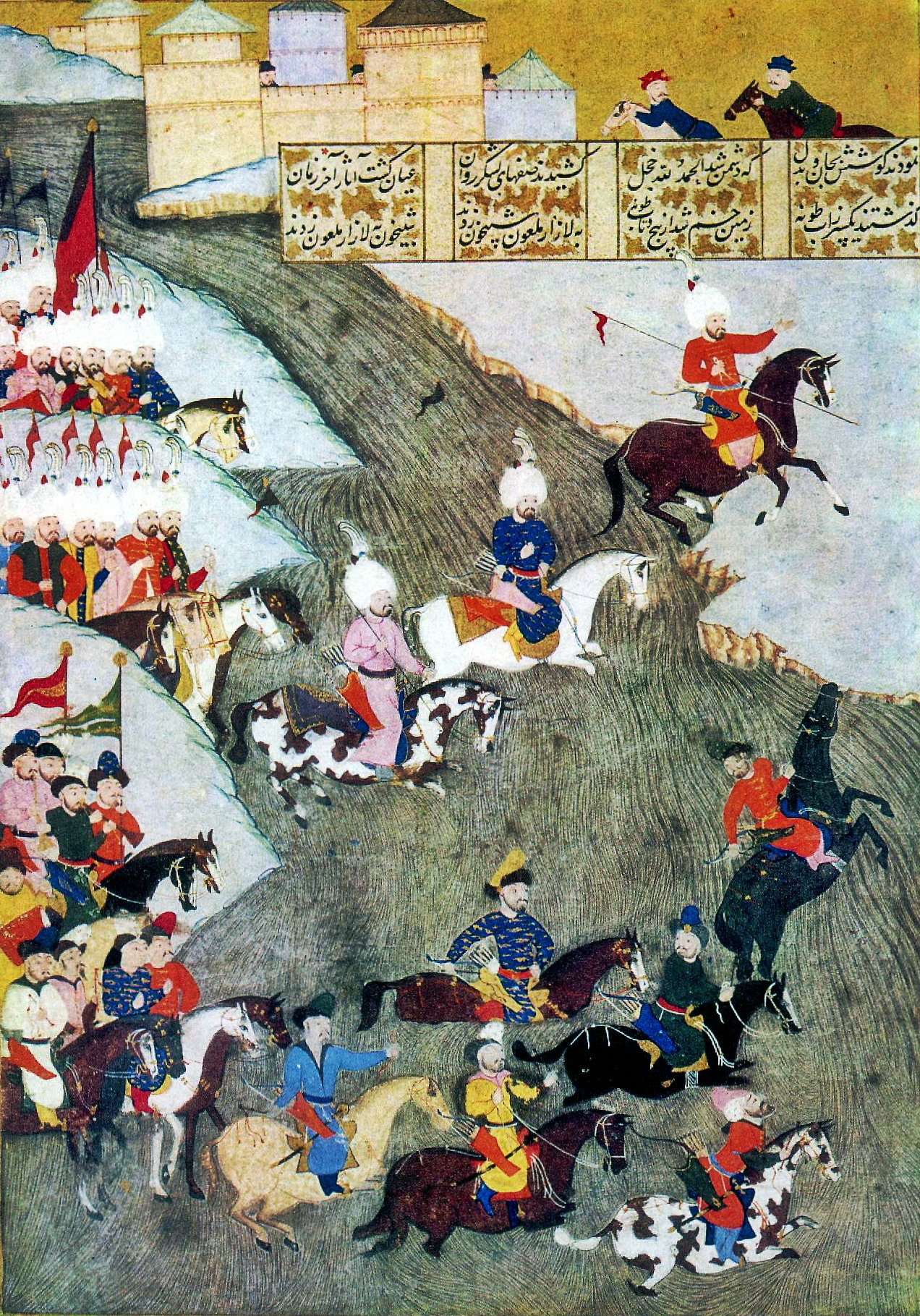
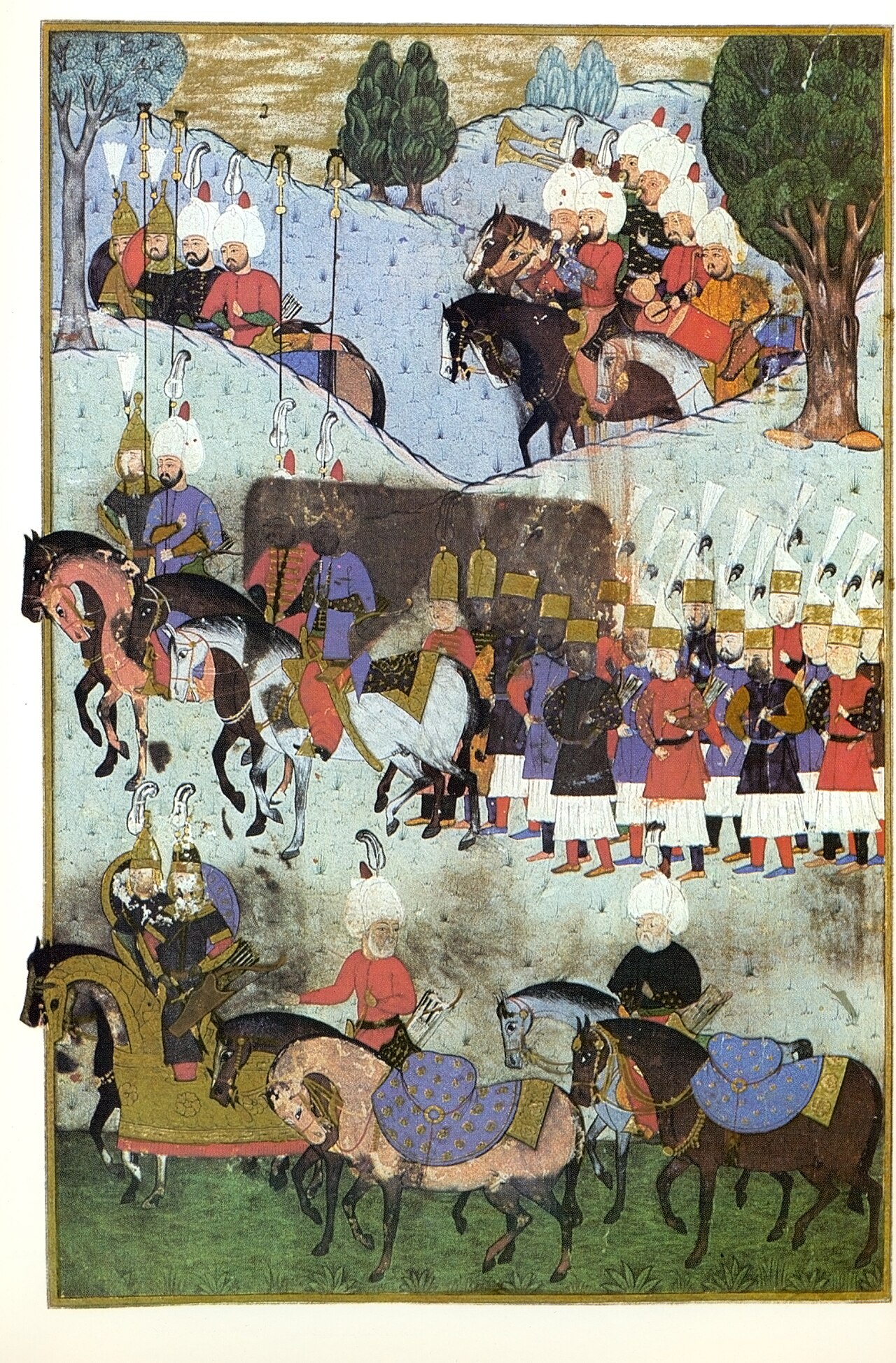
A painted Ottoman miniature of a military campaign: mounted soldiers in red, blue and yellow robes and white turbans ride across a grassy plain toward a walled town at top left. Persian calligraphy panels run across the upper area, and a rider in red gestures from a dark horse at right.Painting

Secondary source

Miniature of the Szigetvár Campaign

Lokman · 1579

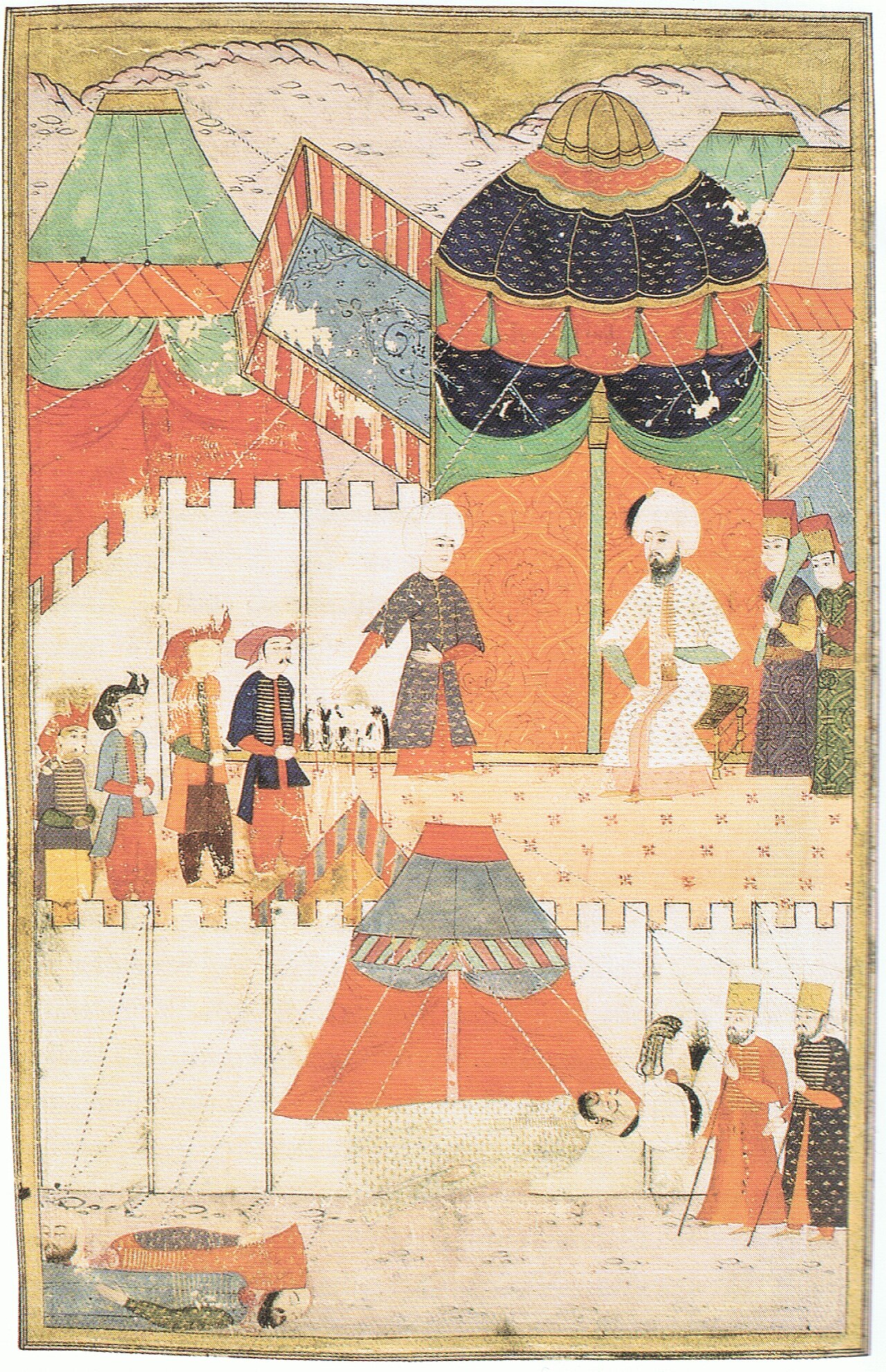
Miniature painting of a manuscript page with an illuminated scene: a sultan seated under a dark canopy with attendants on a raised carpeted platform, and a figure's body lying on the ground near a red tent, with other figures standing nearby.Painting

Secondary source

Hünername Folio: The Bier of Prince Mustafa

16th century

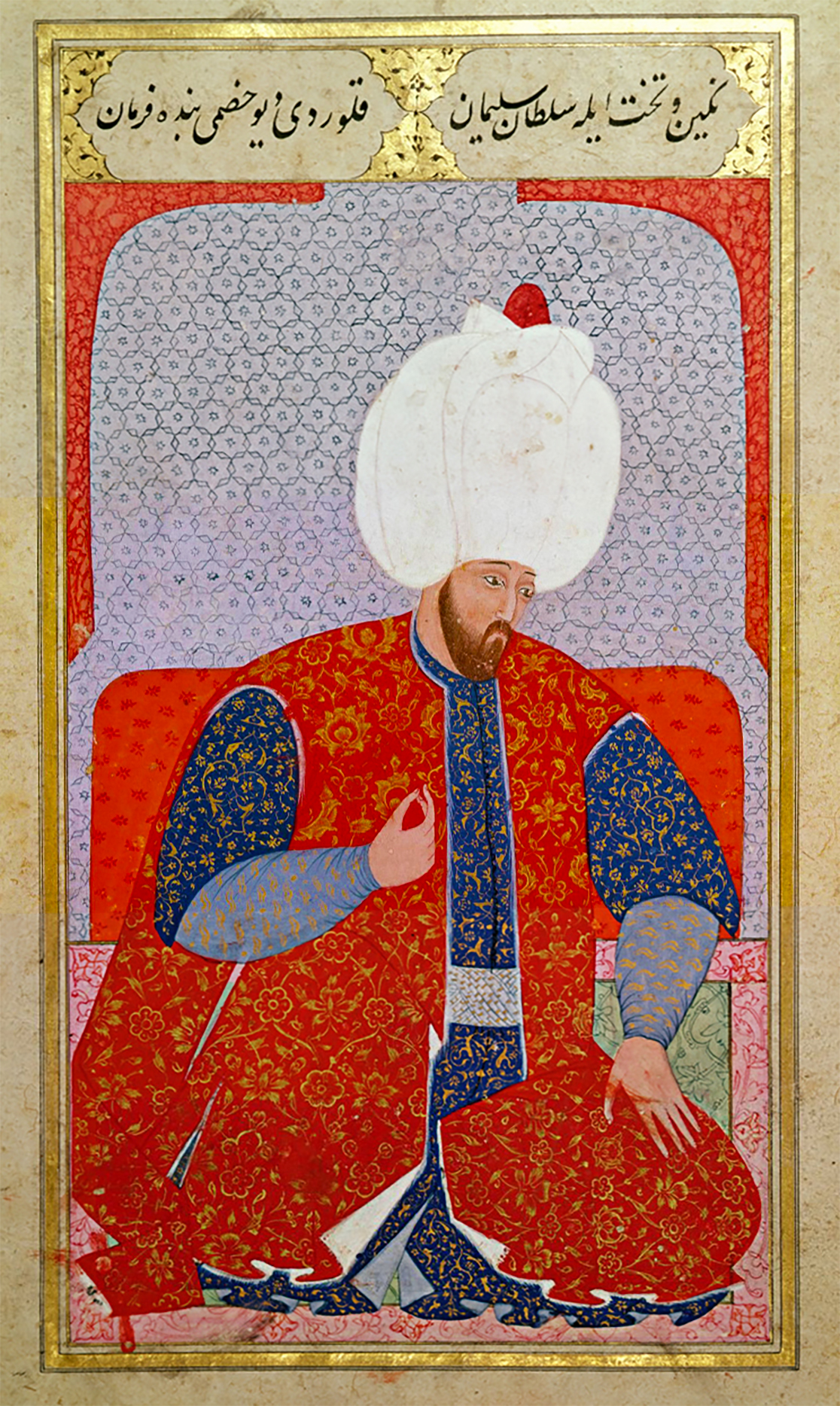
Ottoman miniature painting of a seated bearded man in a white turban with a red top, wearing a red robe with gold floral patterns and blue sleeves, seated before a patterned lavender backdrop framed by gold borders with Arabic-script inscriptions above.Painting

Secondary source

Suleiman the Magnificent as a Young Man

Nakkaş Osman · 1579

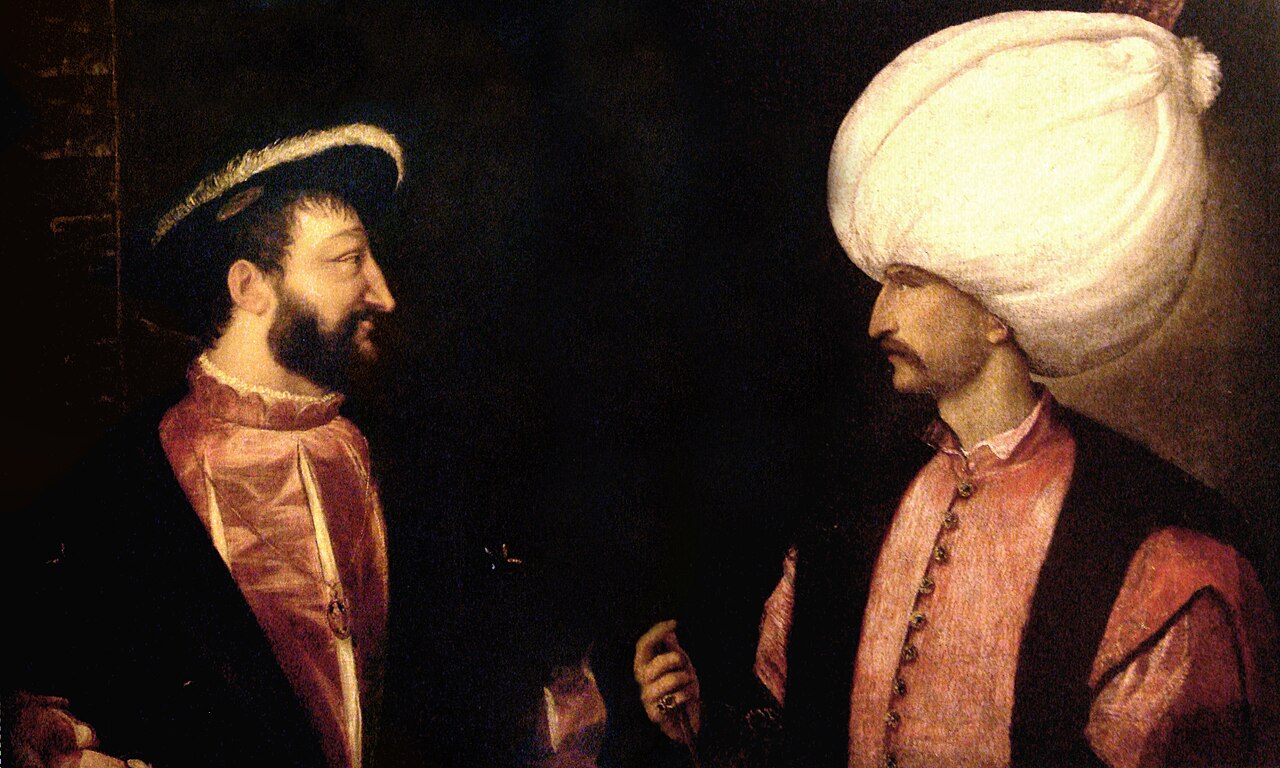
Painting of two men in close conversation against a dark background. On the left, a bearded man in a dark cap with a feathered brim and a red-pink garment with a fur-lined collar. On the right, a man in a large white turban and a pink and dark coat with buttons, gesturing with his right hand.Painting

Secondary source

Francis I and Suleiman the Magnificent

Titian · circa 1530

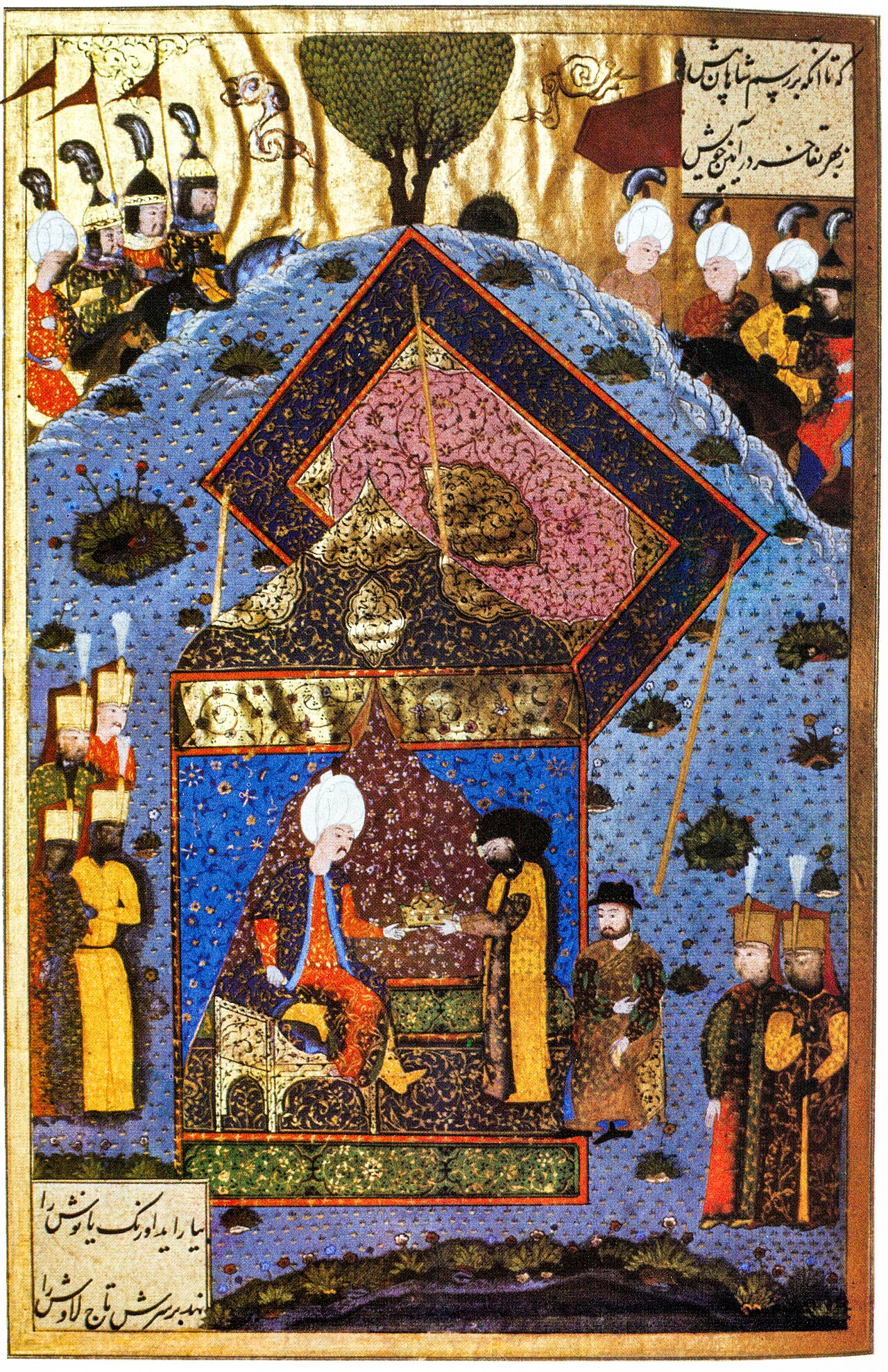
Miniature painting in rich blue, gold and red. A seated turbaned ruler on a gilded throne under a canopy receives or hands over an object while a man in a dark robe kneels before him. Attendants in tall hats stand at the sides, and mounted soldiers with banners ride across a hill above. Persian-script inscriptions appear in the corners.Painting

Secondary source

Suleiman Gives the Holy Crown of Hungary to János Szapolyai

16th century

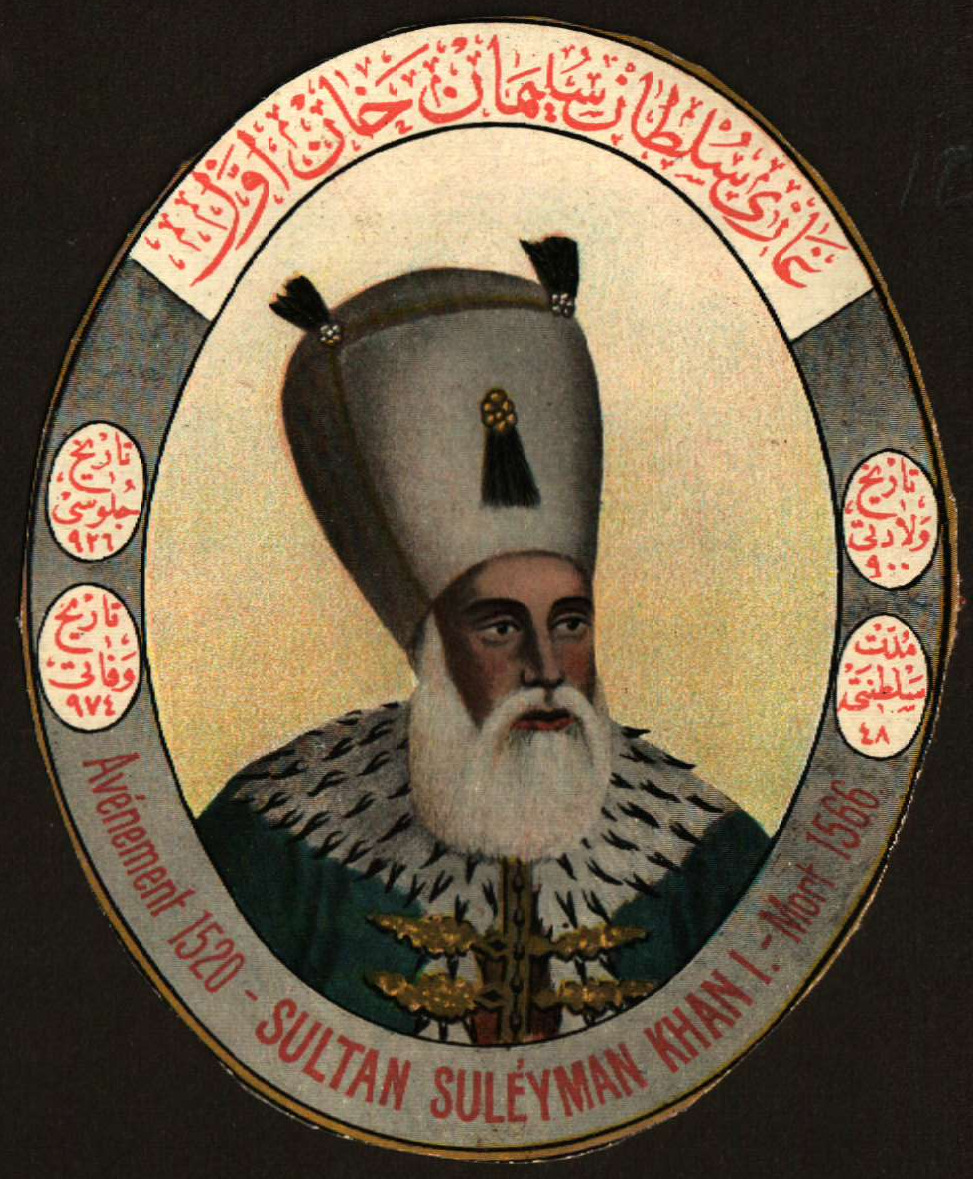
Oval colour portrait of a bearded man in a tall white fur-trimmed turban with black plumes and a gold ornament, wearing a green robe with fur collar. Red Arabic-script inscription across top, red text at bottom reads Avénement 1520 - Sultan Suleyman Khan I - Mort 1566, with small cartouches on the sides.Painting

Secondary source

Suleiman the Magnificent, portrait

Unknown · before 1945

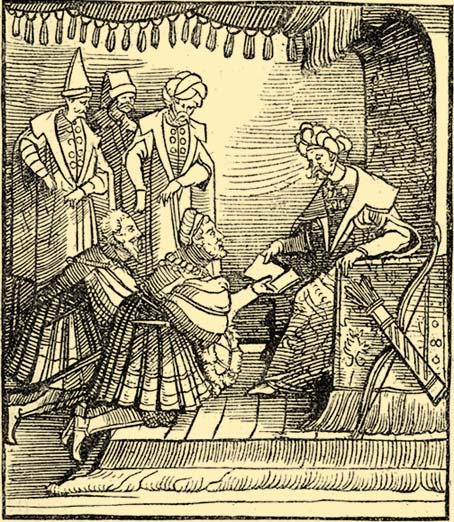
Black and white woodcut-style illustration of a turbaned ruler seated on a raised platform at right, receiving a document from a kneeling bearded man in a long robe. Two standing attendants in turbans and a figure in a pointed hat watch from the left. Curtains hang above.Painting

Secondary source

Hieronim Laski Paying Homage to Suleyman I

Unknown · 1520s

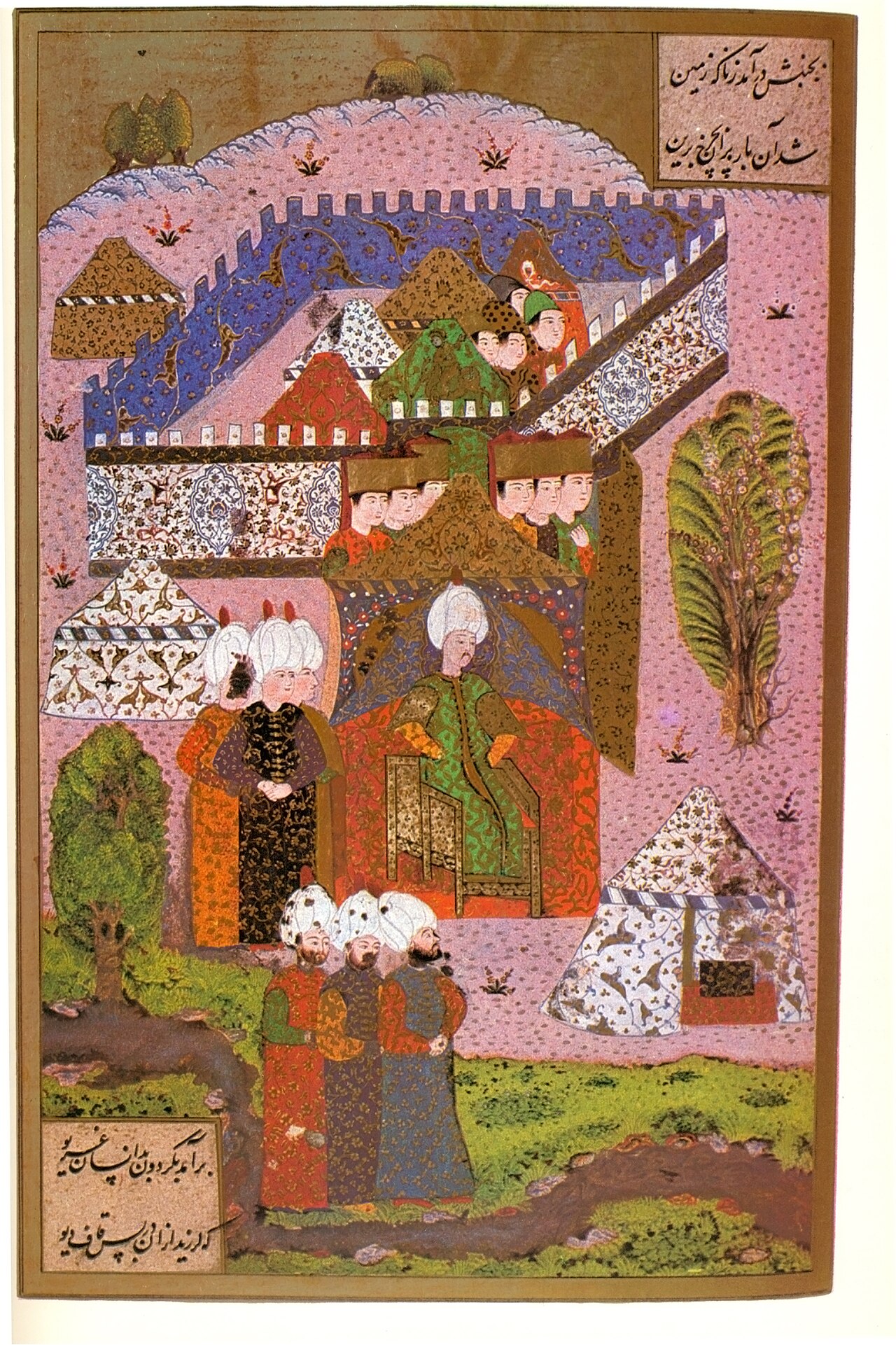
Miniature painting in rich colors on a pink patterned ground. A seated ruler in a white turban and green robe sits on a throne under a canopy, surrounded by attendants in turbans and red robes. Walled fortifications and tents appear behind; a tree stands at right. Persian-script inscriptions appear in cartouches at top right and bottom left.Painting

Secondary source

Suleiman I after the Capture of Belgrade, 1521

Unknown · after 1521

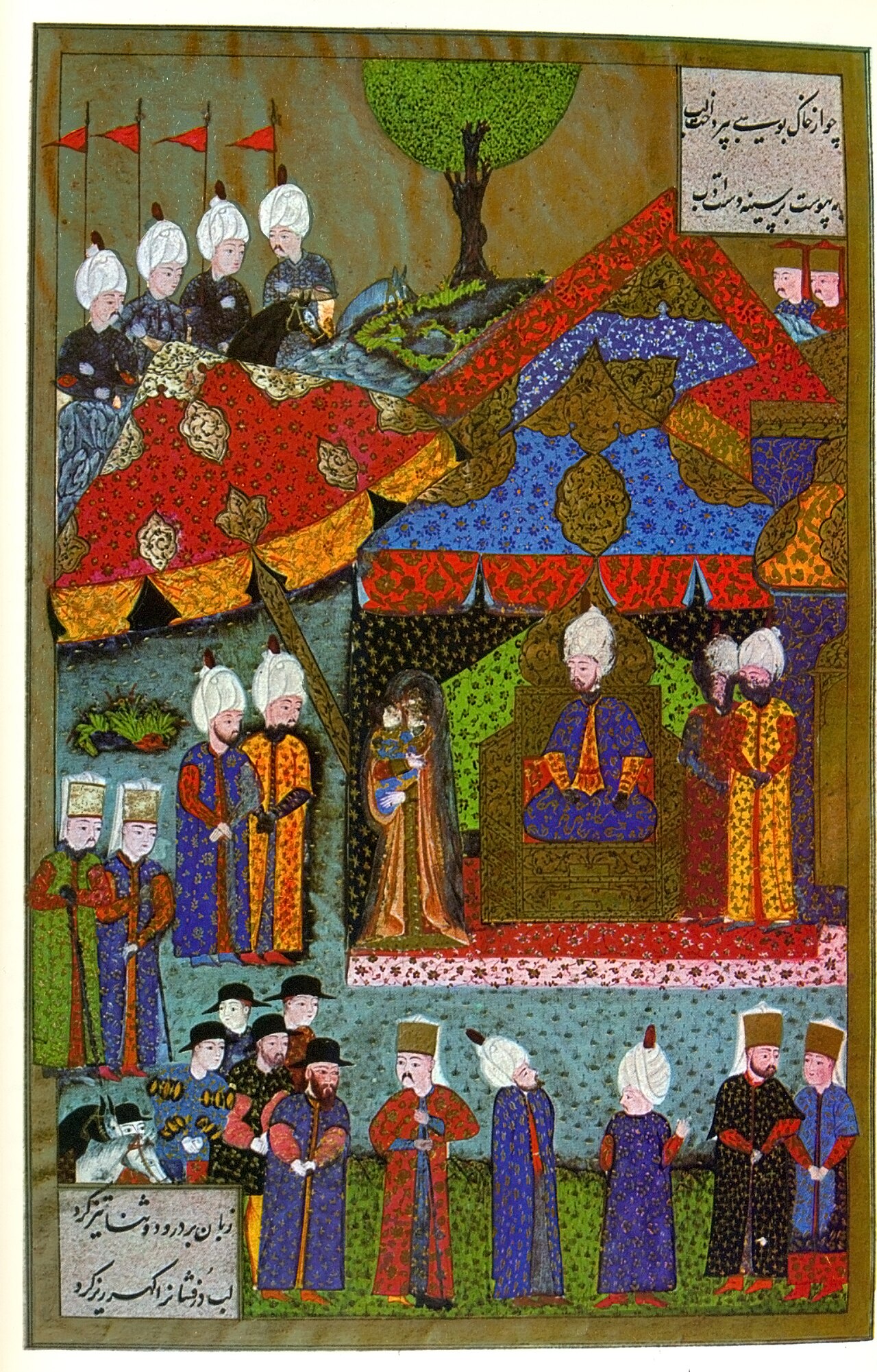
A richly colored miniature painting in an Ottoman style. A bearded ruler in a blue robe sits cross-legged on a golden throne under an ornate canopy, while a veiled woman in orange holds an infant. Attendants in turbans and robes stand nearby, and a crowd of men in tall hats and mixed dress gathers below. Persian-script inscriptions appear at upper right and lower left, and a tree and red banners appear above a tent in the background.Painting

Secondary source

Suleiman with Isabella Jagiellon and Infant John Sigismund Zápolya

Unknown · 16th century

Miniature painting of a procession of Ottoman soldiers in turbans and red and blue robes, some on horseback, moving across a pale blue landscape with trees and a green foreground. A covered litter with gold decoration and attendants appears at lower left.Painting

Secondary source

Turkish Army Returns from Szigetvár, Concealing Suleiman's Death

Nakkaş Osman · 16th century

Book

Secondary source

The Government of the Ottoman Empire in the Time of Suleiman the Magnificent

Albert Howe Lybyer · 1913

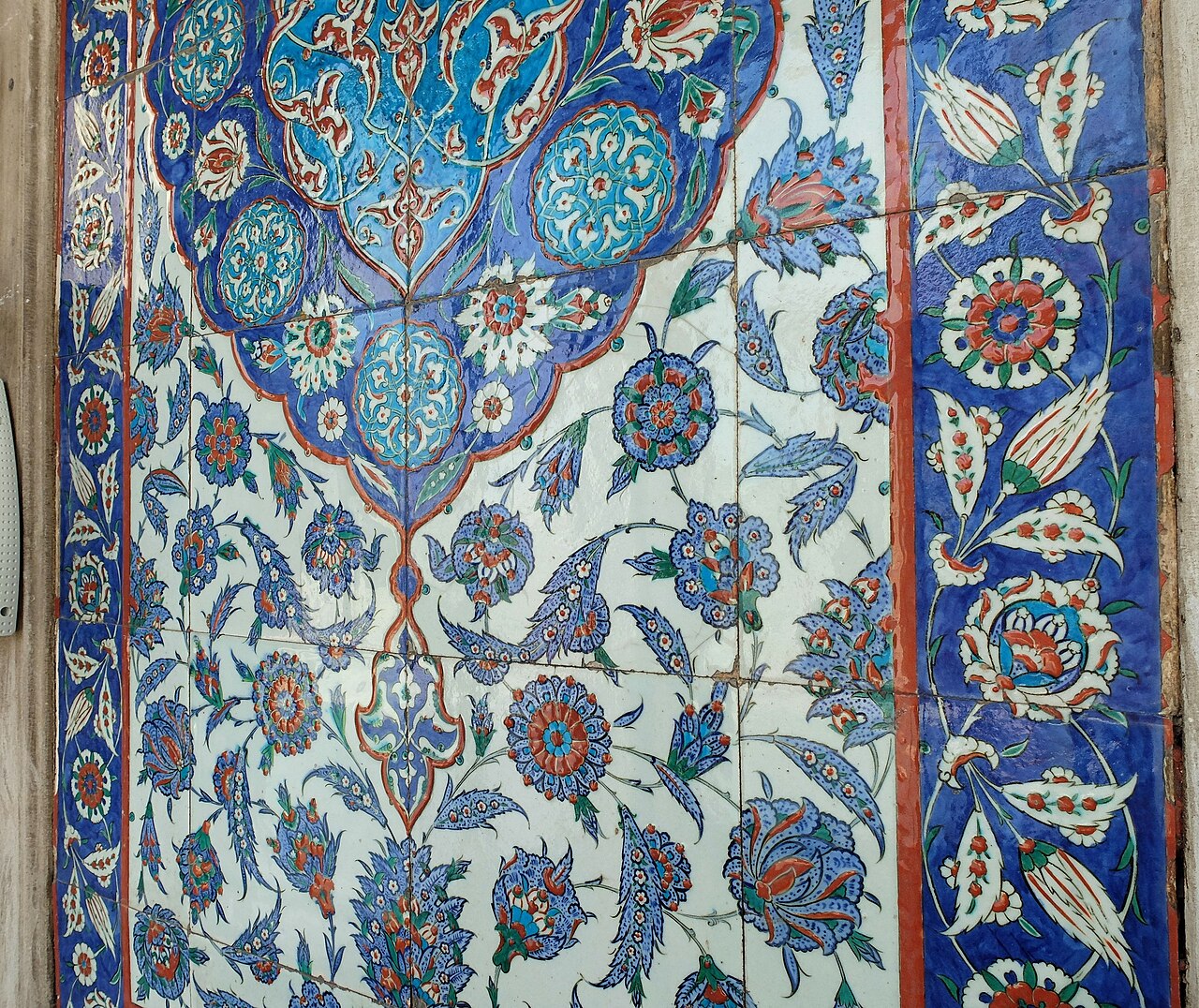
Close view of a wall covered in blue, turquoise, red and white Iznik-style ceramic tiles with floral and arabesque patterns, including large scalloped medallions and stylized flowers and leaves.Photograph

Secondary source

Tomb of Suleiman the Magnificent

R Prazeres · 24 May 2016

Document

Secondary source

Documents on Austria, Hungary and the Ottoman Porte in the 16th and 17th Centuries

Anton von Gévay · 1838

Document

Primary source

Ottoman-French Treaty of 1536

1536

Book

Secondary source

Ibrahim Pasha: Grand Vizir of Suleiman the Magnificent

Hester Donaldson Jenkins · 1911

Document

Primary source

Suleiman's Decree to Grand Master L'Isle-Adam of Rhodes

Suleiman the Magnificent · 1522

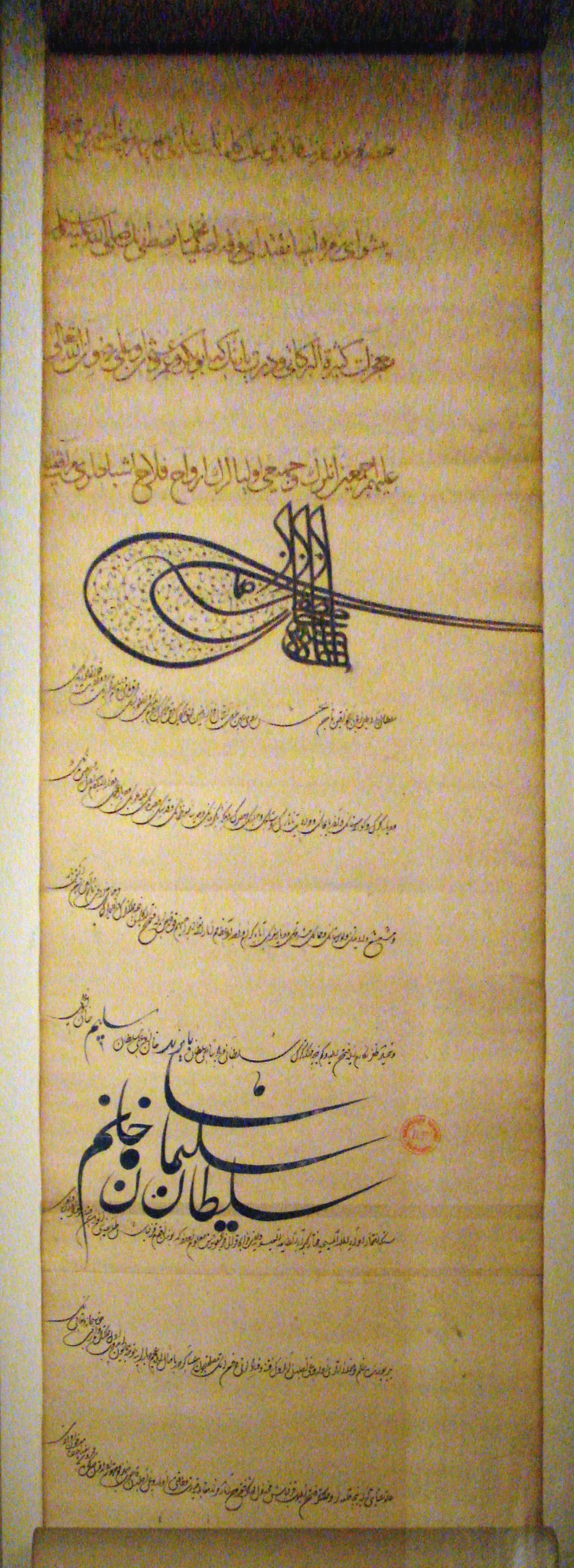
Photograph of a long vertical Ottoman document on yellowed paper, with a large ornate tughra (sultan's calligraphic monogram) in the upper middle, several lines of Arabic-script text above and below it, and a large bold signature-style inscription reading Suleiman Khan near the lower middle, with a small red seal beside it.Letter

Primary source

Letter of Suleiman to Francis I

Suleiman the Magnificent · 6 April 1536

Black-and-white line drawing of an Ottoman tughra: a large looping oval on the left, three tall vertical strokes with flame-like curls rising on the right, a fine horizontal stroke extending to the right edge, and a dense lattice of cross-hatching at the base.Document

Primary source

Tughra of Suleiman I

Unknown court calligrapher · 1520–1566

Document

Primary source

Suleiman's Edict Banning Illicit Entertainment

Suleiman the Magnificent · 6-16 July 1530

Document

Primary source

Suleiman's Decree on Those Who Neglect Prayer

Suleiman the Magnificent · 1546

Document

Primary source

Decree to King Charles

Suleiman the Magnificent

Document

Primary source

Decree to the Judge of Belgrade, 1558

Suleiman the Magnificent · 1558

Letter

Primary source

Letter to Gazi Bali Bey of Semendire, 1532

Suleiman the Magnificent · 1532

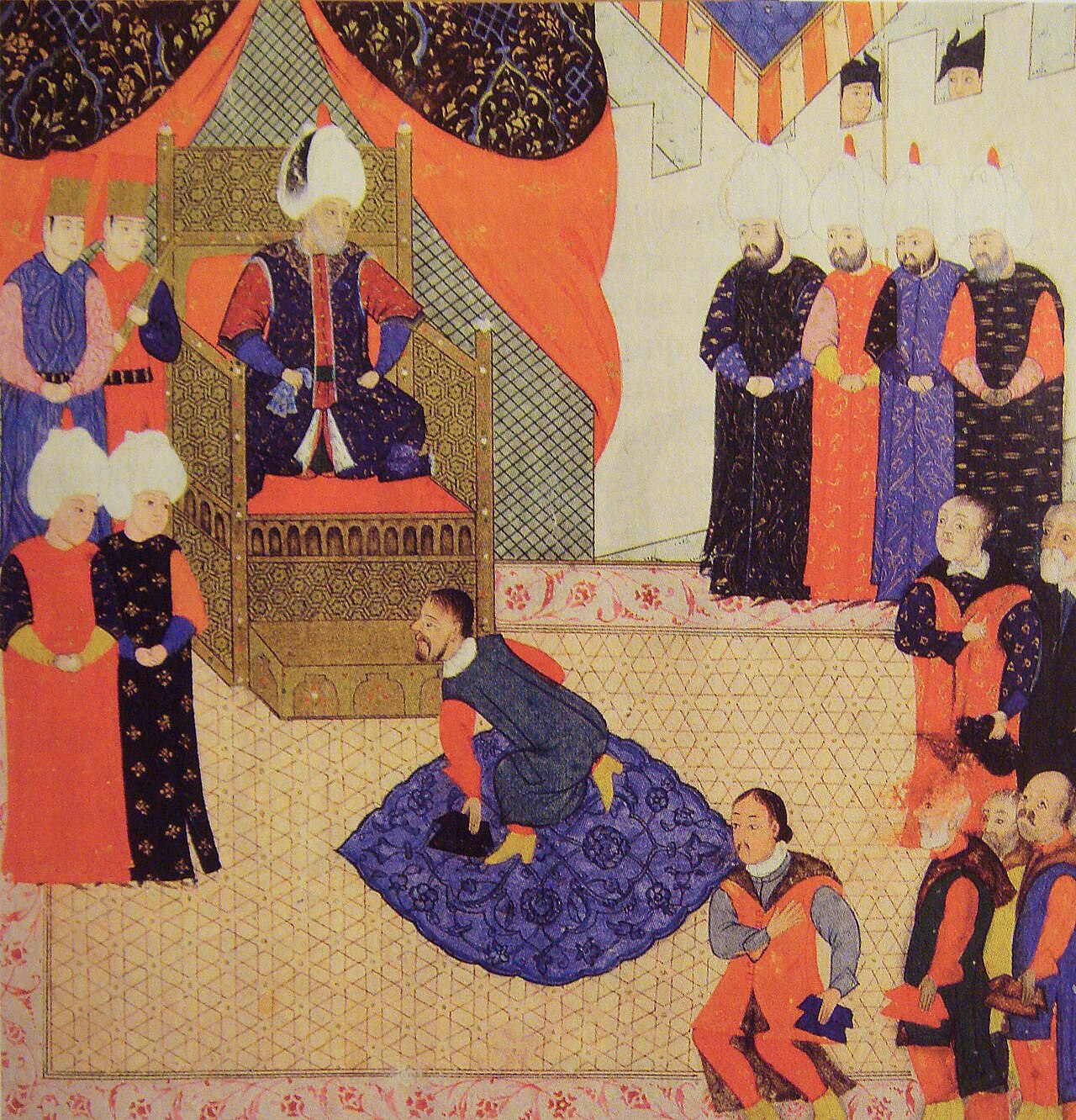
Miniature painting in bright reds, oranges and blues. A bearded ruler in a tall white turban sits on a gilded throne under a red canopy. A man in a blue robe kneels on a purple rug before him. Courtiers in turbans and robes stand on both sides, and armed attendants in red stand nearby.Painting

Primary source

John Sigismund of Hungary with Suleiman the Magnificent

Unknown Ottoman court artist · 1566 (depicting an event from 1556)

Book

Primary source

Bahs

Suleiman the Magnificent

Book

Primary source

Bana

Suleiman the Magnificent

Book

Primary source

Poem to Hürrem Sultan

Suleiman the Magnificent

Book

Primary source

Geç kaşıyla gözleri (Turkish Poem by Suleiman)

Suleiman the Magnificent · 16th century

Book

Primary source

Halk içinde mu'teber bir nesne yok devlet gibi (Ghazal Written While Ill)

Suleiman the Magnificent · 16th century

Book

Primary source

Müjde ey bîçare dil (Turkish Poem by Suleiman)

Suleiman the Magnificent · 16th century

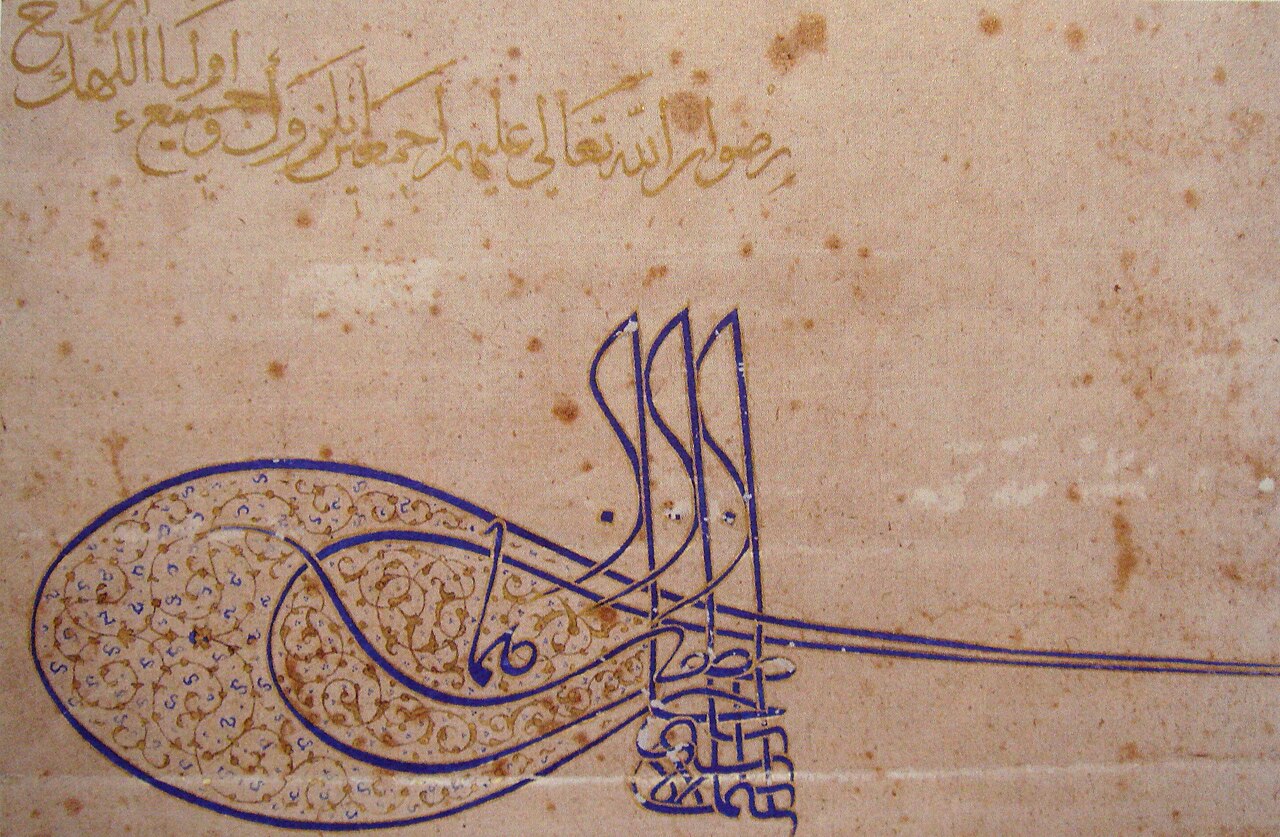
Close-up of the ornate tughra (sultan's monogram) in blue ink with gold-dusted decorative filling and gold Arabic inscription above, on aged tan paper. Part of a 1528 letter from Suleiman I.Letter

Primary source

Letter of Suleiman I to Francis I on Protection of Christians

Suleiman I · September 1528

Book

Primary source

Sakın aldanma cihâna (Turkish Poem by Suleiman)

Suleiman the Magnificent · 16th century

Book

Primary source

Sanma haletin Mecnun'ın (Turkish Poem by Suleiman)

Suleiman the Magnificent · 16th century

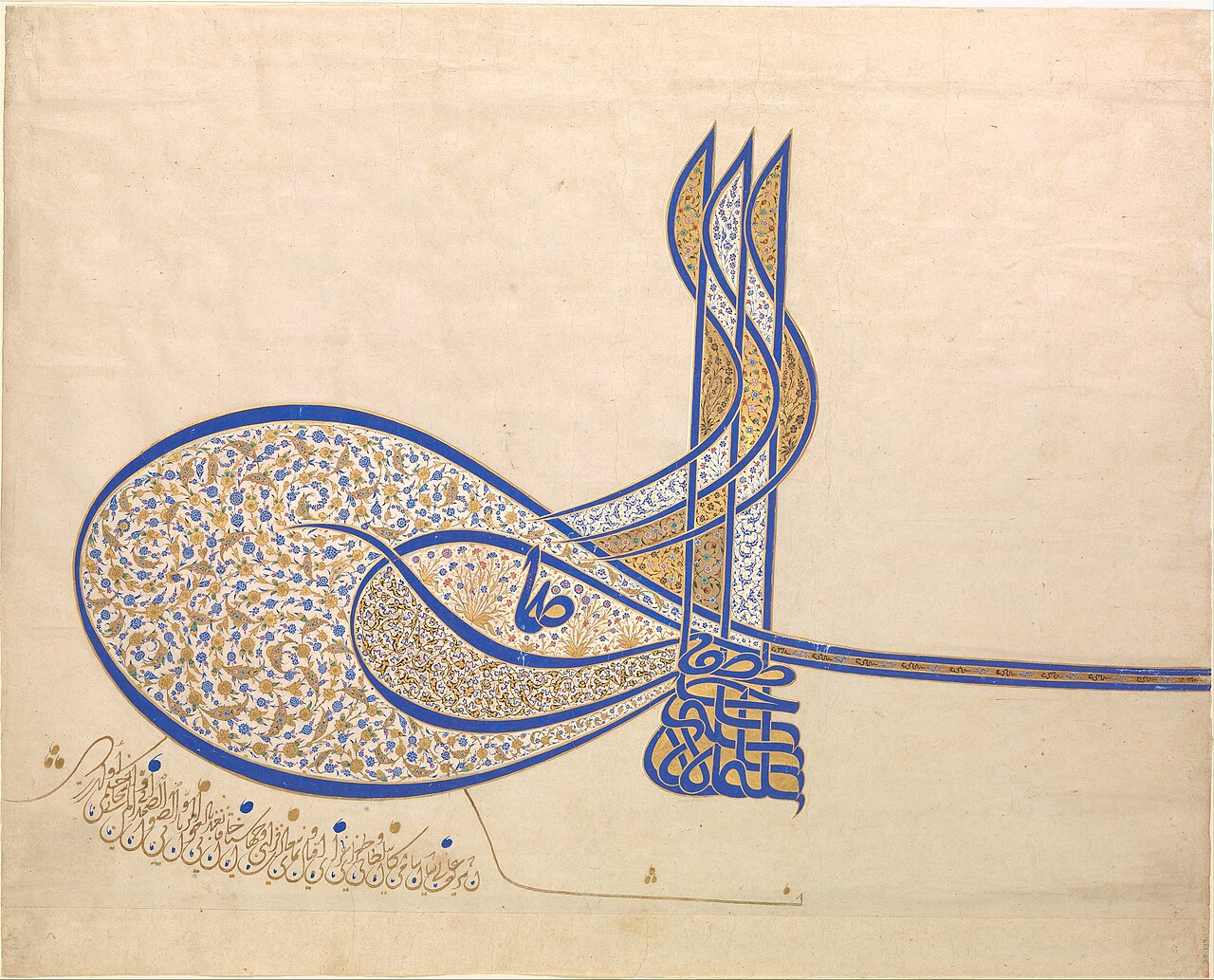
Ornate Ottoman tughra calligraphy on cream paper: a large blue-outlined oval filled with gold and blue floral arabesques, three tall vertical strokes with gold and patterned fills, and a flowing blue line extending to the right, with Arabic inscription at lower left and calligraphic text in the lower center.Document

Primary source

Tughra of Sultan Suleiman the Magnificent

c. 1555

Book

Secondary source

The History of the Life and Death of Sultan Solyman the Magnificent and of His Son Mustapha

1739

Documents on relations between Austria, Hungary and the PorteBook

Secondary source

Documents on relations between Austria, Hungary and the Porte

Anton von Gévay · 1838

Document

Primary source

Order to Build Ships at the Suez Arsenal

Suleiman the Magnificent · 1544

Document

Primary source

Order to Repair the Kaaba's Rain Spout

Suleiman the Magnificent · 1552

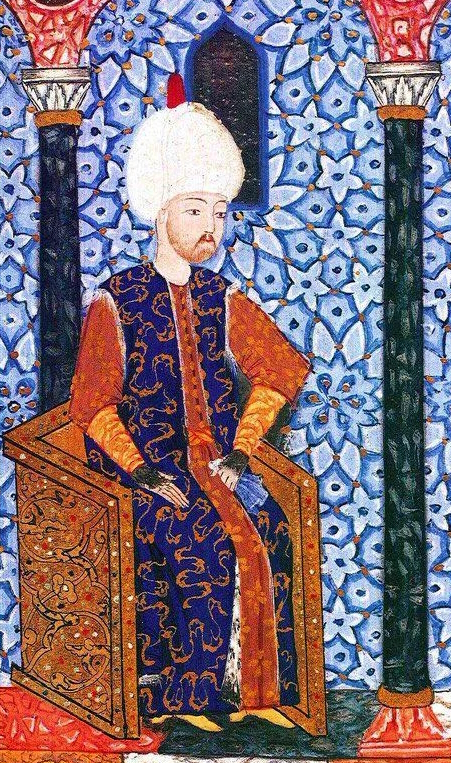
Miniature painting of a bearded man in a white turban with a red plume, wearing a blue robe patterned with orange motifs, seated on an ornate gold throne against a blue floral tiled background flanked by dark columns.Painting

Primary source

Suleiman Receiving Barbarossa

1558

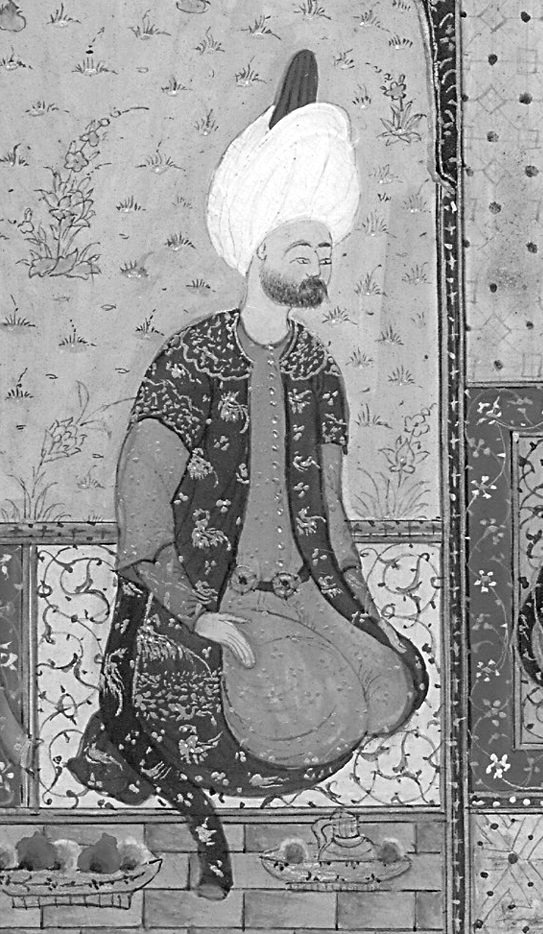
Grayscale detail of a painted miniature showing a seated bearded man in a tall white turban and a dark robe with floral patterns. He sits on a tiled ledge beside a bowl of fruit and a ewer on a tray, against a floral background.Painting

Primary source

Mustafa with His Father Suleiman

1558

Book

Secondary source

Geschichte des Osmanischen Reiches, nach den Quellen dargestellt

Nicolae Iorga · 1908

Book

Secondary source

Ibrahim Pasha, Grand Vizir of Suleiman the Magnificent

Hester Donaldson Jenkins · 1911

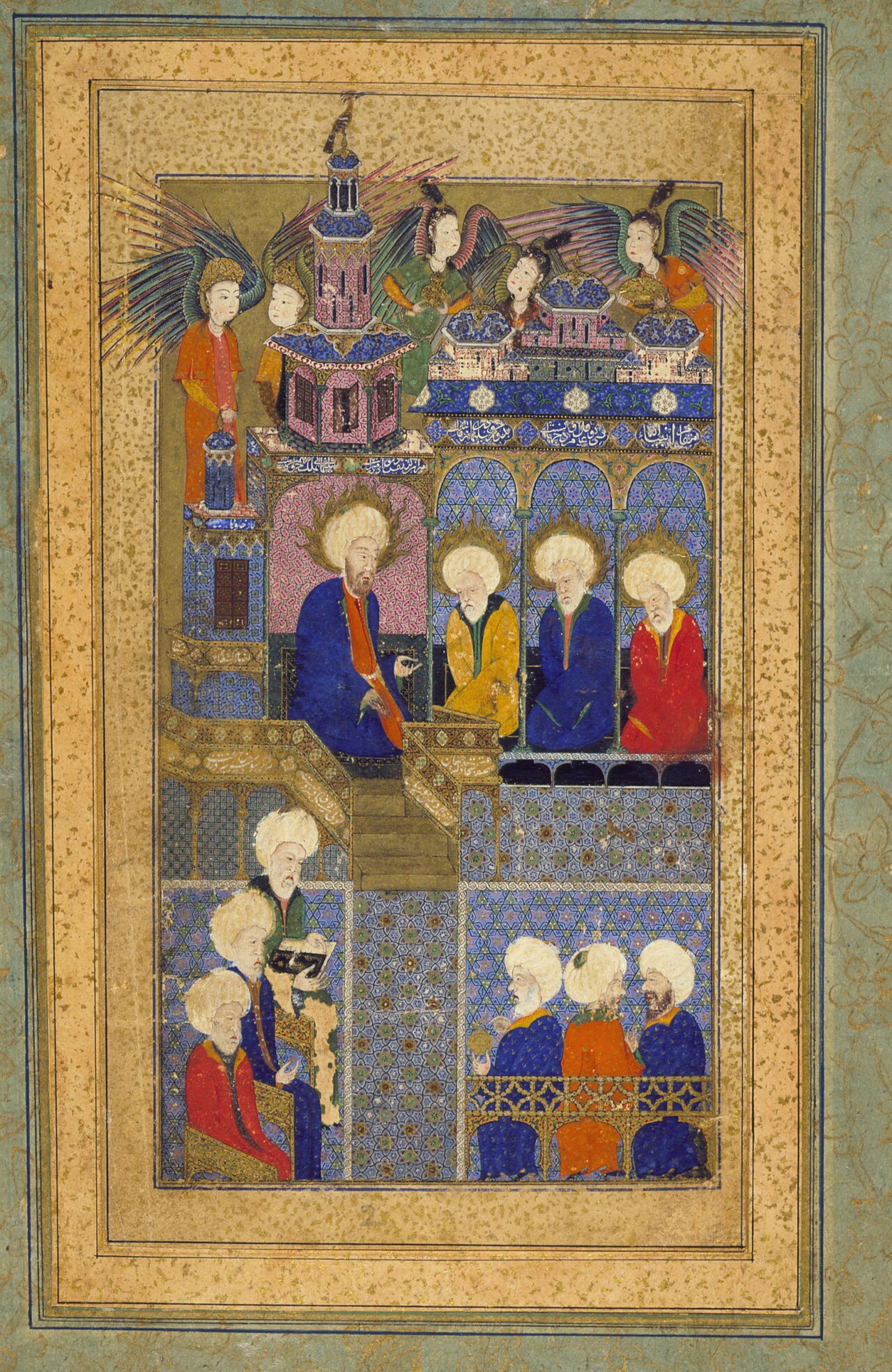
Painted manuscript page in ornate gold-flecked border. A bearded man in blue robe and white turban sits on a throne-like platform with a golden railing, flanked by winged angels above and a pavilion. Other turbaned figures in yellow, blue, red robes sit nearby, and a group of men in blue and orange robes sits on a lower balcony.Painting

Primary source

Sultan Suleyman as King Solomon, Shahnama-i al-i Osman

Arifi · c. 1558

Newspaper article

Secondary source

The Recent Pilgrimage to Jerusalem

F. J. Bliss · 1894

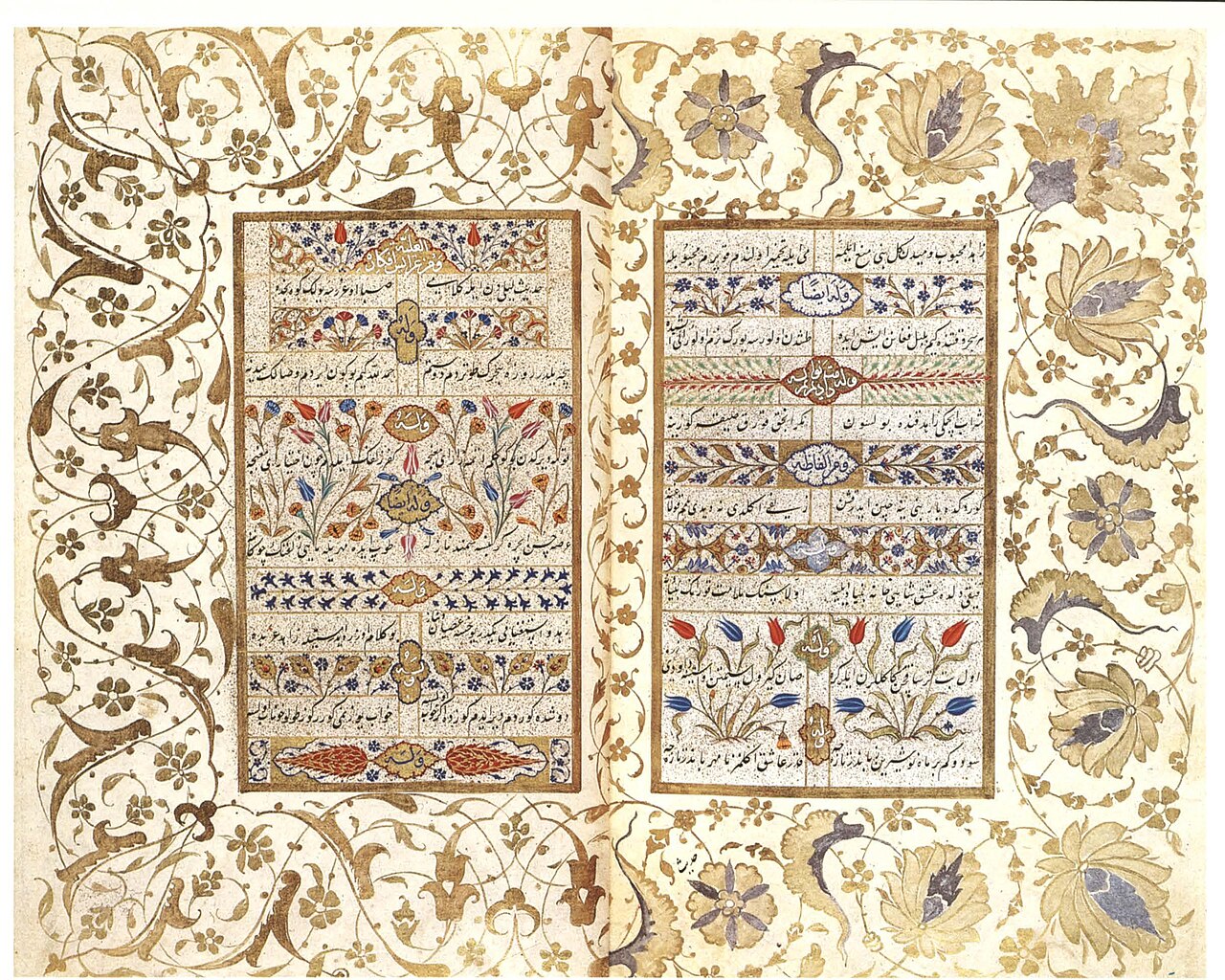
Open manuscript double page with ornate gold and floral illuminated borders on cream paper. Two framed text panels contain Persian-script calligraphy in columns, separated by decorative bands with stylized flowers, tulips, and geometric motifs in red, blue, and gold.Book

Primary source

Divan-i Muhibbi

Mehmed Şerif and Kara Memi · 1566

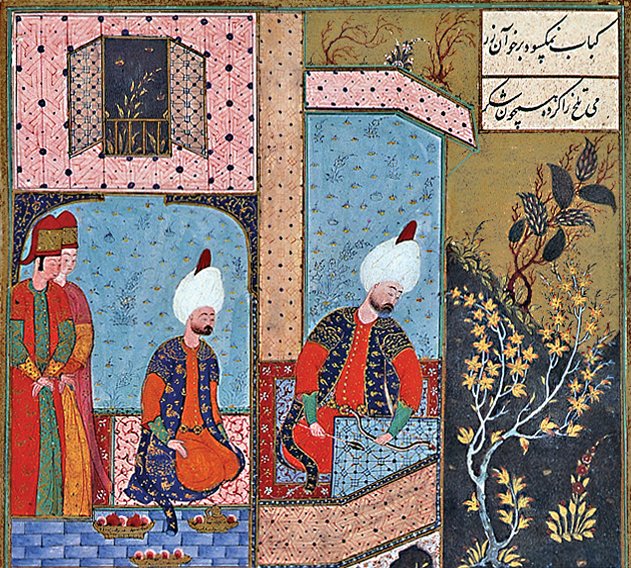
Ottoman miniature painting of two seated men in turbans with a standing attendant at left, set in a courtyard with patterned tiles, blue walls, and a flowering tree at right. Inscription in Persian script appears in the upper right corner.Painting

Primary source

Suleiman Meets Prince Mustafa, 1548

Ârifî Çelebi · 1555 (depicting 1548)

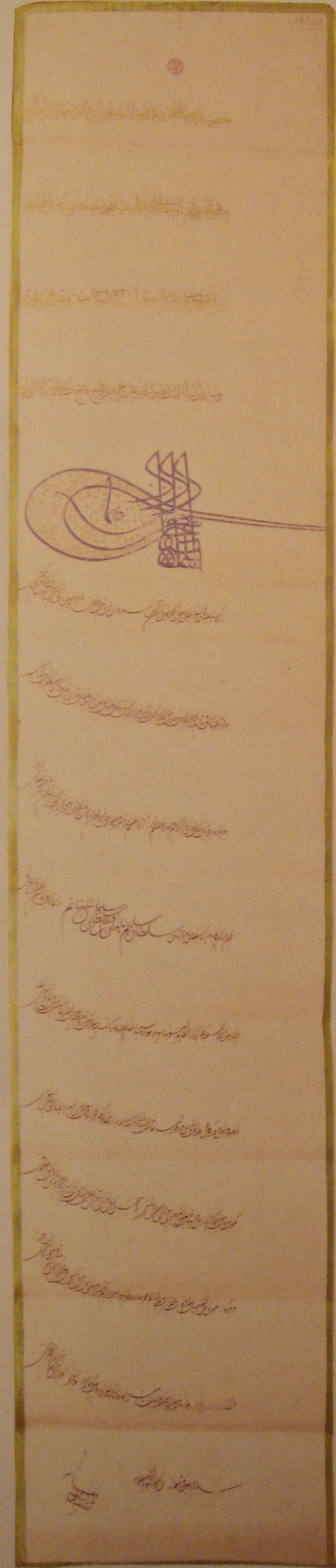
A tall, narrow Ottoman document on cream paper with a gold-colored border. A purple tughra (ornate sultan's signature monogram) sits near the upper middle, with several lines of Arabic-script text above and below it, and a small seal at the top.Letter

Primary source

Letter of Suleiman to Sigismund, Winter 1533

Suleiman the Magnificent · Winter 1533

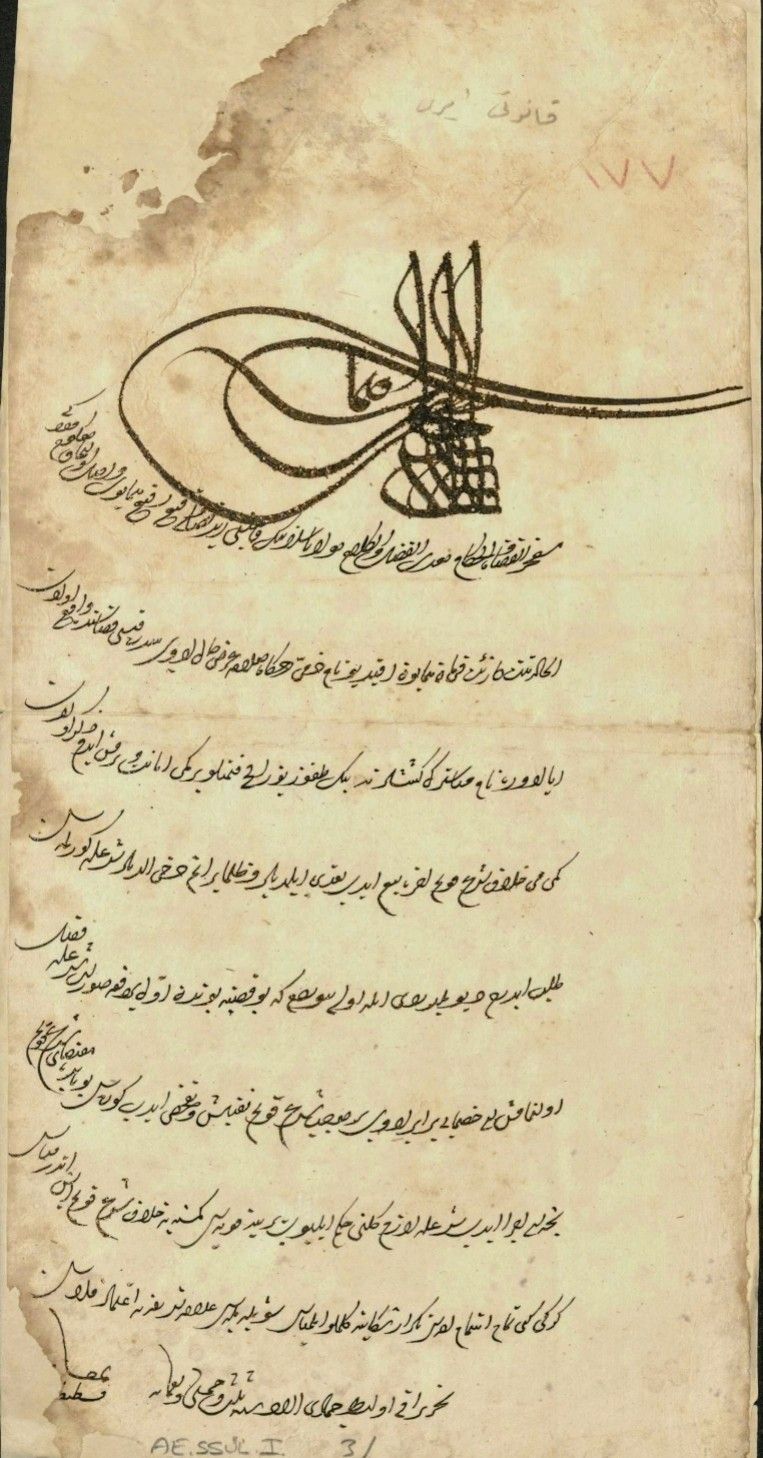
Scanned page of an Ottoman document in Arabic-script calligraphy, with a large tughra (ornate imperial monogram with flourishes) at the top, and about ten lines of handwritten text below. Pencil or ink marks in the margins, including a red numeral.Document

Primary source

Imperial Firman for Thessaloniki

Sultan Suleiman I · 29 November 1547

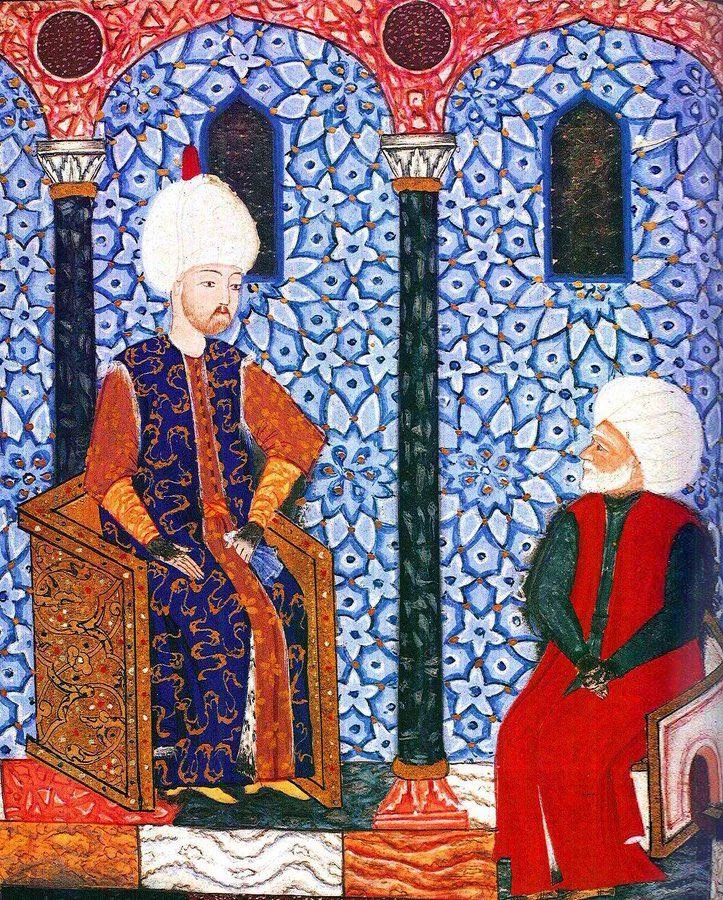
Miniature painting of a bearded ruler in a large white turban and blue robe with gold patterns, seated on an ornate gilded throne, facing an older white-bearded man in a white turban and red robe seated at right. Blue star-patterned tile wall and columns behind them.Painting

Primary source

Suleiman Enthroned Receiving Barbarossa

1558

Want the full shelf? Chat with Suleiman the Magnificent in the app and open the Sources panel — every quote links back to the original.

Use Suleiman the Magnificent in class

1 collection

A ready-made collection from the Humy team that features Suleiman the Magnificent. Preview it, then try it free.

Trusted by educators worldwide

Conversations
375,000+
Real exchanges between students and historical figures
Messages exchanged
4,142,000+
Across every figure, classroom and language
Historical figures
100,000+
Each informed by a curated biography and selected sources
Languages supported
50+
From English and Spanish to Arabic and Korean

Paying customers

Used by 98 schools and universities

Partner school logo
Tecnológico de Monterrey logo
Hyper Island logo
Partner school logo
Chambersburg Area School District logo
Broward County Public Schools logo
Nebo School District logo
National Louis University logo
South Florida PBS logo
Punahou School logo
University of Wisconsin–River Falls logo
Partner school logo
Partner school logo
Archbishop Mitty High School logo
Kingsburg High School logo
Norwalk Public Schools logo
Partner school logo
Connections logo
Partner school logo
Moore Public Schools logo
Partner school logo
Partner school logo
Partner school logo
Partner school logo
Robbinsville Public Schools logo
Partner school logo
Partner school logo
Partner school logo
Tecnológico de Monterrey logo
Hyper Island logo
Partner school logo
Chambersburg Area School District logo
Broward County Public Schools logo
Nebo School District logo
National Louis University logo
South Florida PBS logo
Punahou School logo
University of Wisconsin–River Falls logo
Partner school logo
Partner school logo
Archbishop Mitty High School logo
Kingsburg High School logo
Norwalk Public Schools logo
Partner school logo
Connections logo
Partner school logo
Moore Public Schools logo
Partner school logo
Partner school logo
Partner school logo
Partner school logo
Robbinsville Public Schools logo
Partner school logo
Partner school logo

What educators are saying

“We enjoyed the program last year and used it frequently.”
“My students say it’s a welcome change of pace. I’m not a fan of the “sage on the stage” model, so I try to incorporate research-oriented and self-paced activities. With Humy, students have to take charge of their learning. They’ve become more adept at critical thinking, forming better questions, and improving their reading comprehension. The interview feature has been my go-to tool. I create assignments where students must ask historical figures a set number of questions, then summarize the responses to ensure they’re truly absorbing the material. This approach lets them actively explore the past rather than passively consuming information.”
“Humy has helped me bring historical figures, sometimes long past, to life. When my students interact with these figures in real-time, it eliminates some of the perceived “ancient” characteristics of my curriculum. This has shifted my students’ thinking away from viewing history as abstract or irrelevant. Real-time interactions make historical figures relatable, even allowing students to ask off-topic questions that help put historical lives in a more relevant context for 13-year-olds. The feature I use the most is the interview feature. After teaching a topic, most recently Gandhi and Joan of Arc, I have the students ask pointed, focused questions. We practice good conversation techniques beforehand, teaching them to listen (or read) carefully and formulate thoughtful follow-up questions rather than just interrogating. It helps students practice effective conversation skills.”

FAQ

Frequently asked questions

Who is Suleiman the Magnificent?
Ottoman Sultan known for expansion and cultural achievements. On Humy.ai you can chat with an AI version of Suleiman the Magnificent that draws on a short biography and 86 historical sources during the conversation — by text or voice, in 42 languages.
Is Suleiman the Magnificent AI free?
Suleiman the Magnificent is part of Humy's full library of more than 100,000 figures, which comes with a paid plan. A free account (no credit card) includes 20 messages a month with the free library's figures, so you can try how the conversations work first.
What sources does the Suleiman the Magnificent AI use?
It draws on a short biography and 86 historical sources (paintings, books and documents), including “Süleymaniye Mosque”, “Letter to the King of France” and “Suleiman the Magnificent Forced to Raise the Siege of Vienna”. Each source has its own page on Humy.ai.
How historically accurate is the AI version of Suleiman the Magnificent?
Each figure uses a short biography and a small set of selected historical sources as context (retrieval-augmented generation), so answers stay closer to known material than the model's general knowledge alone. It isn't a citation-grade research tool — like any LLM, the AI can get details wrong or extrapolate. Treat it as a strong starting point for inquiry and cross-reference important claims.
Can I talk to Suleiman the Magnificent by voice?
Yes. In addition to text chat, you can call Suleiman the Magnificent and hear their voice respond in real time — useful for auditory learners, interview practice and Socratic dialogue.
Is Humy.ai safe and compliant for schools?
Yes. Humy.ai is used by more than 100 schools, universities and organisations. The platform is FERPA- and GDPR-aligned, supports SSO, and offers an IT-approval pack tailored for school procurement teams.

Cross-reference Suleiman the Magnificent

Like any LLM, the AI version of Suleiman the Magnificent can get details wrong. Open one of these sources in a new tab to verify what you’ve read.

Ready when you are

Start chatting with Suleiman the Magnificent now.

20 messages free · No credit card · Available in 50+ languages.