


Primary sourceArtifact1913
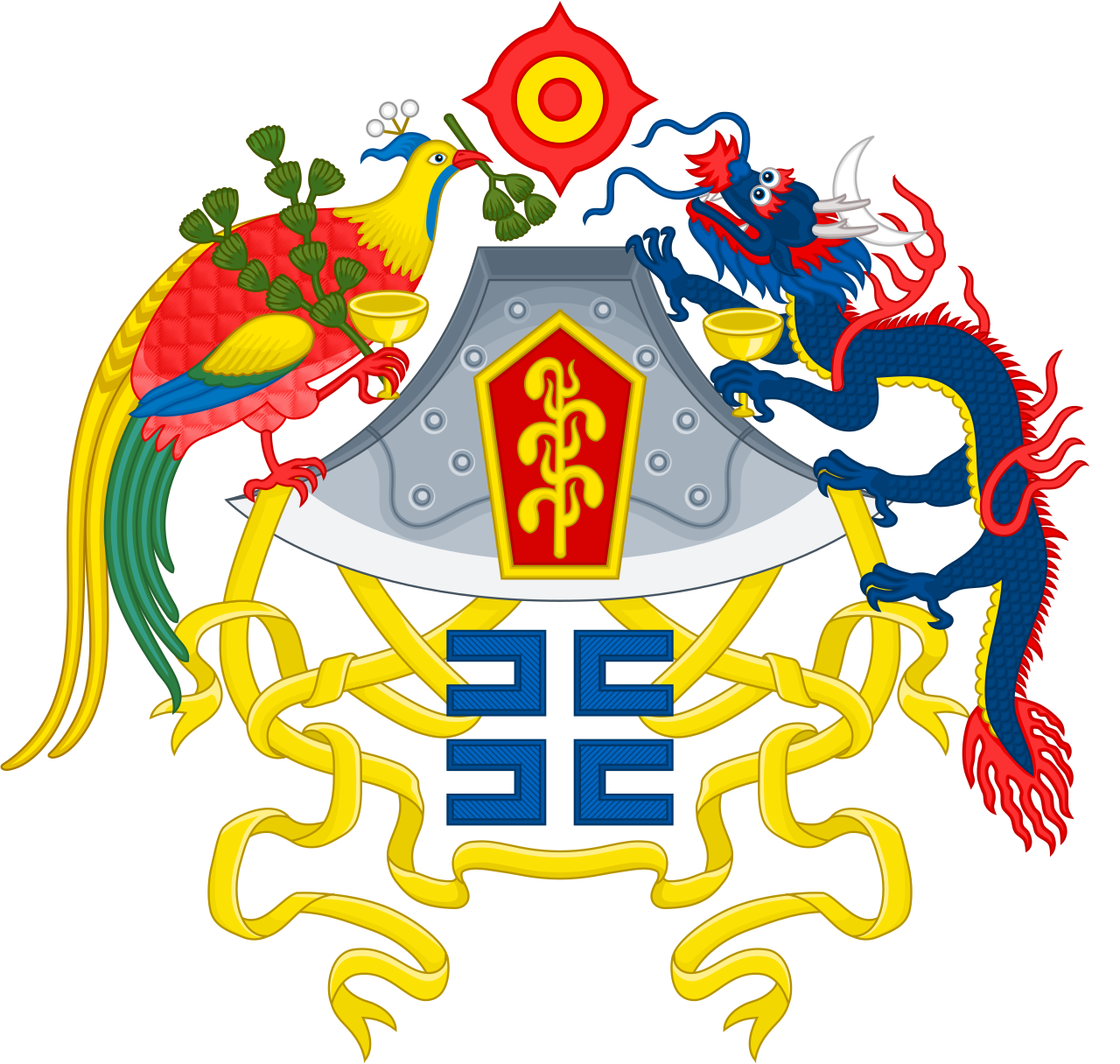
Twelve Symbols National Emblem of China
1913
The national emblem used by China's Beiyang government, including during Yuan Shikai's short-lived empire, drawing on imperial symbolism.
This emblem was adopted under the government Yuan Shikai led and reused during his short-lived empire.
About this source
What it is
A colored heraldic emblem featuring a phoenix and a dragon flanking a central shield with a sun motif above, known as the Twelve Symbols national emblem. It was used by the Republic of China's Beiyang government from 1912 to 1928, and also during the Empire of China proclaimed by Yuan Shikai between 1915 and 1916.
Why it matters
The emblem shows how Yuan Shikai, after becoming president, drew on traditional imperial symbols such as the dragon and phoenix when he declared himself emperor. It reveals his attempt to blend republican government with older imperial imagery to legitimize his rule.
Look closer
- Why might Yuan Shikai have chosen imagery from imperial tradition rather than new republican symbols?
- What do the dragon and phoenix traditionally represent in Chinese culture?
- What does the reuse of this emblem under both the Beiyang government and Yuan's empire suggest about continuity and change in this period?
This artifact is part of the curated material that grounds the AI version of Yuan Shikai on Humy.ai — when students ask about related events, the AI can quote it and cite it.
More Yuan Shikai sources
Browse all 84 →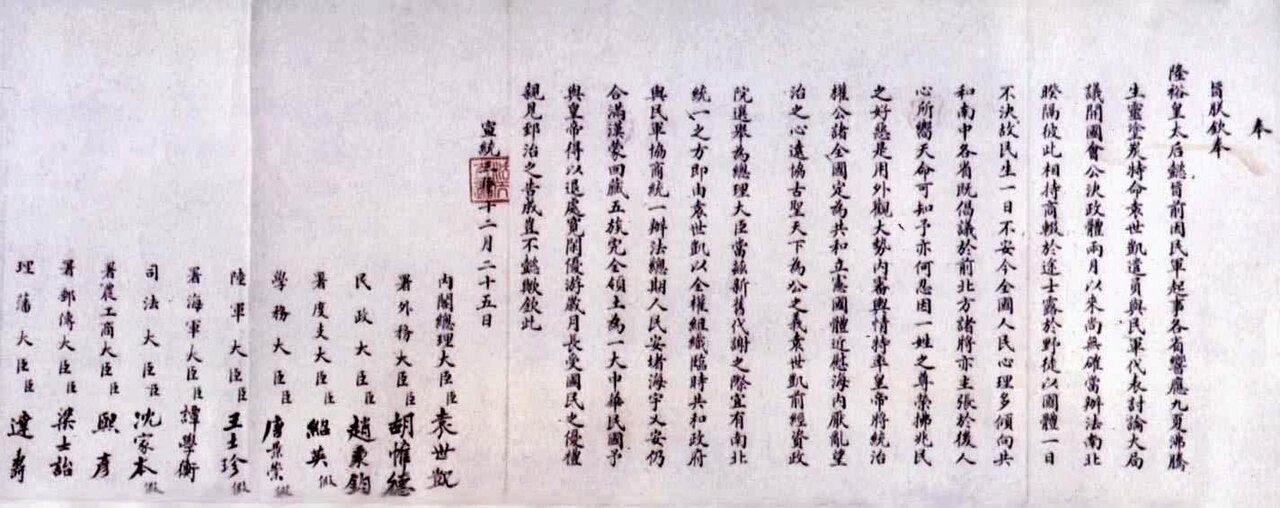 Document
Primary source
Imperial Edict of the Abdication of the Qing Emperor
Empress Dowager Longyu · 12 February 1912
 Document
Primary source
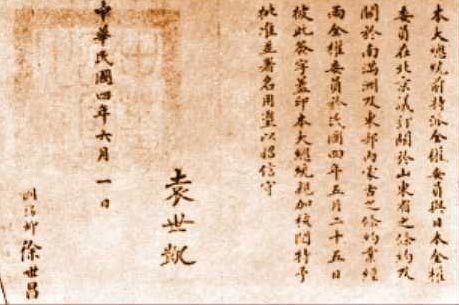
Twenty-One Demands
Empire of Japan · 18 January 1915
 Photograph
Primary source
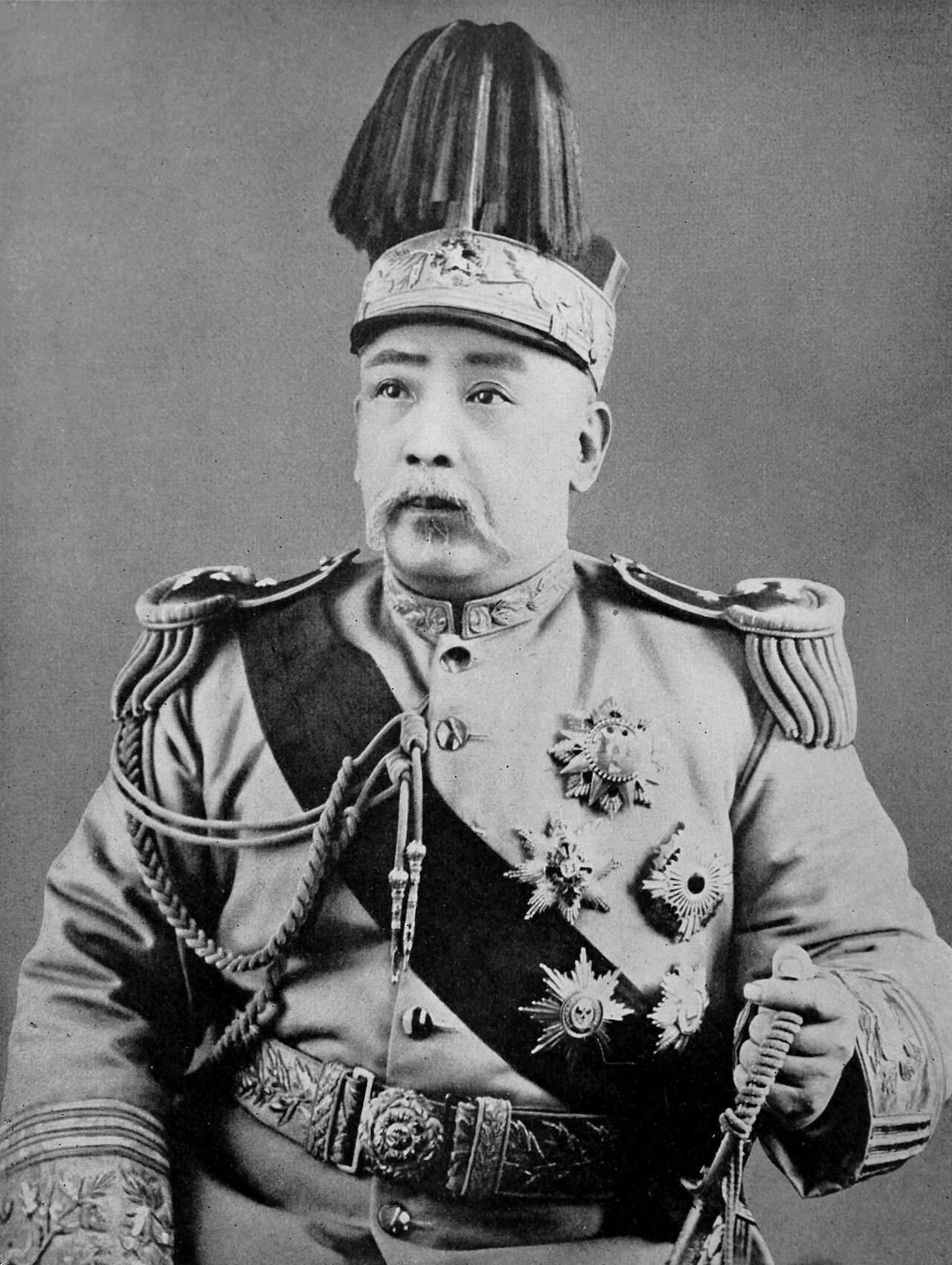
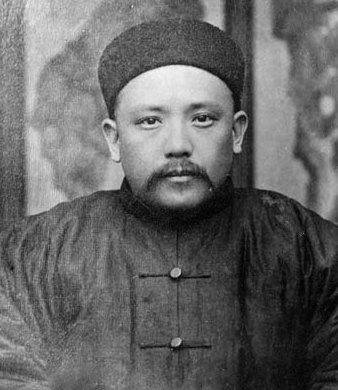
Portrait of Yuan Shikai
1915
 Artifact
Primary source
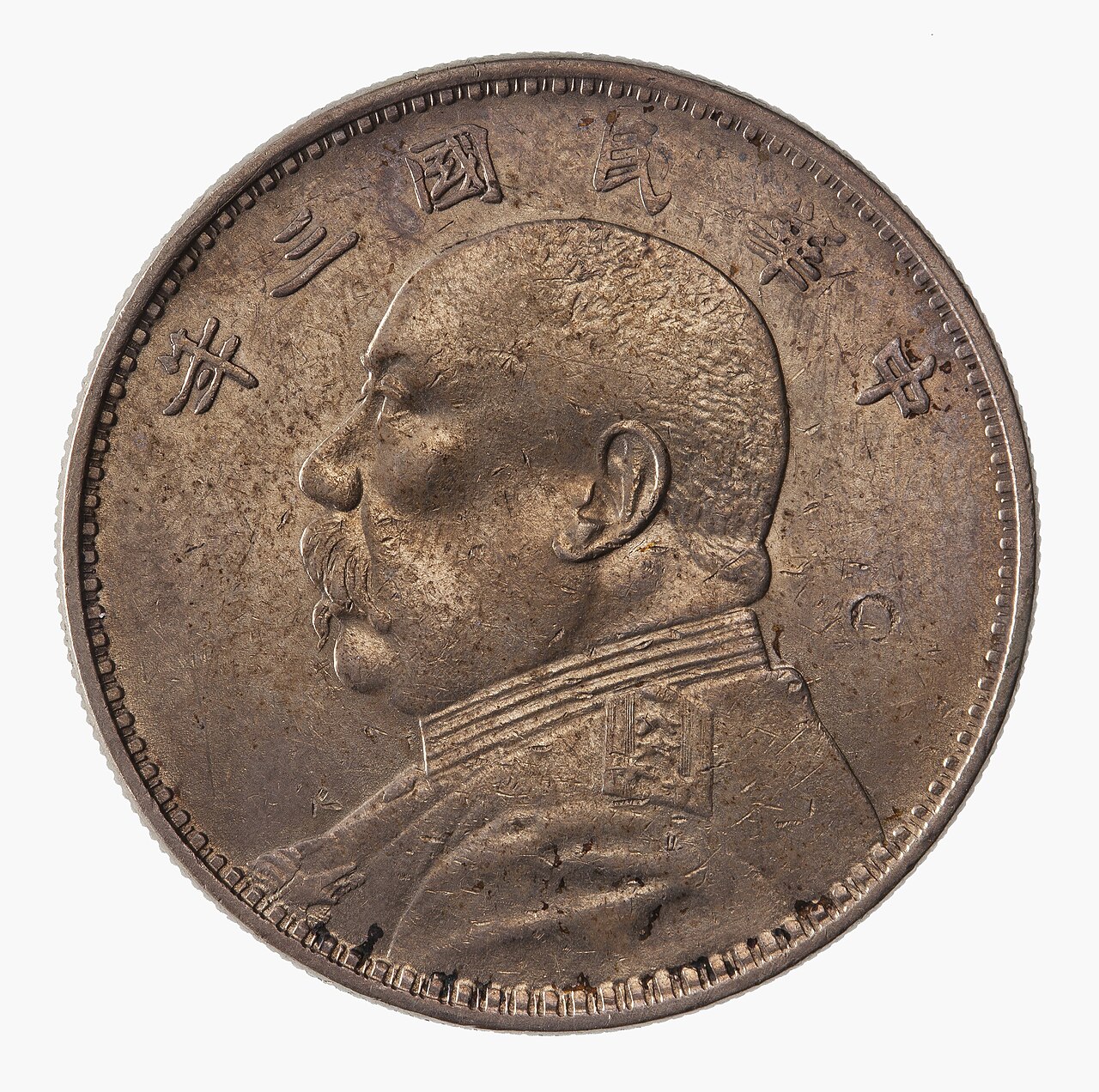
Yuan Shikai dollar
Luigi Giorgi · 1914
Free account
Read every Yuan Shikai source
Sign up free →
Ready when you are
Start chatting with Yuan Shikai now.
20 messages free · No credit card · Available in 50+ languages.