


Primary sourceArtifact1403-1424
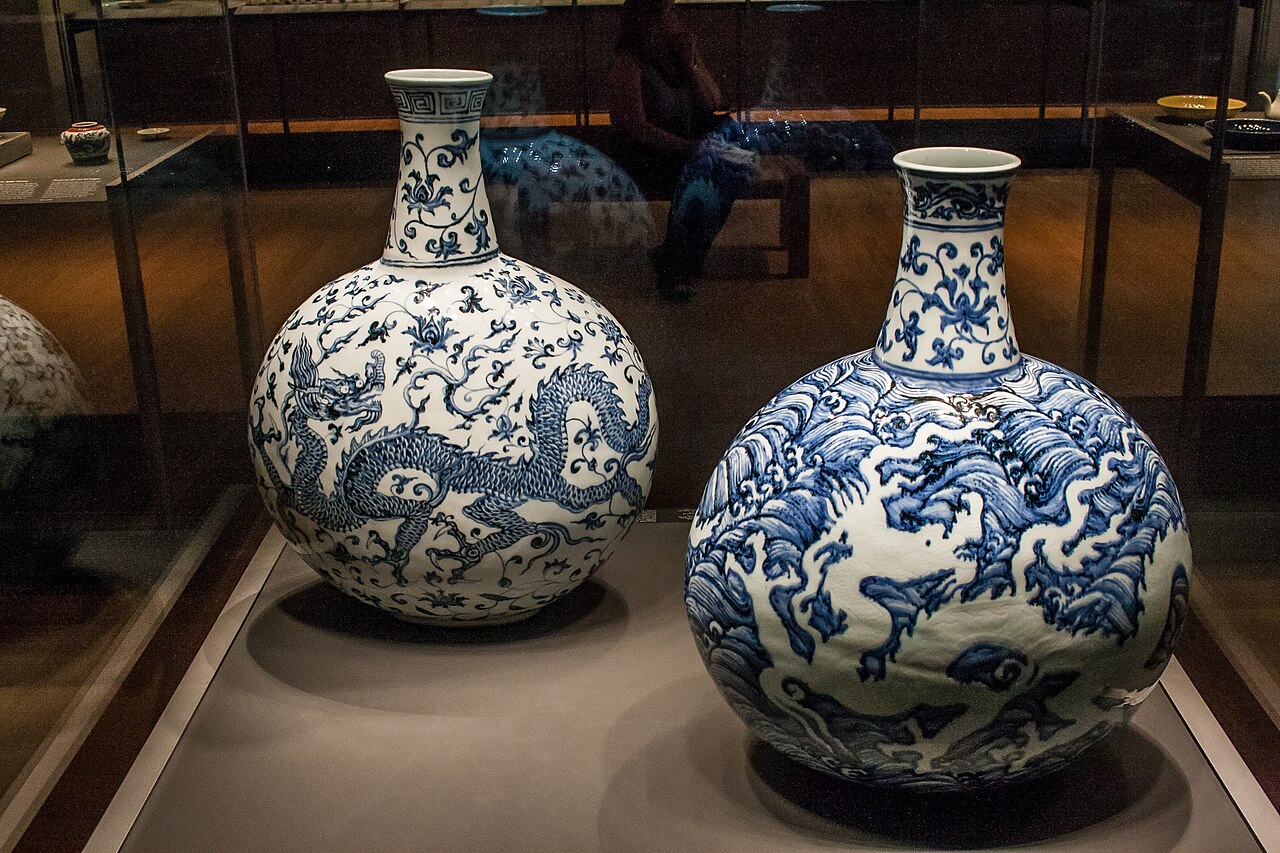
Two Porcelain Flasks with Dragons
1403-1424
Two blue-and-white porcelain flasks decorated with dragons, made during the Yongle Emperor's reign and showing the imperial court's artistic style.
Porcelain produced during the Yongle Emperor's reign, reflecting the dragon imagery associated with imperial power.
About this source
What it is
These are two blue-and-white porcelain tianqiuping flasks made between 1403 and 1424, during the reign of the Yongle Emperor. One flask shows a dragon among flowers, the other a dragon among waves. The maker is unknown.
Why it matters
Dragons were a symbol of imperial power in Ming China, closely associated with the emperor himself. Porcelain like this was produced in large quantities under Yongle's rule and reveals the wealth, craftsmanship, and symbolism of his court.
Look closer
- Why do you think dragons were chosen as a decoration for objects linked to the emperor?
- What does the fine craftsmanship of these flasks suggest about the resources of the Ming court?
- What is missing from this object that would tell us about the people who actually made it?
This artifact is part of the curated material that grounds the AI version of Yongle Emperor on Humy.ai — when students ask about related events, the AI can quote it and cite it.
More Yongle Emperor sources
Meet the AI Yongle Emperor →

Ready when you are
Start chatting with Yongle Emperor now.
20 messages free · No credit card · Available in 50+ languages.