


Secondary sourceSculpture13th century
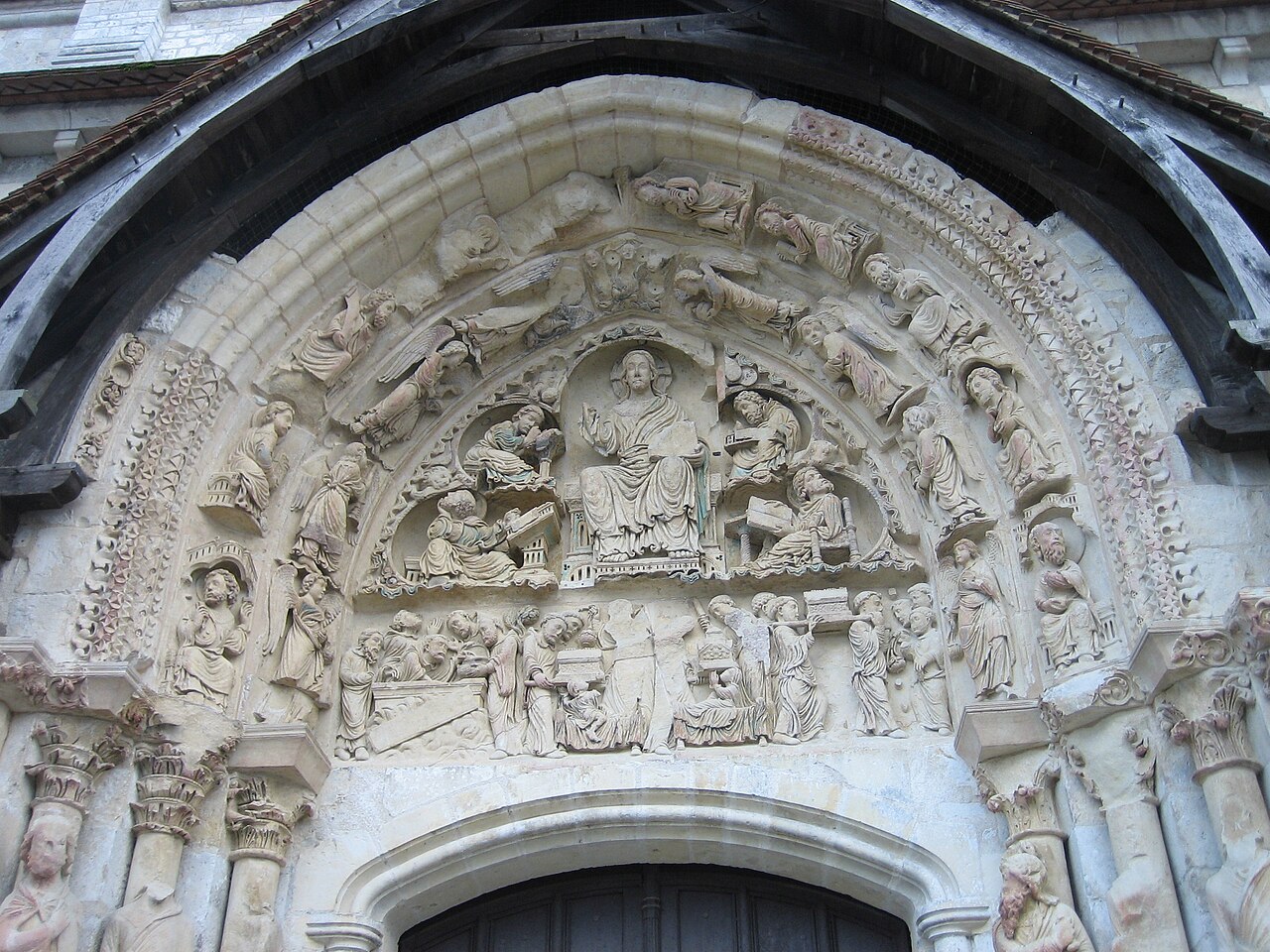
Tympanum of Fleury Abbey showing translation of Benedict's relics
13th century
A carved stone lintel over a church doorway at Fleury Abbey, showing the translation of Saint Benedict's relics, made centuries after his death.
Shows how Benedict was venerated long after his death through the cult of his relics at Fleury Abbey.
About this source
What it is
This is a stone tympanum, a carved panel over a church portal, at Fleury Abbey. It was made in the 13th century. The upper part shows Christ seated in glory, surrounded by the symbols of the four evangelists and angels. The lower lintel shows a scene of the translation (ceremonial moving) of Benedict of Nursia's relics.
Why it matters
Benedict lived many centuries before this carving was made, so it does not show him directly but reflects how later generations honoured him. Fleury Abbey claimed to hold his relics, and this sculpture is evidence of the cult that grew up around his memory and of medieval belief in the power of saints' remains.
Look closer
- What does the arrangement of figures around the tomb suggest about how important this event was to the people who built the church?
- Why might carvers place Christ above the scene of Benedict's relics?
- What does this tell us about Benedict's story that is missing — do we see anything of his actual life?
This sculpture is part of the curated material that grounds the AI version of Saint Benedict on Humy.ai — when students ask about related events, the AI can quote it and cite it.
More Saint Benedict sources
Meet the AI Saint Benedict →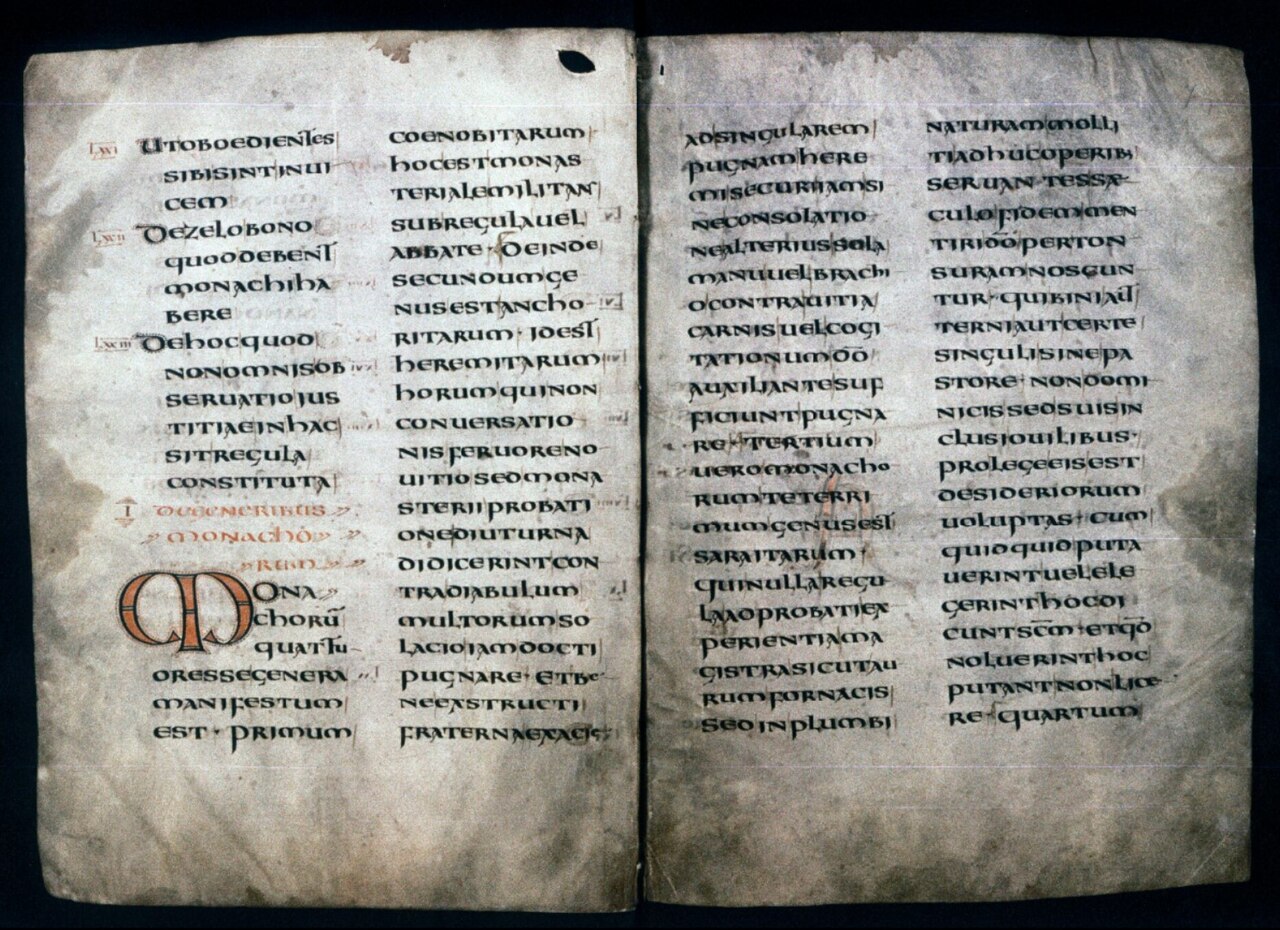 Book
Primary source
Rule of Saint Benedict
Benedict of Nursia · c. 600
 Artifact
Secondary source
Monte Cassino
founded c. 529/530
 Painting
Secondary source
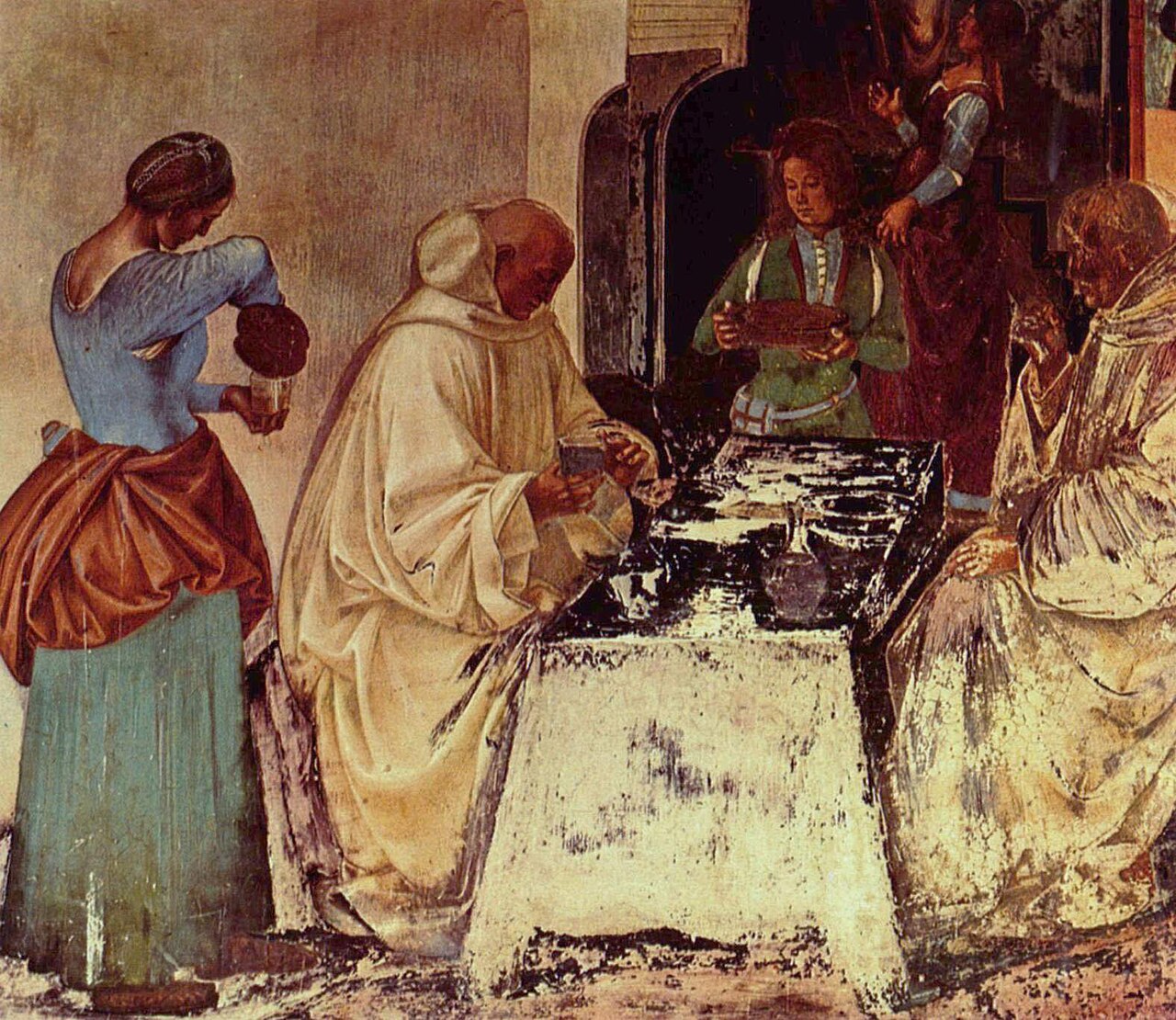
Fresco Cycle of the Life of St Benedict at Monte Oliveto Maggiore
Luca Signorelli and Sodoma · 1497-1505 (fresco cycle); abbey founded 1313
 Artifact
Secondary source
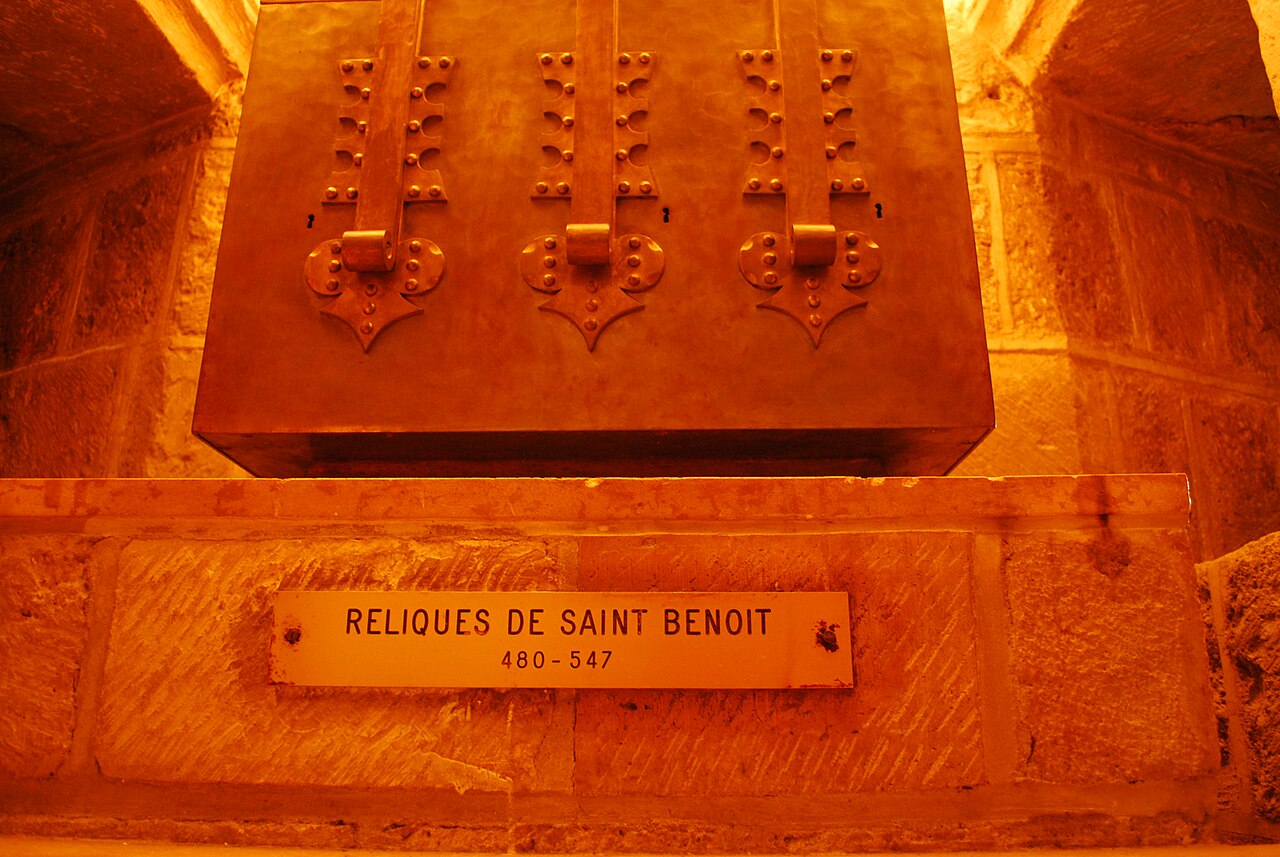
Reliquary of Saint Benedict at Fleury
 Artifact
Secondary source
Plan of Saint Gall
c. 820-830
Ready when you are
Start chatting with Saint Benedict now.
20 messages free · No credit card · Available in 50+ languages.