


Secondary sourcePhotographc. 1905
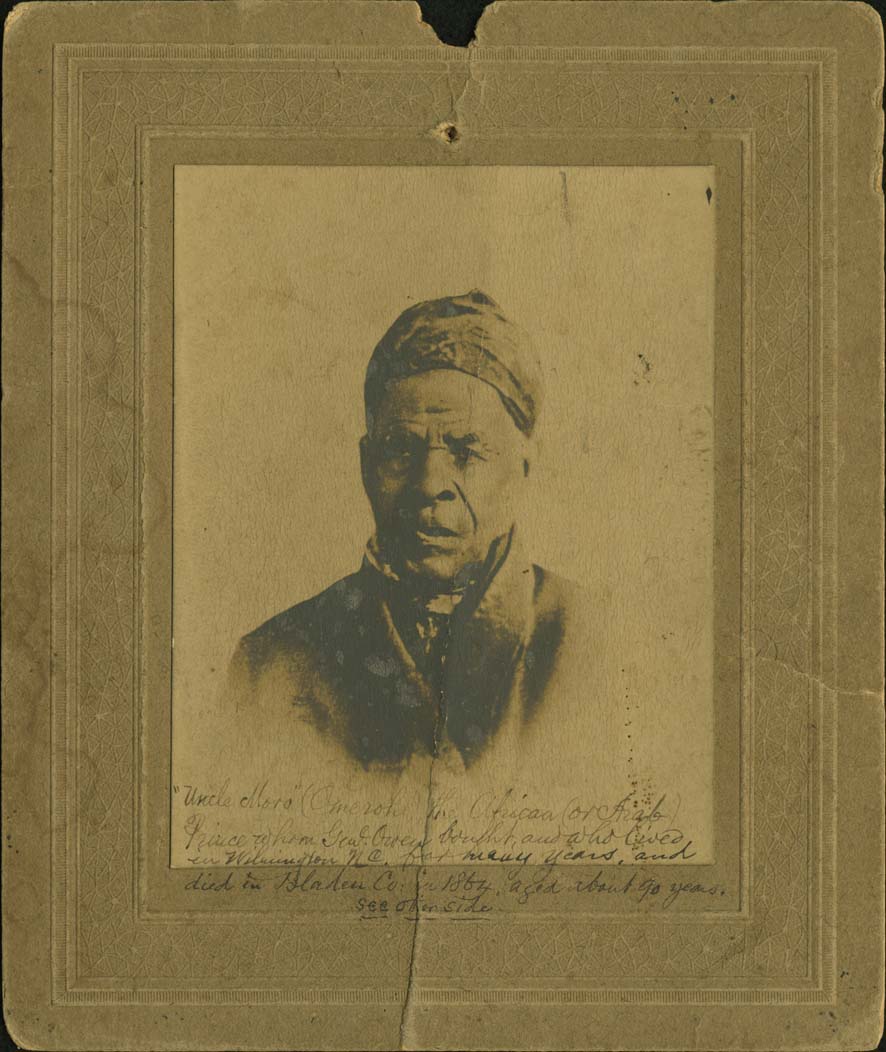
Uncle Moro, the African Prince
Unattributed · c. 1905
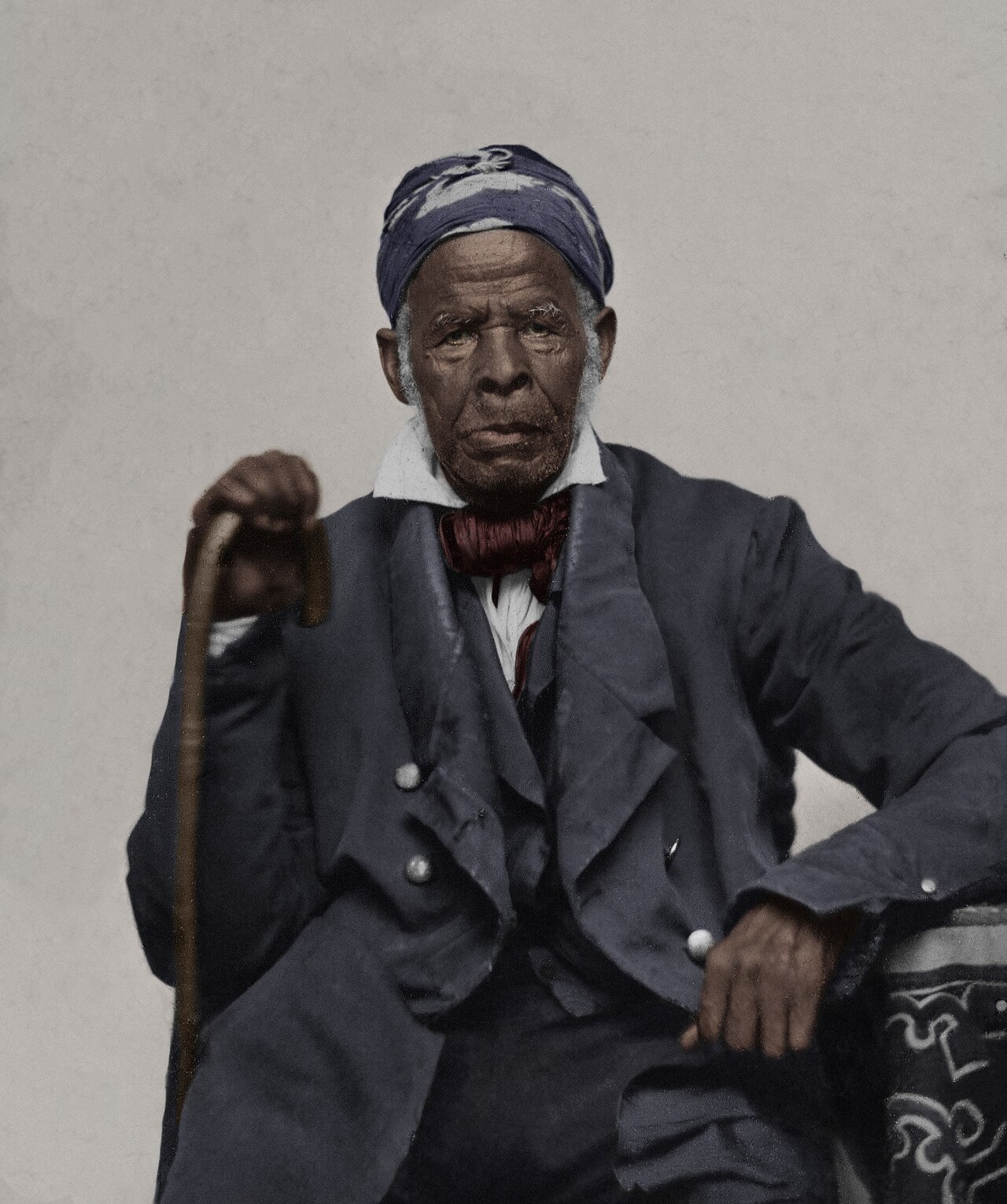
An early twentieth-century photographic print of Omar Ibn Said, captioned by the Owen family as "Uncle Moro" and an "African Prince."
This later print and caption show how the Owen family remembered and reframed Omar Ibn Said decades after his death.
About this source
What it is
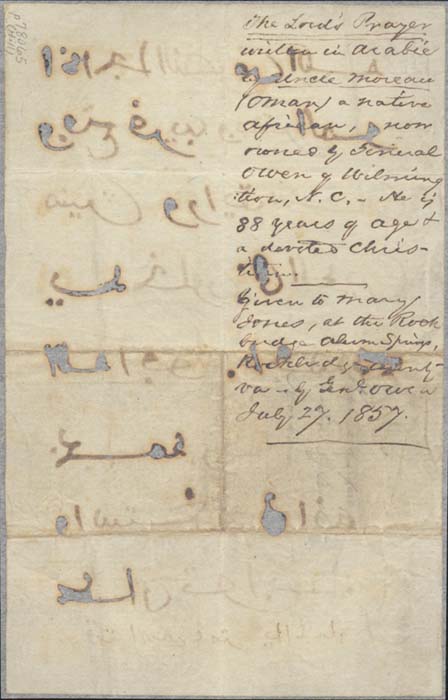
This is a sepia photograph of an elderly man mounted on a decorative card, captioned "Uncle Moro, Omeroh, African or Arab prince." The reverse contains handwritten reminiscences written in 1905 by A. M. Waddell, describing Omar as someone who read and wrote Arabic, was born a Muslim, and was captured as a runaway. The caption states he was bought by General James Owen, lived in Wilmington, North Carolina, and died in Bladen County in 1864.
Why it matters
This image and its caption show how the Owen family and local North Carolina memory preserved, and reshaped, the story of Omar Ibn Said long after his death. Framing him as a "prince" rather than discussing the realities of his enslavement reflects how his owners' descendants chose to remember him.
Look closer
- Why might the Owen family have described Omar as a "prince" rather than focusing on his enslavement?
- What does Waddell's written account add that the photograph alone does not show?
- How does this later memory compare with what Omar wrote about himself?
This photograph is part of the curated material that grounds the AI version of Omar Ibn Said on Humy.ai — when students ask about related events, the AI can quote it and cite it.
More Omar Ibn Said sources
Browse all 13 →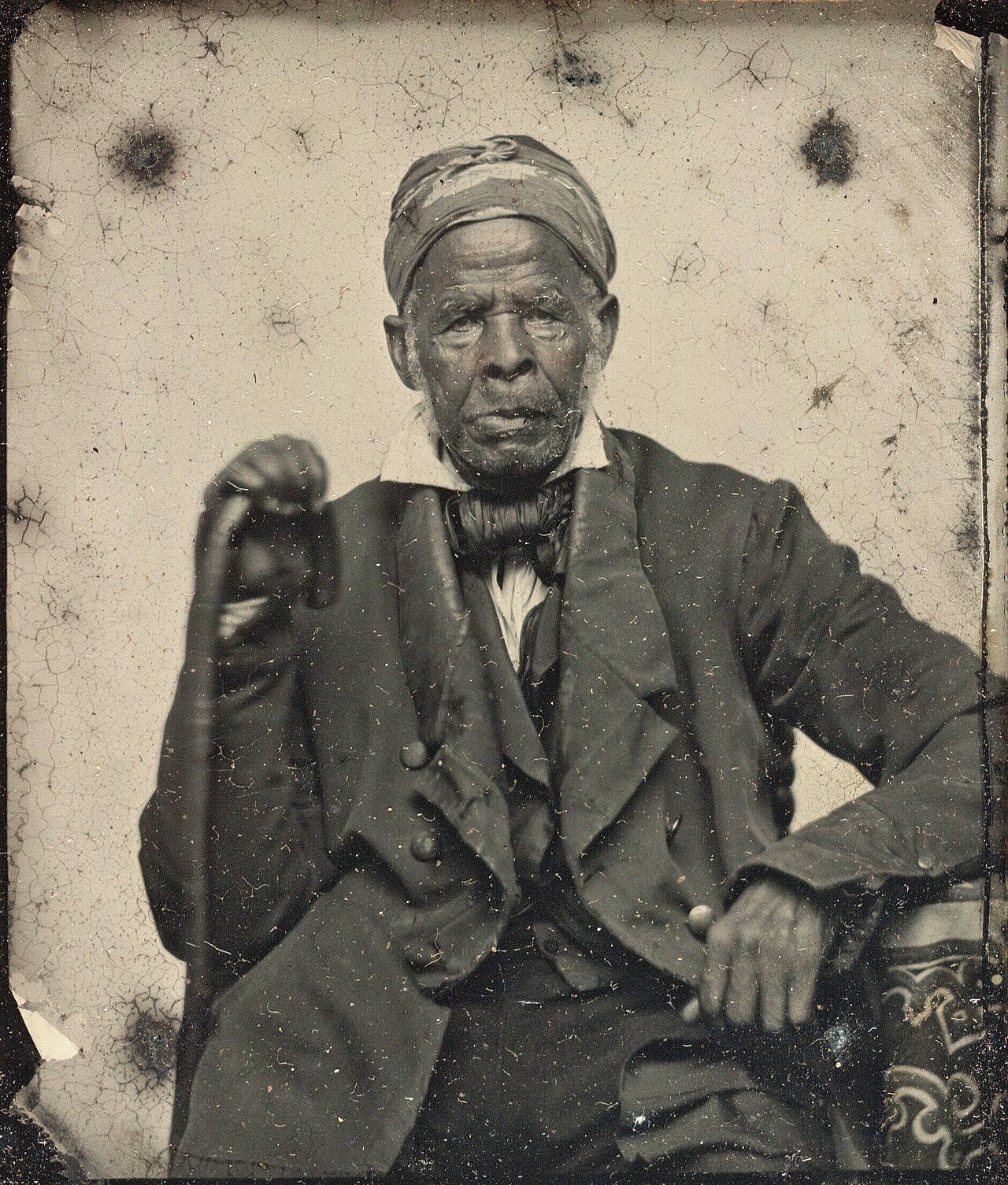 Photograph
Primary source
Uncle Marian
c. 1850
 Artifact
Secondary source
First Presbyterian Church
1816 (rebuilt 1832)
 Document
Primary source
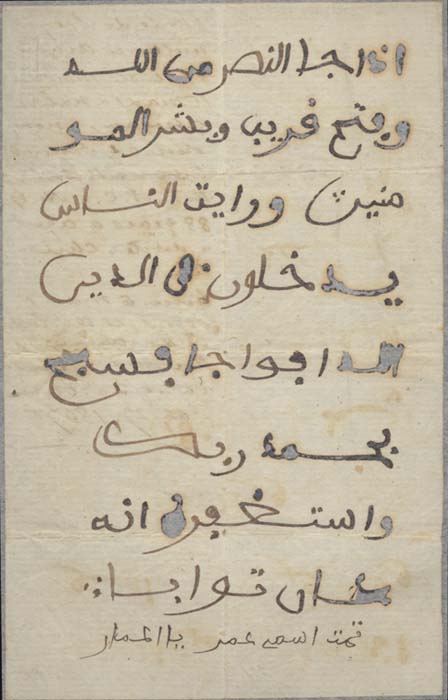
Surat an-Nasr Manuscript (Recto Copy)
Omar Ibn Said · 1857
 Document
Primary source
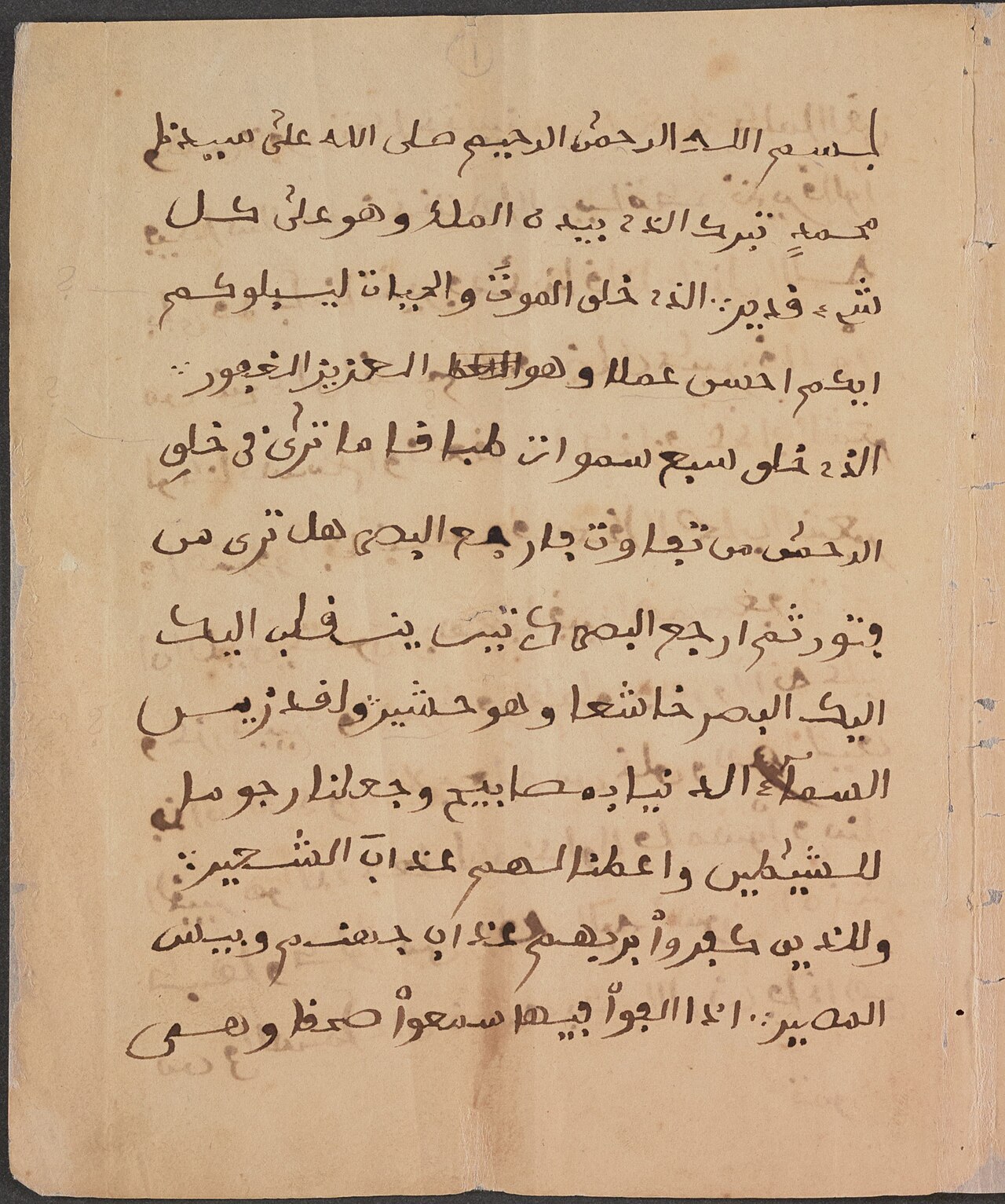
Surat al-Mulk Manuscript
Omar Ibn Said
Free account
Browse every Omar Ibn Said source
Sign up free →
Ready when you are
Start chatting with Omar Ibn Said now.
20 messages free · No credit card · Available in 50+ languages.