


Primary sourcePainting1926
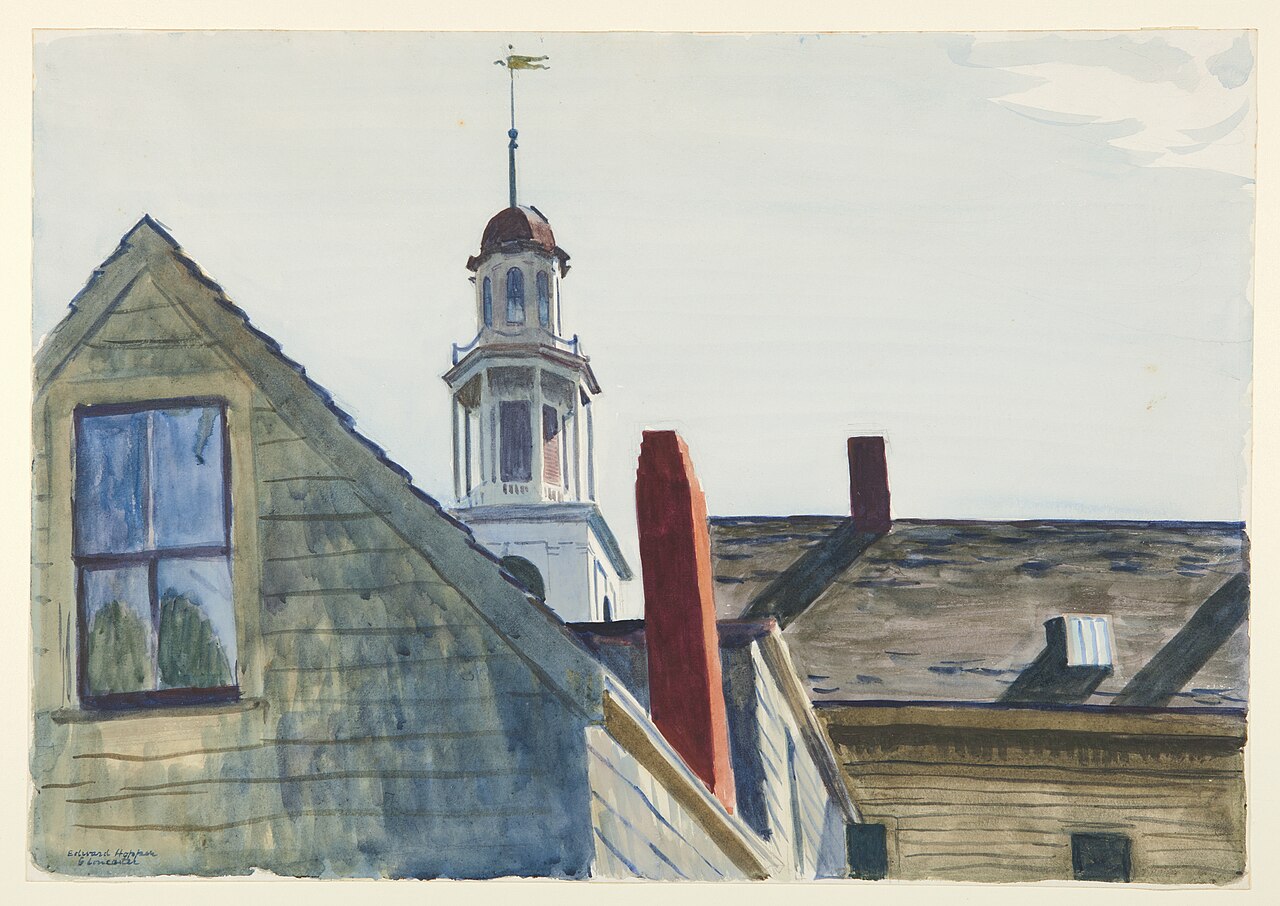
Universalist Church
Edward Hopper · 1926
A 1926 watercolor by Edward Hopper showing the steeple of a Gloucester church partly hidden behind rooftops.
Painted by Hopper himself during his 1926 stay in Gloucester, showing his developing watercolor technique.
About this source
What it is
This is a 1926 watercolor by American realist painter Edward Hopper, made during a summer spent in Gloucester, Massachusetts, a fishing town that had become a popular art colony.
The painting shows rooftops and chimneys with a white church steeple rising in the center, under a pale sky.
Why it matters
Hopper had returned to painting in watercolor after years as a commercial illustrator, and his Gloucester works helped establish his reputation. According to his wife Jo, he resisted painting this well-known church directly and instead focused on the surrounding houses before giving in and including the steeple. The building, founded in 1779, is barely recognizable here since Hopper deliberately obscured most of it.
Look closer
- Why might Hopper have chosen to hide most of the church behind other buildings?
- What mood does the pale sky and the geometric shapes of the rooftops create?
- What does this painting leave out about the town of Gloucester itself?
This painting is part of the curated material that grounds the AI version of Edward Hopper on Humy.ai — when students ask about related events, the AI can quote it and cite it.
More Edward Hopper sources
Browse all 94 →
Ready when you are
Start chatting with Edward Hopper now.
20 messages free · No credit card · Available in 50+ languages.