


Secondary sourcePhotograph1918-06-12
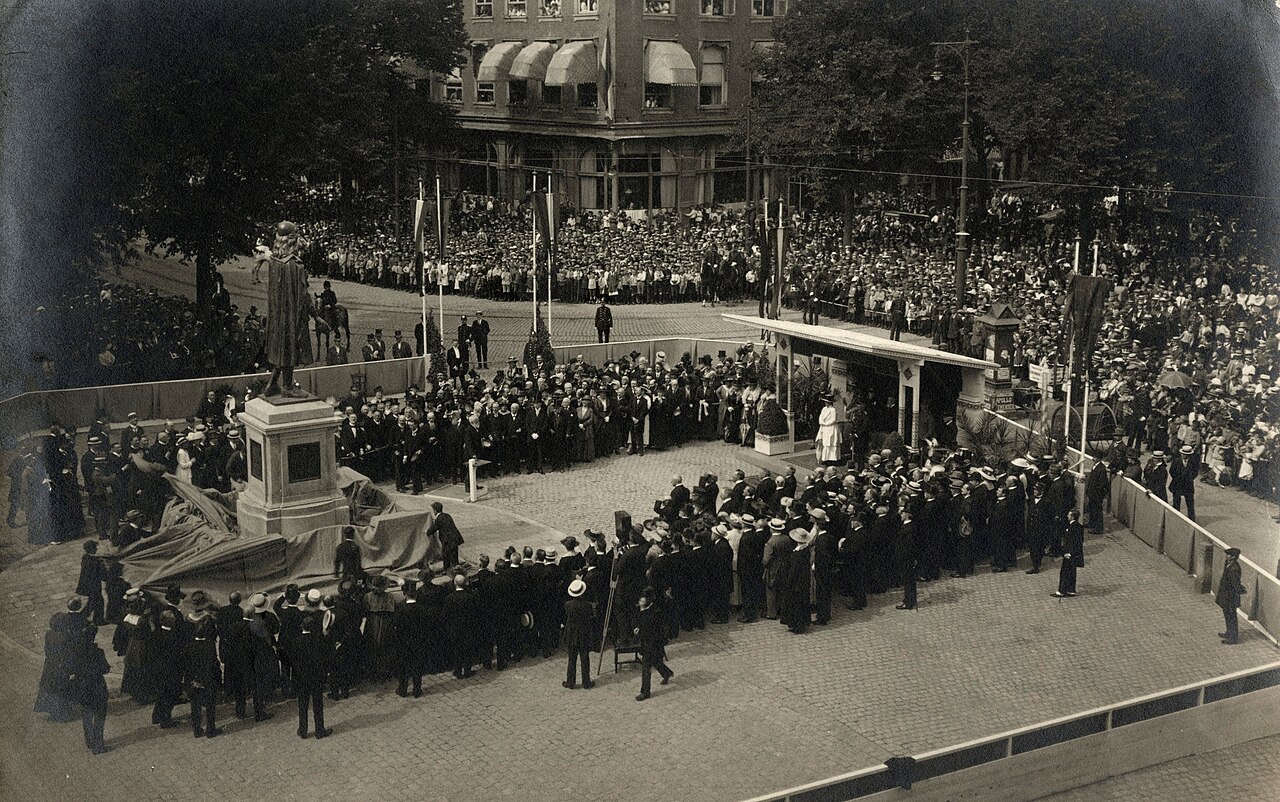
Unveiling of the Johan de Witt statue before Queen Wilhelmina, 1918
1918-06-12
A 1918 photograph of the unveiling of Jeltsema's De Witt statue in The Hague, with Queen Wilhelmina and Prince Hendrik present. The crowd watches the ceremony.
Shows the 1918 public unveiling of the monument to Johan de Witt, a later act of commemoration.
About this source
What it is
This is a photograph of an unveiling ceremony in a city square in The Hague, taken on 12 June 1918. A large crowd watches as a statue on a stone pedestal is partly covered by a draped cloth. A raised platform with a canopy stands to the right, and tall flagpoles and onlookers fill the background near a multi-story building. According to the record, Minister Cort van der Linden unveiled the statue in the presence of Queen Wilhelmina and Prince Hendrik. The statue is Johan de Witt, Grand Pensionary of Holland, made by Frederik Engel Jeltsema. The photographer is unknown.
Why it matters
The ceremony shows how the Dutch state chose to honour Johan de Witt in 1918, more than 240 years after his death. The record notes that the statue's right hand points to the spot where Johan and Cornelis de Witt were lynched by an angry crowd during the Rampjaar of 1672. So the monument links a public celebration of the figure with the violent end of his life. A photograph like this shows the honour and the ceremony that the twentieth-century state gave him.
Look closer
- Who appears on the platform, and what does their presence suggest about the importance of the event?
- Why did the people of 1918 choose to honour a politician who died in violence in 1672?
- What does the photograph leave out, such as the speeches given or the reactions of individual people in the crowd?
This photograph is part of the curated material that grounds the AI version of Johan de Witt on Humy.ai — when students ask about related events, the AI can quote it and cite it.
More Johan de Witt sources
Browse all 70 →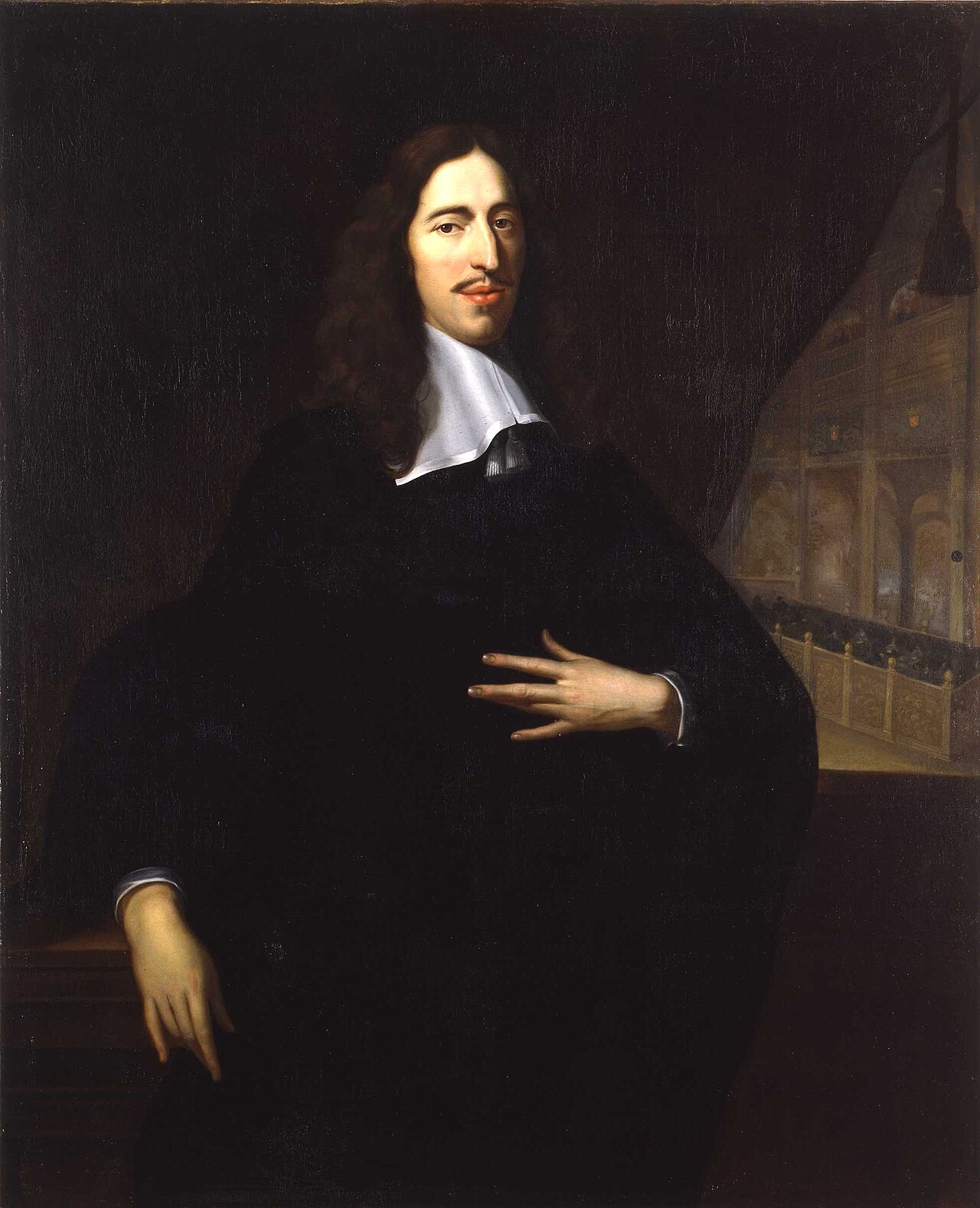 Painting
Primary source
Portrait of Johan de Witt (Jan de Baen, 1669)
Jan de Baen · 1669
 Painting
Primary source
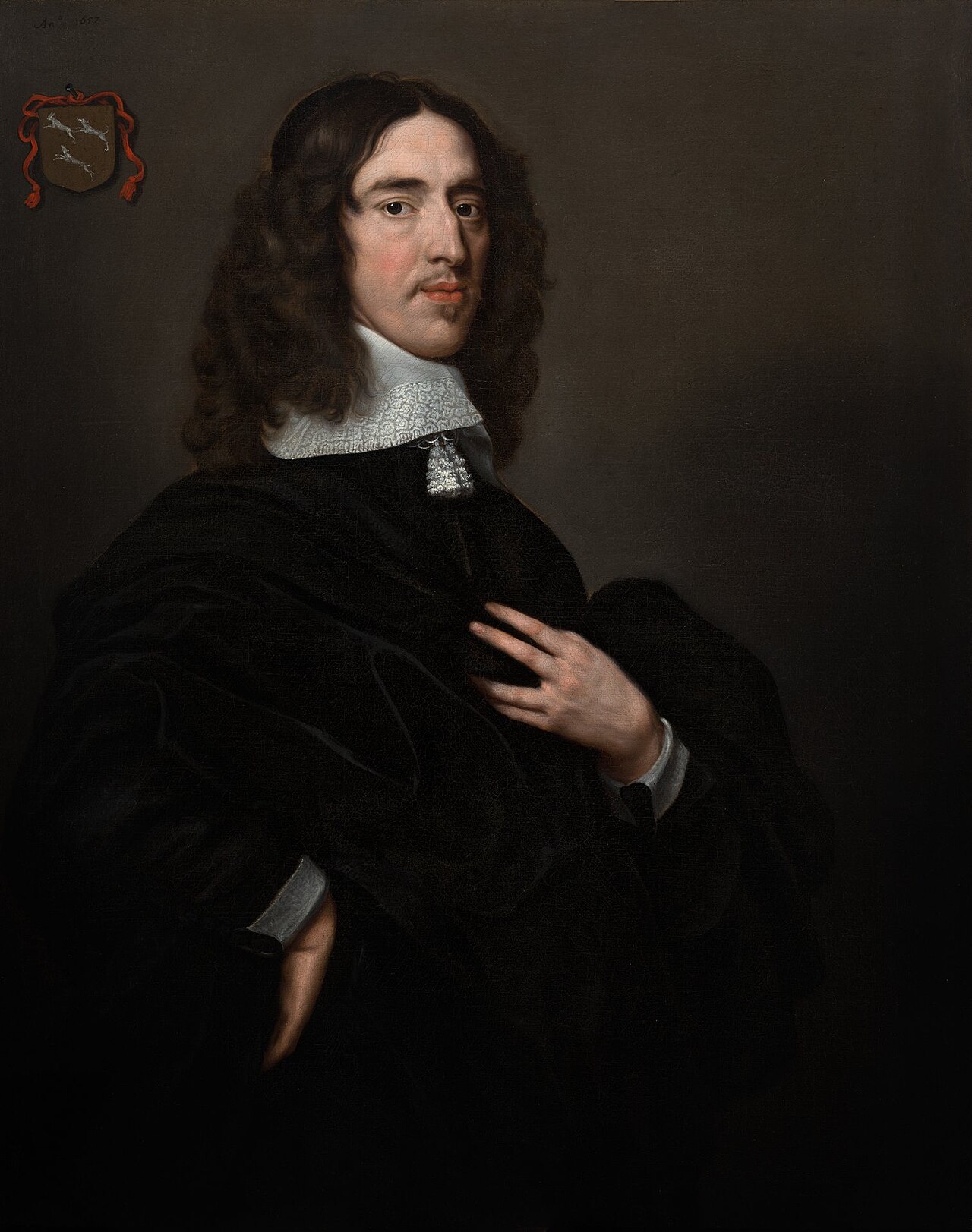
Portrait of Johan de Witt (Hanneman)
Adriaen Hanneman · c. 1652
 Book
Primary source
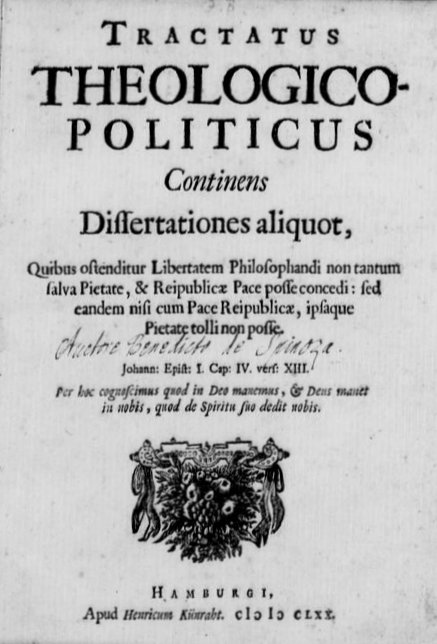
Tractatus Theologico-Politicus
Benedictus de Spinoza · 1670
 Document
Primary source
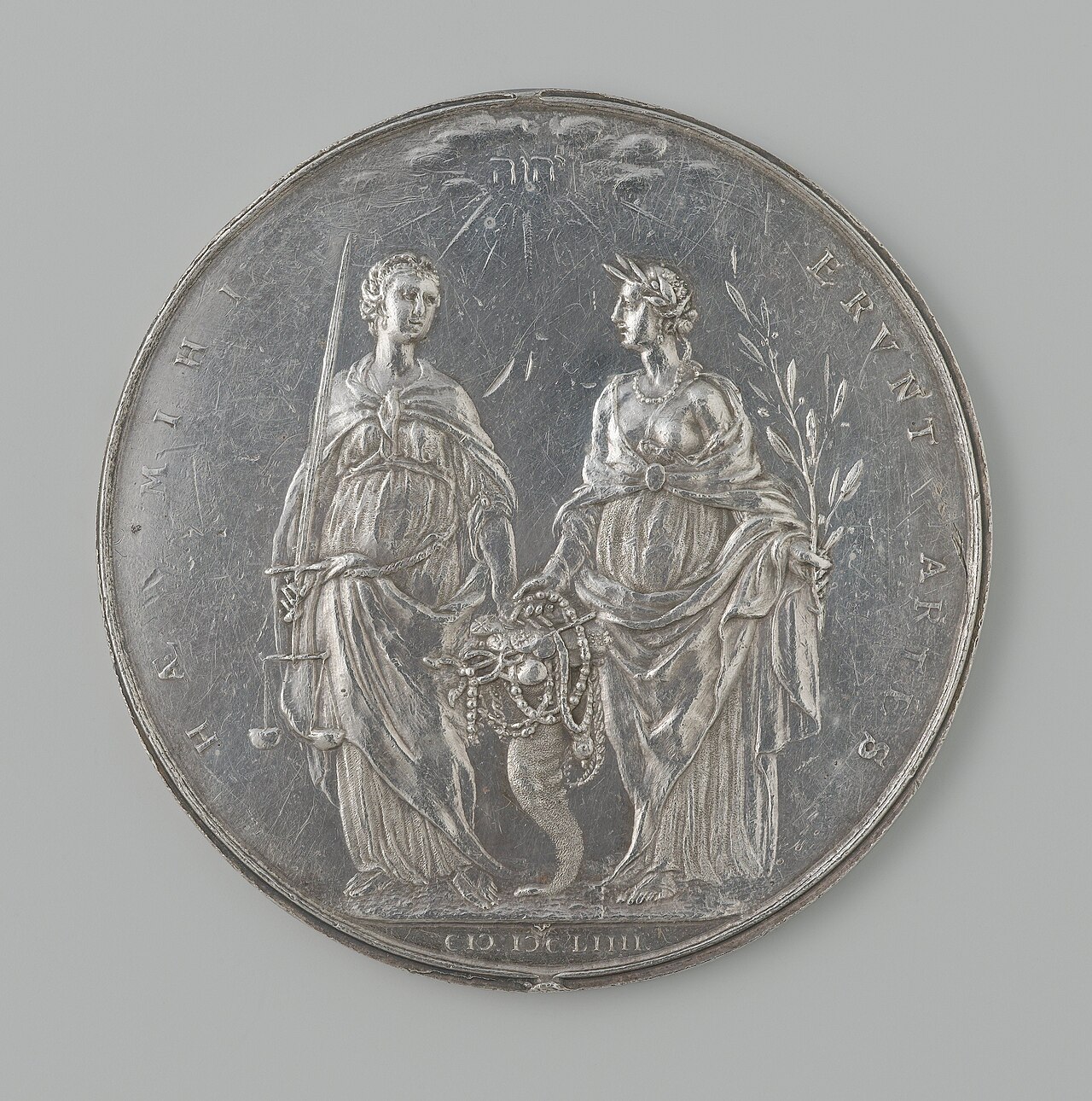
Treaty of Westminster
1654
Free account
Read every Johan de Witt source
Sign up free →
Ready when you are
Start chatting with Johan de Witt now.
20 messages free · No credit card · Available in 50+ languages.