


Secondary sourcePainting
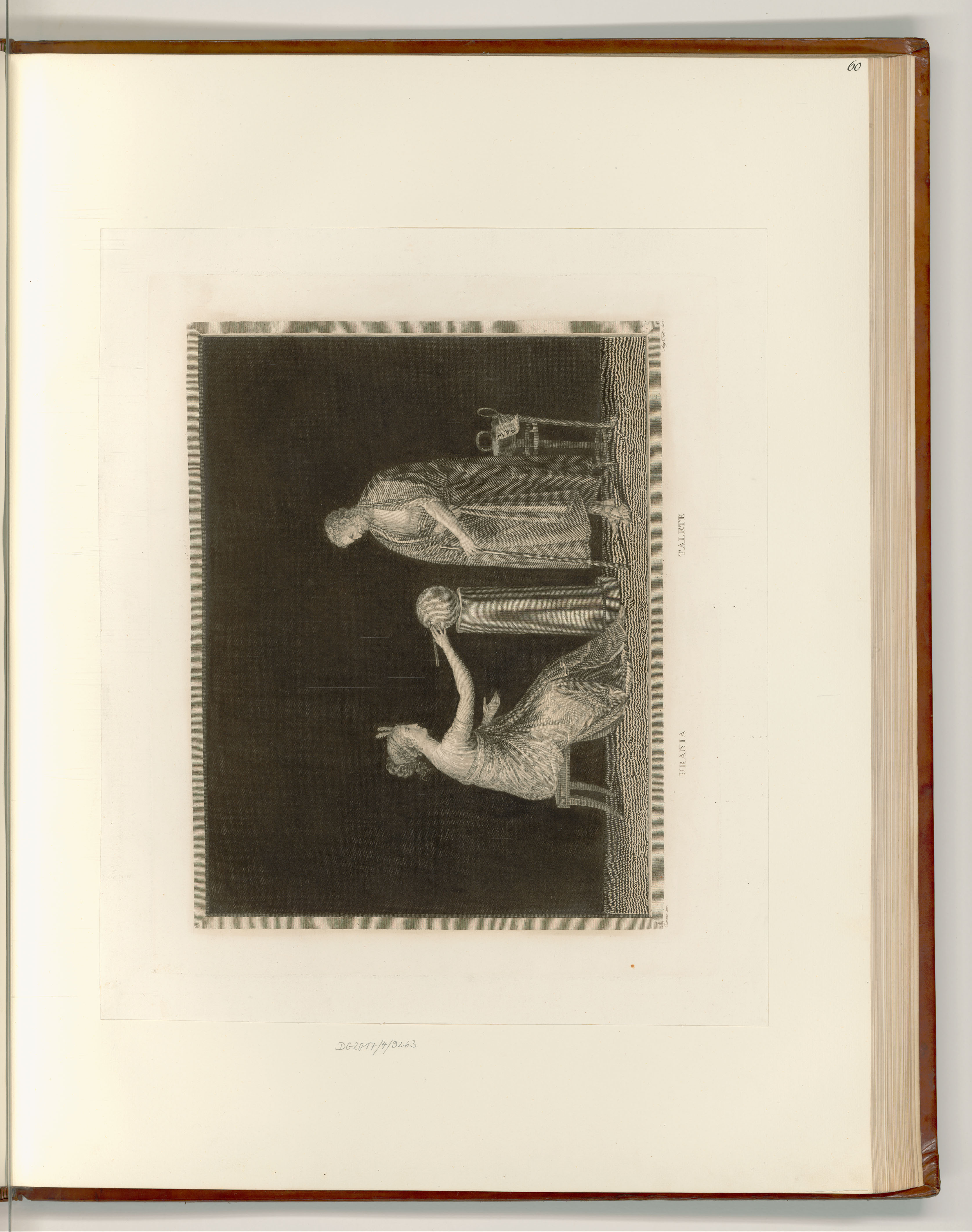
Urania and Thales
An engraved print from the Albertina Museum showing Thales with the muse Urania, an allegory of astronomy. It is a later depiction of the philosopher.
A later print linking Thales to astronomy through the muse Urania, showing how his legend was pictured.
About this source
What it is
This is an engraved print, shown rotated sideways on a book page marked with the number 60. It shows two classical figures. Urania, the muse, wears a star-patterned robe and holds a globe. Thales, a bearded man in a draped cloak, leans on a staff beside a cylindrical pedestal and a vase with letters. The labels read Urania and Thales. The print is held by the Albertina Museum in Austria.
Why it matters
Urania is the muse associated with astronomy, and the print pairs her with Thales, who is traditionally linked to early Greek astronomy. The image is a later depiction, so it reflects how Thales was imagined centuries after his life, which ended around 545 BCE. Scenes like this show how artists used classical figures to express ideas about learning and the stars.
Look closer
- What objects does each figure hold or lean on, and what might they signify?
- Why might an artist pair Thales with the muse of astronomy?
- What does the book-page setting tell you about how this image was circulated?
This painting is part of the curated material that grounds the AI version of Thales of Miletus on Humy.ai — when students ask about related events, the AI can quote it and cite it.
More Thales of Miletus sources
Browse all 76 → Book
Secondary source
Metaphysics
Aristotle · c. 400 BCE
 Book
Secondary source
Histories
Herodotus · c. 440 BCE
 Book
Secondary source
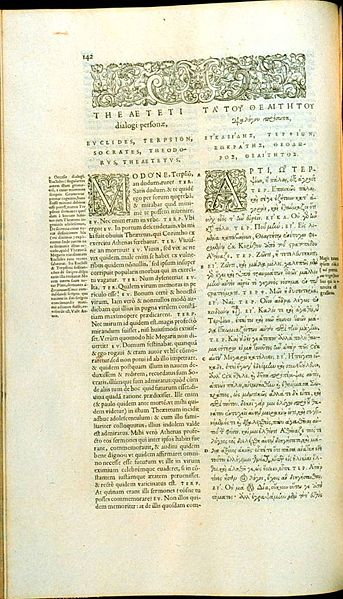
Theaetetus
Plato · early-to-middle 4th century BCE (this edition 1578)
 Book
Primary source
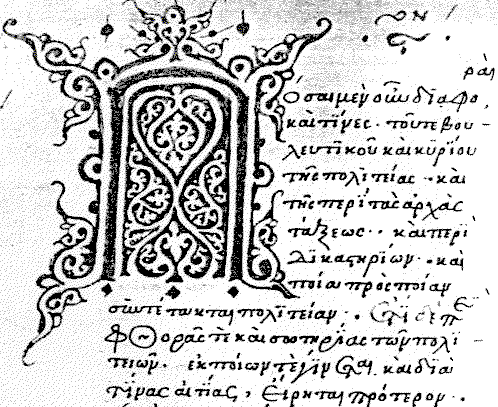
Politics
Aristotle · 4th century BCE
Free account
Read every Thales of Miletus source
Sign up free →
Ready when you are
Start chatting with Thales of Miletus now.
20 messages free · No credit card · Available in 50+ languages.