


Secondary sourceSculpture1799
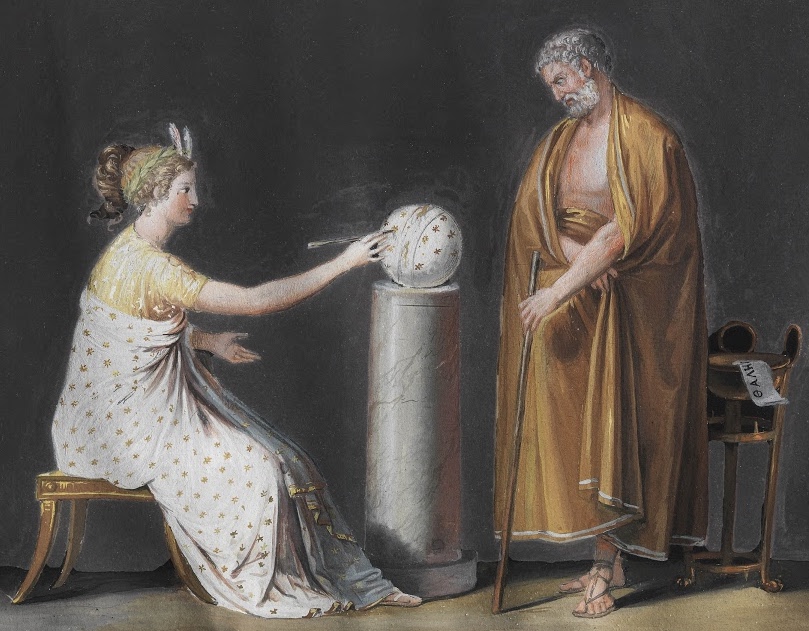
Urania Reveals to Thales the Secrets of the Skies
Antonio Canova · 1799
A Neoclassical relief by Antonio Canova showing the Muse Urania revealing astronomical knowledge to Thales.
This Neoclassical relief imagines Thales receiving astronomical knowledge from the Muse Urania, reflecting his later reputation as an astronomer.
About this source
What it is
This is a relief sculpture created by the Italian sculptor Antonio Canova in 1799. It depicts a scene between the Muse Urania, associated with astronomy, and the philosopher Thales.
Why it matters
The work shows how later European artists imagined ancient Greek philosophers, celebrating Thales as a founding figure of astronomy and science. It is not a historical record of Thales himself but reflects how his reputation as an early astronomer continued to inspire artists many centuries after his lifetime.
Look closer
- What does the scene with Urania suggest about how Thales's knowledge of the stars was remembered?
- Why might an artist centuries later choose to depict Thales receiving wisdom from a mythological figure?
- How does this image differ from a historical record, and what does that difference teach us about legacy and myth-making?
This sculpture is part of the curated material that grounds the AI version of Thales of Miletus on Humy.ai — when students ask about related events, the AI can quote it and cite it.
More Thales of Miletus sources
Browse all 76 → Book
Secondary source
Metaphysics
Aristotle · c. 400 BCE
 Book
Secondary source
Histories
Herodotus · c. 440 BCE
 Book
Secondary source
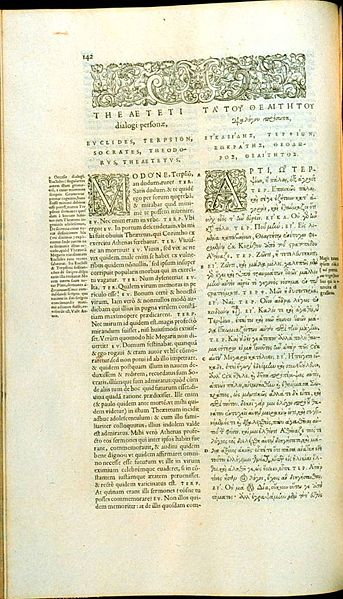
Theaetetus
Plato · early-to-middle 4th century BCE (this edition 1578)
 Book
Primary source
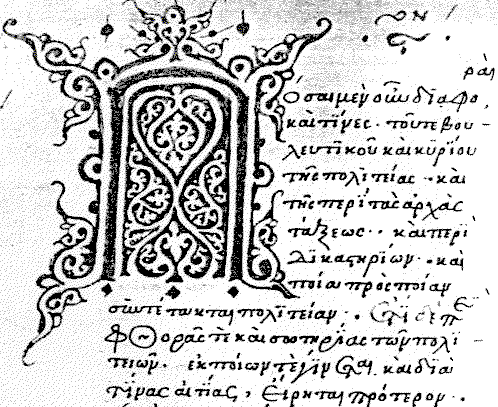
Politics
Aristotle · 4th century BCE
Free account
Read every Thales of Miletus source
Sign up free →
Ready when you are
Start chatting with Thales of Miletus now.
20 messages free · No credit card · Available in 50+ languages.