


Primary sourceArtifact1426/7–1443/4
Uzunköprü Bridge
Muslihiddin · 1426/7–1443/4
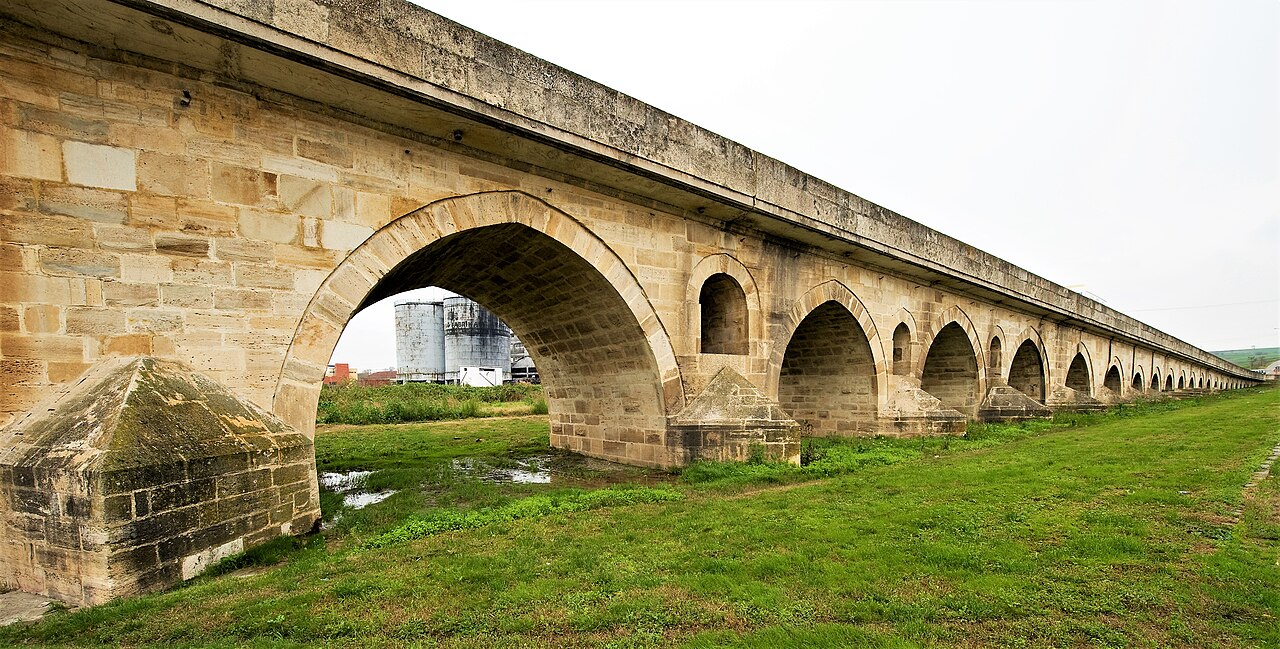
A long Ottoman stone bridge over the Ergene River, built between 1426 and 1443/4 on the order of Sultan Murad II to help his armies cross into the Balkans.
Murad II ordered this bridge built for his armies and attended its opening ceremony after the Battle of Varna.
About this source
What it is
Uzunköprü Bridge, also called Cisr-i Ergene, is a 15th-century stone bridge in Edirne Province, Turkey. Sultan Murad II ordered its construction, which began around 1426/7 under head architect Muslihiddin and craftsman Mehmed and finished in 1443/4. It spans the Ergene River with many arches and is claimed to be the world's longest stone bridge.
Why it matters
The bridge let Ottoman soldiers cross a swampy, flood-prone river safely on the route into Rumelia (the Balkans), supporting Murad's military campaigns. Its opening ceremony was attended by Murad II himself, on his way back from the Battle of Varna. The settlement of Uzunköprü grew up around the bridge, showing how infrastructure projects could create new towns.
Look closer
- Why would a sultan invest sixteen years and great resources in building a bridge rather than roads or forts?
- What problems did the bridge solve for people living and travelling in the region?
- How does the bridge's survival through repairs and restorations change what we're really looking at today?
This artifact is part of the curated material that grounds the AI version of Murad II on Humy.ai — when students ask about related events, the AI can quote it and cite it.
More Murad II sources
Browse all 80 →
Ready when you are
Start chatting with Murad II now.
20 messages free · No credit card · Available in 50+ languages.