


Secondary sourcePhotograph18 May 2008
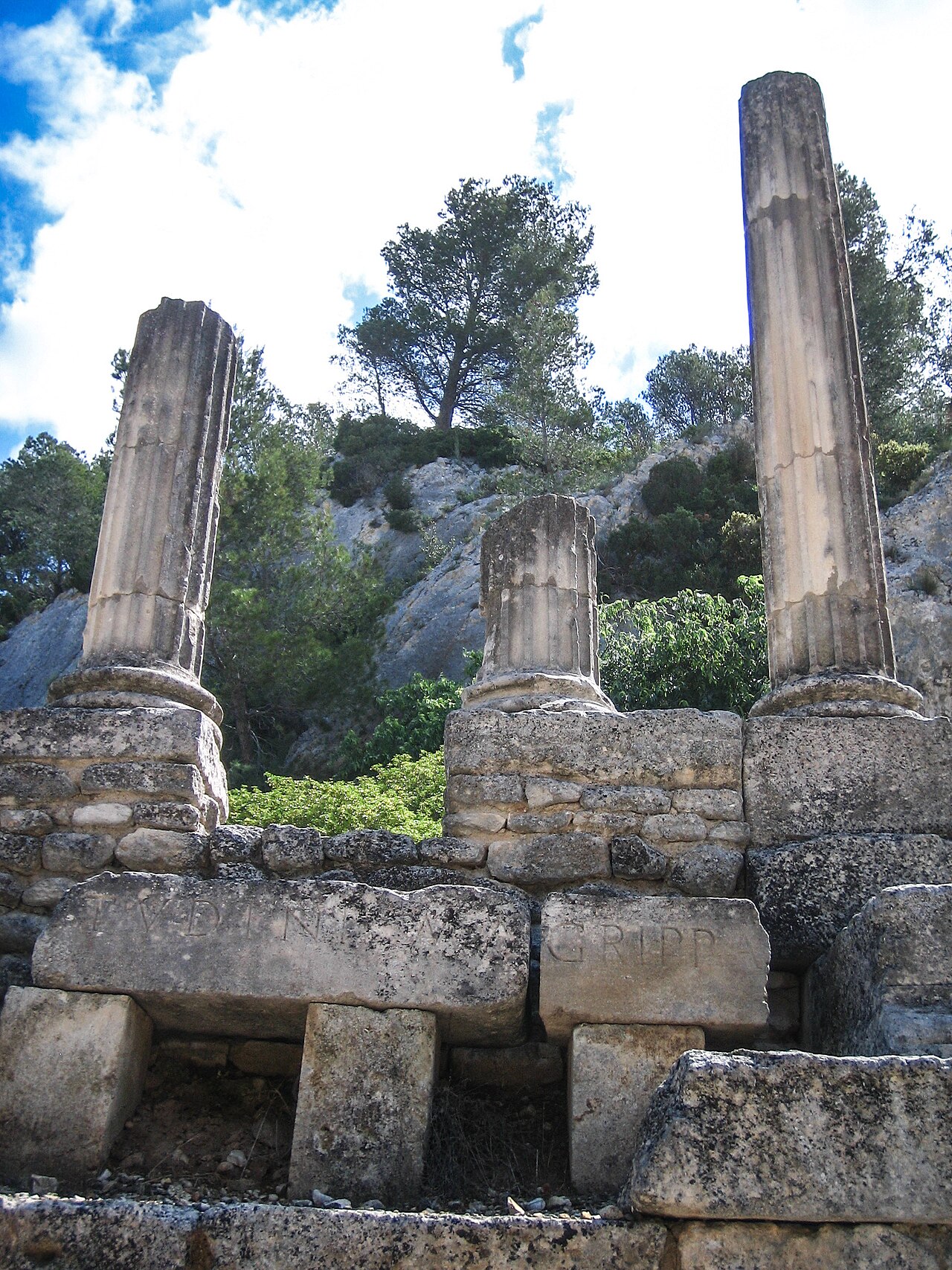
Valetudo temple at Saint-Rémy-de-Provence
Rachel Scott Halls · 18 May 2008
A 2008 photograph of ruined columns and stone blocks of a Roman temple at Glanum. The record links this building to Agrippa.
Shows a temple at Glanum that the collection record links to Agrippa, though the photo itself does not show who built it.
About this source
What it is
This is a photograph taken on 18 May 2008 by Rachel Scott Halls. It shows the ruins of a Roman temple at Glanum, now in Saint-Rémy-de-Provence. Three fluted stone columns stand on stone bases, the tallest on the right. Inscribed stone blocks lie in front, with a rocky hillside and pine trees behind under a cloudy sky.
Why it matters
The temple is linked to Agrippa in the collection record, which is why it appears in his archive. The surviving columns show the scale and style of Roman religious building in Gaul. The ruins also show how much of ancient Glanum has been lost, so students must rely on fragments and photographs to picture the town as it once was.
Look closer
- How much of the temple survives, and what parts appear to be missing?
- What does the record tell you about the link between this temple and Agrippa, and what does the photograph itself not prove?
- What does a photograph of ruins leave out about the people who worshipped here?
This photograph is part of the curated material that grounds the AI version of Marcus Vipsanius Agrippa on Humy.ai — when students ask about related events, the AI can quote it and cite it.
More Marcus Vipsanius Agrippa sources
Browse all 97 → Document
Secondary source
CIL VI, 896 (Pantheon Dedication Inscription)
126 (copying text of 27 BC)
 Sculpture
Primary source
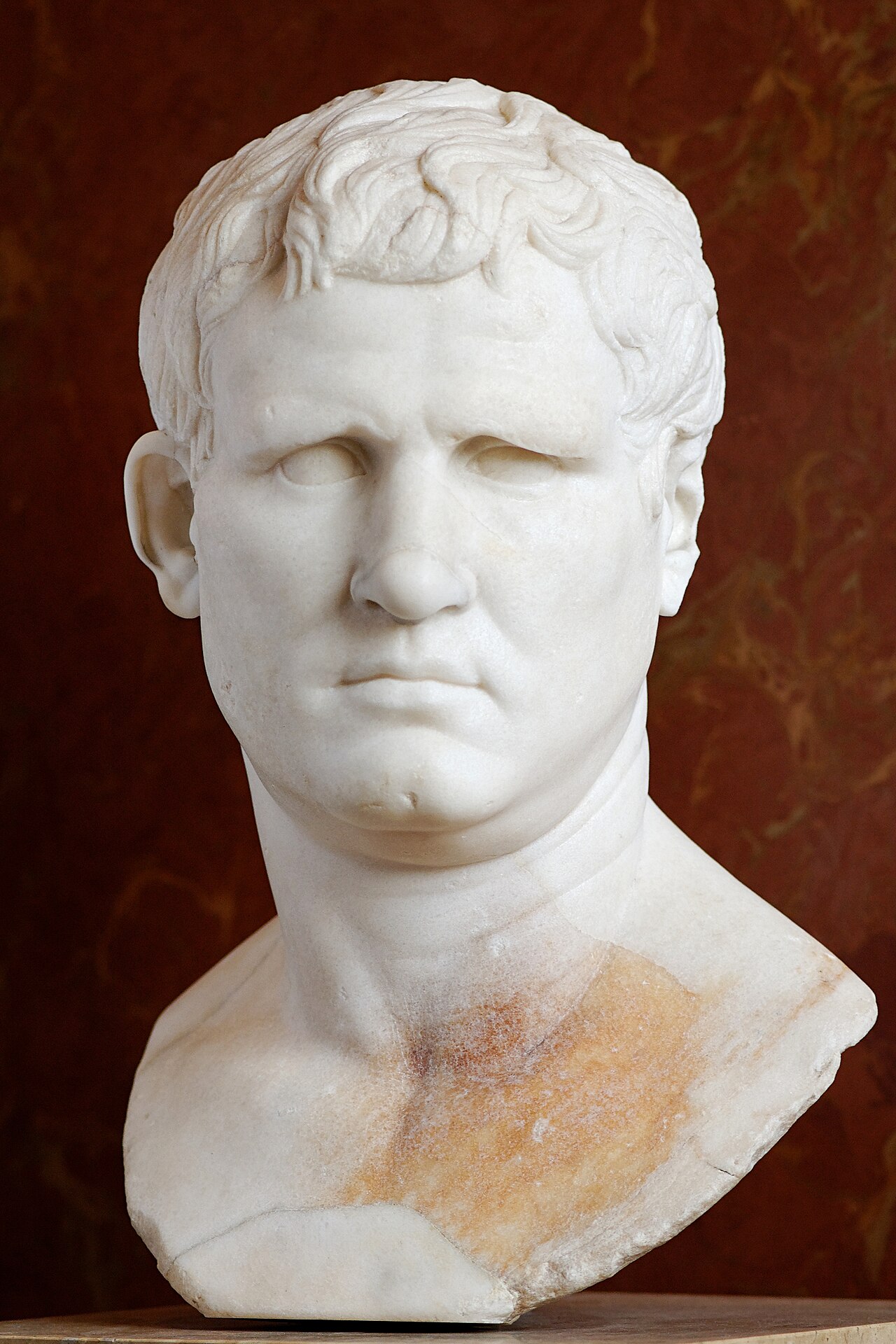
Portrait of Marcus Vipsanius Agrippa (Gabii type)
c. 25–24 BC
 Artifact
Primary source
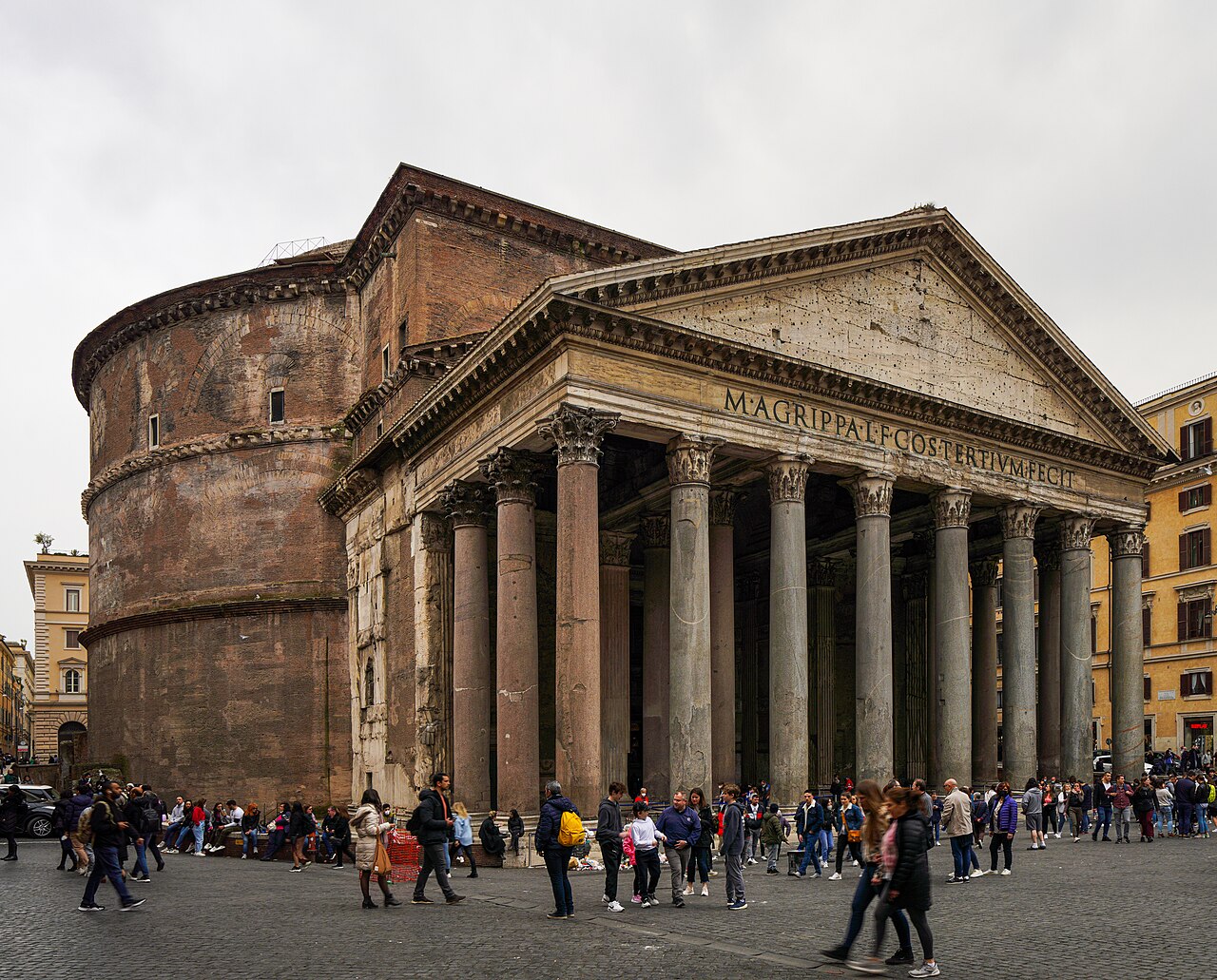
Pantheon
Hadrian · c. AD 126-128
 Document
Primary source
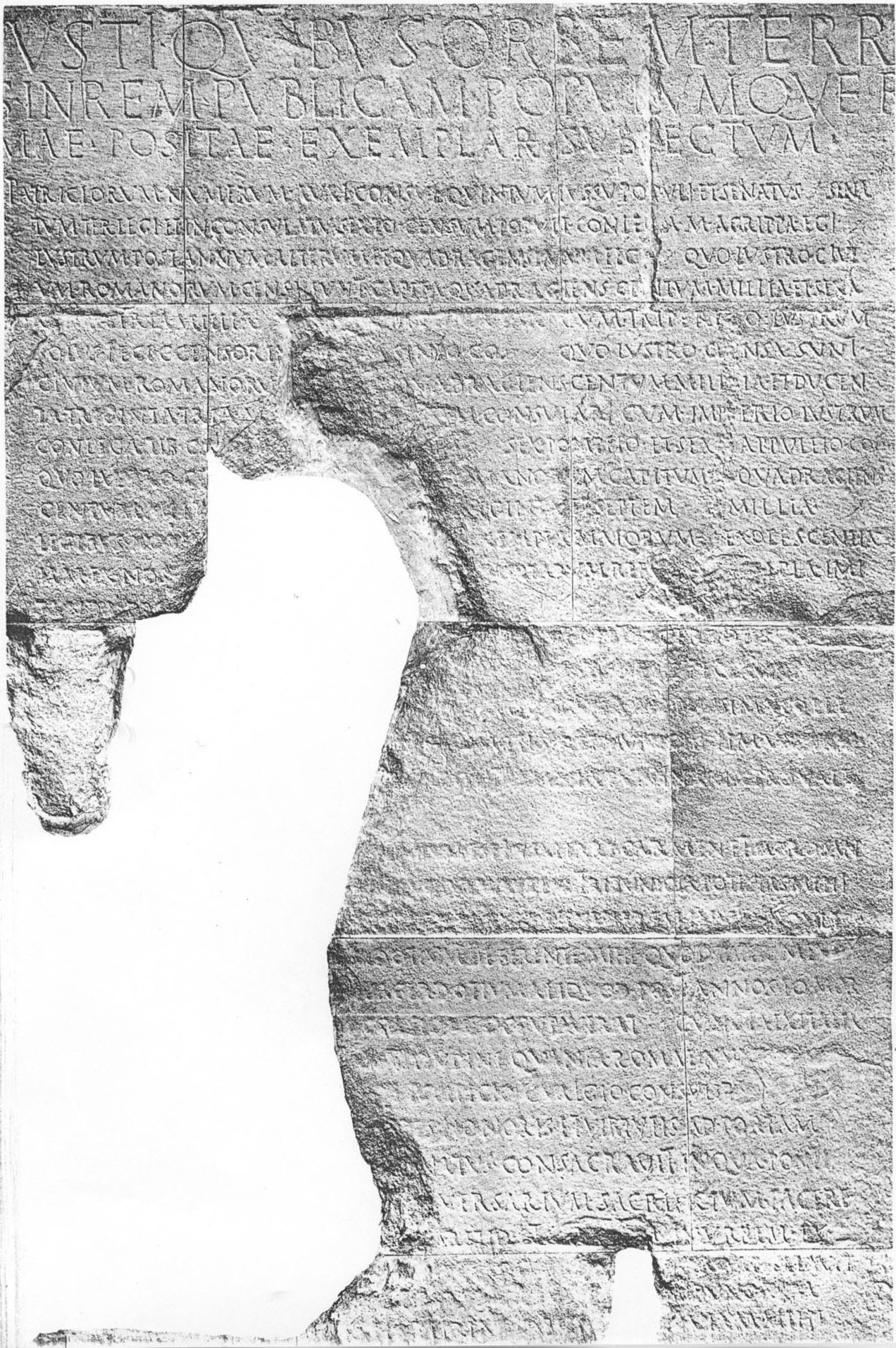
Res Gestae Divi Augusti
Augustus · 14 AD
Free account
Read every Marcus Vipsanius Agrippa source
Sign up free →
Ready when you are
Start chatting with Marcus Vipsanius Agrippa now.
20 messages free · No credit card · Available in 50+ languages.