


Secondary sourcePainting17th century
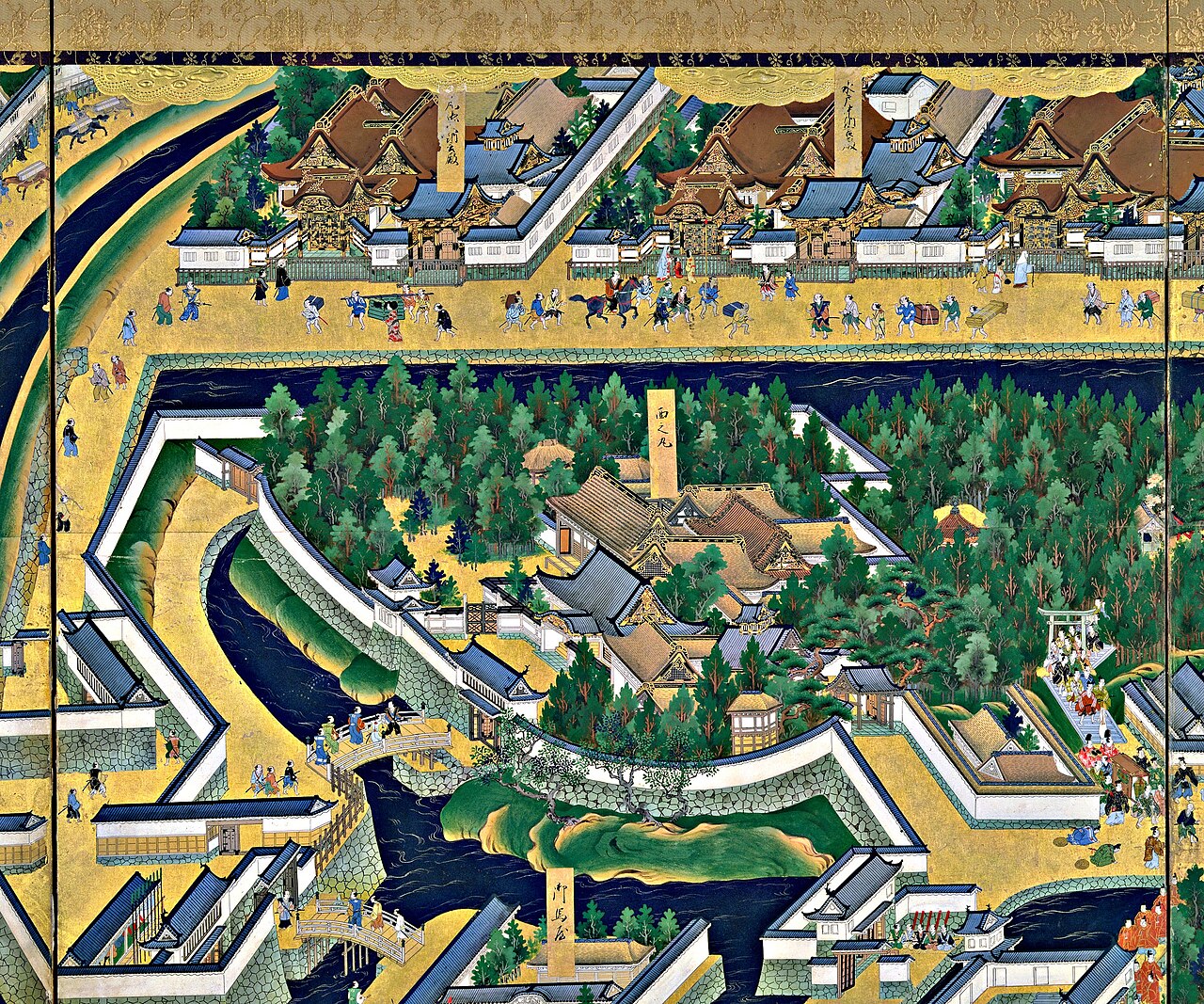
View of Edo, Left Screen (Detail: West Enceinte)
Unknown · 17th century
A detail from a 17th-century folding screen showing the west enclosure of Edo Castle, which later became the residence Yoshinobu occupied as shogun.
Shows Edo Castle, the seat of power Yoshinobu inherited and later surrendered, long before his lifetime.
About this source
What it is
This is a detail from a pair of six-panel folding screens painted in the 17th century, showing the city of Edo (now Tokyo) and celebrating the achievements of the third shogun, Tokugawa Iemitsu. This section shows the west enclosure and Fukiage area of Edo Castle, with castle residences of the Tokugawa families and palanquin carriers on the roads.
Why it matters
Edo Castle was the seat of power for the Tokugawa shoguns for over two centuries, including Tokugawa Yoshinobu, the last shogun, who lived there and eventually surrendered it during the Meiji Restoration. The screen shows the grandeur the shogunate built and projected generations before Yoshinobu's time.
Look closer
- What details show how important and wealthy the castle residences were?
- Why might an artist use gold leaf as a background?
- What is missing from this view that a photograph might show?
This painting is part of the curated material that grounds the AI version of Tokugawa Yoshinobu on Humy.ai — when students ask about related events, the AI can quote it and cite it.
More Tokugawa Yoshinobu sources
Browse all 52 →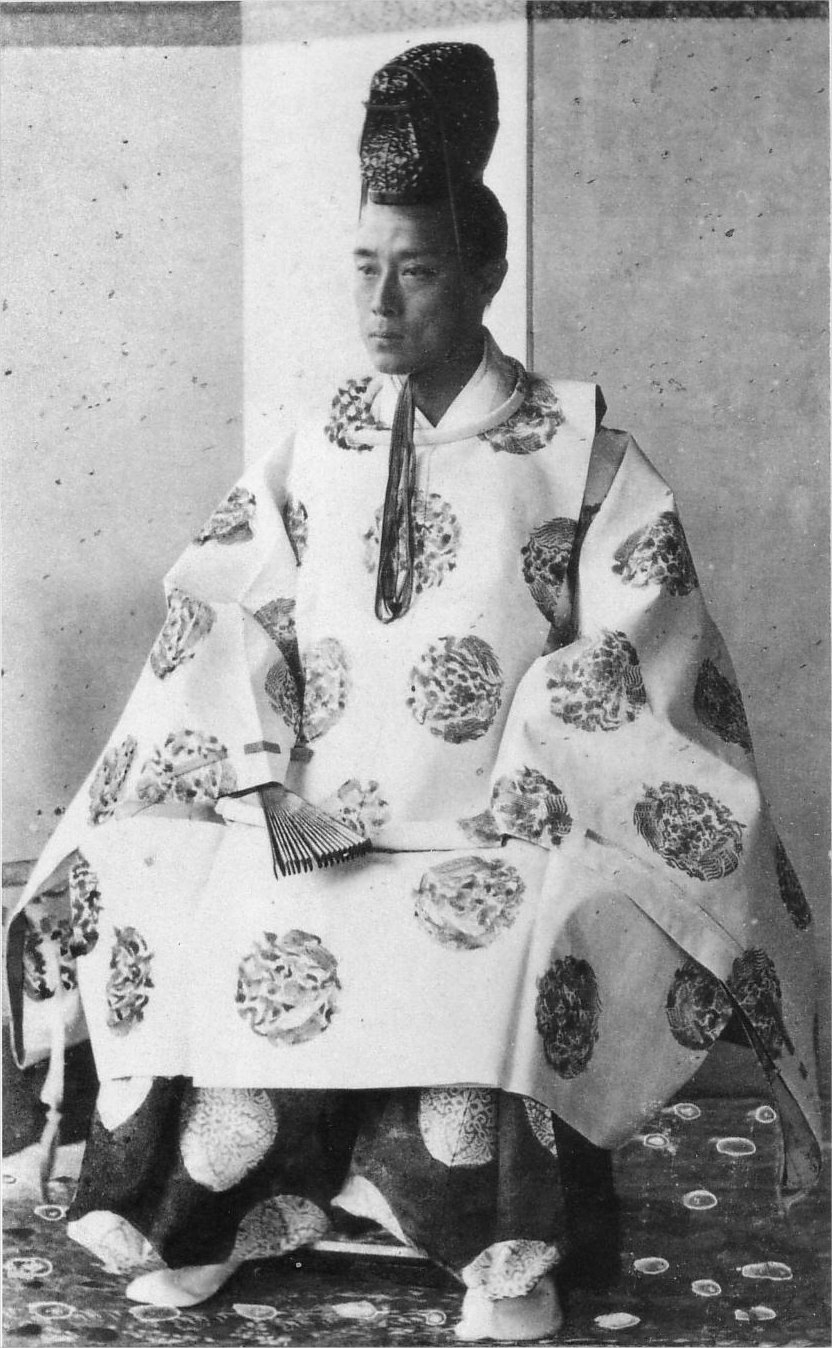 Photograph
Primary source
Portrait of Tokugawa Yoshinobu
1867
 Artifact
Primary source
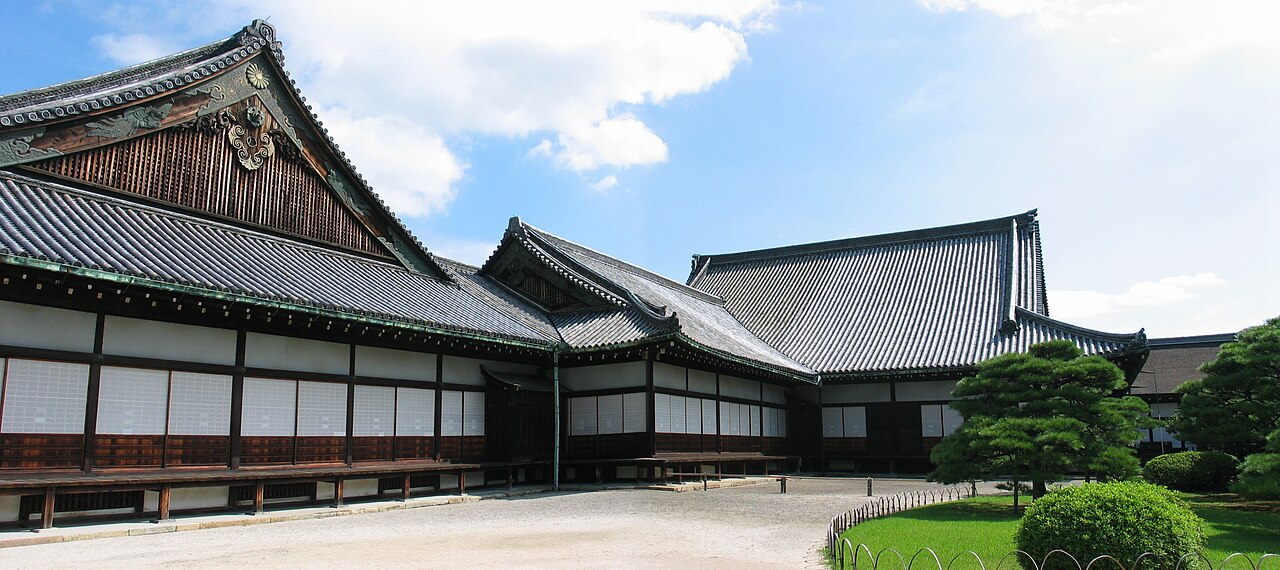
Nijō Castle
1601-1603 (completed 1626)
 Photograph
Primary source
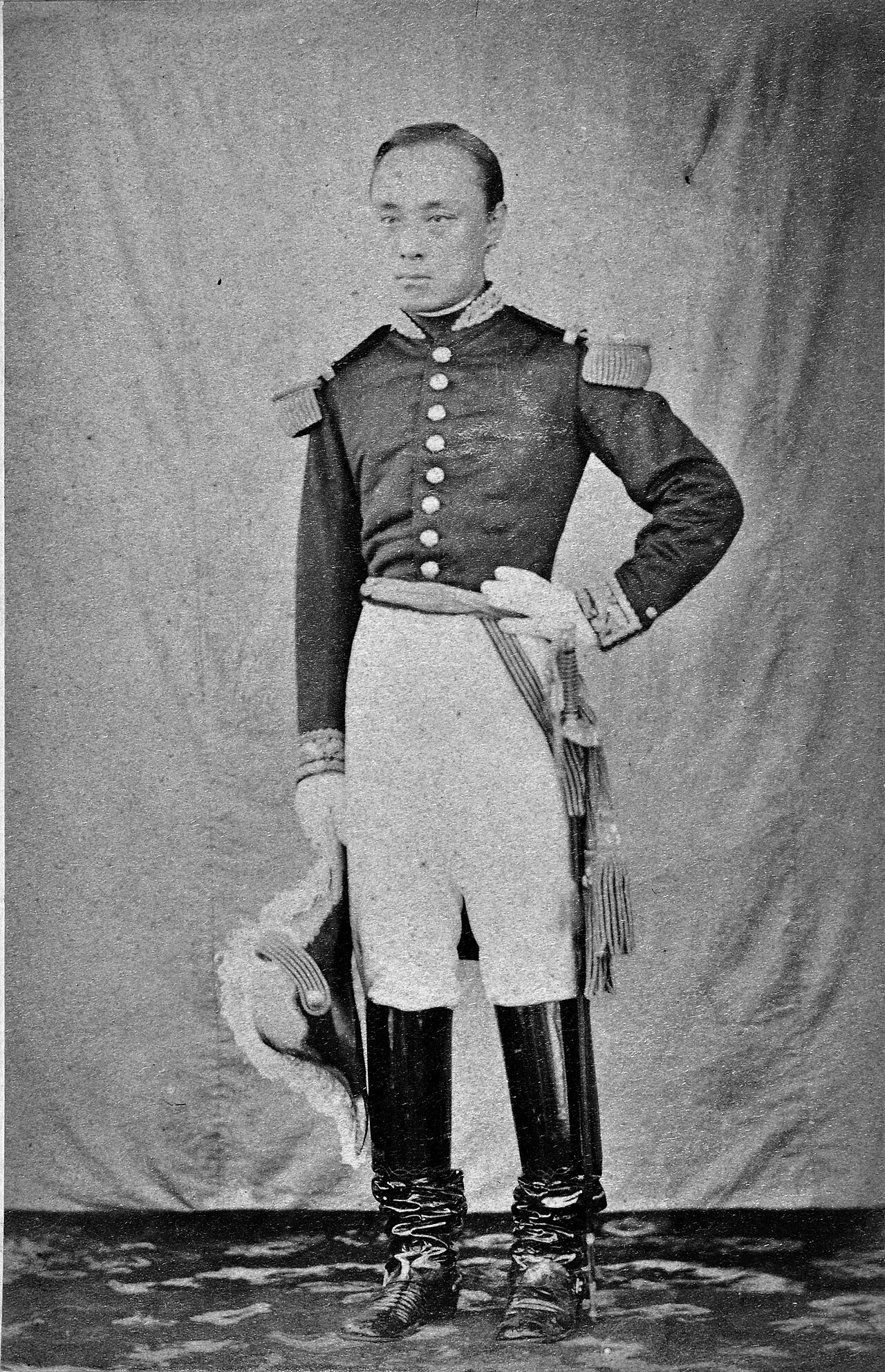
Photograph of Tokugawa Yoshinobu in French Military Uniform
Frederick William Sutton (attributed) · 1867
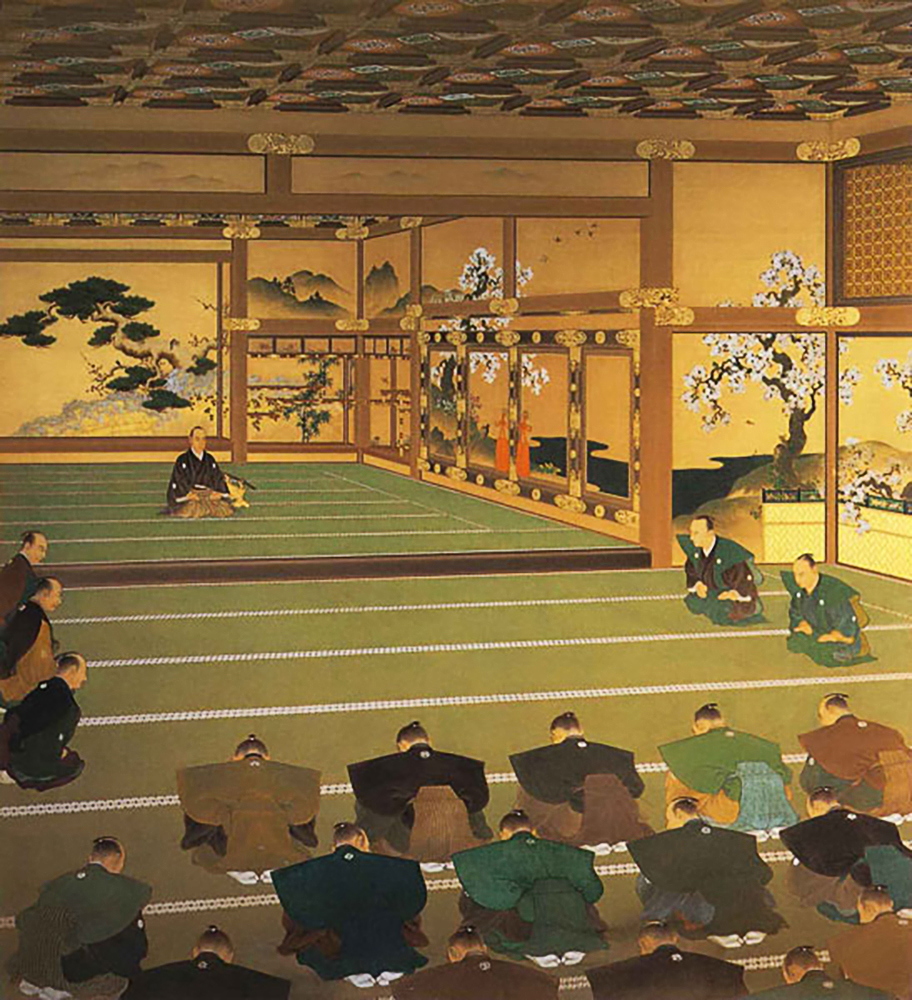 Painting
Secondary source
Taisei Hōkan
Kunii Ōbun · 1935
Free account
Read every Tokugawa Yoshinobu source
Sign up free →
Ready when you are
Start chatting with Tokugawa Yoshinobu now.
20 messages free · No credit card · Available in 50+ languages.