


Primary sourceDocument1974
Village of Belle Terre v. Boraas
Thurgood Marshall · 1974
A 1974 Supreme Court dissent by Thurgood Marshall arguing that a village ordinance limiting unrelated residents to two people burdened rights of association and privacy.
Marshall wrote this dissent as a Supreme Court justice, showing his view that household rules touch on privacy and association rights.
About this source
What it is
This is a dissenting opinion by Justice Thurgood Marshall in Village of Belle Terre v. Boraas (1974), reported as 416 U.S. 1. The case concerns a zoning ordinance of the incorporated village of Belle Terre, New York, which prohibited groups of more than two unrelated persons from living in a residence, while allowing any number of people related by blood, adoption, or marriage. The text is listed on Wikisource, which holds a transcription rather than the original document.
Why it matters
The opinion involves three unrelated student tenants and two owners of a residence who challenged the ordinance as a violation of equal protection. Marshall argues that the classification affects fundamental rights of association and privacy under the First and Fourteenth Amendments, so stricter review should apply. He disagrees with the majority, which he says upheld the ordinance under a rational-relationship test. The dissent shows how local zoning rules could touch on family and household life.
Look closer
- Who does the ordinance allow to live together, and who does it not allow?
- Why does Marshall say the rights of the students make a difference to the level of review?
- What does the opinion leave out about the village's reasons for the ordinance?
This document is part of the curated material that grounds the AI version of Thurgood Marshall on Humy.ai — when students ask about related events, the AI can quote it and cite it.
More Thurgood Marshall sources
Meet the AI Thurgood Marshall →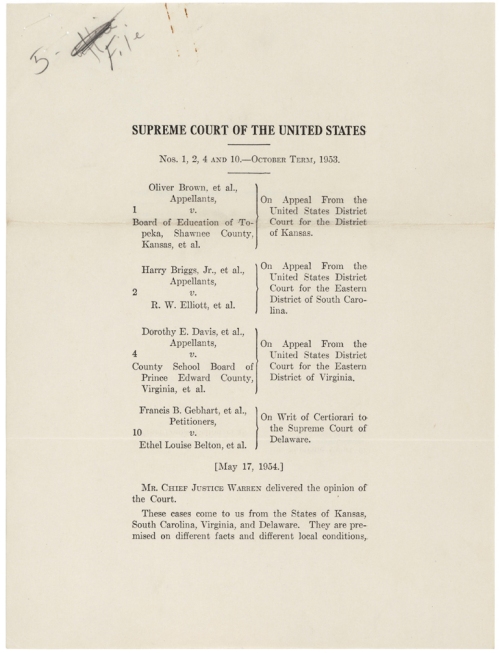 Document
Primary source
Brown v. Board of Education
Earl Warren · 17 May 1954
 Painting
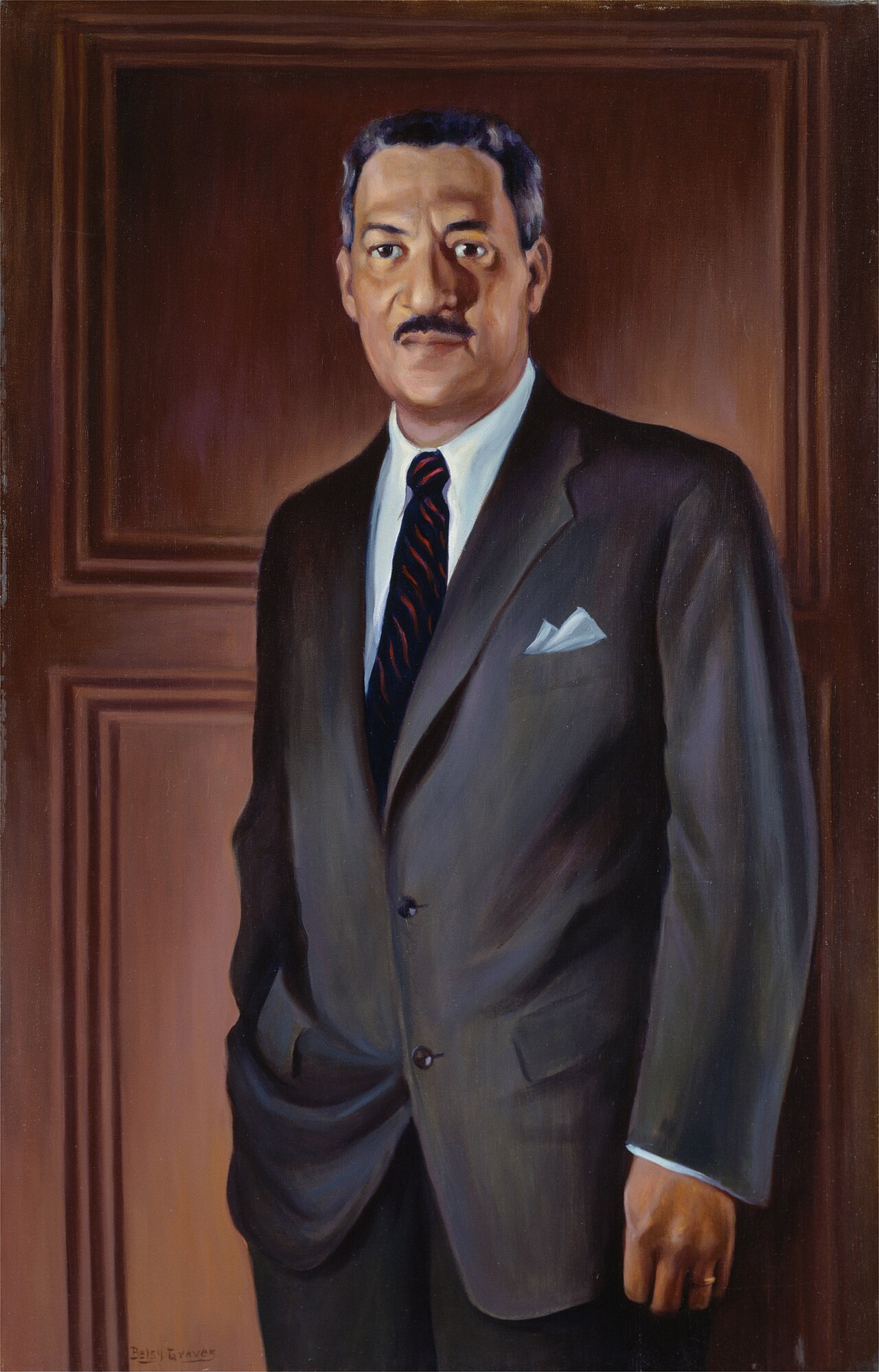
Primary source
Thurgood Marshall
Betsy Graves Reyneau · 1956
 Photograph
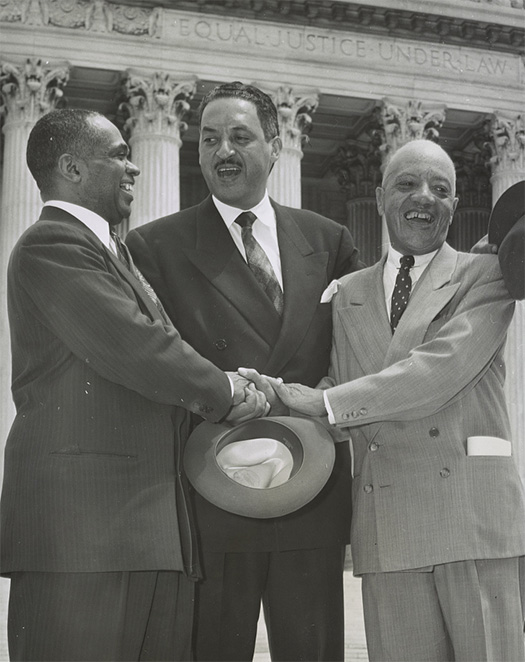
Primary source
George Edward Chalmer Hayes, Thurgood Marshall, and James Nabrit in 1954 winning Brown case
1954
 Photograph
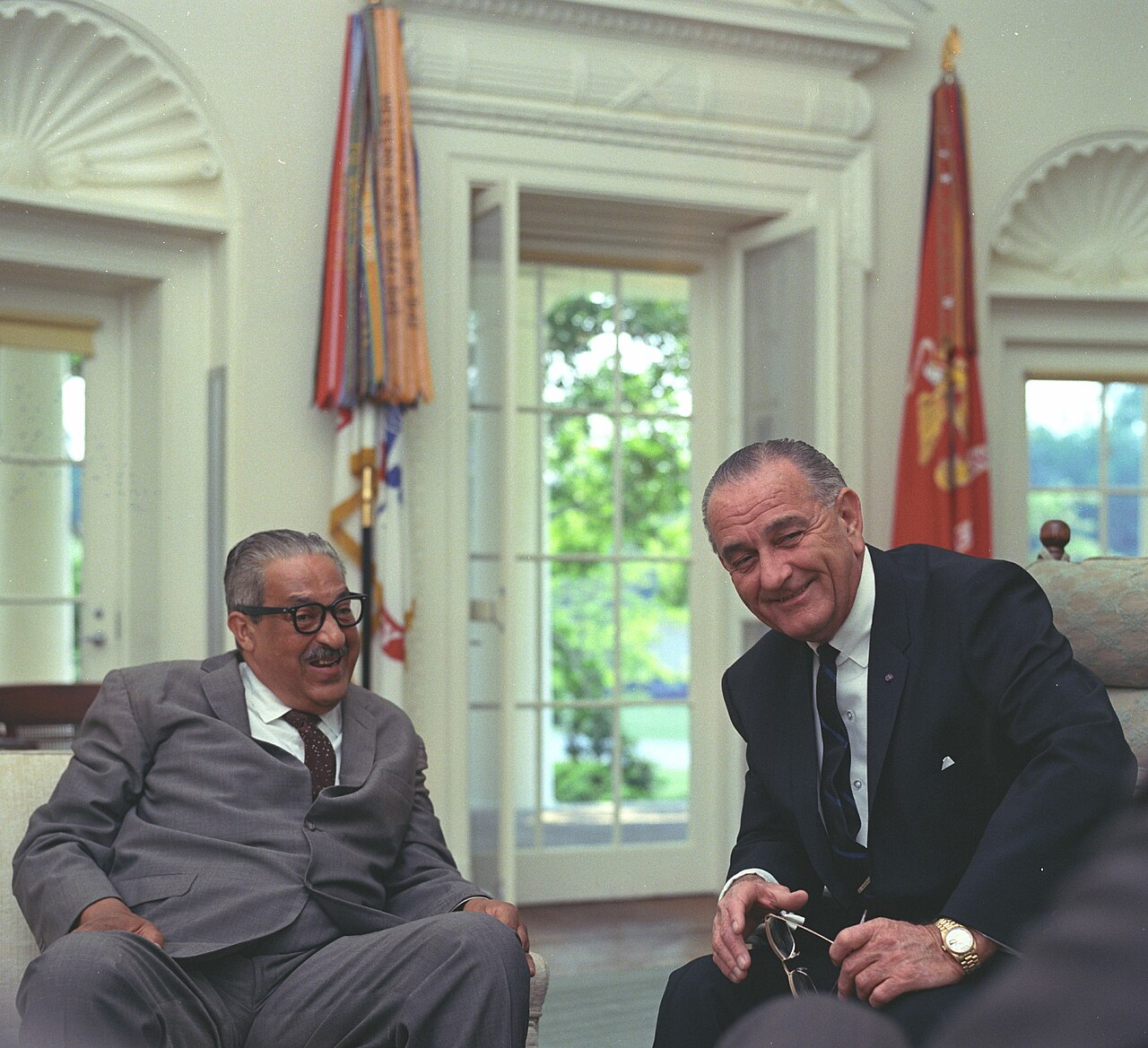
Primary source
Thurgood Marshall and President Lyndon B. Johnson, June 13, 1967
Frank Wolfe · 13 June 1967
Primary source
Cooper v. Aaron
12 September 1958
Ready when you are
Start chatting with Thurgood Marshall now.
20 messages free · No credit card · Available in 50+ languages.