


Secondary sourcePainting1565
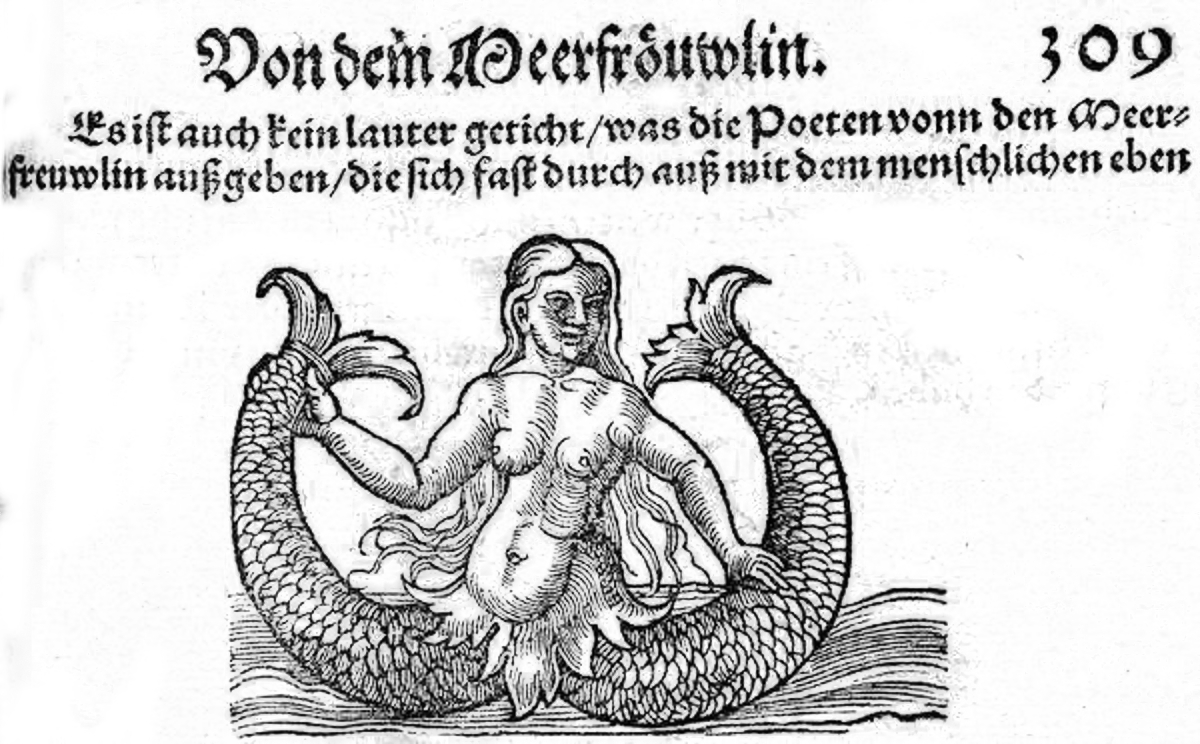
Von dem Meerfröuwlin (Mermaid woodcut from German Natural History)
1565
A woodcut of a two-tailed mermaid, printed on page 309 of a 1565 German edition of Pliny's Natural History.
Shows how Pliny's Natural History was reprinted with pictures in a German edition, long after his death.
About this source
What it is
This is a woodcut printed in a German edition of Pliny's Natural History, published in Frankfurt in 1565. The page has the German heading Von dem Meerfröuwlin, meaning about the mermaid, and the page number 309. Below the text, a mermaid with long flowing hair sits inside a loop formed by her two fish tails. She holds one tail with her left hand and rests her other arm on the other tail. Wavy water lines run along the bottom. The record names the page number with a question mark, so it should be checked against a copy of the book. The image shows a bare-breasted figure.
Why it matters
Pliny did not make this woodcut. It was added by printers and artists more than 1,400 years after his death, when his encyclopedia was read in new languages. Editions like this one show how Renaissance readers took Pliny's descriptions of strange animals and people as facts, and then gave them pictures. The book reflects the interests of its German publishers and their readers.
Look closer
- What details of the mermaid look like the artist's imagination rather than an observed animal?
- Why might a printer in 1565 choose to illustrate a creature that Pliny described?
- What does the text beside the picture suggest about how readers were expected to treat it?
This painting is part of the curated material that grounds the AI version of Pliny the Elder on Humy.ai — when students ask about related events, the AI can quote it and cite it.
More Pliny the Elder sources
Browse all 84 →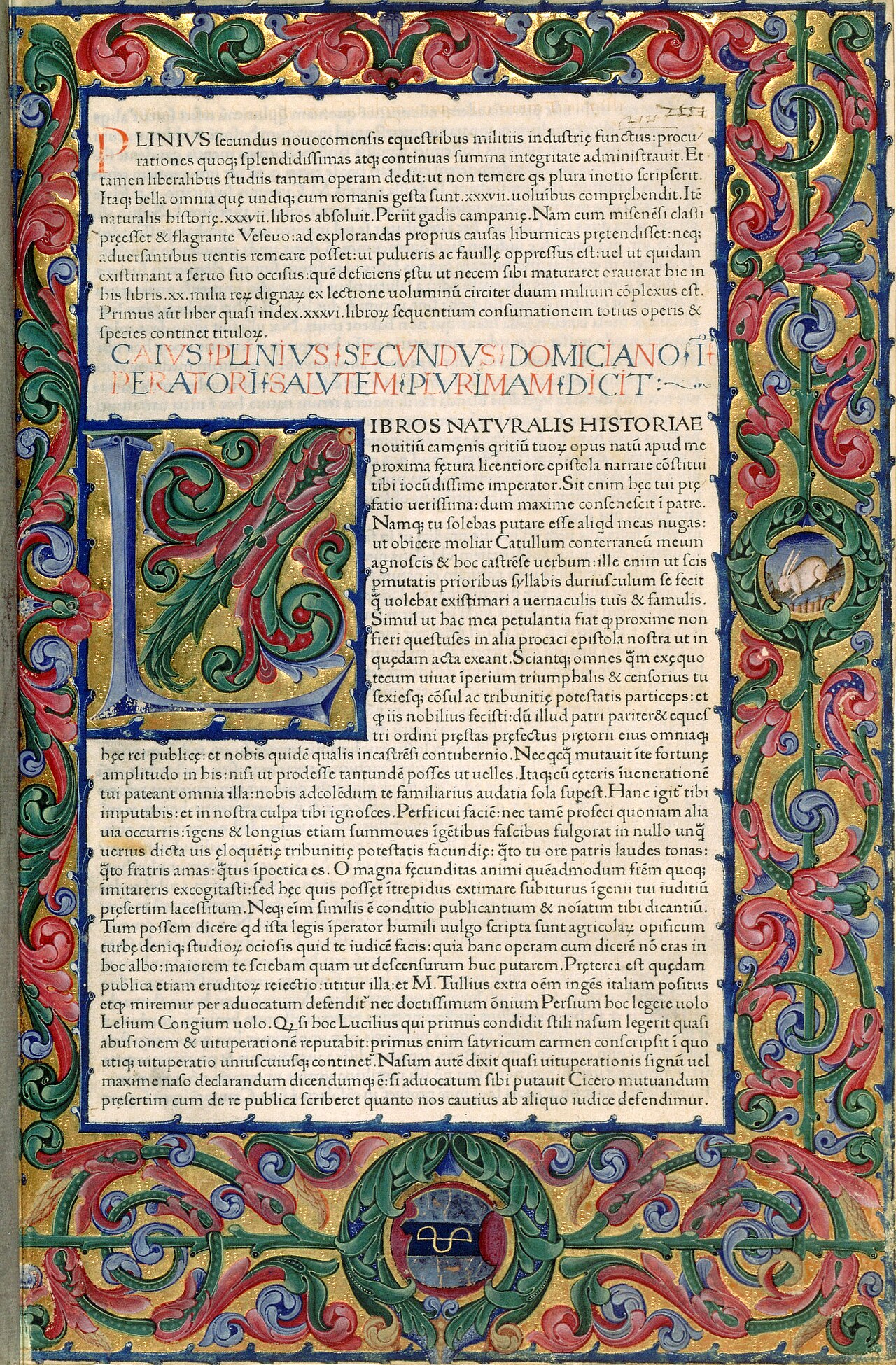 Book
Secondary source
Natural History
Pliny the Elder · 77-79 CE
 Sculpture
Secondary source
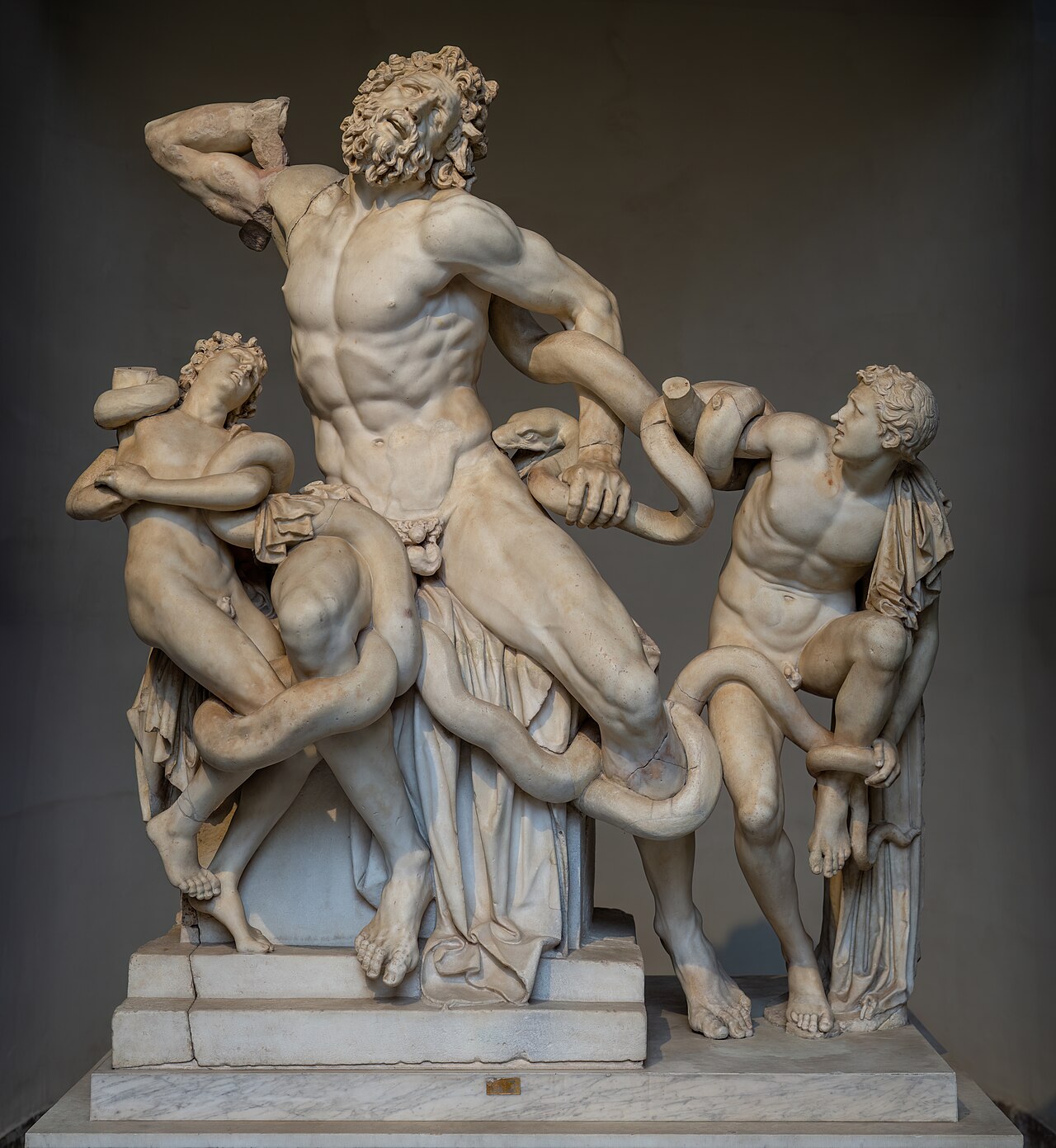
Laocoön and His Sons
Athanadoros · uncertain, Hellenistic to early Imperial period
 Book
Primary source
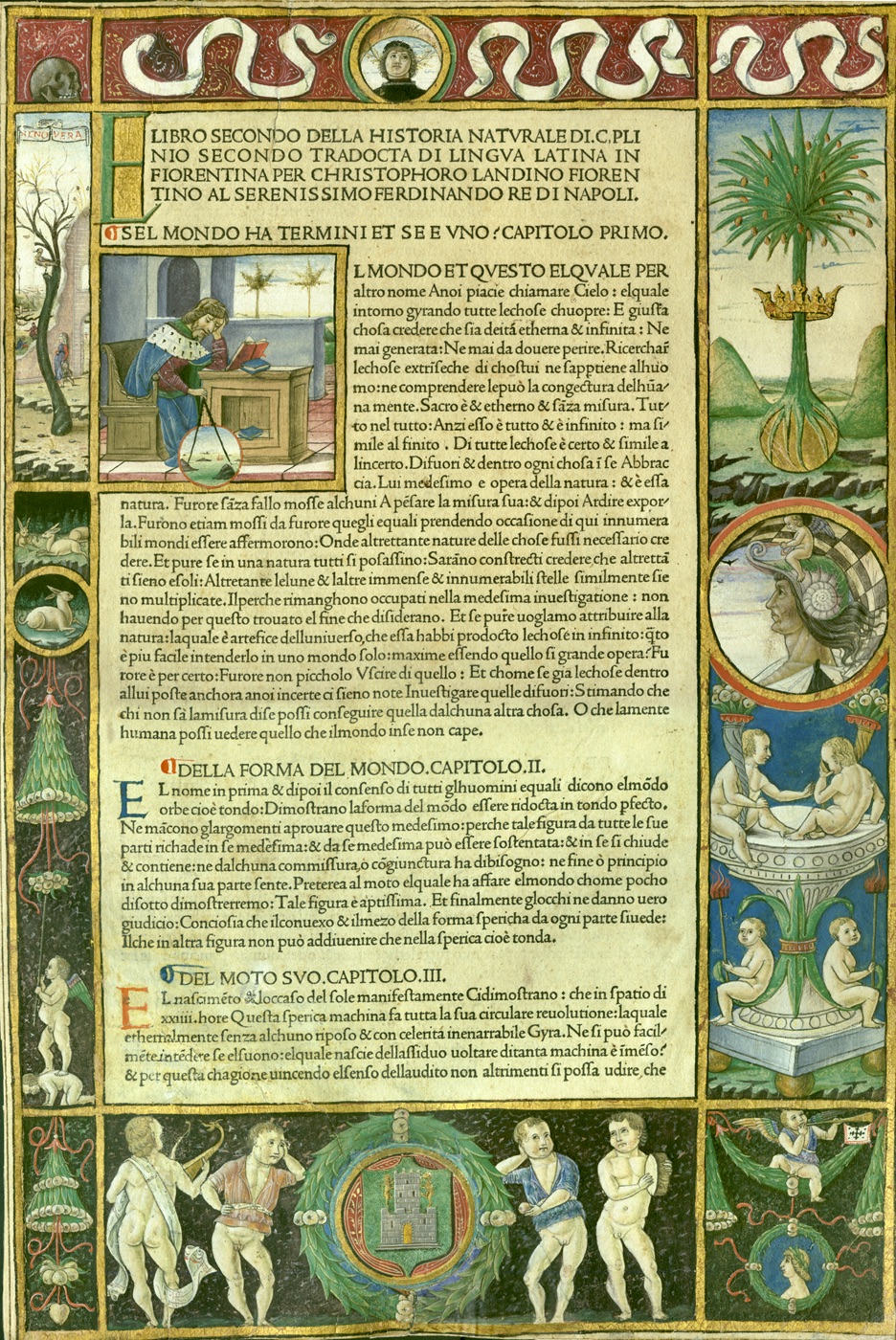
Naturalis historia Illuminated Initial Leaf
Pliny the Elder · c. 1476
 Book
Secondary source
The History of the World, Commonly Called the Naturall Historie of C. Plinius Secundus
Philemon Holland · 1601
Free account
Read every Pliny the Elder source
Sign up free →
Ready when you are
Start chatting with Pliny the Elder now.
20 messages free · No credit card · Available in 50+ languages.