


Primary sourceSculpture486–465 BC
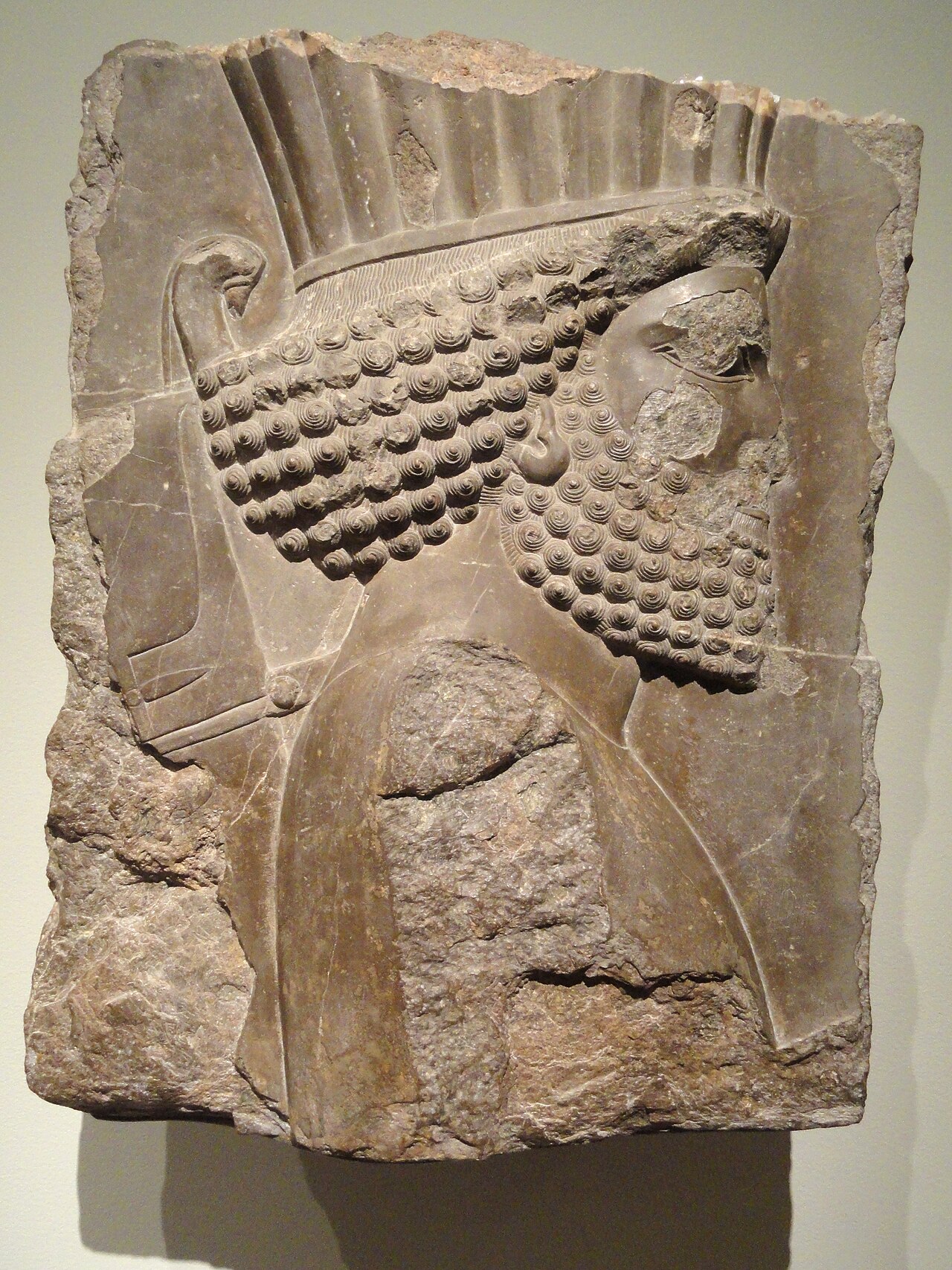
Wall Relief of a Guardsman from the Palace of Xerxes
486–465 BC
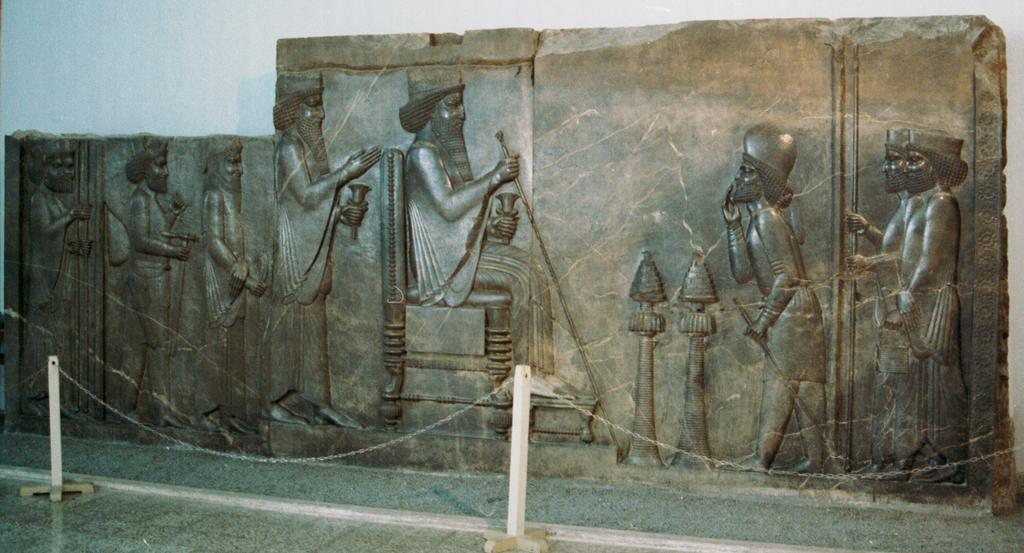
A carved stone relief fragment of a royal guard in procession from Xerxes's palace at Persepolis, commissioned during his reign.
This relief decorated the palace that Xerxes commissioned at Persepolis, showing the imagery of royal power he built around himself.
About this source
What it is
This gray limestone relief fragment shows the head and upper body of a guardsman in profile, wearing a tall fluted headdress and a curled ringlet beard. It came from the decoration of the Palace of Xerxes at Persepolis, dated to his reign, 486–465 BC. It is now held by the Cleveland Museum of Art.
Why it matters
Reliefs of guards in procession lined the walls and stairways of Persepolis, showing the order and splendor of the Achaemenid court. Because Xerxes commissioned this palace, the relief is physical evidence of how he wanted his empire's power to be seen — through careful, repeated images of soldiers and officials rather than through portraits of himself.
Look closer
- What does the guardsman's clothing and headdress tell us about his rank or role?
- Why might a king decorate his palace with rows of guards rather than scenes of battle?
- What is missing from this broken fragment that might help us understand the whole scene?
This sculpture is part of the curated material that grounds the AI version of Xerxes I on Humy.ai — when students ask about related events, the AI can quote it and cite it.
More Xerxes I sources
Browse all 97 →
Ready when you are
Start chatting with Xerxes I now.
20 messages free · No credit card · Available in 50+ languages.