


Primary sourceArtifactc. 870s
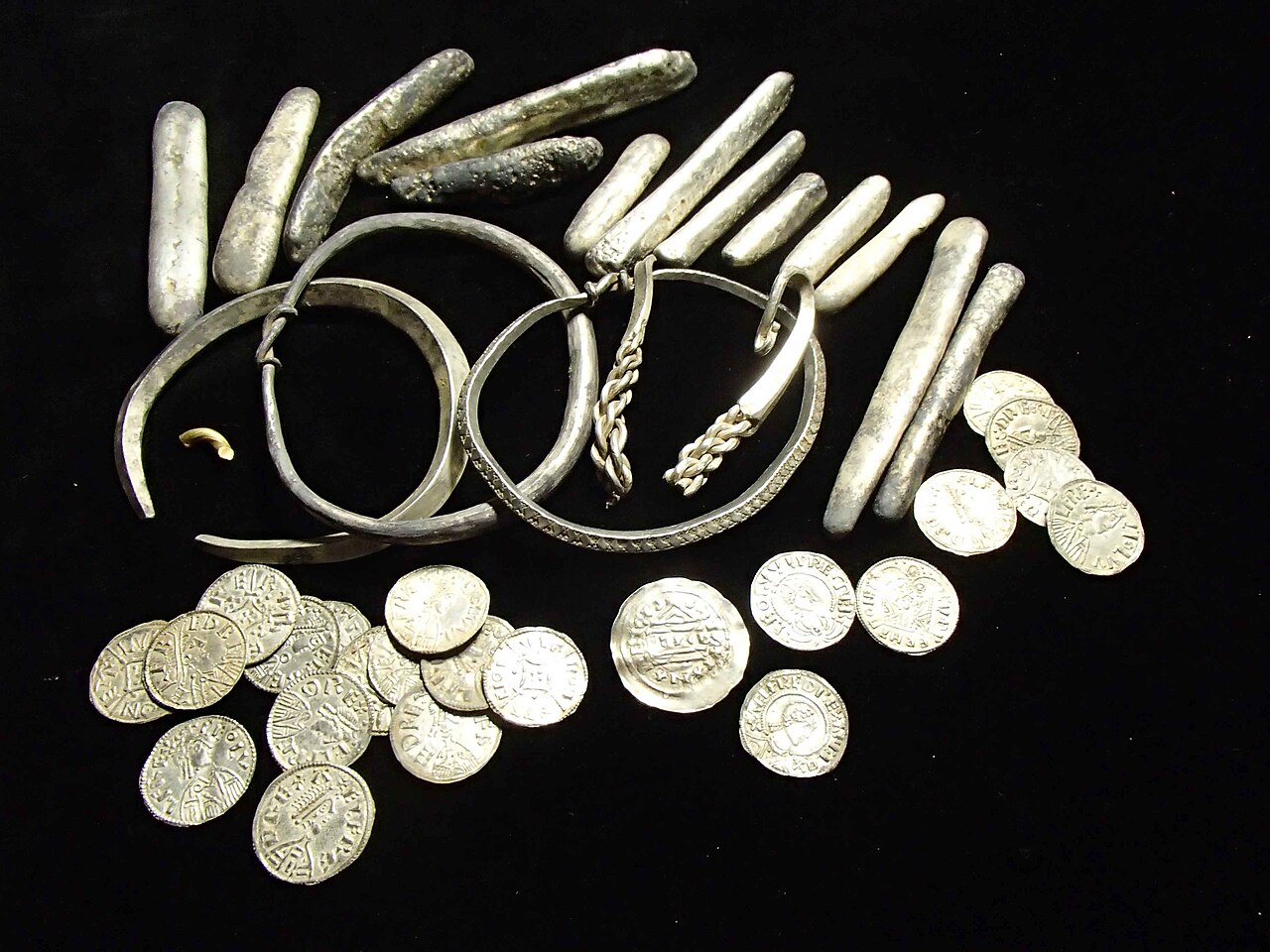
Watlington Hoard
c. 870s
A Viking hoard of silver coins, ingots and jewellery buried around 879, containing coins of Alfred and Ceolwulf II of Mercia.
Coins in this Viking hoard were minted by Alfred, showing his coinage and his victory over Guthrum shaping the period.
About this source
What it is
The Watlington Hoard is a collection of Viking silver — 186 coins, 15 ingots, 7 pieces of jewellery and a scrap of gold — buried in the 870s and found by a metal-detectorist in 2015 in Oxfordshire. It is now held by the Ashmolean Museum.
Why it matters
The hoard was buried shortly after Alfred the Great defeated the Viking leader Guthrum in 878. Among the coins are ones minted by both Alfred and Ceolwulf II of Mercia, some showing the two kings seated side by side in a style copied from ancient Roman coins. This design was meant to send a political message about cooperation between Wessex and Mercia against the Vikings.
Look closer
- Why would a Viking bury treasure instead of keeping it with them?
- What might the image of two kings sitting together have been meant to communicate, and to whom?
- What does this hoard tell us that a written record alone could not?
This artifact is part of the curated material that grounds the AI version of Alfred the Great on Humy.ai — when students ask about related events, the AI can quote it and cite it.
More Alfred the Great sources
Meet the AI Alfred the Great →
Ready when you are
Start chatting with Alfred the Great now.
20 messages free · No credit card · Available in 50+ languages.