


Secondary sourcePainting1796
Wearmouth Bridge
1796
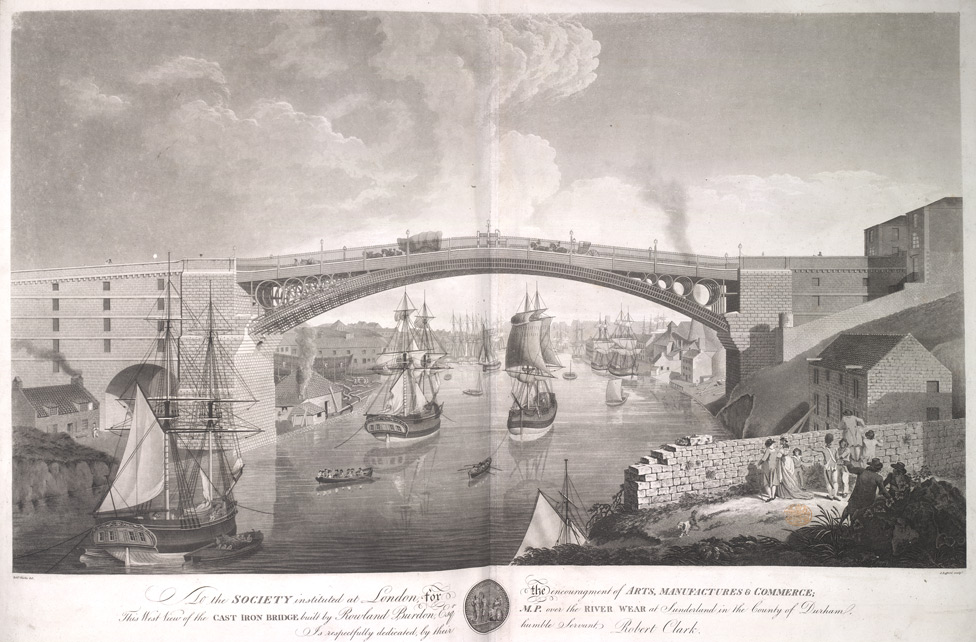
An 1796 engraving of the cast-iron Wearmouth Bridge at Sunderland. The bridge's design was influenced by a cast-iron span Thomas Paine had built as a demonstration.
Paine influenced this bridge's cast-iron design through a demonstration span and designs he submitted, showing his role as an engineer-inventor.
About this source
What it is
This is an engraving dated 1796 showing the cast-iron Wearmouth Bridge over the River Wear at Sunderland, England. It shows a single wide arch spanning the river, with carriages on the deck, sailing ships on the water, and people standing on a stone quay at lower right. The print is from the King George III Topographical Collection, an online exhibition of the British Library. The bridge itself was opened in 1796.
Why it matters
Wearmouth Bridge was the second major bridge made of cast iron and was admired as an achievement of the industrial age. Its builders were influenced by Thomas Paine, who had built a demonstration cast-iron span in Paddington in 1789 and submitted designs for Wearmouth. The ribs of both bridges may have been cast at the same Rotherham foundry. The bridge sponsor was Rowland Burdon, and the architectural features were designed by Thomas Wilson. The bridge shows Paine's work as an engineer, not only as a writer.
Look closer
- What does the engraving show about how people used the bridge and the river?
- Why might an engraver include ships, carriages and people in a picture of a new structure?
- What does the picture leave out, such as who paid for the bridge and who built it?
This painting is part of the curated material that grounds the AI version of Thomas Paine on Humy.ai — when students ask about related events, the AI can quote it and cite it.
More Thomas Paine sources
Meet the AI Thomas Paine →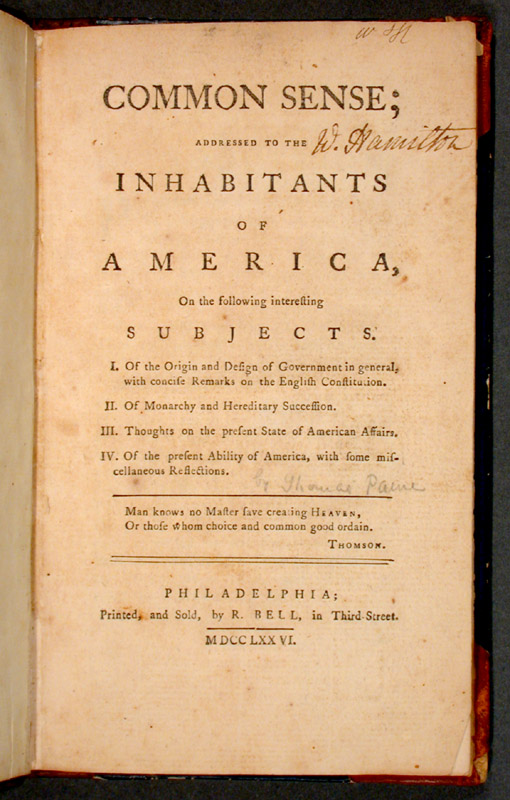 Book
Primary source
Common Sense
Thomas Paine · 10 January 1776
 Book
Primary source
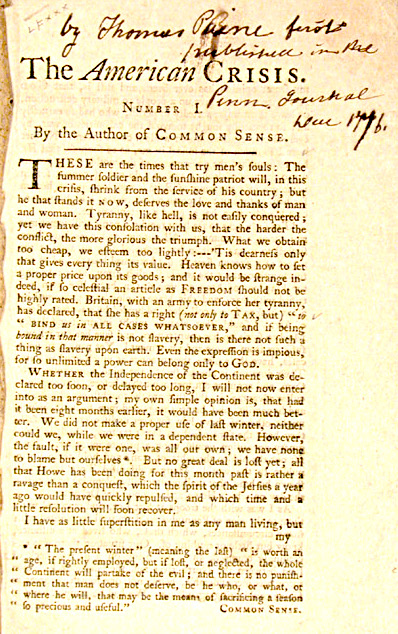
The American Crisis
Thomas Paine · 1776-1783
 Book
Primary source
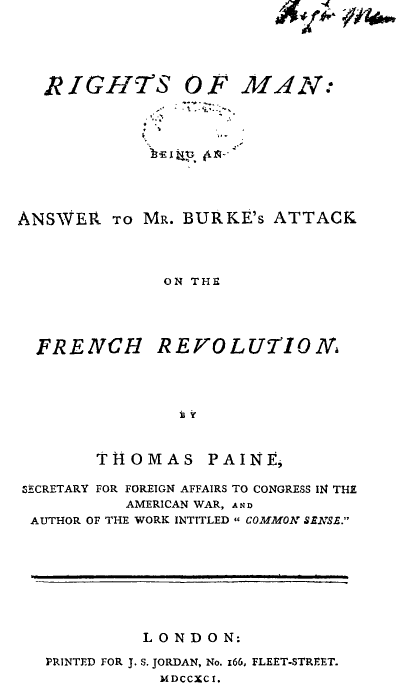
Rights of Man
Thomas Paine · 1791-1792
 Book
Primary source
The Age of Reason
Thomas Paine · 1794-1807
 Document
Primary source
Declaration of Independence
Continental Congress (drafted by Thomas Jefferson) · 1776
Ready when you are
Start chatting with Thomas Paine now.
20 messages free · No credit card · Available in 50+ languages.