


Secondary sourcePainting1616
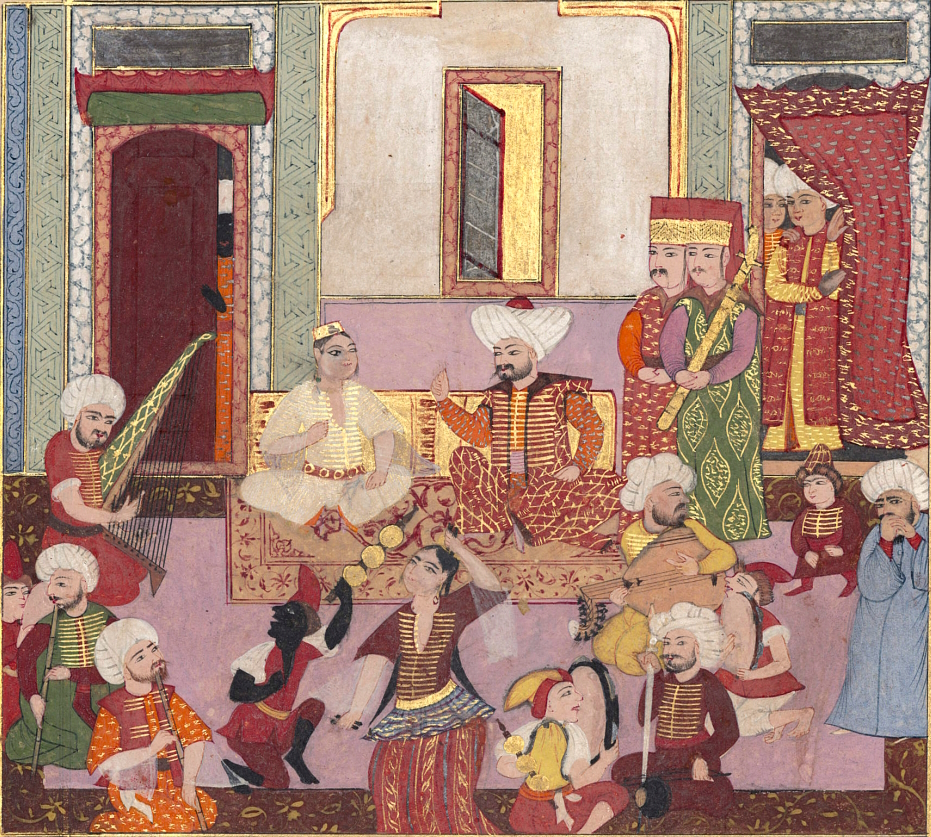
Wedding of Murad II
Unknown 17th-century Ottoman artist · 1616
A 1616 Ottoman miniature depicting the marriage celebrations of Sultan Murad II.
Shows Murad II's wedding celebrations, part of the political marriages that secured his dynasty's alliances.
About this source
What it is
This painting comes from the same 1616 manuscript of the Tadj al-Tawarikh, a chronicle of Ottoman history. It shows a palace court scene with a turbaned man seated on a cushioned dais, surrounded by musicians playing lutes, a harp and a flute, and dancers performing below.
Why it matters
The scene is linked to Murad II's dynastic marriages, including alliances formed through marriage with neighbouring powers such as Candar and Serbia. Marriage was a political tool for Ottoman sultans, used to secure alliances and expand influence, and this image reflects how later chroniclers celebrated those unions.
Look closer
- What do the musicians and dancers tell you about how celebrations were imagined in Ottoman court life?
- Why might a sultan's wedding be recorded in a historical chronicle decades or centuries later?
- What political purposes might lie behind a sultan's marriage, beyond personal choice?
This painting is part of the curated material that grounds the AI version of Murad II on Humy.ai — when students ask about related events, the AI can quote it and cite it.
More Murad II sources
Browse all 80 →
Ready when you are
Start chatting with Murad II now.
20 messages free · No credit card · Available in 50+ languages.