


Secondary sourceSculpture1395–1403
Well of Moses
Claus Sluter · 1395–1403
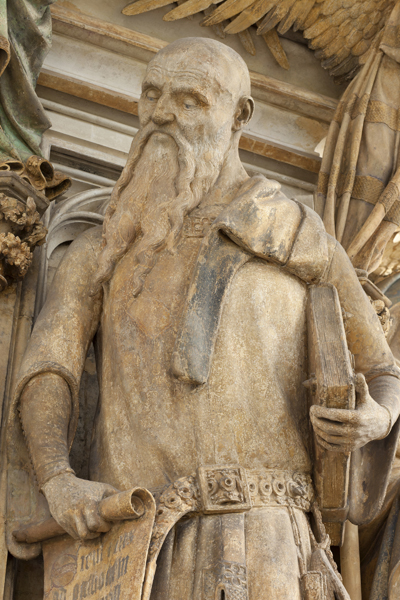
A monumental Gothic sculpture by Claus Sluter including a realistic figure of Isaiah among six prophets who foretold Christ's death.
Isaiah is one of six prophets carved here as having foretold Christ's death, shown with striking realism.
Free Humy account · No credit card · 120,912 sources to read
About this source
What it is
The Well of Moses is a monumental sculpture carved by Claus Sluter and his workshop, including his nephew Claus de Werve, for the Carthusian monastery of Chartreuse de Champmol near Dijon, commissioned by Duke Philip the Bold. It once formed the base of a large crucifixion scene, surrounded by statues of six prophets, including Isaiah, who were believed to have foretold Christ's death.
Why it matters
The sculpture is considered a masterpiece of late Gothic art for its unusually realistic, individualised figures. Its documented commission reveals how a powerful duke used art and religious imagery to express piety and power. Isaiah's statue, intensely lifelike, shows how artists of this period moved away from stiff, symbolic figures toward convincing human presence.
Look closer
- What details in the carving make this figure feel like a real individual rather than a symbol?
- Why might a duke commission such an elaborate and costly monument?
- What has survived of the original work, and what does that tell us about how art is preserved or lost over time?
This sculpture is part of the curated material that grounds the AI version of Isaiah on Humy.ai — when students ask about related events, the AI can quote it and cite it.
More Isaiah sources
Browse all 92 →

Ready when you are
Start chatting with Isaiah now.
20 messages free · No credit card · Available in 50+ languages.