


Primary sourcePaintingc. 1577
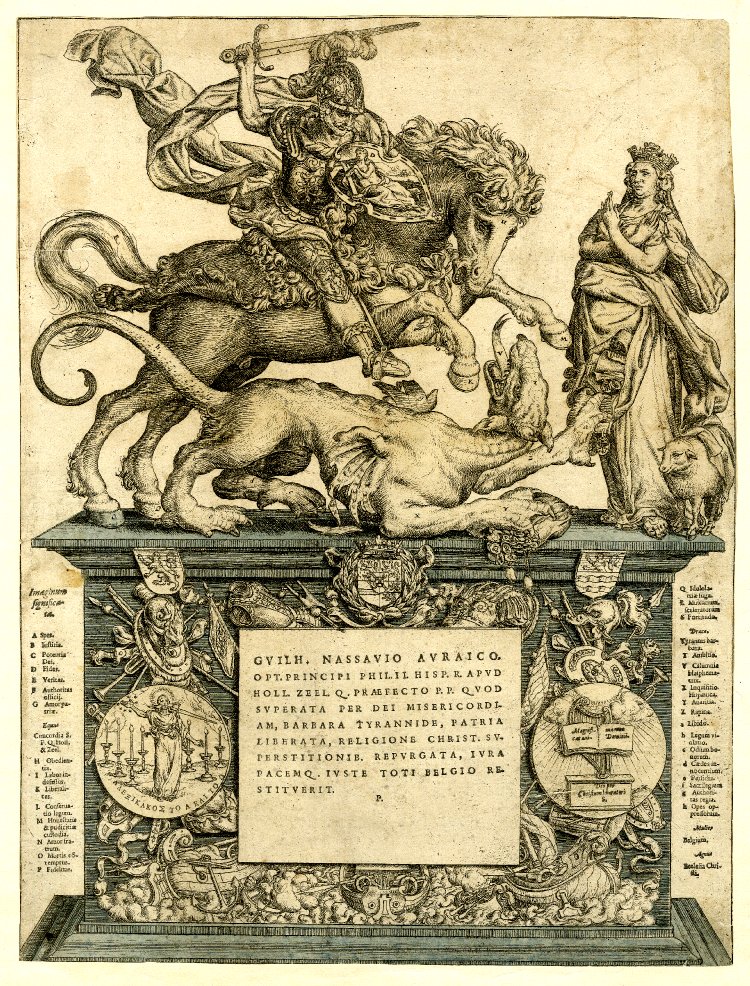
William I as St George Slaying the Dragon
Marcus Gheeraerts the Elder · c. 1577
An allegorical engraving from around 1577 showing William of Orange as the legendary knight St George defeating a dragon.
This allegorical print presents William of Orange as the heroic saint St George, revealing how his propaganda image was built.
About this source
What it is
This is an engraved print made around 1577 by Marcus Gheeraerts the Elder. It shows an imagined monument with a knight on a rearing horse spearing a dragon, a crowned woman with a lamb standing nearby, and an inscribed pedestal with heraldic shields and printed text.
Why it matters
The image casts William of Orange as the legendary saint St George, a Christian hero who rescued a kingdom from a dragon. This kind of allegory was propaganda: it presented William as a holy protector fighting evil during the revolt against Spanish rule. Studying it shows how supporters built up his public image using familiar legends and symbols rather than realistic portraiture.
Look closer
- Who do you think the dragon and the crowned woman are meant to represent?
- Why would an artist choose a legend like St George to describe a real political leader?
- What does this image leave out about the real events of the revolt?
This painting is part of the curated material that grounds the AI version of William the Silent on Humy.ai — when students ask about related events, the AI can quote it and cite it.
More William the Silent sources
Browse all 93 →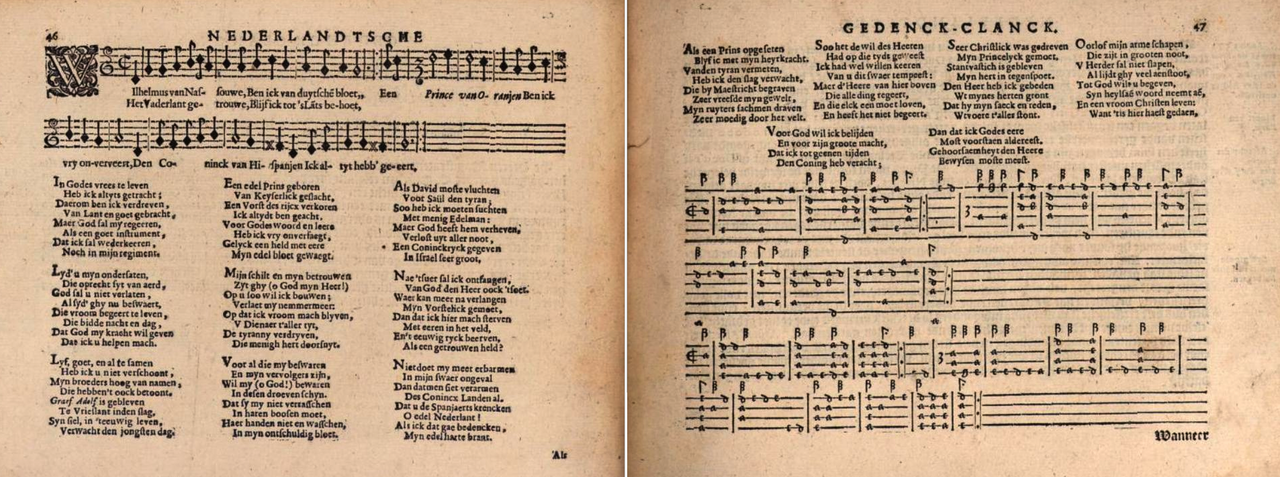 Document
Secondary source
Wilhelmus
Adrianus Valerius · 1572 (text); printed with music 1626
 Document
Primary source
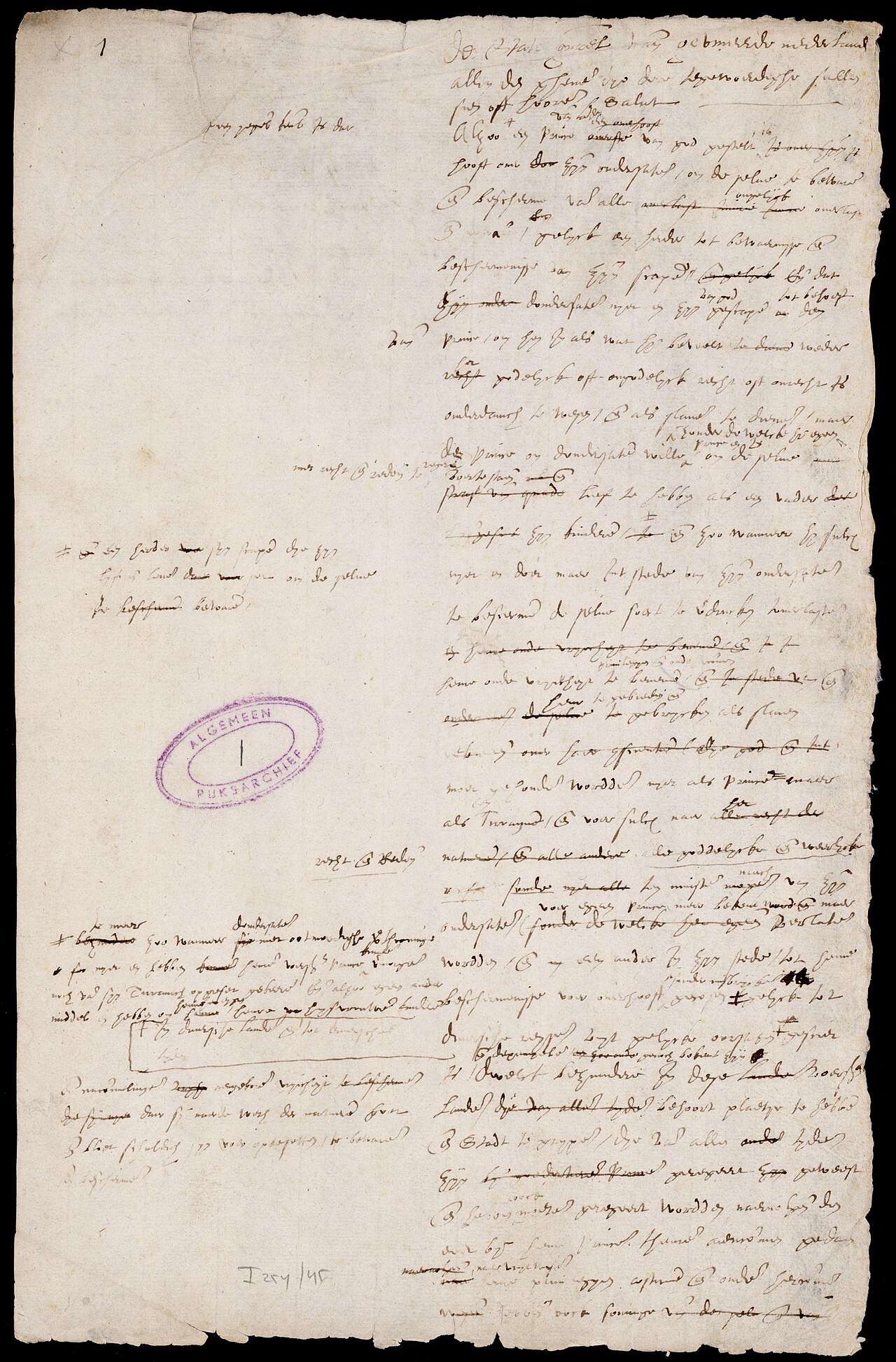
Act of Abjuration
Jan van Asseliers · 26 July 1581
 Artifact
Primary source
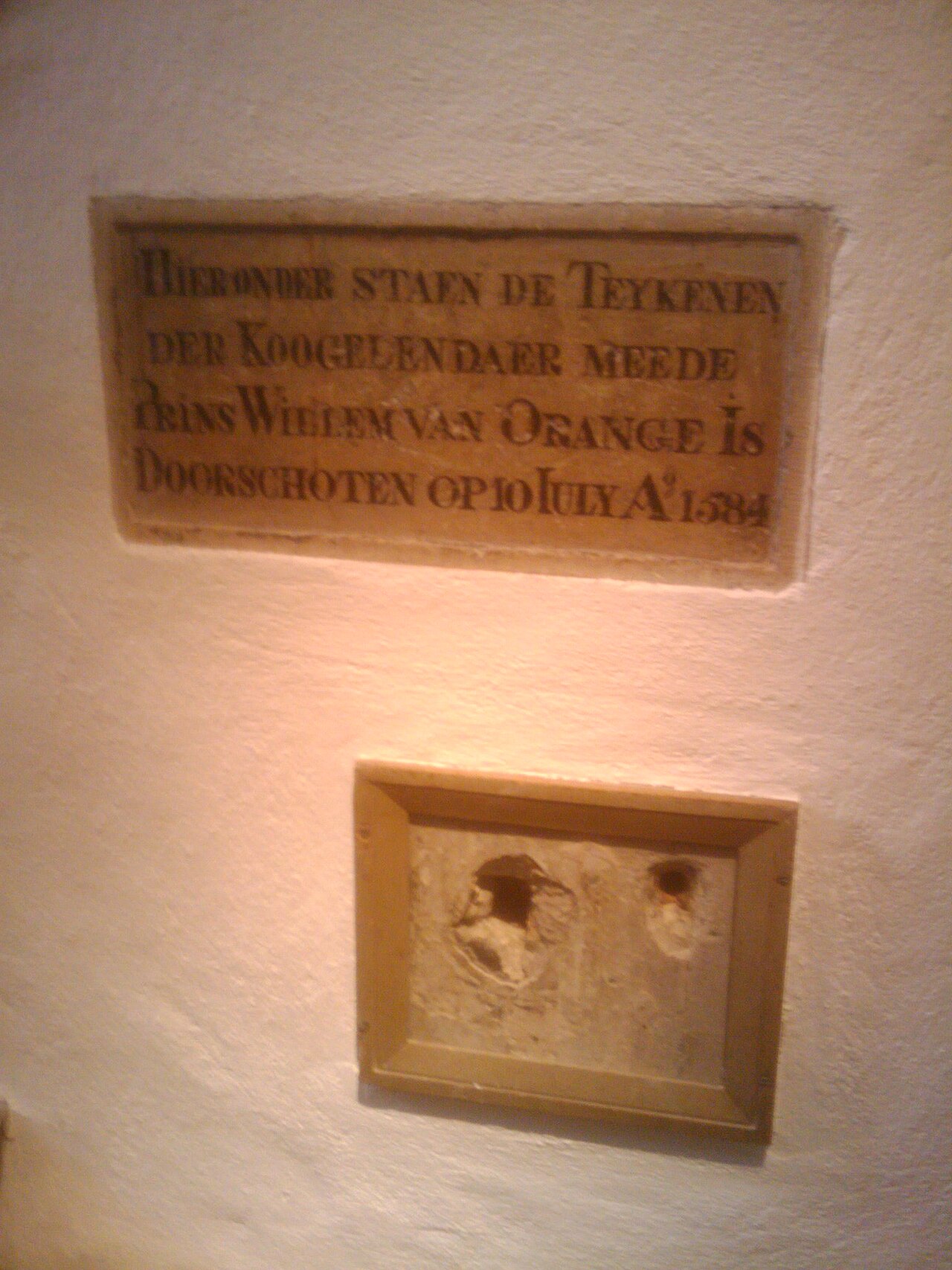
Prinsenhof, Delft
15th century (building); residence 1572–1584
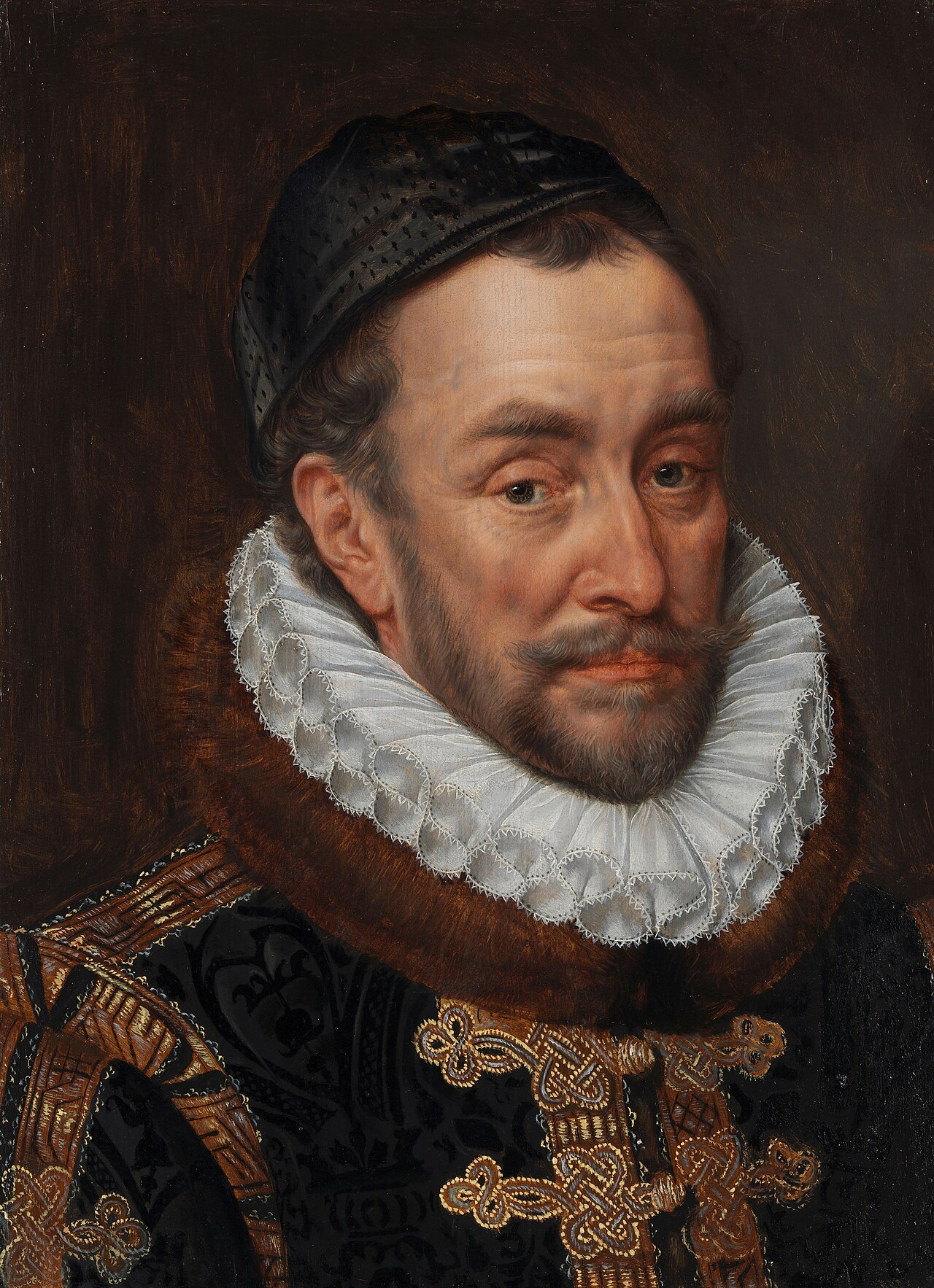 Painting
Primary source
William I, Prince of Orange
Adriaen Thomasz. Key · 1579
Free account
Read every William the Silent source
Sign up free →
Ready when you are
Start chatting with William the Silent now.
20 messages free · No credit card · Available in 50+ languages.