


Primary sourceSculpture
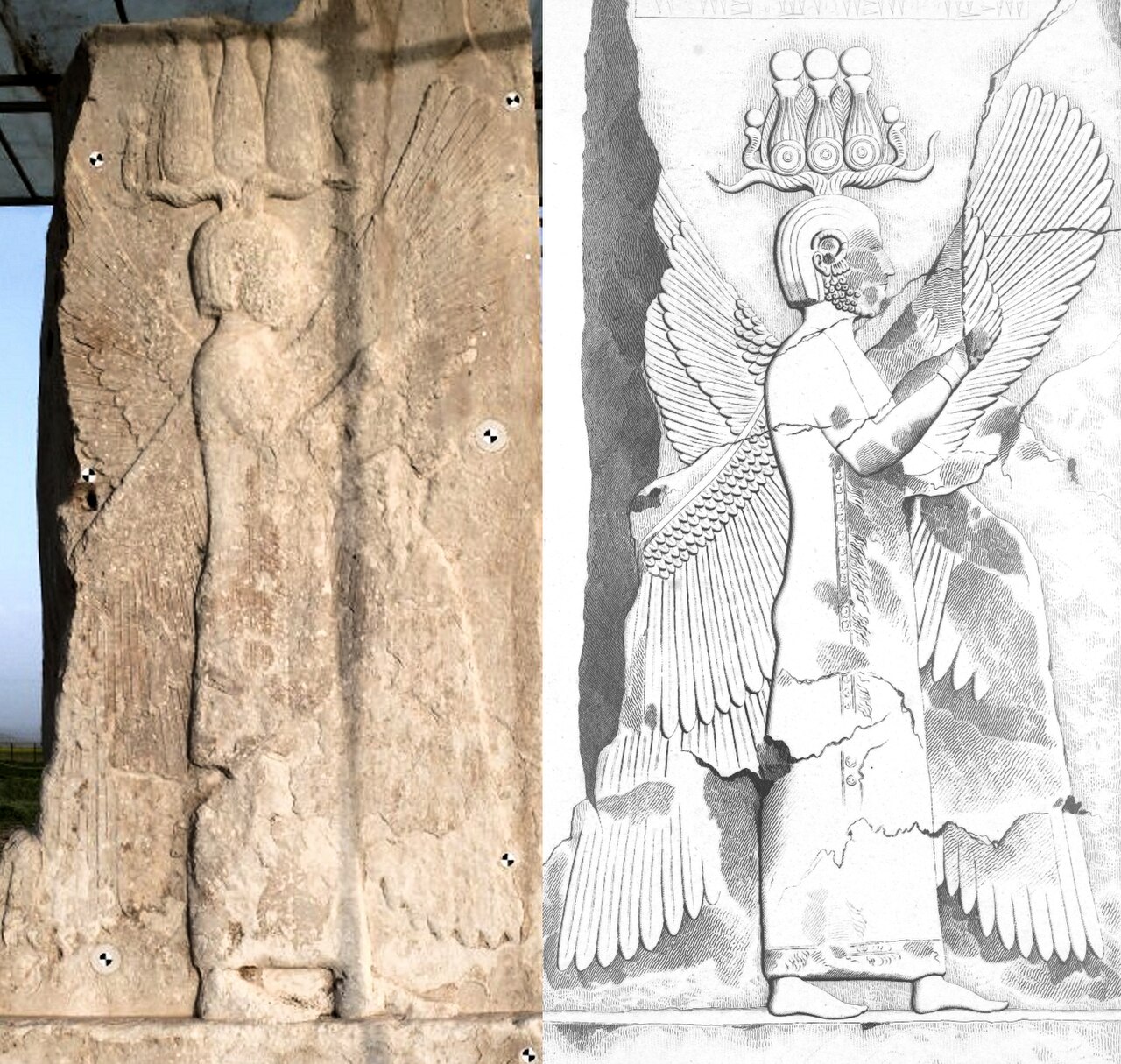
Winged Genius Relief
A four-winged carved figure at Pasargadae, once linked to Cyrus, blending Assyrian, Egyptian and Elamite styles.
Commissioned under Cyrus, this relief once bore an inscription naming him, though it does not depict him personally.
About this source
What it is
This stone relief at Pasargadae shows a four-winged figure wearing an Egyptian-style crown, standing at what was once the palace's gate. A trilingual inscription naming Cyrus once stood above it but has been missing since the mid-19th century. It is the sole surviving structure of its gate.
Why it matters
Though once thought to be a portrait of Cyrus himself, scholars now view the inscription as attributing the palace's construction to Cyrus rather than depicting him. The figure combines Assyrian, Egyptian, Elamite and Babylonian artistic elements, reflecting how Cyrus's empire absorbed the styles of the many peoples it had conquered.
Look closer
- Why might people in the 19th century have assumed the figure was a portrait of Cyrus?
- What do the mixed styles in the figure's crown, robe and wings tell you about the empire's reach?
- What was lost when the inscription disappeared, and why does that matter for interpreting the relief today?
This sculpture is part of the curated material that grounds the AI version of Cyrus the Great on Humy.ai — when students ask about related events, the AI can quote it and cite it.
More Cyrus the Great sources
Meet the AI Cyrus the Great →

Ready when you are
Start chatting with Cyrus the Great now.
20 messages free · No credit card · Available in 50+ languages.