


Primary sourcePaintingc. 1662-1663
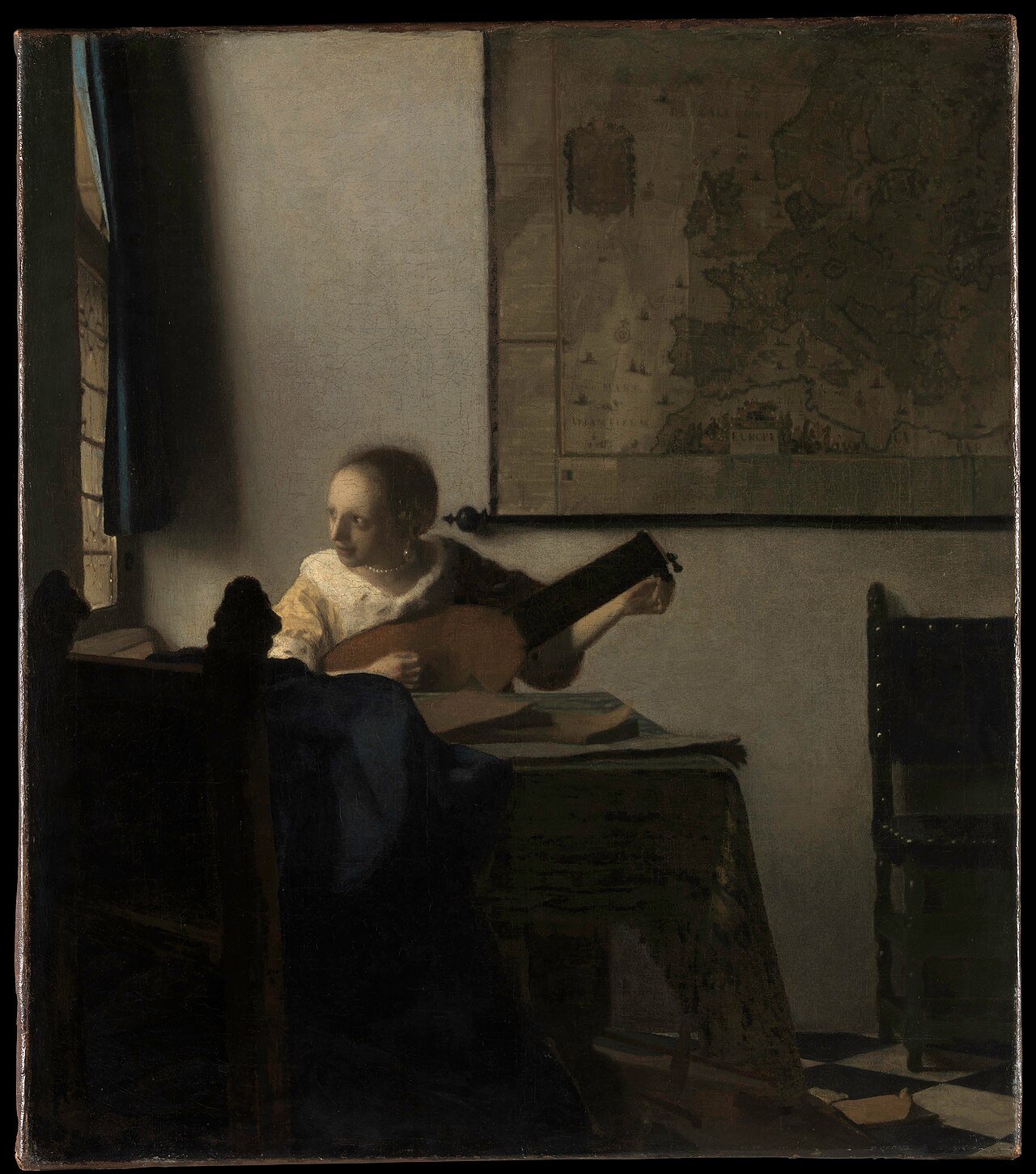
Woman with a Lute
Johannes Vermeer · c. 1662-1663
A painting by Johannes Vermeer of about 1662-63 showing a young woman tuning a lute by a window, a courtship scene with a wall map behind her.
A painting by Vermeer showing his recurring interest in music, courtship, and maps as symbols of Dutch life.
About this source
What it is
This oil-on-canvas painting was created by Johannes Vermeer around 1662-1663. It shows a young woman in an ermine-trimmed jacket tuning a lute while looking out a window, apparently waiting for a visitor. It is now held by the Metropolitan Museum of Art in New York.
Why it matters
The scene combines two of Vermeer's favourite themes: music as a sign of courtship, and maps as a sign of the wealth and worldliness of the Dutch Republic. Viewers of the time would have recognised the act of tuning a lute as a symbol of temperance, a virtue. The painting shares its canvas origin with Vermeer's Lady Writing a Letter with her Maid, showing how he worked and reused materials.
Look closer
- What does the woman's posture and gaze toward the window suggest she is doing or waiting for?
- Why might a map on the wall behind her be included in this scene?
- What objects on the floor and table hint at a musical courtship?
This painting is part of the curated material that grounds the AI version of Johannes Vermeer on Humy.ai — when students ask about related events, the AI can quote it and cite it.
More Johannes Vermeer sources
Browse all 95 →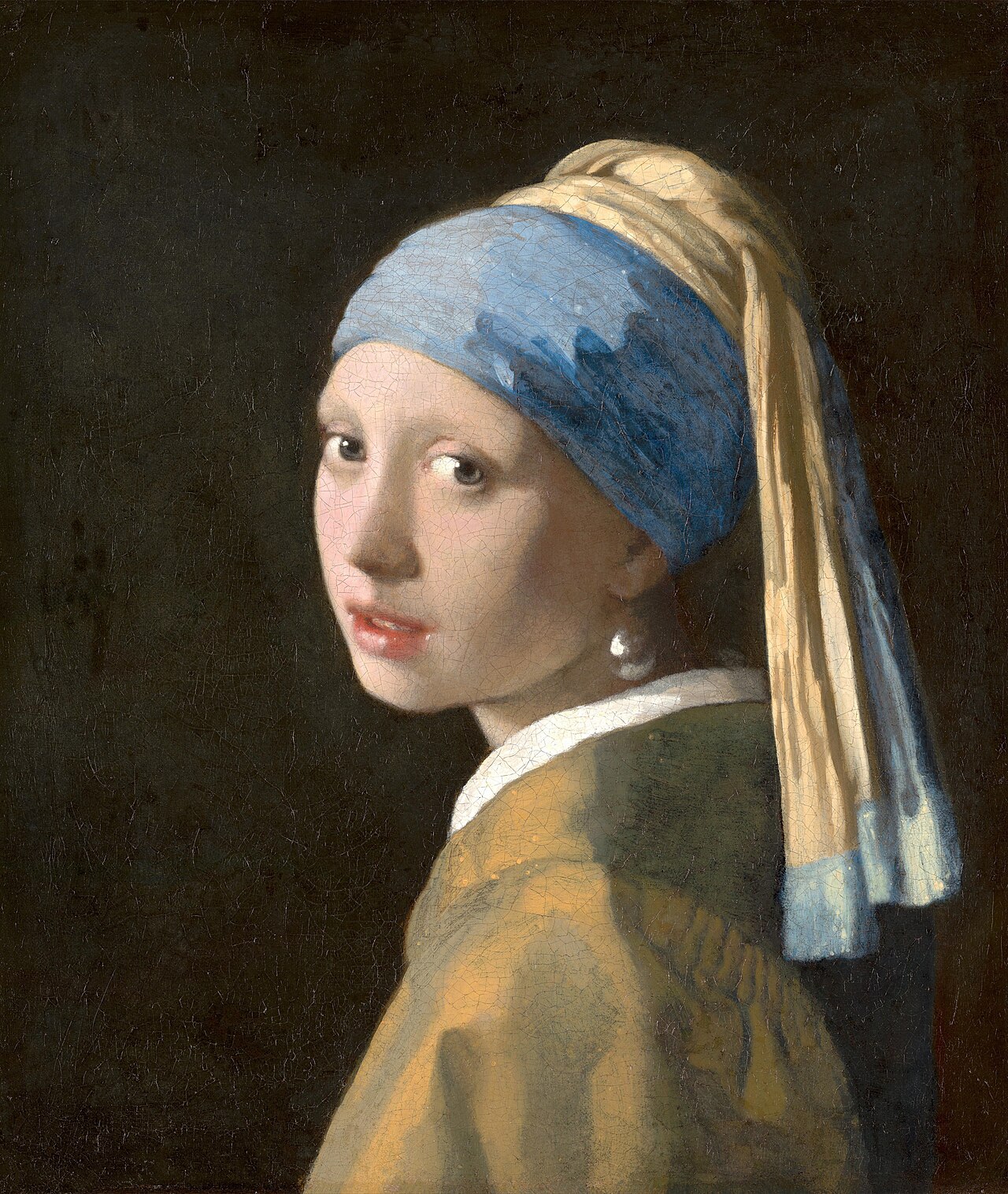 Painting
Primary source
Girl with a Pearl Earring
Johannes Vermeer · c. 1665
 Painting
Primary source
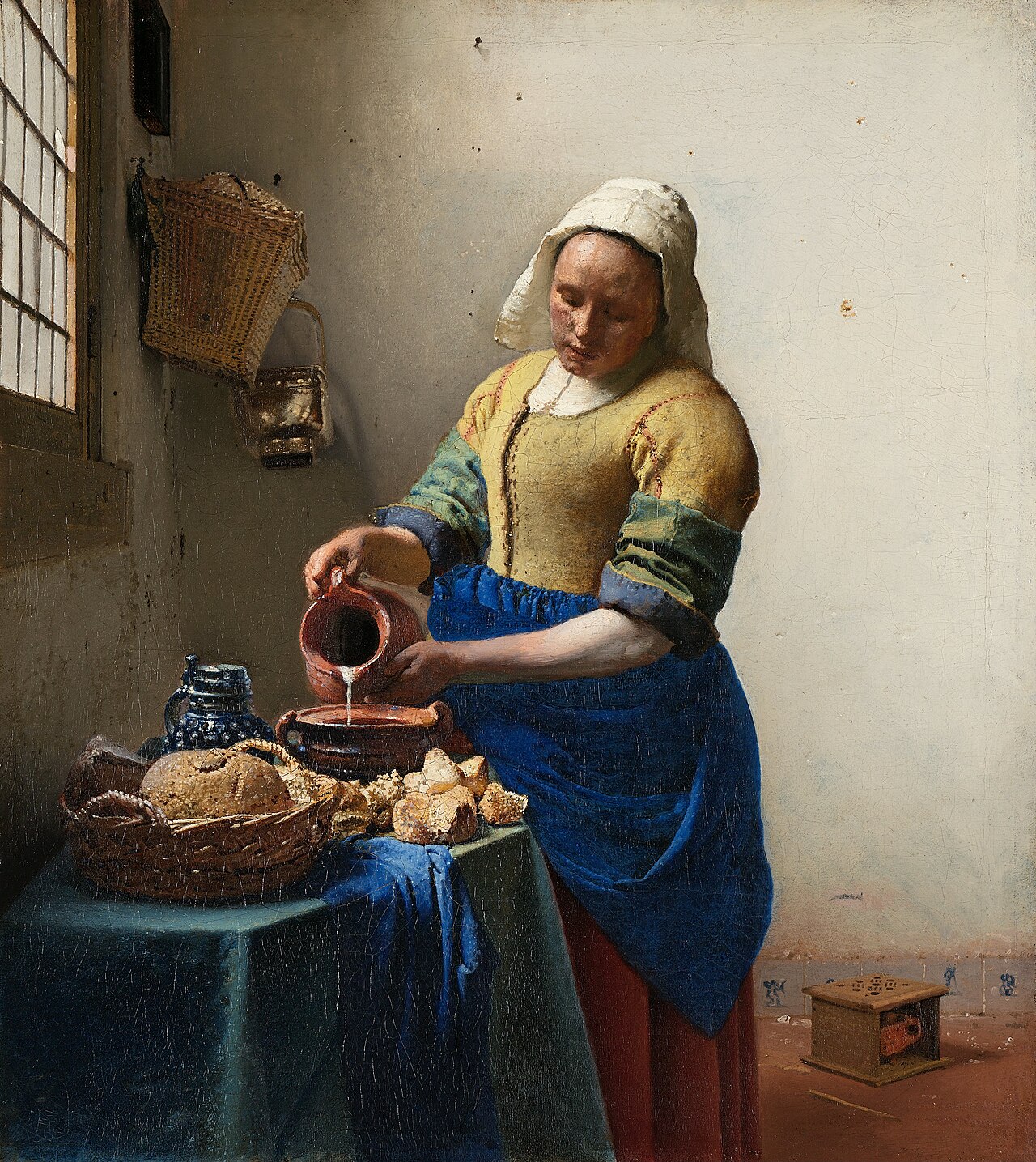
The Milkmaid
Johannes Vermeer · c. 1658-1661
 Painting
Primary source
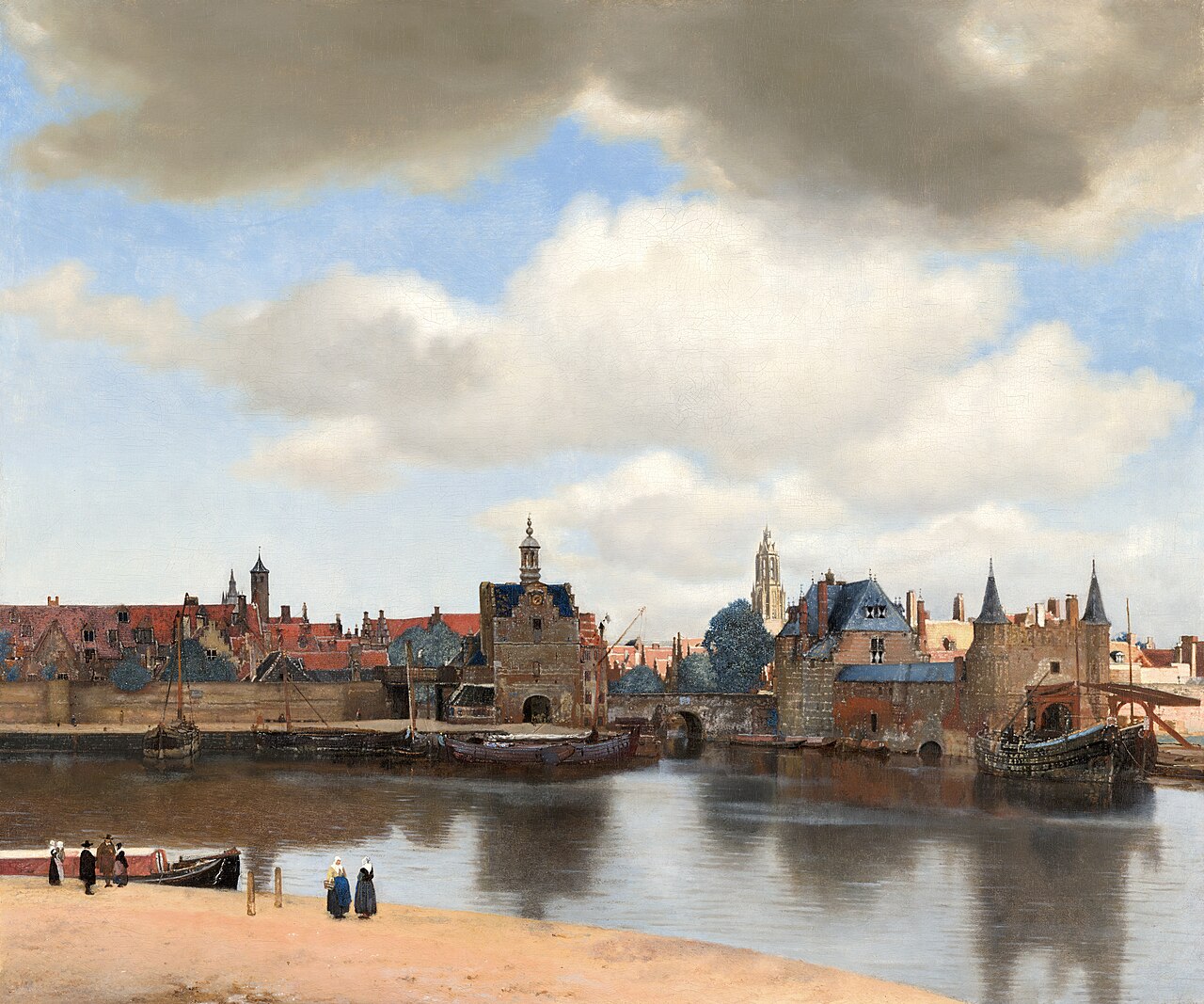
View of Delft
Johannes Vermeer · c. 1659-1661
 Painting
Primary source
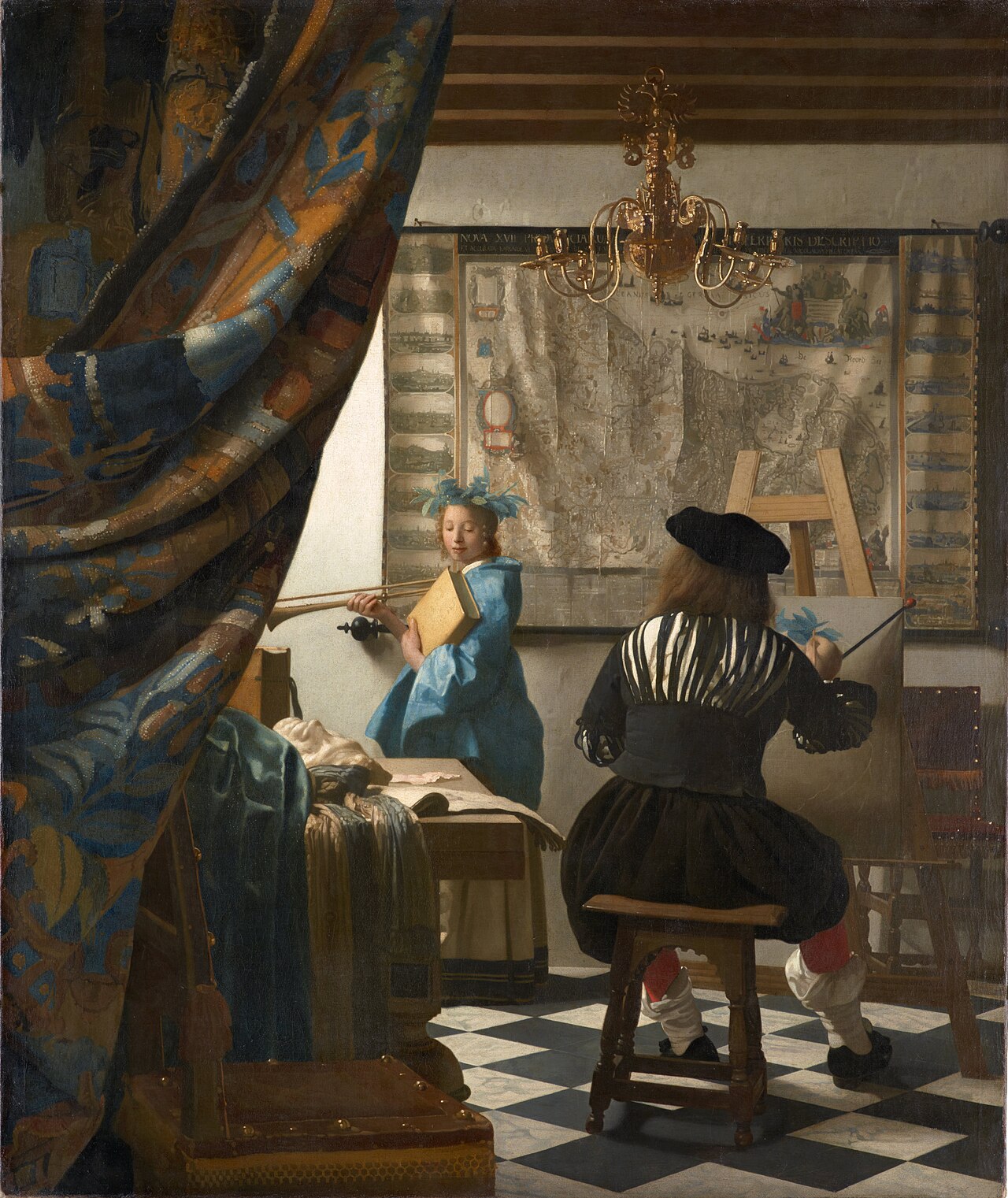
The Art of Painting
Johannes Vermeer · c. 1665-1668
Free account
Read every Johannes Vermeer source
Sign up free →
Ready when you are
Start chatting with Johannes Vermeer now.
20 messages free · No credit card · Available in 50+ languages.