


Secondary sourcePainting1st century AD
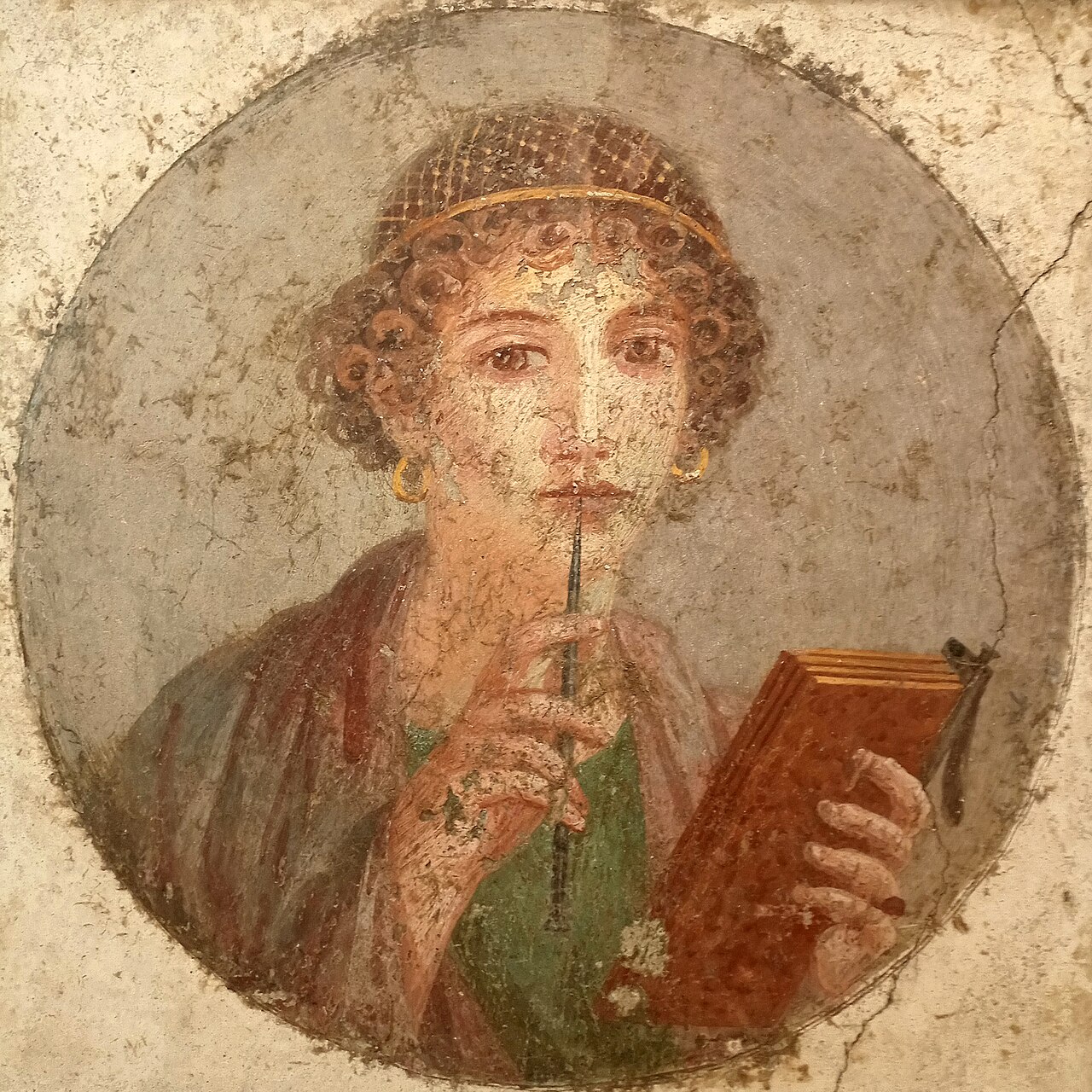
Woman with Wax Tablets and Stylus
Anonymous Roman painter · 1st century AD
A Roman fresco from Pompeii popularly nicknamed 'Sappho', though it does not actually depict her.
Popularly nicknamed 'Sappho' though it almost certainly shows an unnamed Roman woman, not the poet herself.
Free Humy account · No credit card · 120,912 sources to read
About this source
What it is
This fresco from Pompeii, dated to the first century AD, shows a finely dressed young woman holding a writing tablet and stylus, a common way for Roman painters to show literacy and education. It was uncovered in 1760 in a house in Pompeii and is now held by the National Archaeological Museum in Naples.
Why it matters
In the nineteenth century scholars speculatively identified the woman as Sappho, and the name stuck even though there is no label or other evidence connecting the painting to her. Most modern scholars think it shows an educated, upper-class Pompeiian woman instead. The fresco shows how eager later ages were to find images of Sappho, and how such guesses can become fixed in popular memory.
Look closer
- Why might people in the nineteenth century have wanted this painting to be Sappho?
- What clues in the painting actually tell us about the woman's identity, if any?
- Why is it important for historians to say clearly when an identification is just a guess?
This painting is part of the curated material that grounds the AI version of Sappho on Humy.ai — when students ask about related events, the AI can quote it and cite it.
More Sappho sources
Browse all 89 →



Ready when you are
Start chatting with Sappho now.
20 messages free · No credit card · Available in 50+ languages.