


Secondary sourcePainting19th century
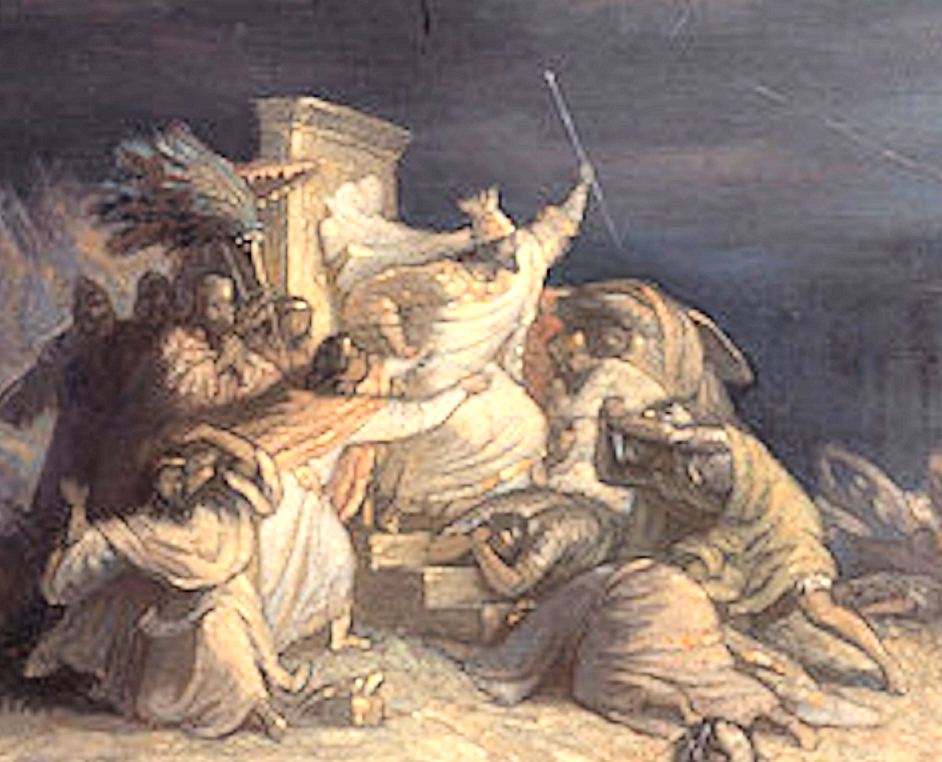
Wrath of Xerxes at Salamis
Wilhelm von Kaulbach · 19th century
A 19th-century Romantic painting imagining Xerxes's furious reaction to the Persian defeat at the Battle of Salamis.
The painting imagines Xerxes's emotional reaction to his navy's defeat at Salamis.
About this source
What it is
This painting by the German artist Wilhelm von Kaulbach, made in the 19th century, depicts the Persian king Xerxes reacting with anger during the Battle of Salamis, where his fleet suffered a major defeat against the Greeks.
Why it matters
The painting was created more than two thousand years after the battle and reflects 19th-century Romantic ideas about dramatic history rather than firsthand knowledge. It shows how later European artists imagined Xerxes as a symbol of powerful but doomed ambition, shaping popular memory of the Greco-Persian Wars.
Look closer
- What emotions does the artist give to the central figure, and how?
- Since Kaulbach never saw Xerxes, what sources might he have used to imagine this scene?
- How might this image differ from how Persians themselves remembered the battle?
This painting is part of the curated material that grounds the AI version of Xerxes I on Humy.ai — when students ask about related events, the AI can quote it and cite it.
More Xerxes I sources
Browse all 97 →
Ready when you are
Start chatting with Xerxes I now.
20 messages free · No credit card · Available in 50+ languages.