


Secondary sourceArtifactc. 483–480 BC
Xerxes Canal
c. 483–480 BC
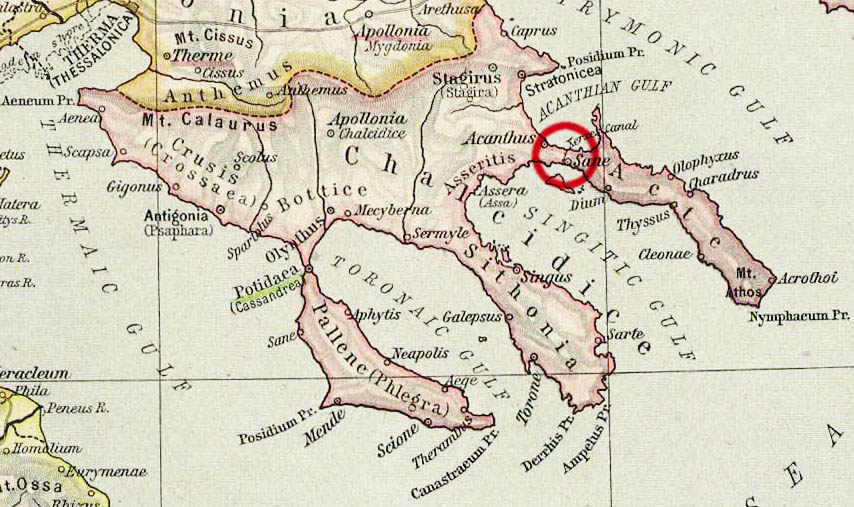
The traces of a canal Xerxes ordered dug through the Athos isthmus in Greece to protect his invasion fleet, confirmed by modern archaeology.
Xerxes personally ordered this canal built, revealing the scale of logistics and manpower behind his invasion of Greece.
About this source
What it is
The Xerxes Canal was a navigable channel cut through the base of the Mount Athos peninsula in northern Greece in the 5th century BC. Xerxes I ordered its construction, overseen by his engineer Artachaees, to prepare for his second invasion of Greece. It is now buried under sediment but its outline has been confirmed by aerial photography and geophysical surveys.
Why it matters
According to the historian Herodotus, the canal was built after an earlier Persian fleet under Mardonios was wrecked rounding Athos; Herodotus also suggested Xerxes partly wanted to display his power. Thousands of workers, including locals and Egyptian and Phoenician labourers, dug it over three years. Modern surveys have confirmed Herodotus's account, making the canal rare physical evidence of Achaemenid activity in Europe and of the scale of Xerxes' invasion preparations.
Look closer
- Why might Herodotus suggest pride, not just safety, motivated the canal's construction?
- What does it mean that modern science has confirmed details from an ancient written account?
- What does the short use of the canal tell you about the limits of such a huge engineering project?
This artifact is part of the curated material that grounds the AI version of Xerxes I on Humy.ai — when students ask about related events, the AI can quote it and cite it.
More Xerxes I sources
Browse all 97 →
Ready when you are
Start chatting with Xerxes I now.
20 messages free · No credit card · Available in 50+ languages.