


Primary sourceArtifact5th century BC
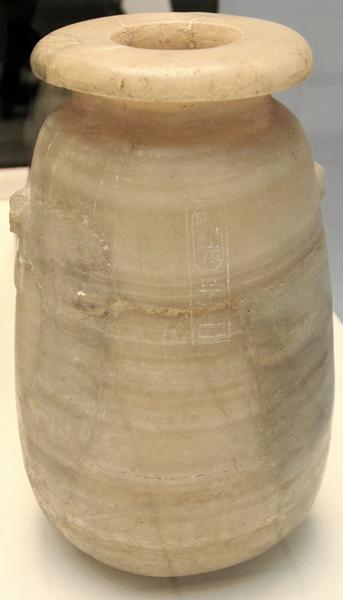
Xerxes Jar from the Mausoleum at Halicarnassus
5th century BC
An Egyptian alabaster jar inscribed with Xerxes' name in four scripts, showing his rule over Egypt and the movement of royal gifts across the empire.
The jar bears Xerxes' own name and titles, showing his rule over Egypt through an object he commissioned.
About this source
What it is
This is a tall alabaster jar of Egyptian origin, inscribed with the name of Xerxes I in Old Persian, Elamite, Babylonian and Egyptian hieroglyphs. It was found at the Mausoleum at Halicarnassus.
Why it matters
The jar's inscriptions in four scripts show how Xerxes, as ruler of Egypt as well as Persia, used royal objects to assert authority across different peoples and languages. Its presence far from Egypt, at the later Mausoleum at Halicarnassus, also hints at how prestigious royal items travelled and were valued long after they were made, passing through the hands of other rulers and officials.
Look closer
- Why might a king's name be carved in four different scripts on one object?
- What could explain how a jar made for Xerxes ended up at a tomb built generations later?
- What does an object like this suggest about trade, gift-giving or inheritance among ancient rulers?
This artifact is part of the curated material that grounds the AI version of Xerxes I on Humy.ai — when students ask about related events, the AI can quote it and cite it.
More Xerxes I sources
Browse all 97 →
Ready when you are
Start chatting with Xerxes I now.
20 messages free · No credit card · Available in 50+ languages.