


Primary sourceArtifact1758; rebuilt 1913
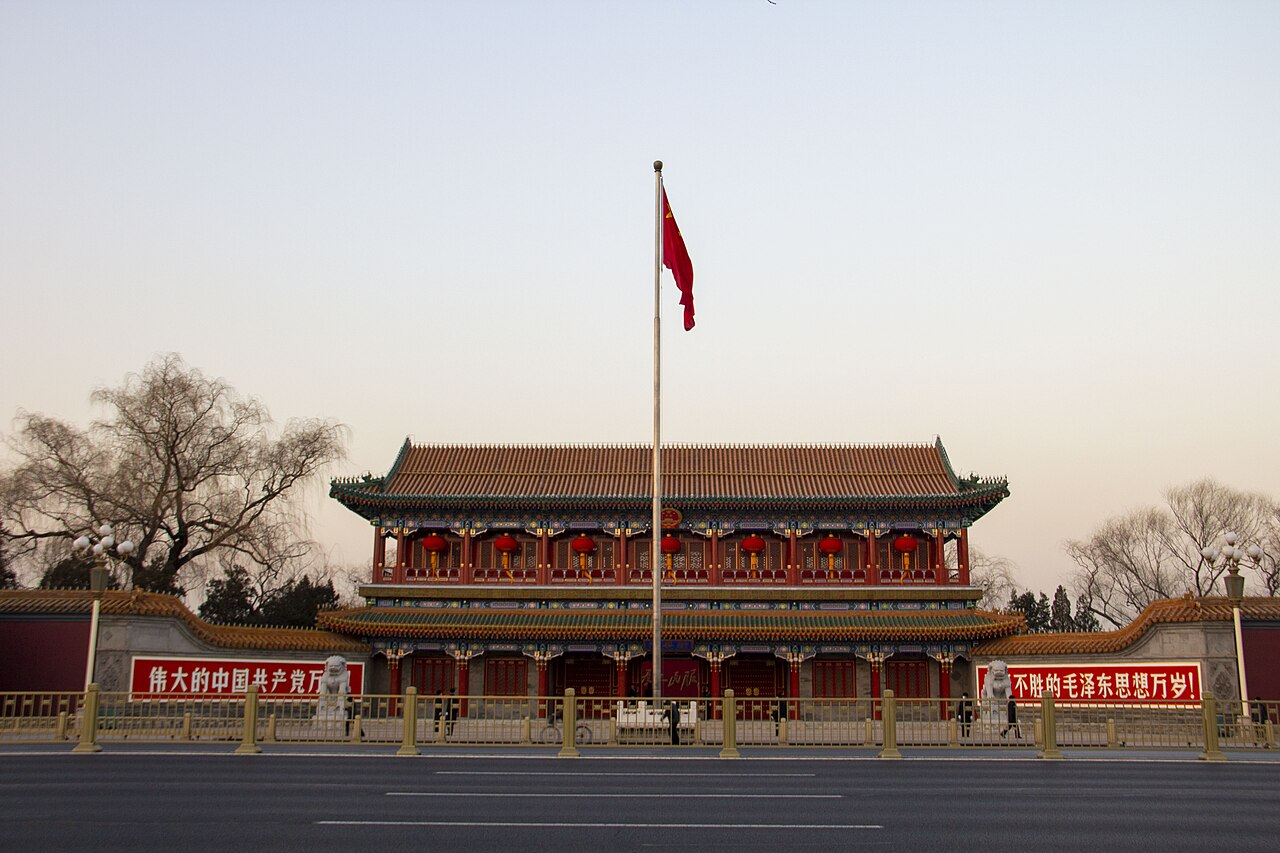
Xinhuamen
1758; rebuilt 1913
The main gate of Zhongnanhai, rebuilt in 1913 from an old Qing tower into the entrance of Yuan Shikai's presidential compound.
Yuan Shikai commissioned the 1913 rebuilding of this gate as the entrance to his presidential compound at Zhongnanhai.
Free Humy account · No credit card · 120,912 sources to read
About this source
What it is
Xinhuamen, or Xinhua Gate, stands at Zhongnanhai in Beijing. It began life as Baoyue Tower, built in 1758 during the Qing dynasty. In 1913 it was rebuilt as the main gate of the Presidential Palace under Yuan Shikai, who had become provisional president of the new Republic of China. The plaque on the gate was written by Yuan Lizhun.
Why it matters
The gate shows how Yuan Shikai converted an imperial pleasure building into the entrance of his own government headquarters, linking the new Republic's power to the old imperial city. It reveals how political leaders reuse old symbols of authority to build legitimacy for new regimes. The gate later became the entrance to the seat of the People's Republic of China's government, showing continuous use as a center of power.
Look closer
- Why might Yuan have chosen an old imperial building rather than constructing something entirely new?
- What does the renaming from 'Baoyue Tower' to 'Xinhua Gate' suggest about the new government's aims?
- What is missing from this image about the people who used to live around the original building?
This artifact is part of the curated material that grounds the AI version of Yuan Shikai on Humy.ai — when students ask about related events, the AI can quote it and cite it.
More Yuan Shikai sources
Browse all 84 →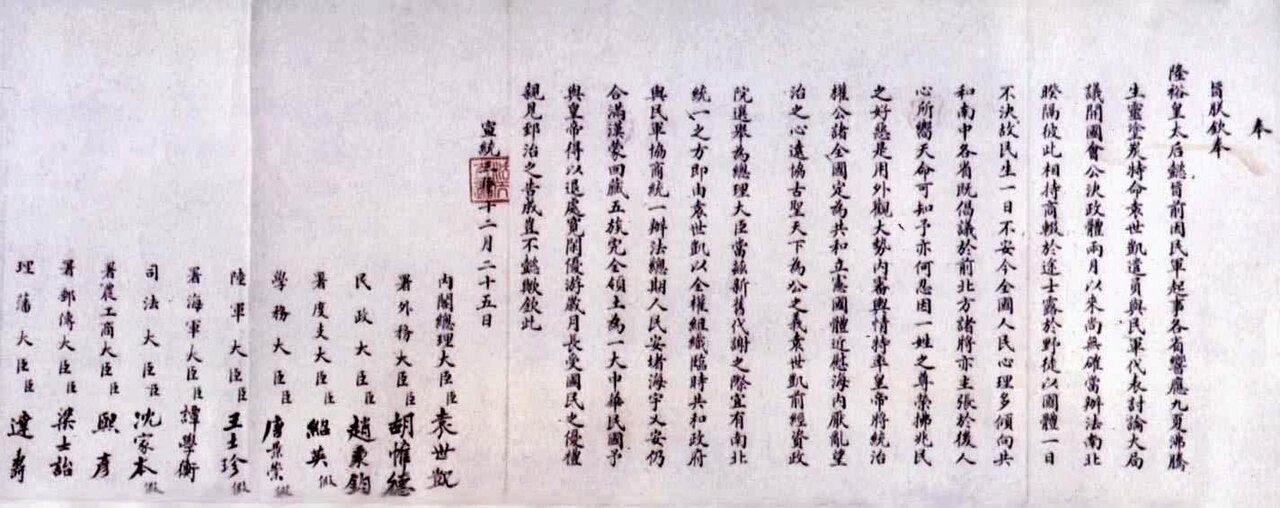 Document
Primary source
Imperial Edict of the Abdication of the Qing Emperor
Empress Dowager Longyu · 12 February 1912
 Document
Primary source
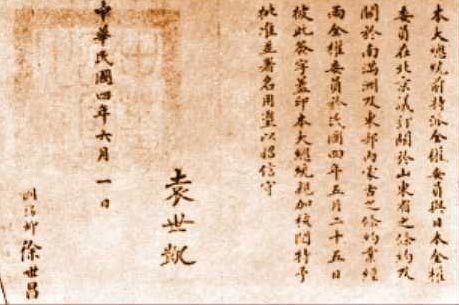
Twenty-One Demands
Empire of Japan · 18 January 1915
 Photograph
Primary source
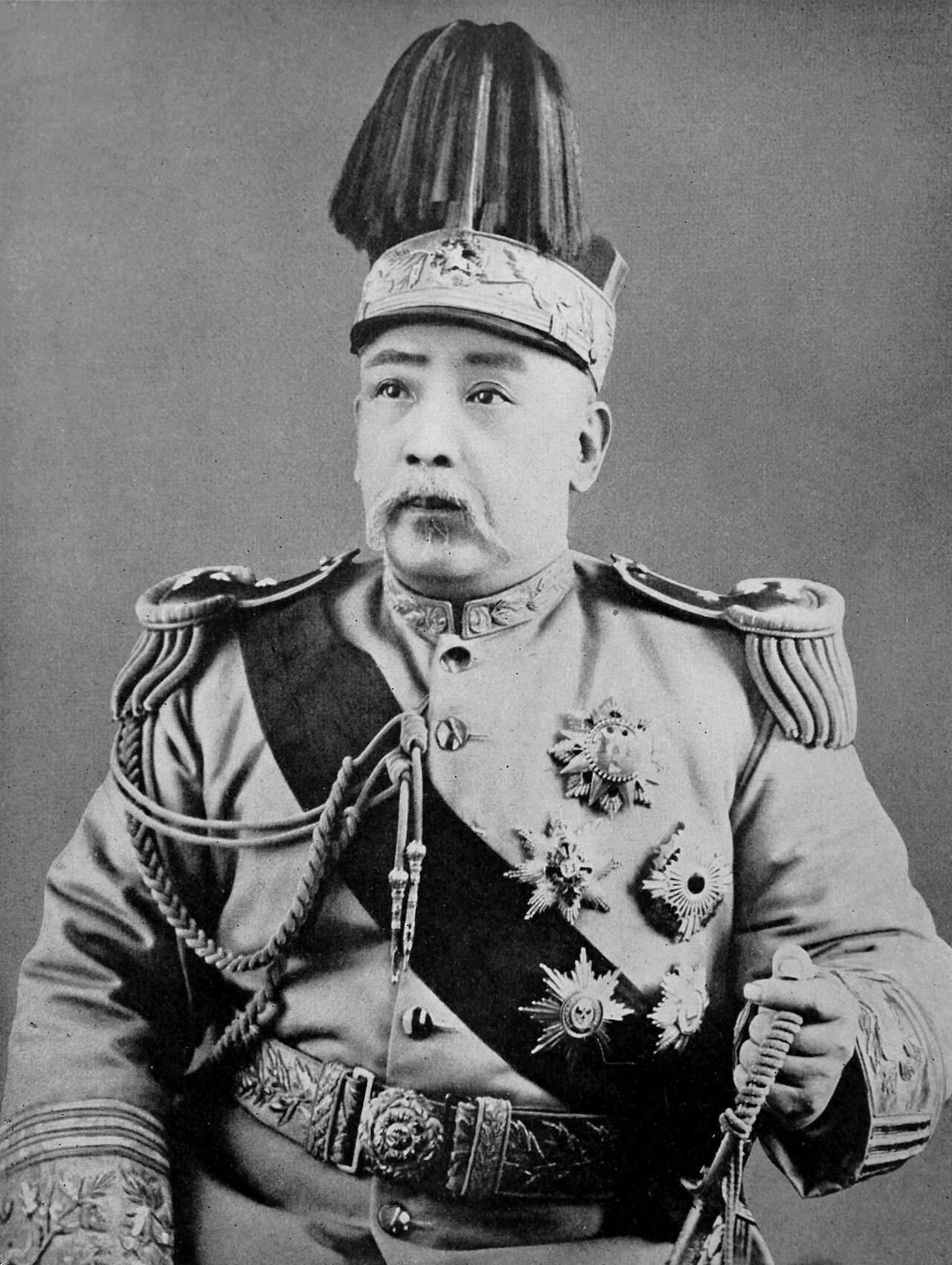
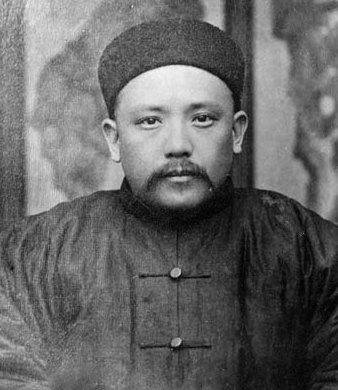
Portrait of Yuan Shikai
1915
 Artifact
Primary source
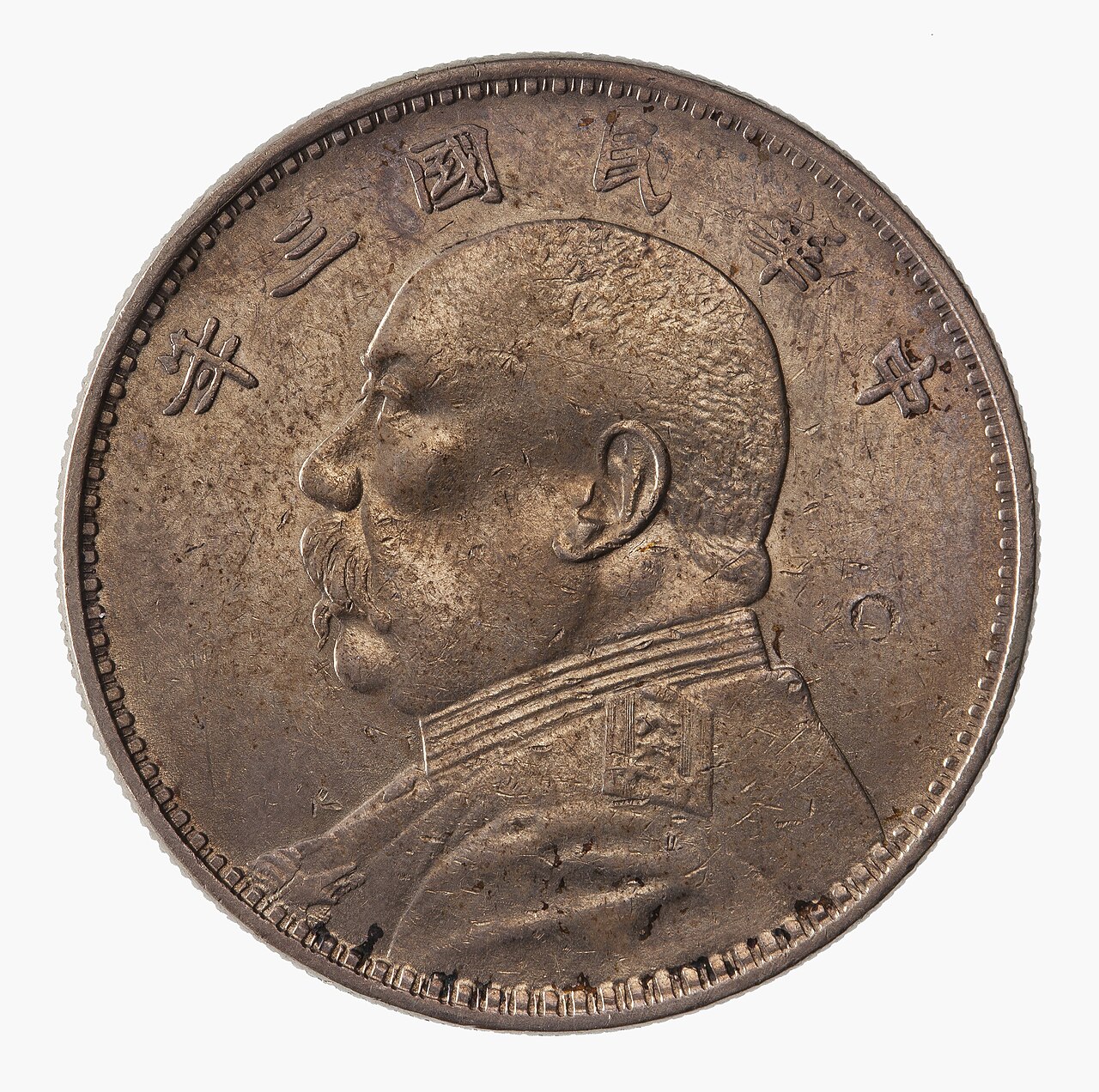
Yuan Shikai dollar
Luigi Giorgi · 1914
Free account
Read every Yuan Shikai source
Sign up free →
Ready when you are
Start chatting with Yuan Shikai now.
20 messages free · No credit card · Available in 50+ languages.