


Secondary sourcePainting1833
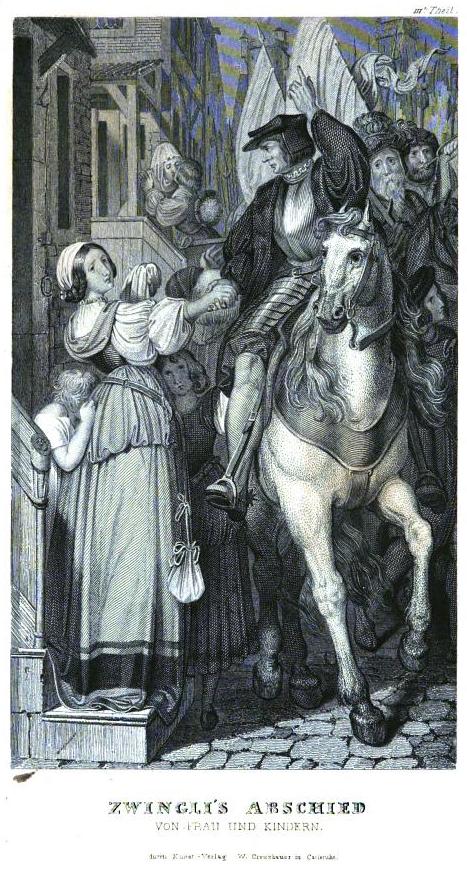
Zwingli's Farewell from Wife and Children
Moritz von Schwind · 1833
A black and white engraving after Moritz von Schwind, dated 1833, showing Zwingli leaving his family on horseback. It is a later artistic imagining of a scene from his life.
Shows a later artist's imagined farewell of Zwingli from his family, so it reflects how the nineteenth century remembered him.
About this source
What it is
This is an engraving titled Zwingli's Abschied von Frau und Kindern, after a copperplate by Moritz von Schwind, dated 1833. It shows a mounted rider in a wide-brimmed hat and dark cloak on a white horse, raising his arm. At left, a woman in a white headscarf holds a small child and gestures toward him, while another child clings to her skirt. A crowd fills the background among tall old buildings. The image is an artist's imagining of a scene from Zwingli's life, not a record made at the time.
Why it matters
In the nineteenth century, artists often painted and printed scenes from the lives of Reformation figures to tell moral and national stories. This engraving presents Zwingli's departure as a family parting, so it shows how later viewers wanted to picture him: a husband and father called away. It reveals more about the taste and concerns of 1833 than about the exact events.
Look closer
- What emotions do the figures show, and how does the artist use gesture and position to create them?
- Why might an artist in 1833 choose a family farewell rather than a scene of religious debate?
- What does this image leave out about Zwingli's own words and reasons for leaving?
This painting is part of the curated material that grounds the AI version of Huldrych Zwingli on Humy.ai — when students ask about related events, the AI can quote it and cite it.
More Huldrych Zwingli sources
Browse all 97 →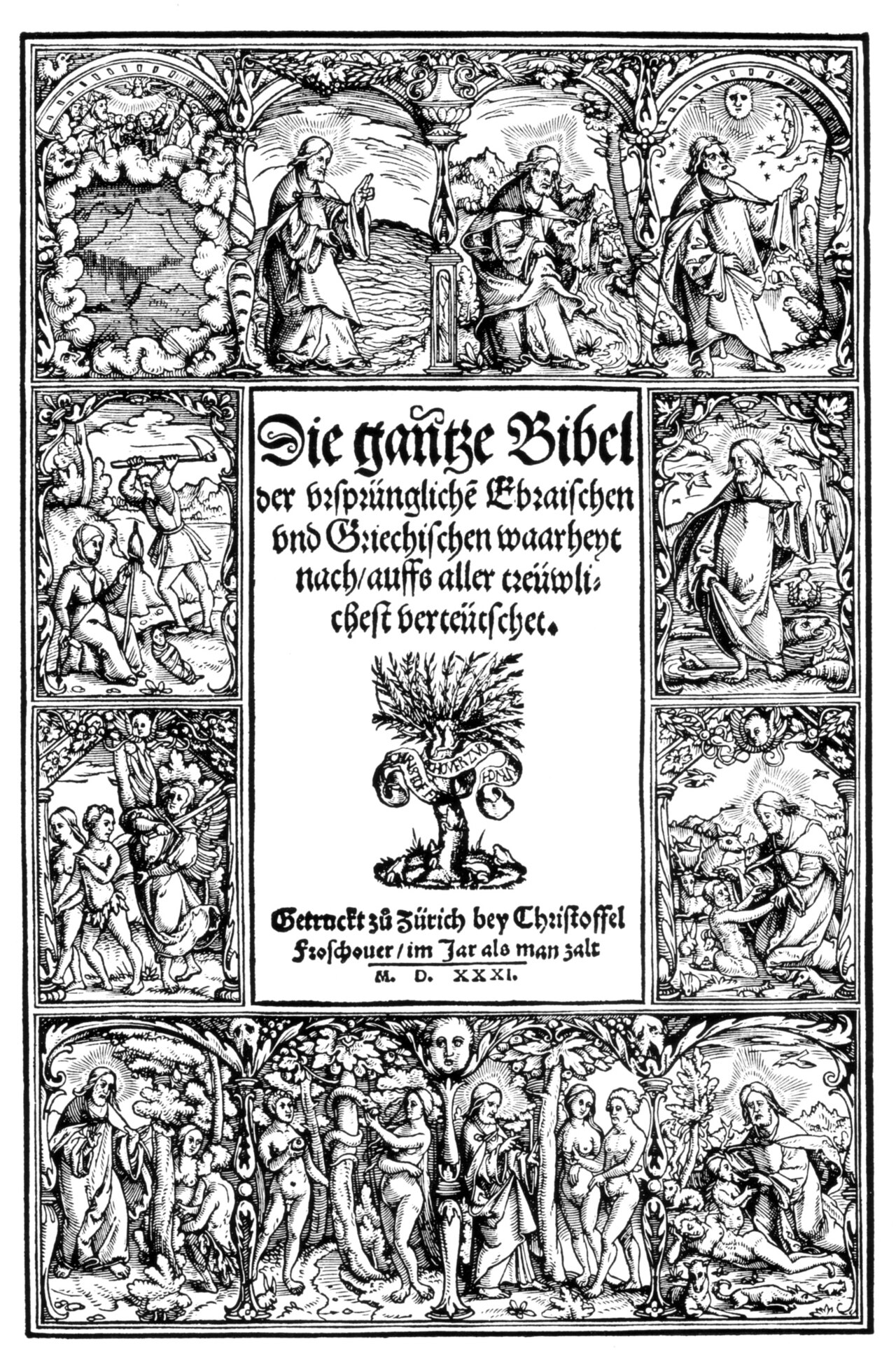 Book
Primary source
Zürich Bible
Huldrych Zwingli · 1531
 Document
Secondary source
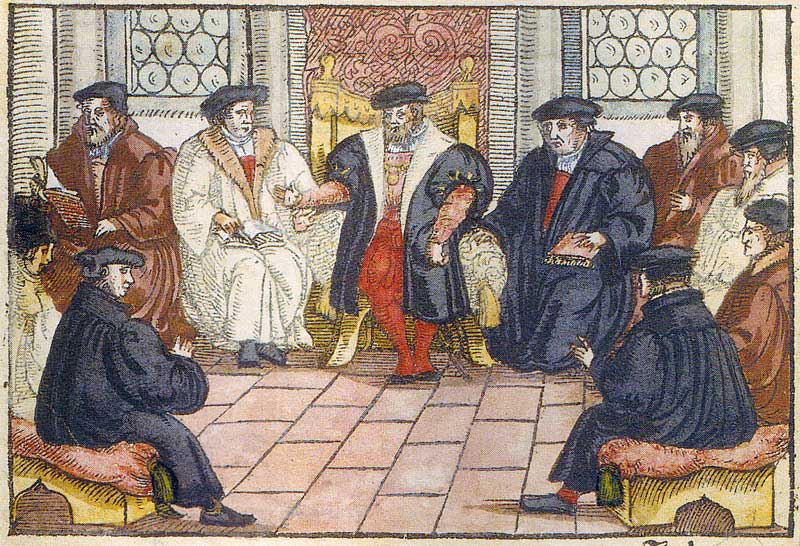
Marburg Colloquy
1-4 October 1529
 Painting
Secondary source
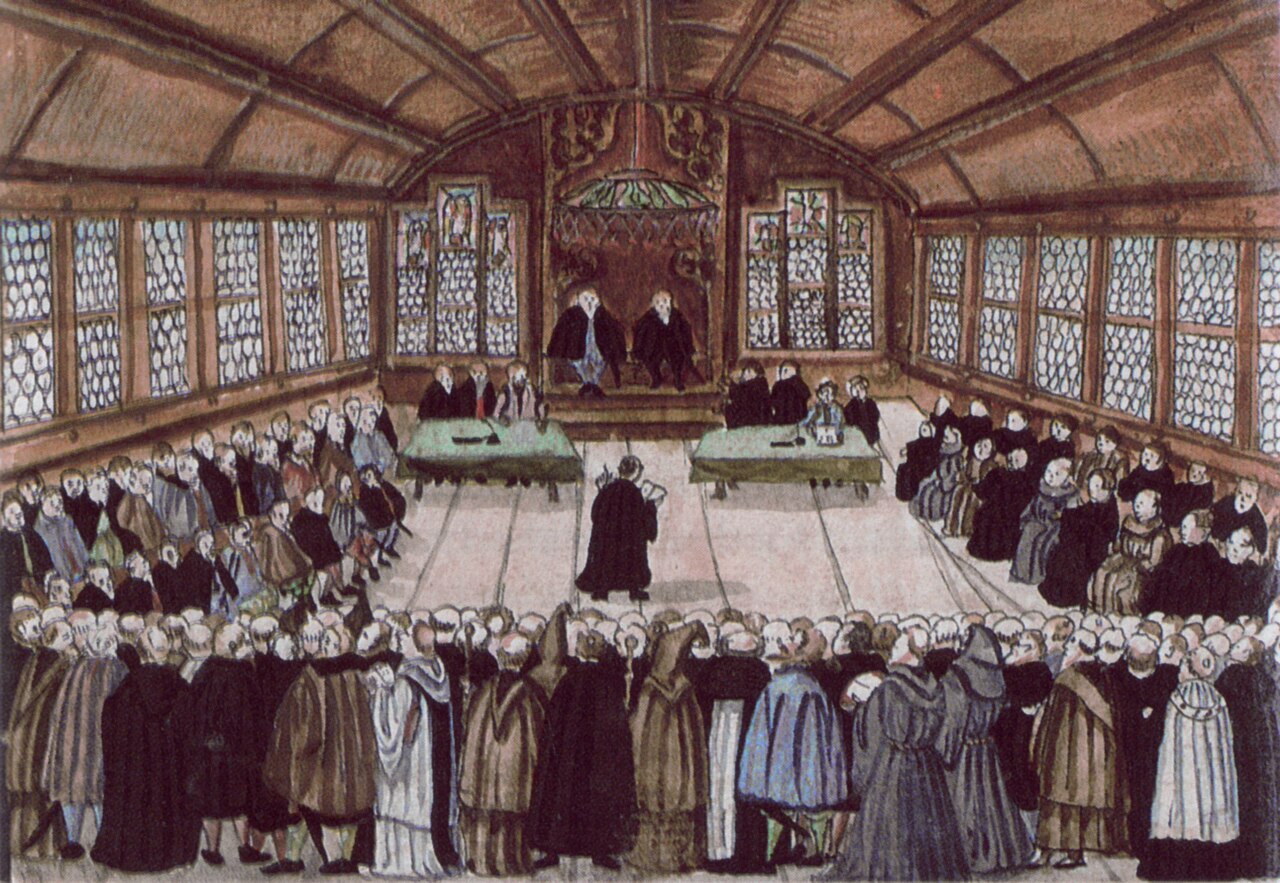
Zürcher-Disputation 1523
1523 (event); later copy
 Book
Primary source
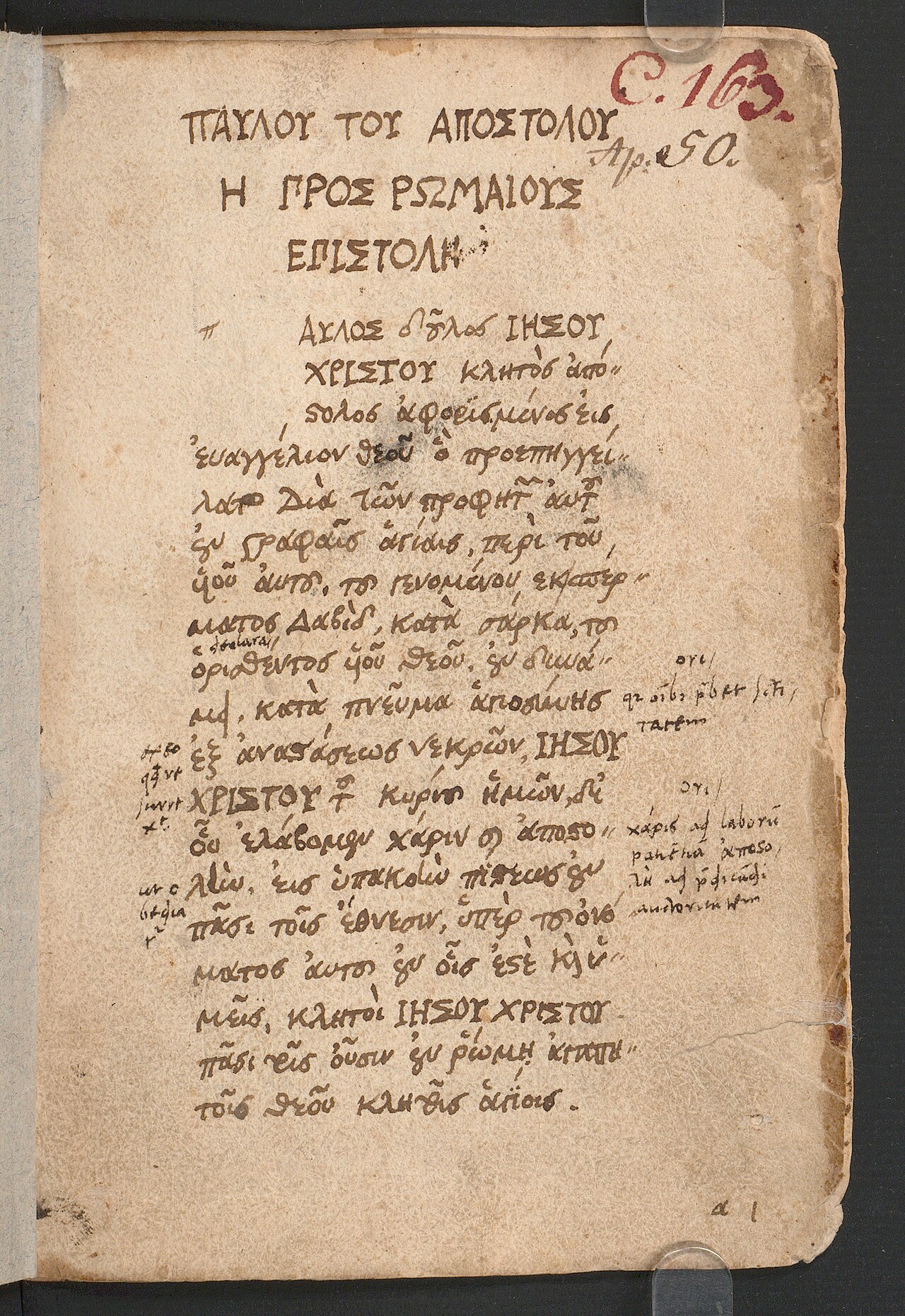
Divi Pauli Apostoli epistolae
Huldrych Zwingli · 1517
Free account
Browse every Huldrych Zwingli source
Sign up free →
Ready when you are
Start chatting with Huldrych Zwingli now.
20 messages free · No credit card · Available in 50+ languages.