Case study
AI Hatshepsut at South Florida PBS
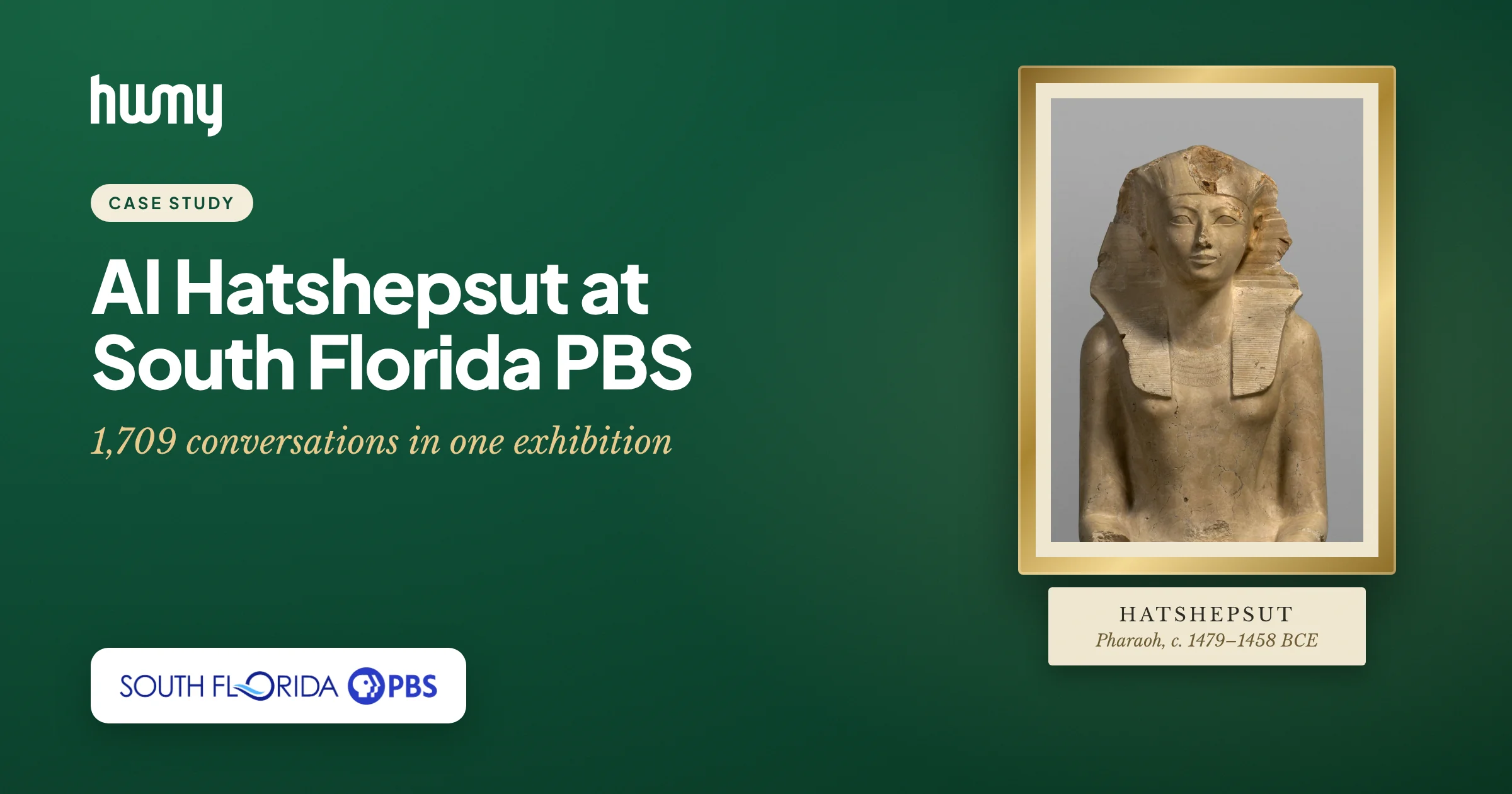
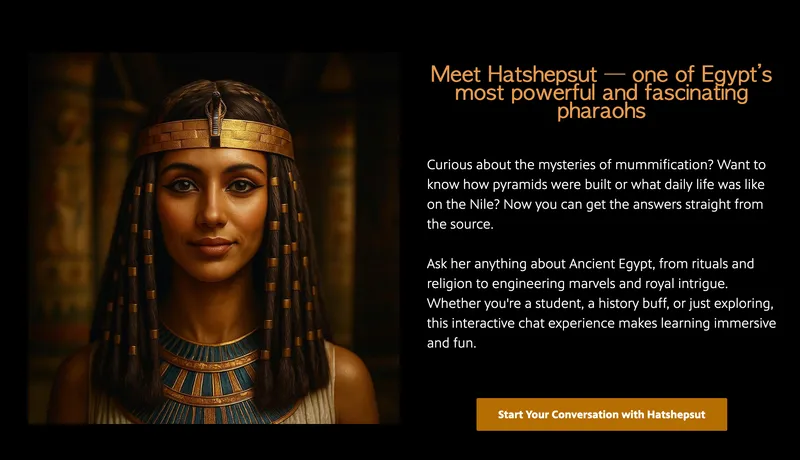
From October 2025 to April 2026, visitors to South Florida PBS’s immersive exhibition Egyptian Pharaohs: From Cheops to Ramses II could question Pharaoh Hatshepsut herself. Humy built the AI figure, and PBS’s own team ran it for the whole exhibition. She held 1,709 conversations.
At a glance
- Client: South Florida PBS
- Exhibition: Egyptian Pharaohs: From Cheops to Ramses II, October 4, 2025 to the end of April 2026
- What Humy built: an AI Pharaoh Hatshepsut, grounded in her documented biography, 63 artefacts chosen by PBS and the exhibition FAQ
- Where visitors met her: PBS’s exhibition website, QR codes, and a dedicated station in the final room. No app and no account.
- Languages: English and Spanish, typed or spoken
- Under the hood: Humy for sources, guardrails, integrations and analytics; Google Gemini for text generation
The brief
PBS wanted an educational layer for the exhibition that visitors could use before and after a visit, not only in the gallery, for audiences from middle school to adults. With limited engineering support, its own team had to be able to configure and run it. And it had to open without an app or a sign-up, and stay in character whatever the public typed.
How it came together
PBS came to us in spring 2025 and picked Humy after comparing proposals. Over the summer, its team sent the exhibition FAQ, the exhibition chapters, resource links, and images of the artefacts with their descriptions. We turned them into Hatshepsut’s sources and ran review rounds in English and Spanish. In conversation she could show an artefact and point visitors to tickets. She went live on PBS’s site in September, ahead of the opening, and PBS’s team placed the embed and the QR codes themselves. We announced the launch in November 2025.
63 artefacts, chosen by PBS
PBS picked 63 artefacts for Hatshepsut to draw on, from her own statues and temple to the pyramids, pharaohs and everyday objects of ancient Egypt. Each came with a description and its source, so she could show the right one in the middle of a conversation. Eight of them:
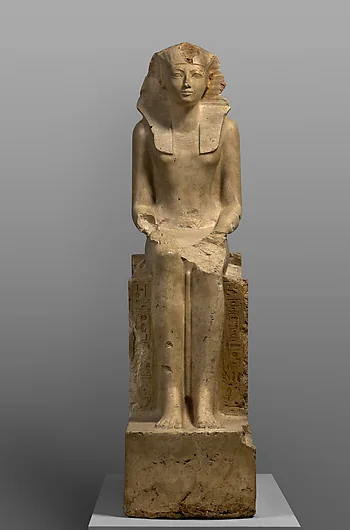 StatueSeated Statue of Hatshepsutc. 1473–1458 BCE · The Met
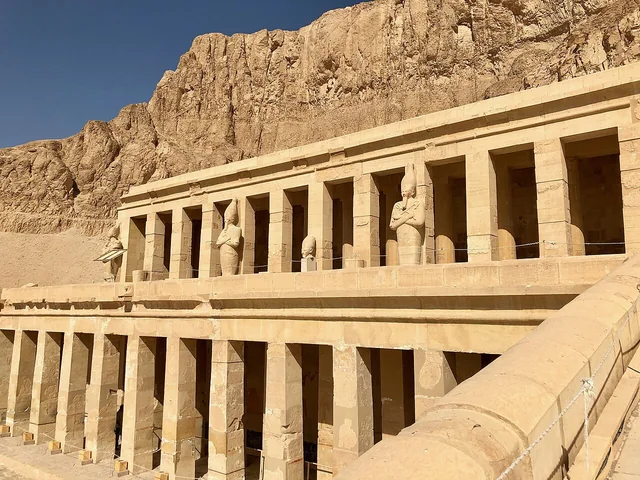 TempleMortuary Temple of HatshepsutDeir el-Bahari, Luxor · photo by Warren LeMay
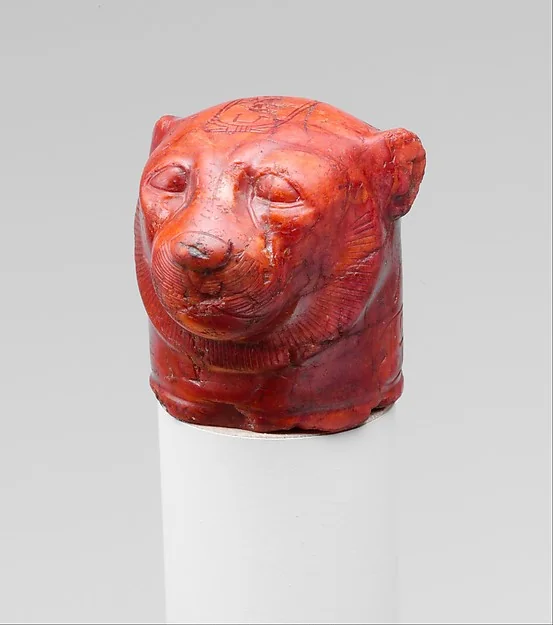 SculptureHead of a Leopard with the Name of Hatshepsutc. 1473–1458 BCE · The Met
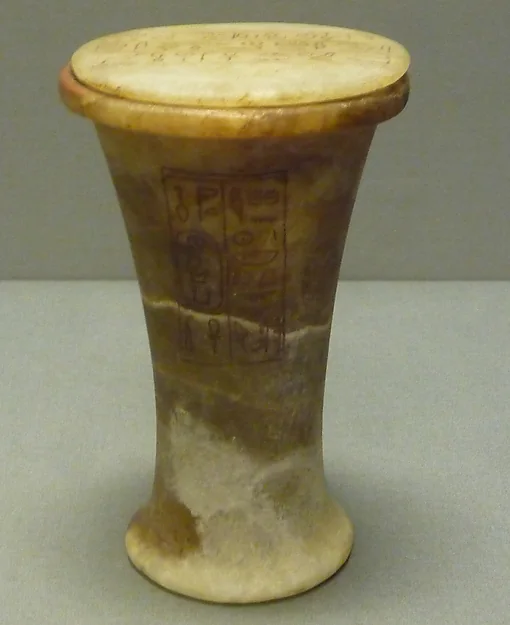 VesselOintment Jar from a Foundation Deposit of Hatshepsutc. 1473–1458 BCE · The Met
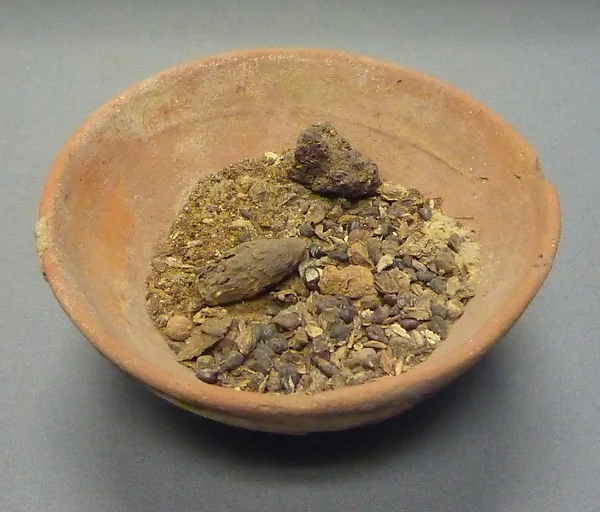 OfferingBowl of Grapes and Figsc. 1473–1458 BCE · The Met
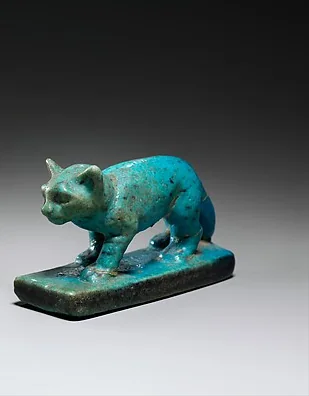 FigurineCat figurinec. 1981–1802 BCE · The Met
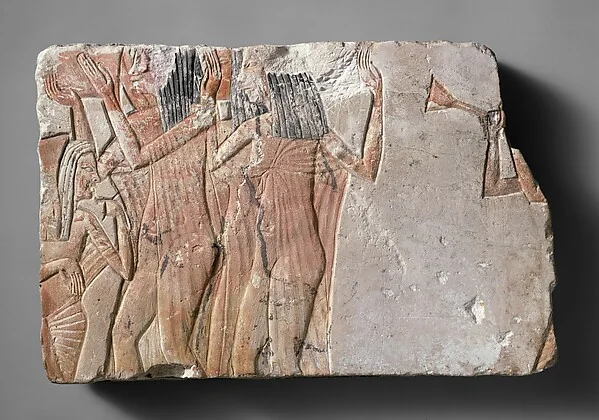 ReliefDancers with Instrumentsc. 1347–1330 BCE · The Met
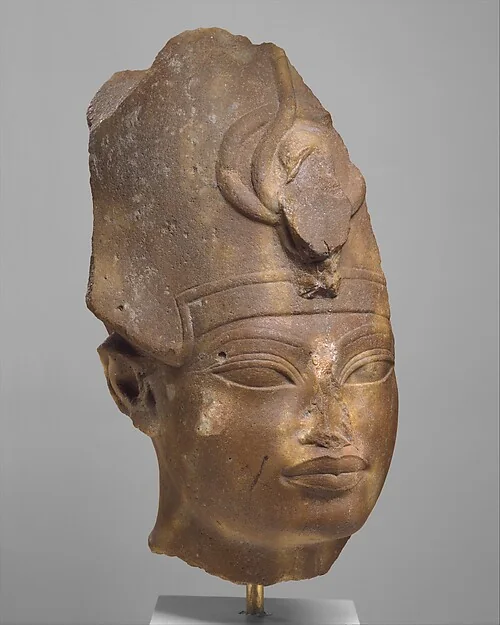 SculptureAmenhotep III in the Blue Crownc. 1386–1347 BCE · The Met

Results
Conversations
1,709
over the run, online and in the gallery
Past 20 messages
61
conversations; another 265 ran 6–20 messages
Longest conversation
115
messages with Hatshepsut
Most visitors asked a question or two. A committed core kept going, using Hatshepsut as a tutor rather than a novelty. 278 messages came in by voice, and 23 in Spanish.
What we learned
- A gallery station beats posters. Engagement rose noticeably once PBS set up a dedicated station in the exhibition’s final room, where visitors already pause.
- Most conversations happen online. Even with the in-gallery placements, most conversations took place on the exhibition website before or after a visit, which makes the website the first thing to design for.
- The guardrails held without staff. In testing, the PBS team managed to turn an early build into a pirate, so we tightened her guardrails before launch. During the run, profanity, off-topic abuse and attempts to change her personality were handled automatically, and no one from PBS had to step in.
- Out of the box was the right call. PBS’s team configured and ran Hatshepsut themselves, from the first test build to closing day.
Next time, we’d ship a reporting dashboard with the AI and put the gallery station in place on day one.
Planning an exhibition? See how Humy works for museums, with AI historical figures grounded in your own collection.
Images: Seated Statue of Hatshepsut (cover) and the artefacts above from The Metropolitan Museum of Art, public domain (CC0). Mortuary Temple photo by Warren LeMay via Wikimedia Commons, CC0.