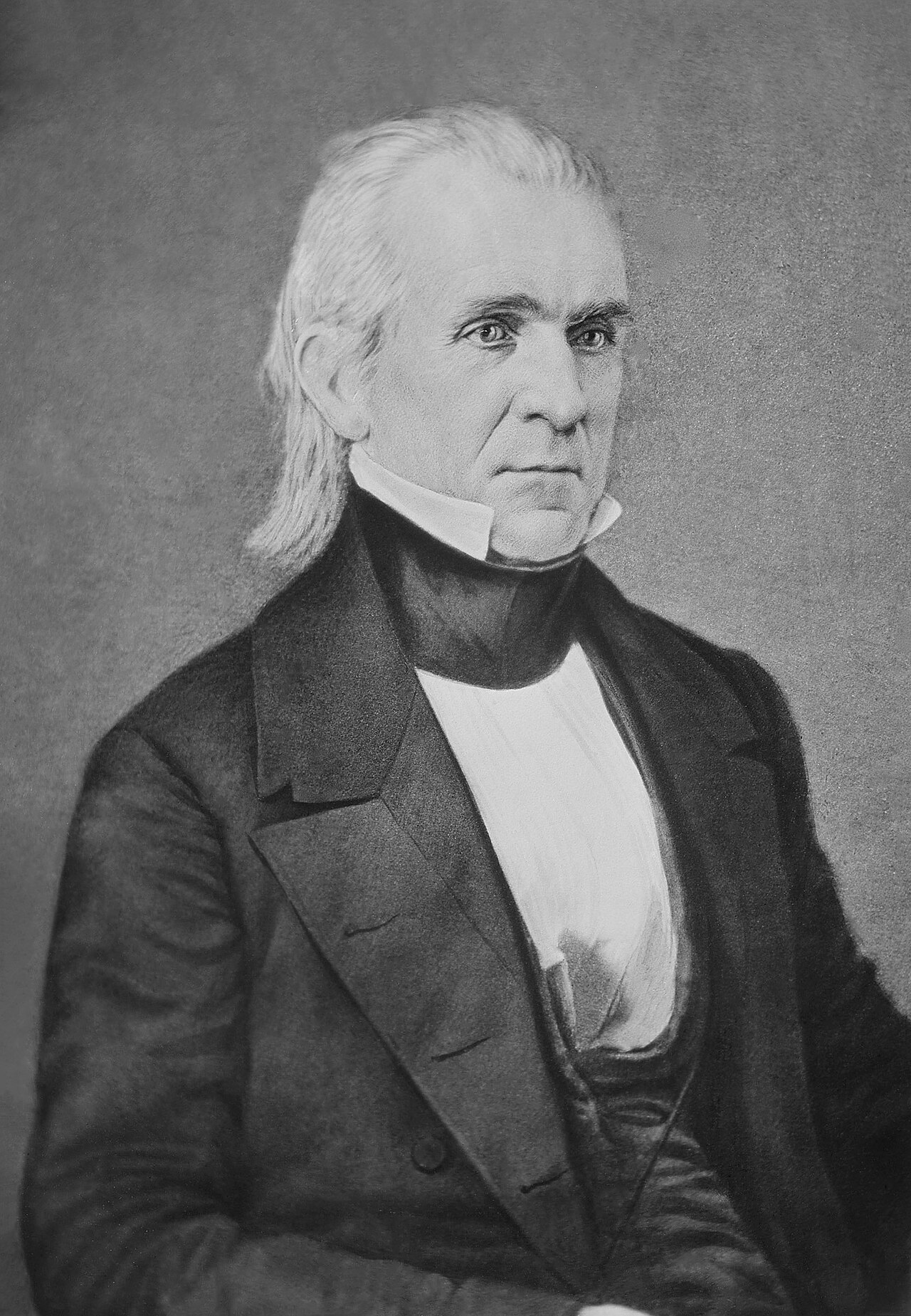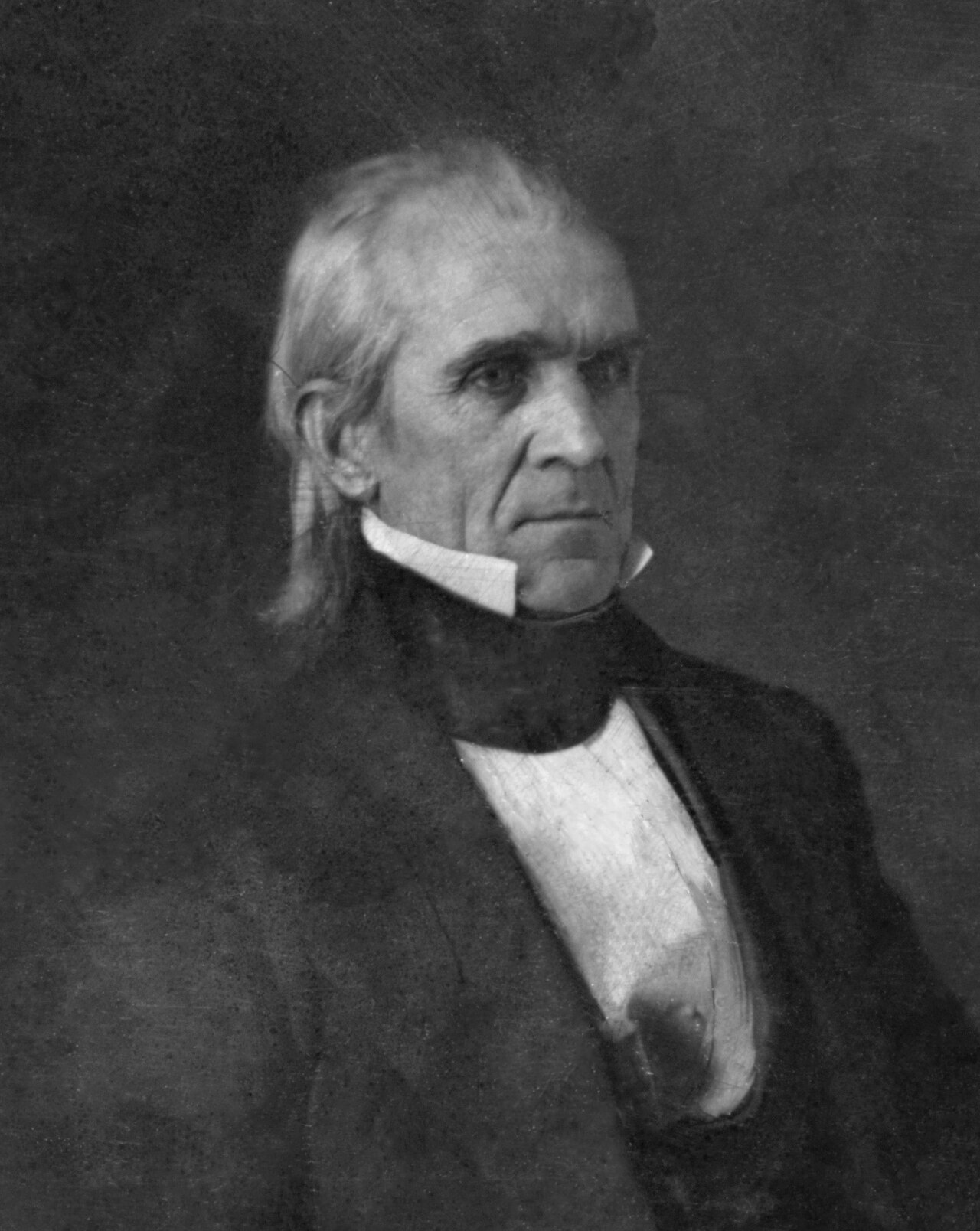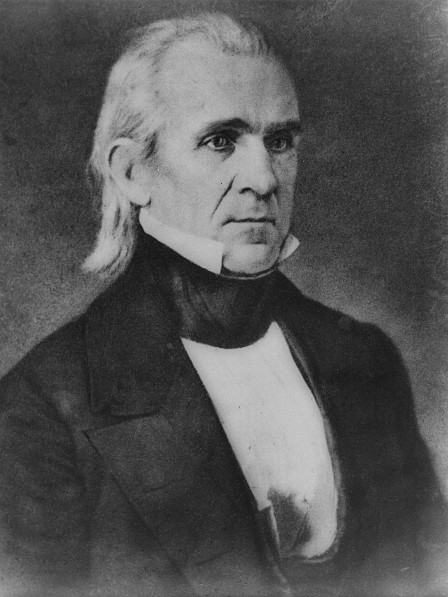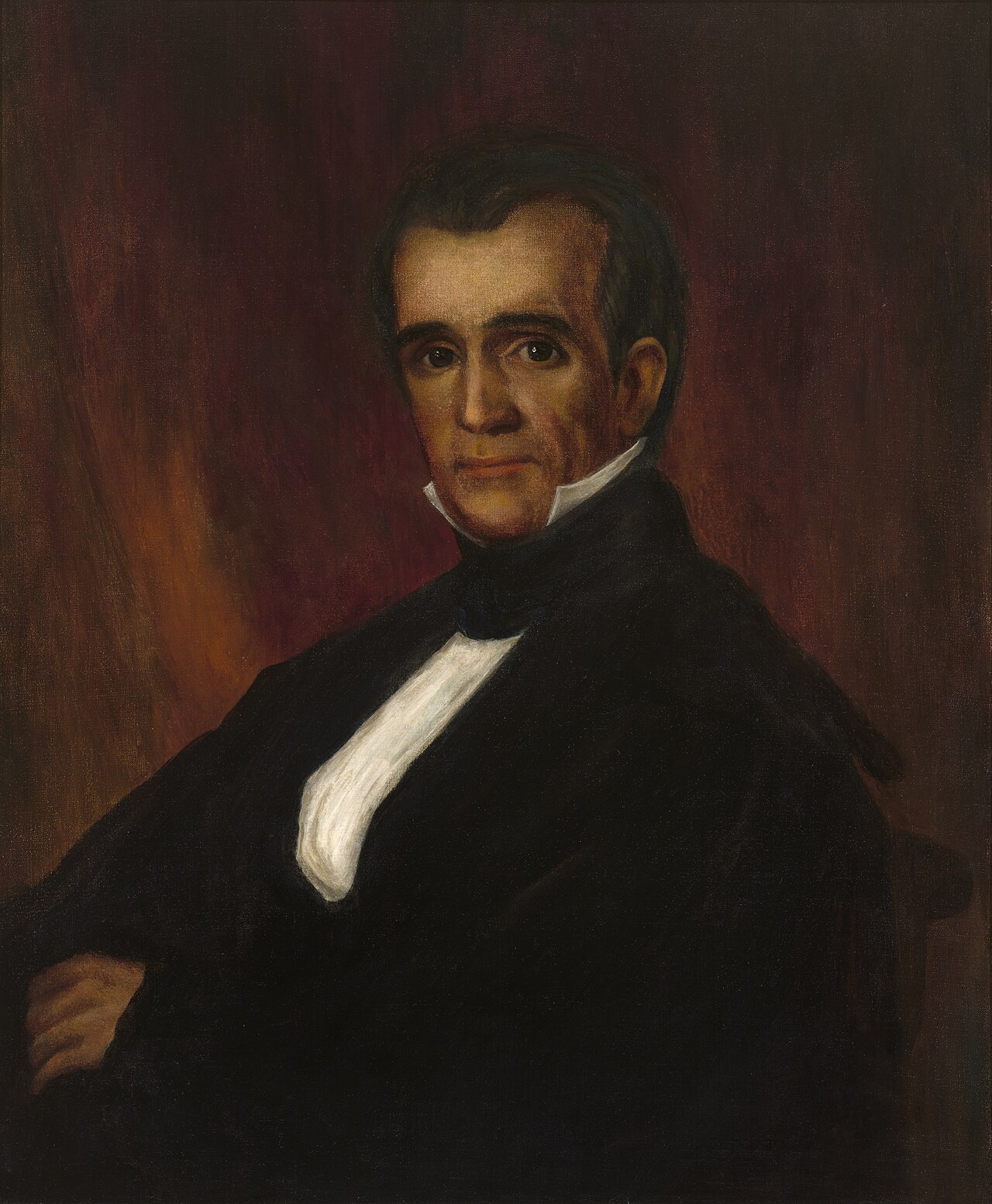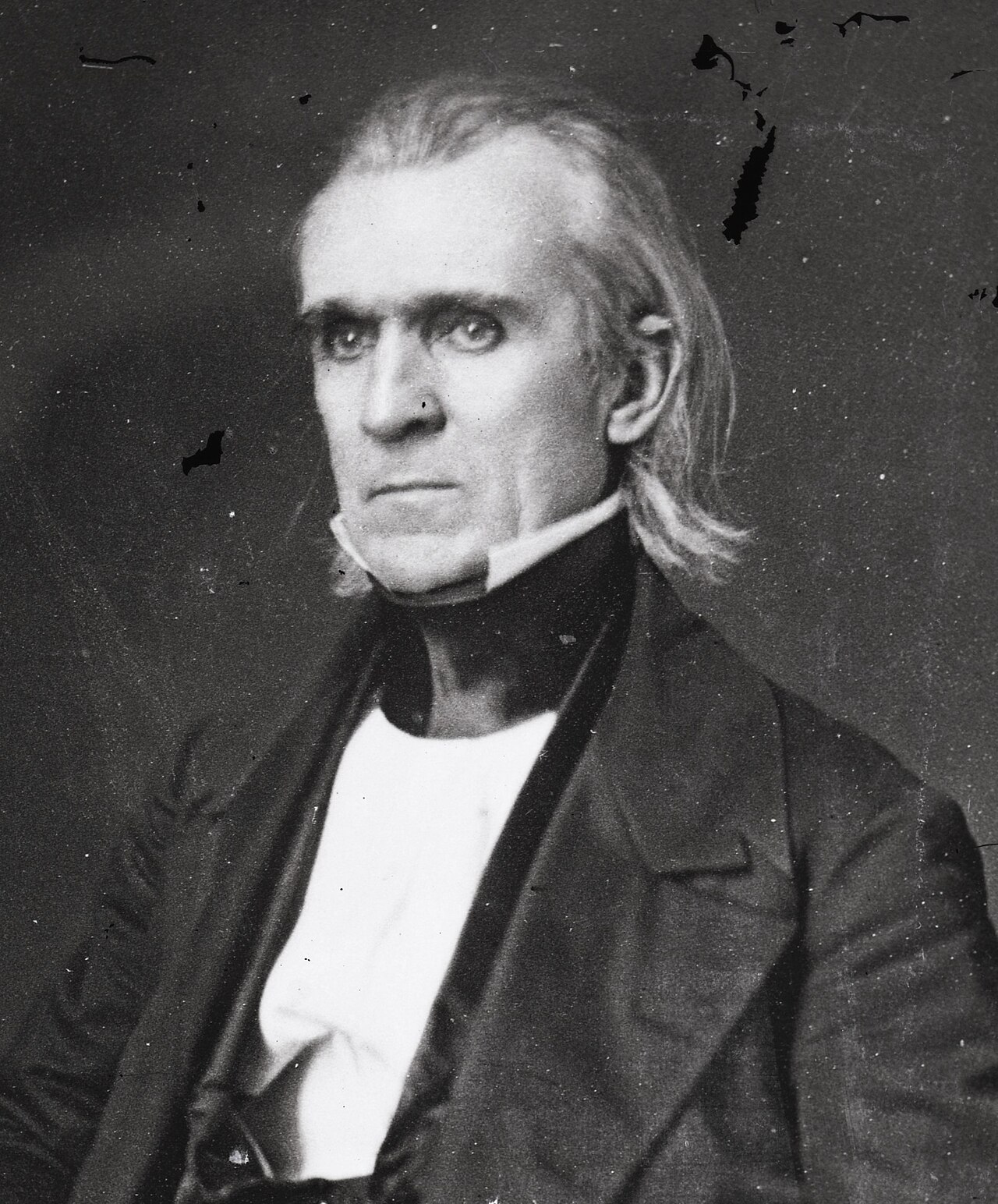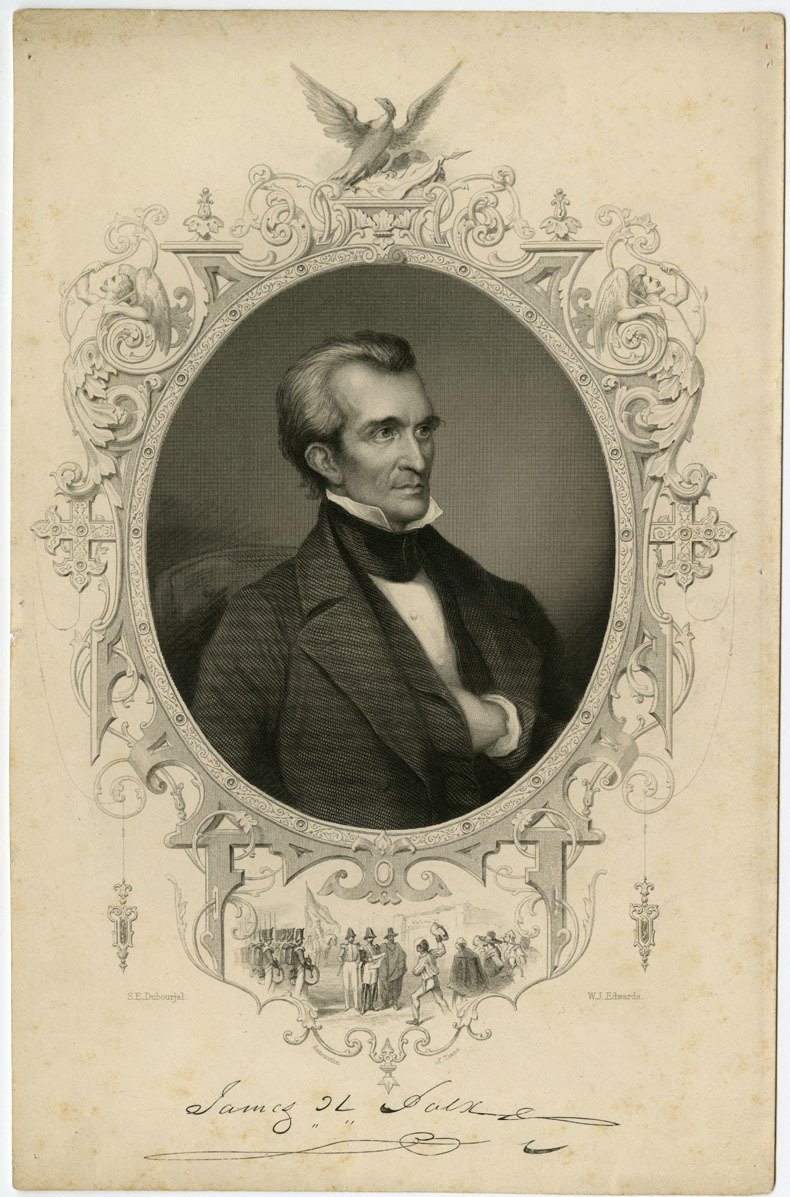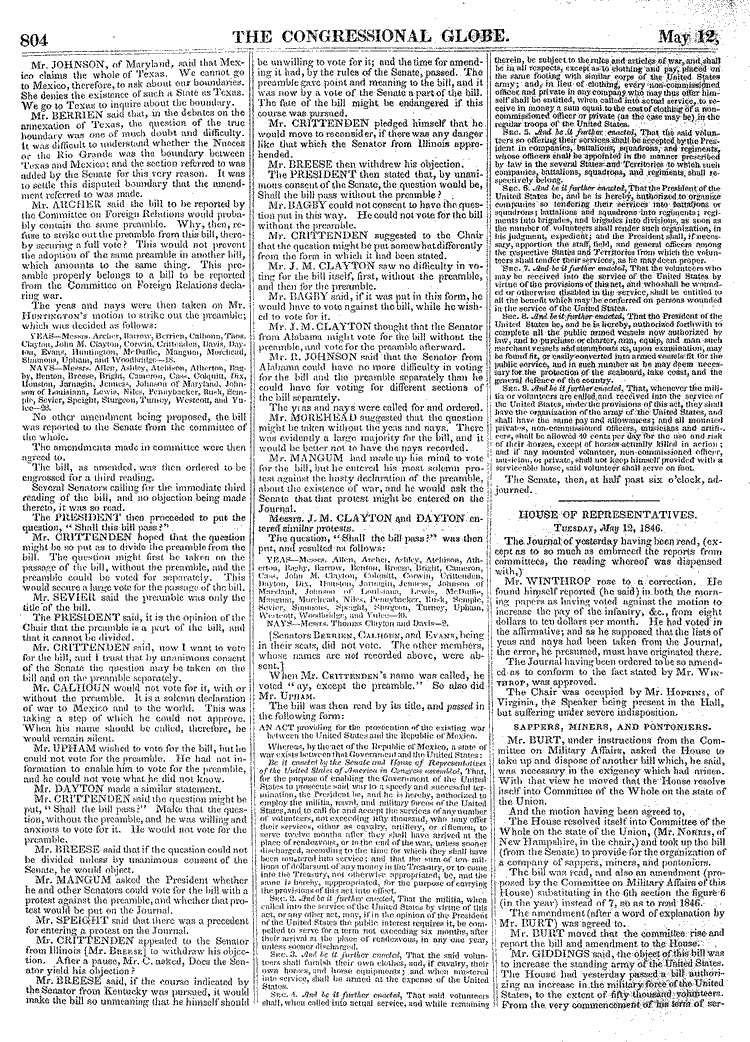
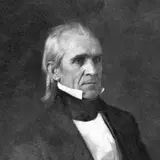
Portrait of James K. Polk

AI Historical Figure

James K. Polk

11th President of the United States who expanded the country's territory through the annexation of Texas, the Oregon Treaty, and the Mexican–American War.

Chat with James K. Polk via text or voice — in 42 languages, drawing on a curated biography and 87 historical sources. Available 24/7.

Start chatting with James K. Polk20 messages free · No credit card
Lived
1795–1849
From
United States
Known for
Politics & governmentLaw
James K. Polk

James K. Polk

Online · responds in seconds

Hello — I'm James K. Polk. 11th President of the United States who expanded the country's territory through the annexation of Texas, the Oregon Treaty, and the Mexican–American War. What would you like to ask me?

20 messages free · No credit card · Powered by Humy.ai

Live preview · Switch between 42 languages above · Send a message to continue in the app

Multilingual

Talk to James K. Polk in 42 languages

Ask James K. Polk questions in any language below, and the rest of Humy's app speaks it too. Pick yours to open the chat in that language.

Also in German (Austria), German (Switzerland), English (UK), English (Australia), English (Canada).

The sources behind this AI

87 sources · 25 documents · 18 books · 15 paintings · 14 photographs · 9 speeches · 2 artifacts · 2 newspaper articles · 1 diary entry · 1 letter

James K. Polk doesn’t improvise from thin air. The AI is grounded in 87 curated historical sources students can inspect. Open any of them to see what informs the conversation.

Plain blue-grey cloth book cover, with a tan cloth spine strip on the left edge. No title or text is visible on this blank cover.Diary entry

Primary source

Diary of James K. Polk

James K. Polk · 1845–1849

Speech

Primary source

Inaugural Address of James K. Polk

James K. Polk · 4 March 1845

Speech

Primary source

James K. Polk's First State of the Union Address

James K. Polk · 2 December 1845

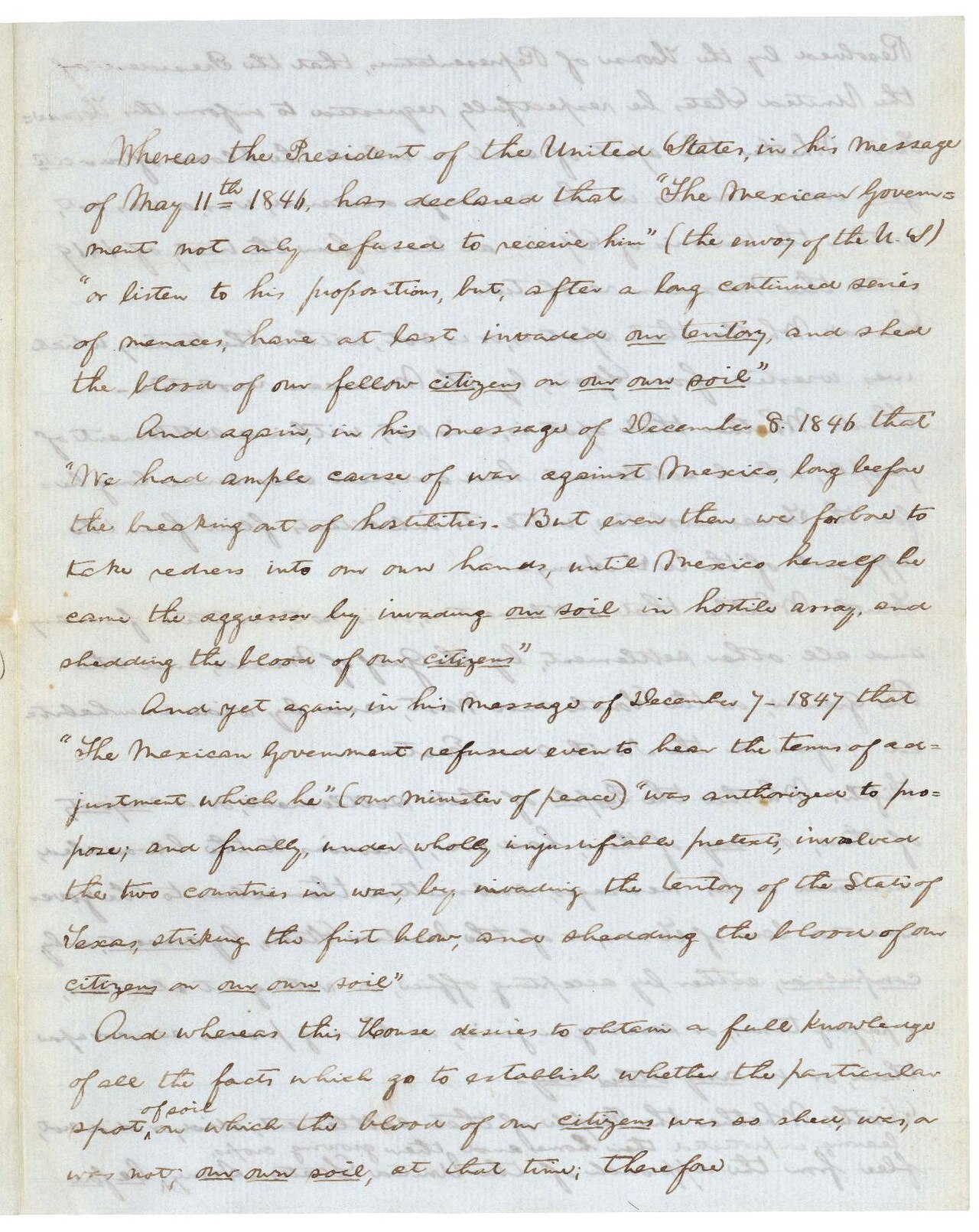
Handwritten manuscript page in brown ink on aged paper, beginning 'Whereas the President of the United States, in his message of May 11th 1846...' with underlined phrases. Text quotes Polk's messages and discusses the spot where blood was shed.Document

Primary source

Spot Resolutions

Abraham Lincoln · 22 December 1847

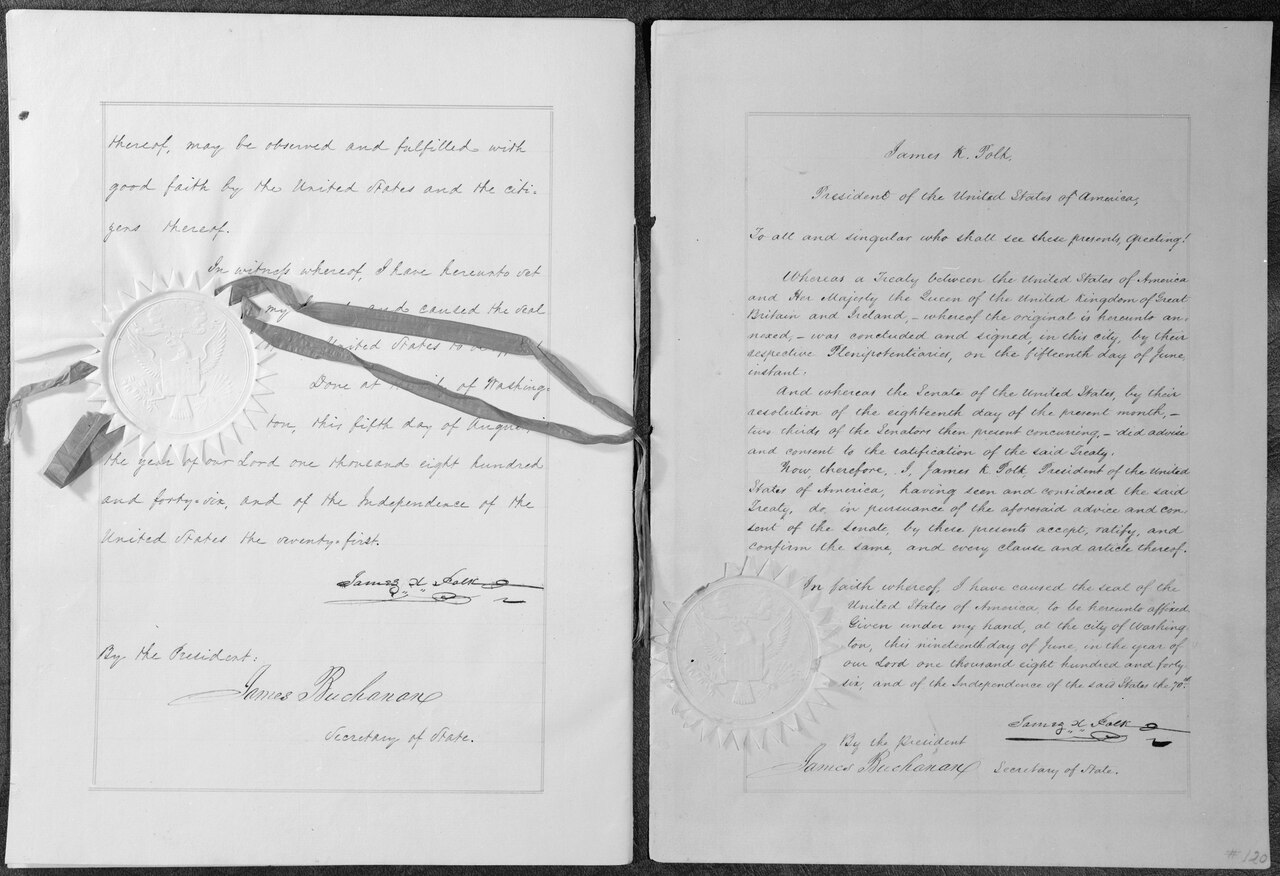
Two pages of the Oregon Treaty, handwritten in ink on paper, laid side by side. Each has a wax seal with a ribbon on the left page and a seal on the right. Signatures appear at the bottom: James Buchanan as Secretary of State, and James K. Polk as President.Document

Primary source

Oregon Treaty

15 June 1846

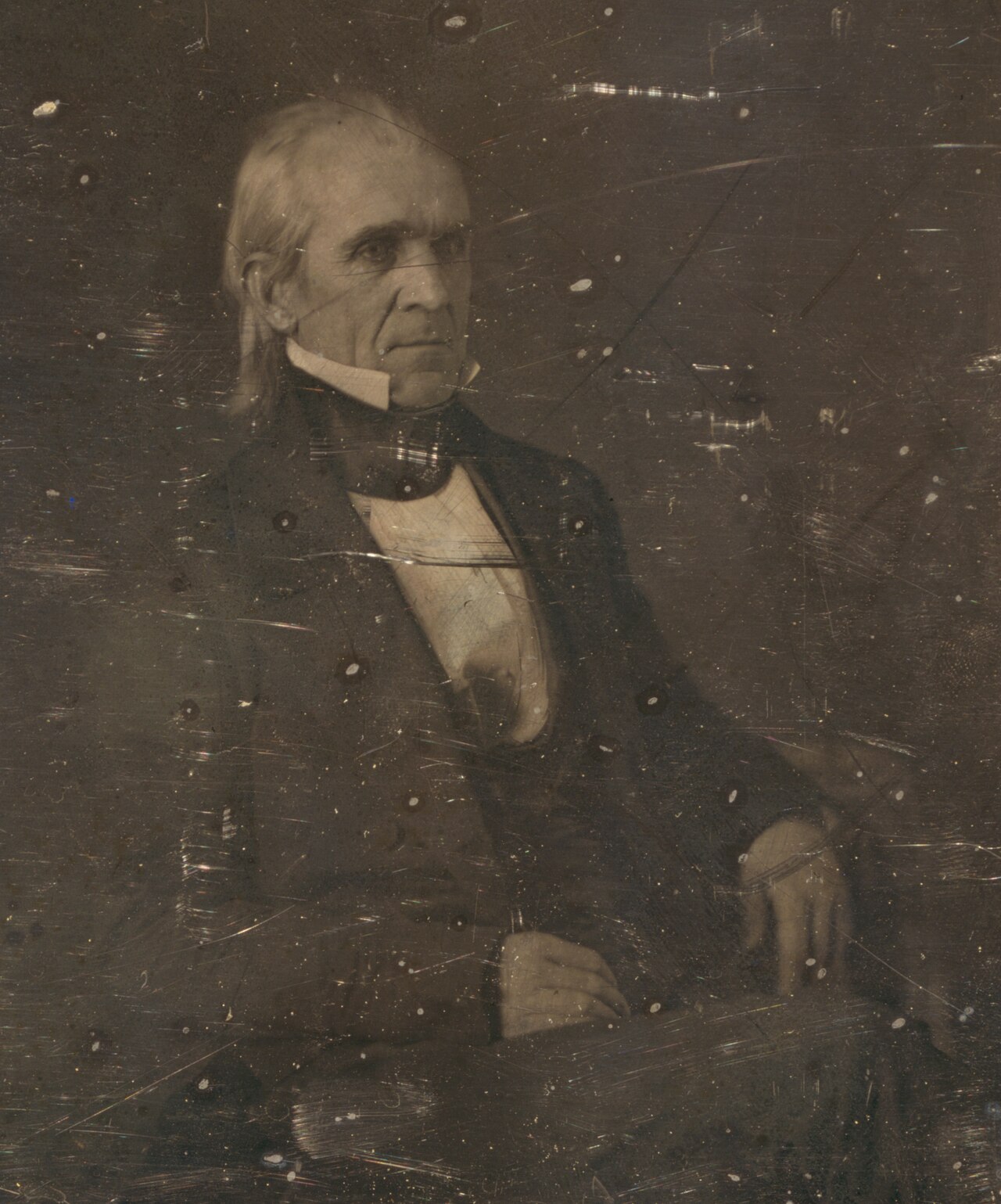
Black and white portrait of an older man with light, swept-back hair falling to his collar, wearing a dark jacket, high white collar and white shirt front, looking to the side against a grey background.Photograph

Primary source

Daguerreotype Portrait of James K. Polk

Mathew Benjamin Brady · 1849

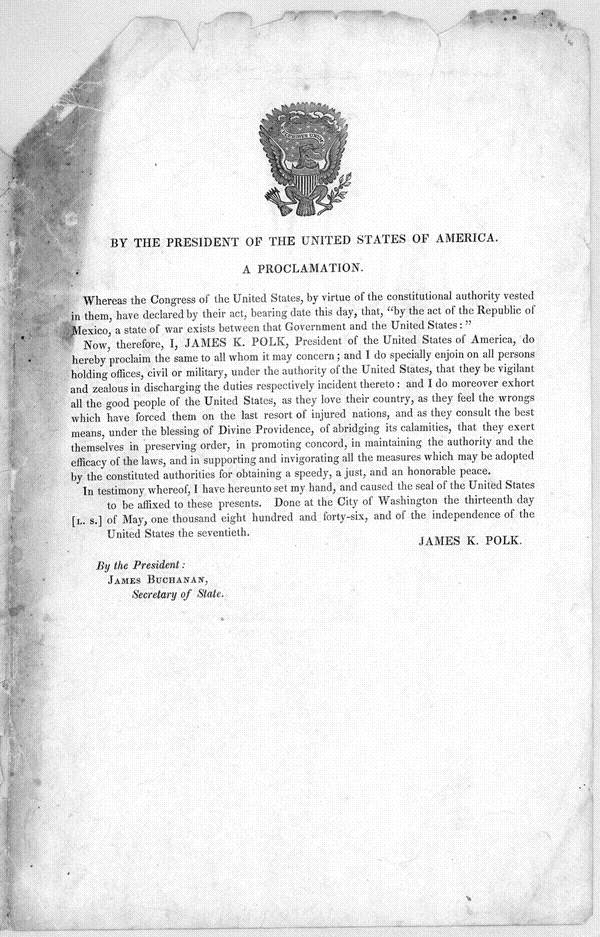
Scan of a printed proclamation headed 'By the President of the United States of America. A Proclamation.' beneath an eagle seal. Signed James K. Polk, with James Buchanan as Secretary of State. Paper is aged and stained at the edges.Document

Primary source

Proclamation Declaring a State of War with Mexico

James K. Polk · 1846

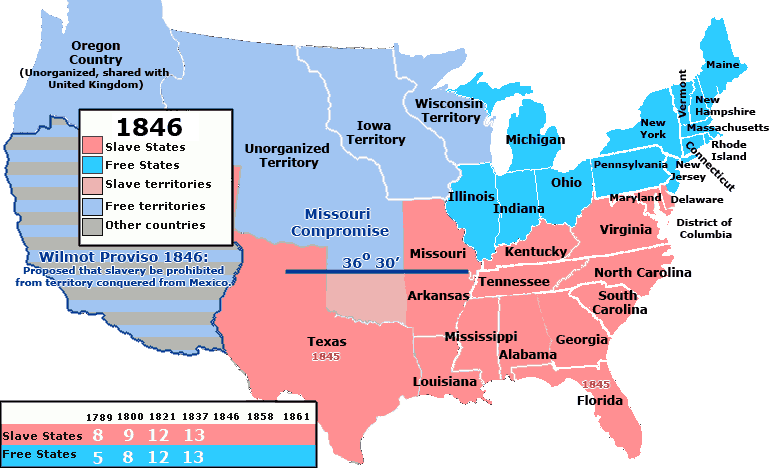
Map of the United States in 1846 showing slave states in red, free states in blue, and territories including Oregon Country and Unorganized Territory. A legend box and a note on the Wilmot Proviso of 1846 appear on the left, and a table of state counts by year is at the bottom.Document

Secondary source

Wilmot Proviso

David Wilmot · 1846

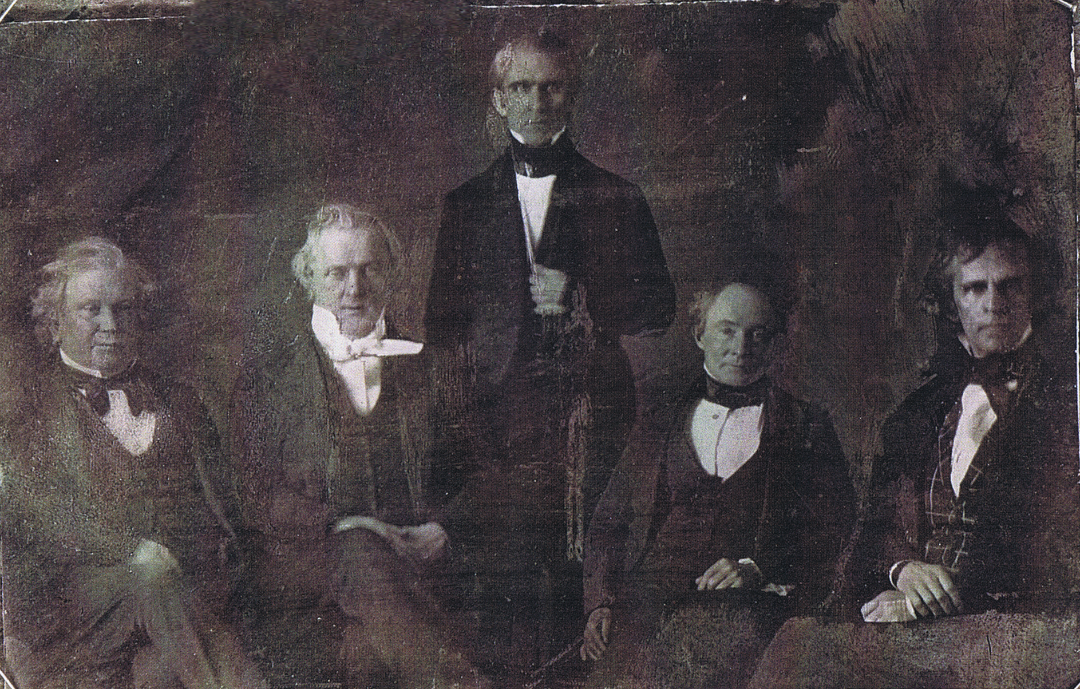
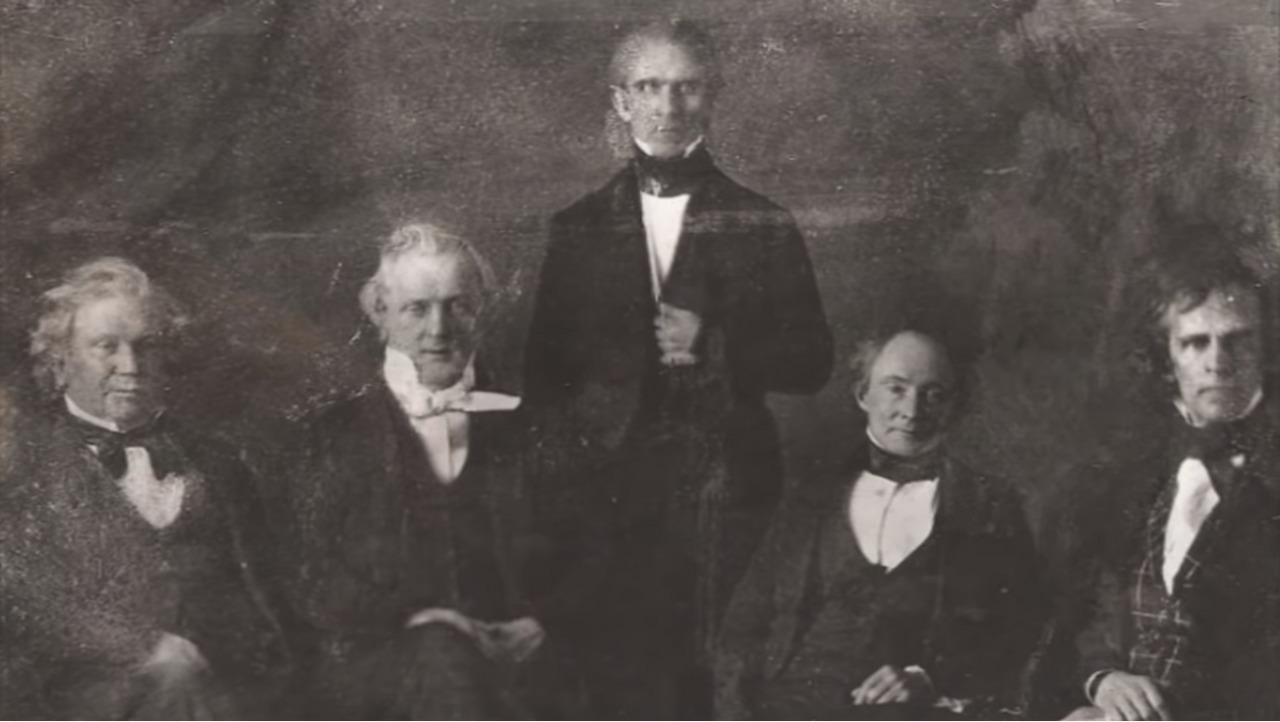
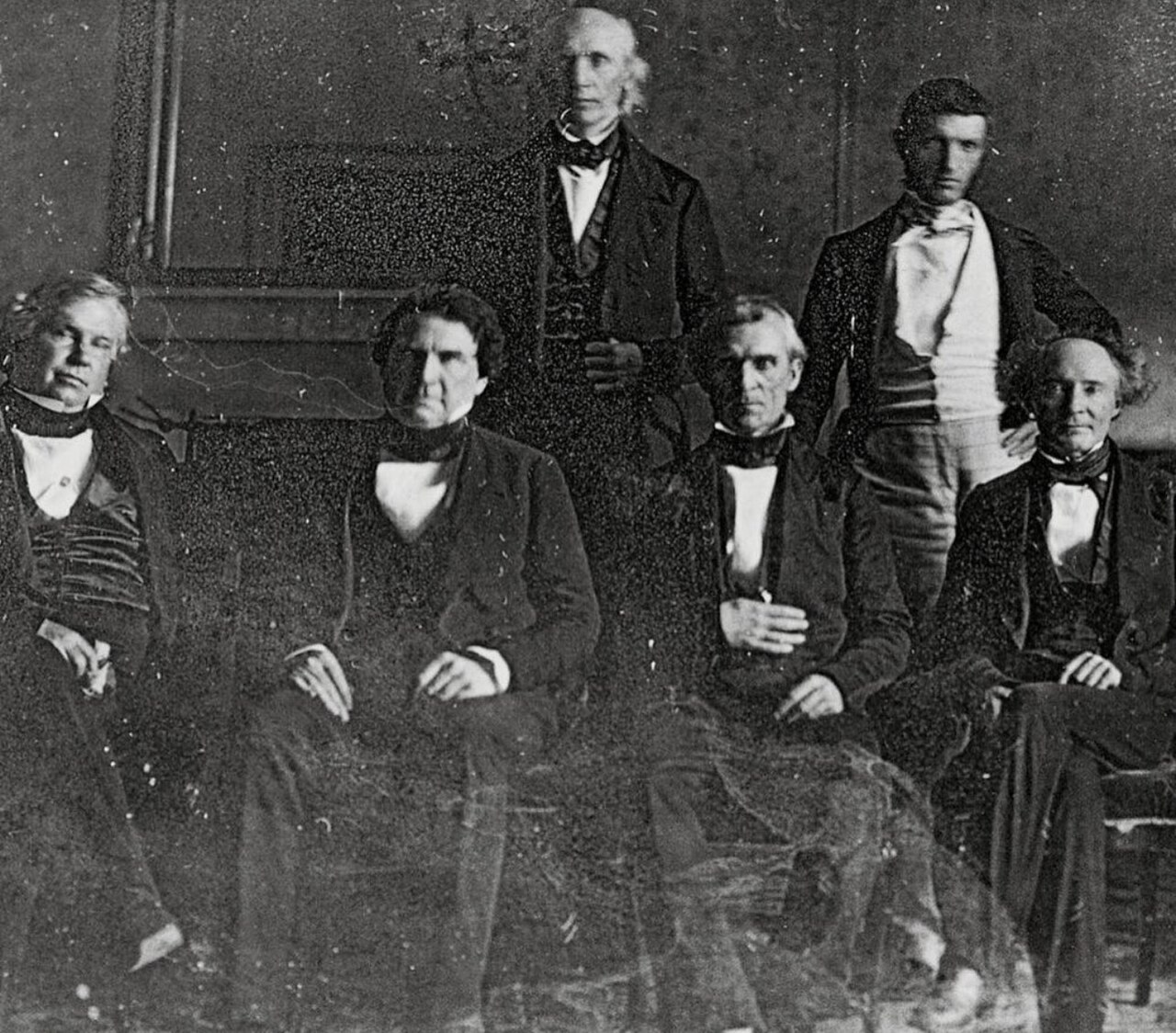
Sepia-toned group portrait of five men in 19th-century dark suits and white collars against a dark backdrop. Seated at left and right and seated near center-right, with one man standing in the center back.Photograph

Primary source

Polk's Cabinet Daguerreotype, 1849

1849

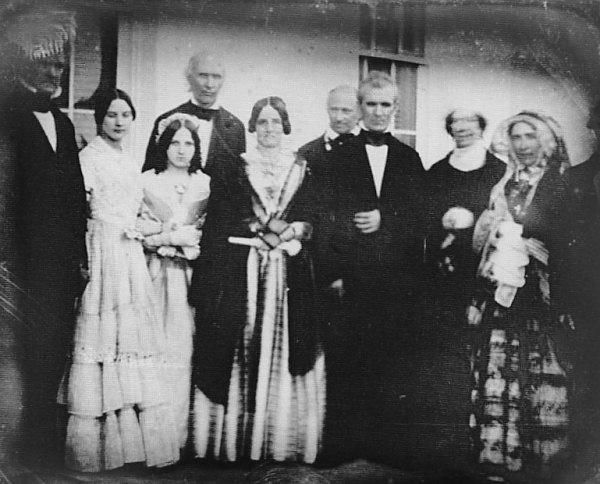
Black and white daguerreotype of a group of about eight people in 19th-century dress standing outdoors in front of a building with windows. An older woman in a dark shawl and lace cap stands at right, and a man in a dark suit stands center-right.Photograph

Primary source

Gathering on the White House South Portico

John Plumbe, Jr. · c. 1848

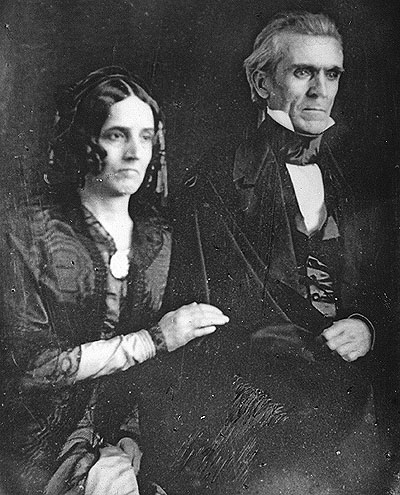
Sepia daguerreotype-style portrait of a seated man and woman. On the left, a woman with dark curled hair wears a dark dress with a brooch and her hands rest in her lap. On the right, a man with light swept-back hair wears a dark coat, white shirt and high collar, with his hands resting near his waist.Photograph

Primary source

James K. Polk and Sarah Childress Polk

Unknown, possibly John Plumbe Jr.

Speech

Primary source

Third State of the Union Address

James K. Polk · 7 December 1847

Speech

Primary source

Fourth Annual Message to Congress

James K. Polk · 5 December 1848

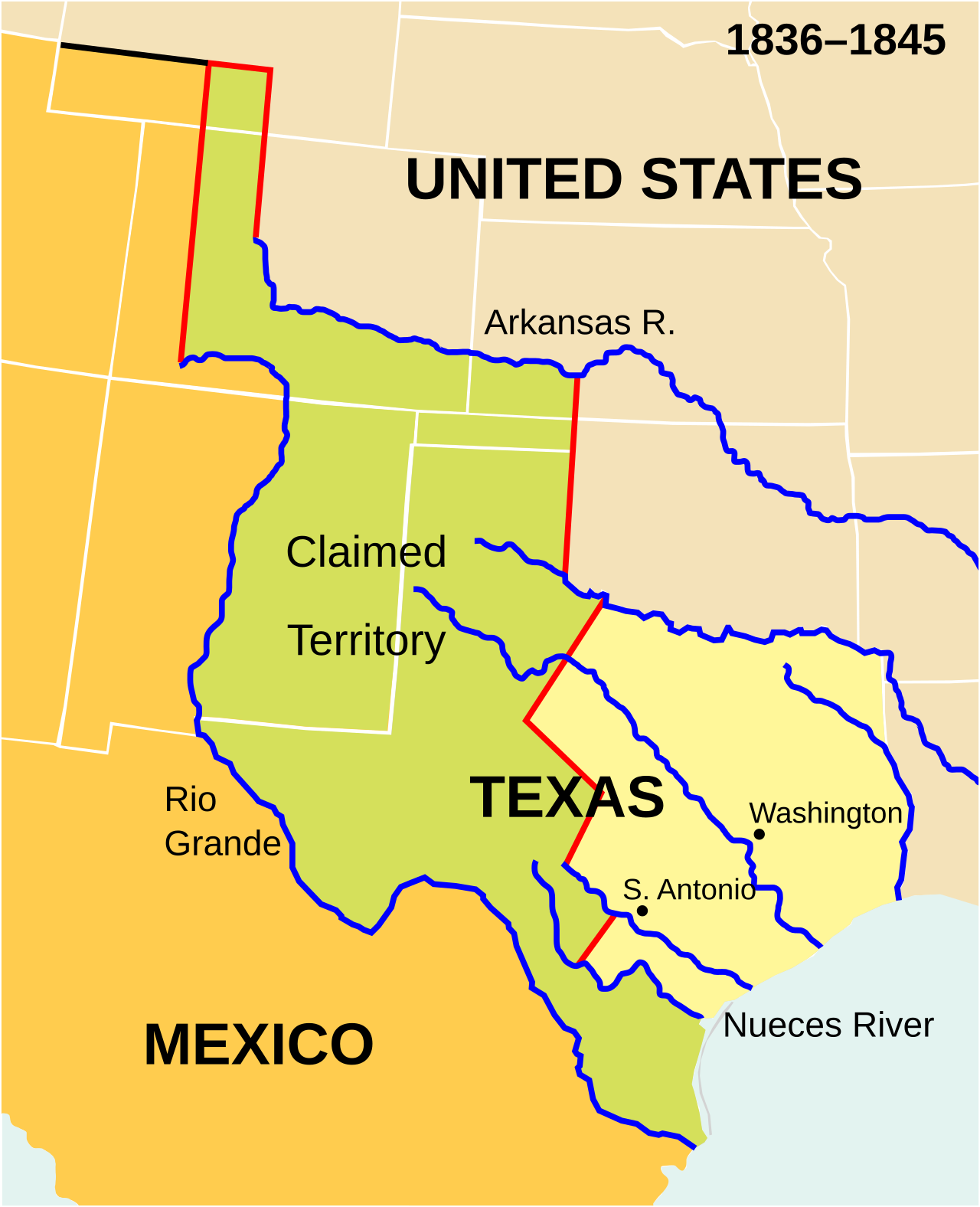
Map titled 1836–1845 showing the Republic of Texas in yellow and light green, with the Claimed Territory in green, bordered by the United States to the north and Mexico to the south and west. Labeled rivers include the Arkansas R., Rio Grande, and Nueces River, with the cities Washington and S. Antonio marked.Document

Primary source

Texas Annexation

1845

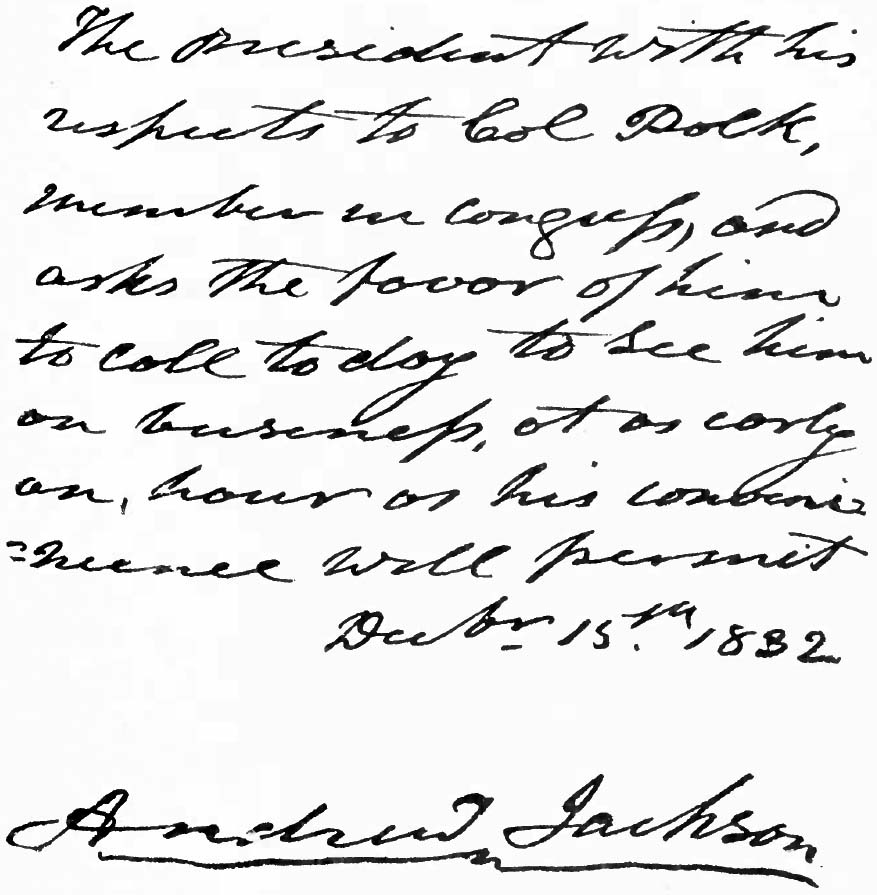
Handwritten cursive letter text reading: 'The President with his respects to Col Polk, requests him to call today to see him on business, at as early an hour as his convenience will permit. Decr 15th 1832', signed 'Andrew Jackson' in cursive below.Letter

Primary source

Letter of Andrew Jackson to James K. Polk

Andrew Jackson · December 15, 1832

Dark navy cover of a printed pamphlet with gold lettering reading 'SPEECH OF MR. A. LINCOLN, OF ILLINOIS', with a small gold ornament below the title.Speech

Primary source

Lincoln's Speech in the House on the War with Mexico

Abraham Lincoln · 12 January 1848

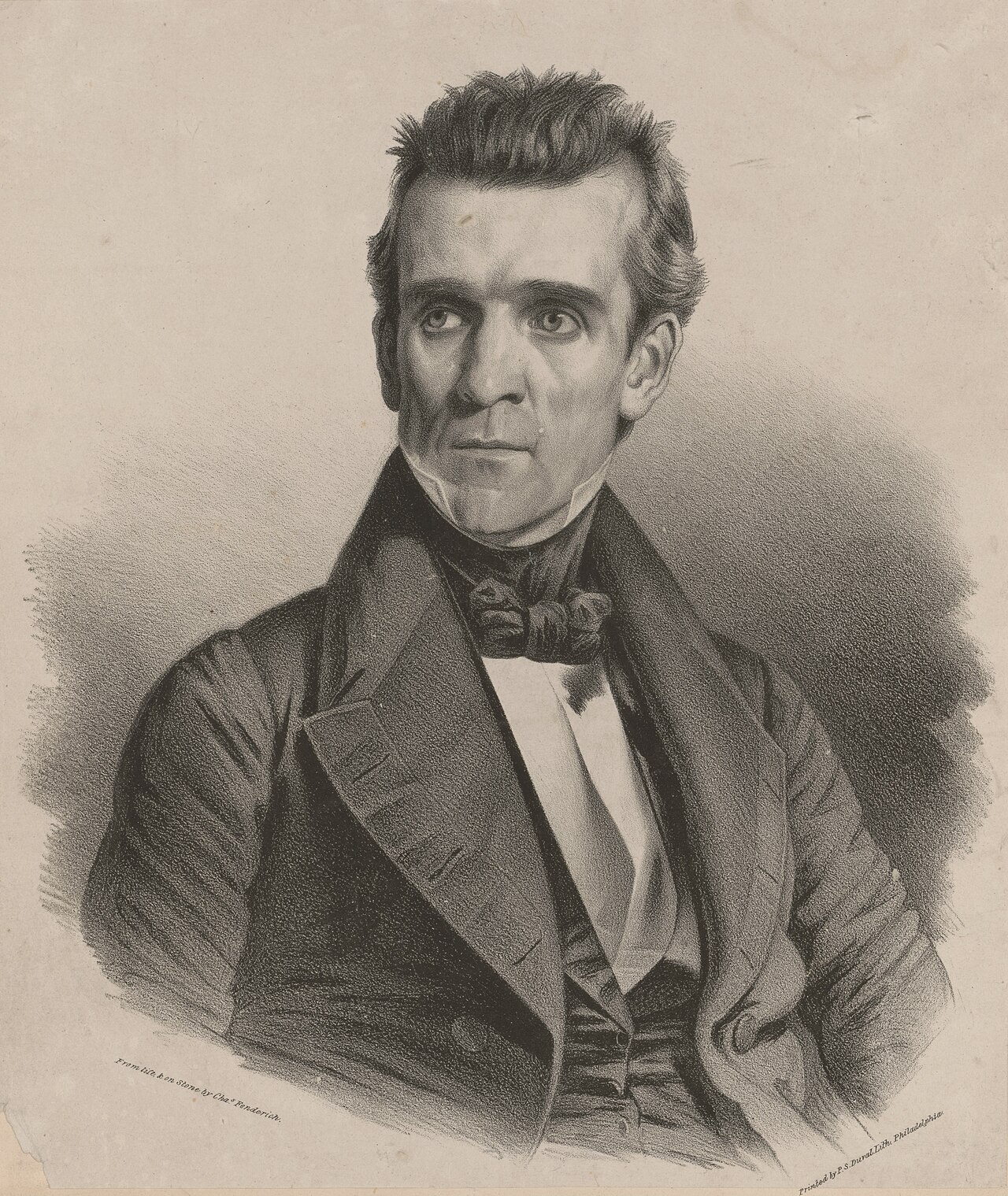
Black and white lithograph portrait of a man with swept-back hair, looking to his left, wearing a high-collared shirt, cravat, and dark coat with wide lapels. Printed on tan paper with a signature and printer's credit in the lower corners.Painting

Primary source

James K. Polk, Speaker of the House of Representatives

Charles Fenderich

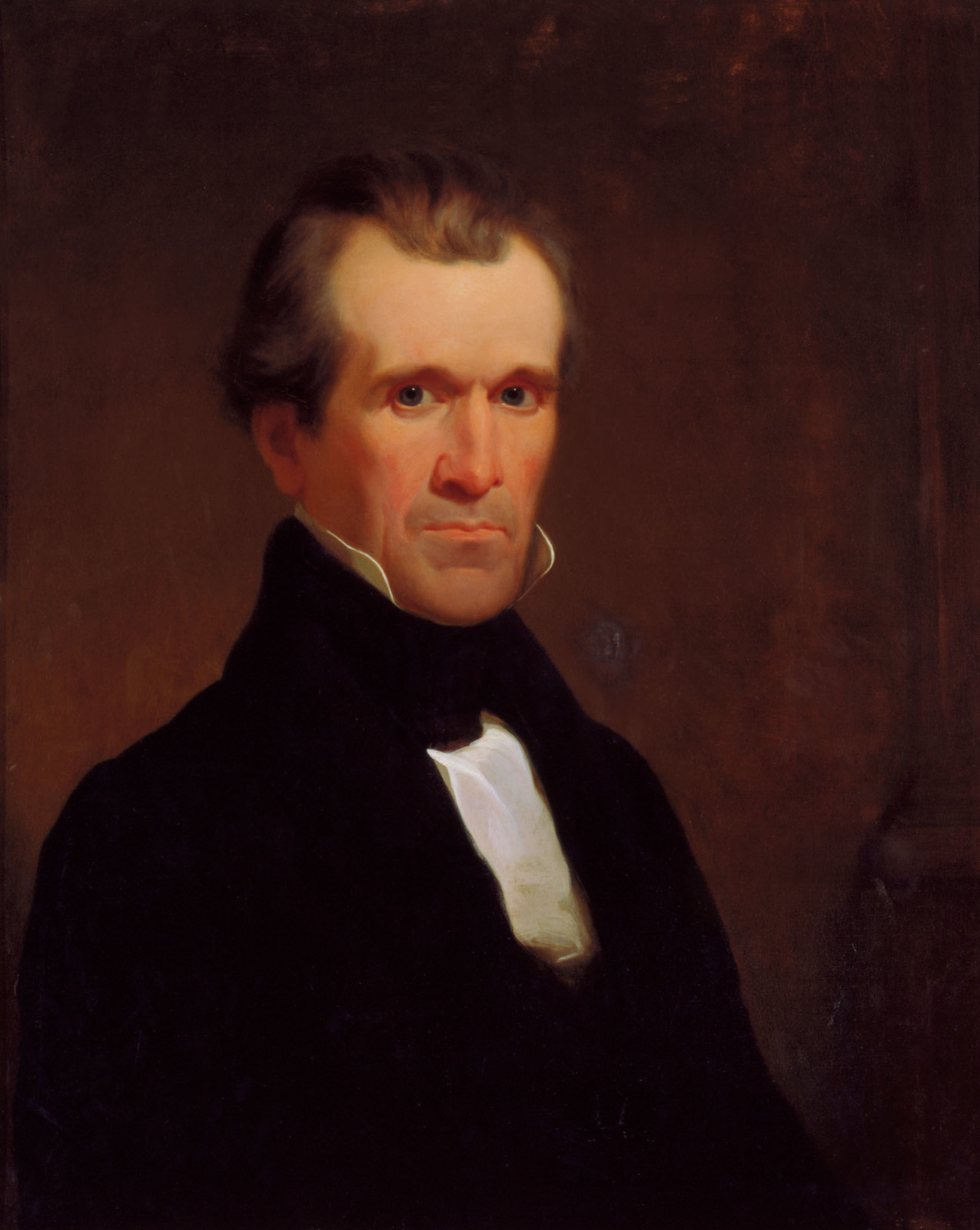
Oil portrait of a middle-aged man with gray hair, shown from the chest up against a dark reddish-brown background. He wears a black coat with a high collar and a white cravat, and looks directly at the viewer with a serious expression.Painting

Primary source

James K. Polk Gubernatorial Portrait

Miner Kilbourne Kellogg

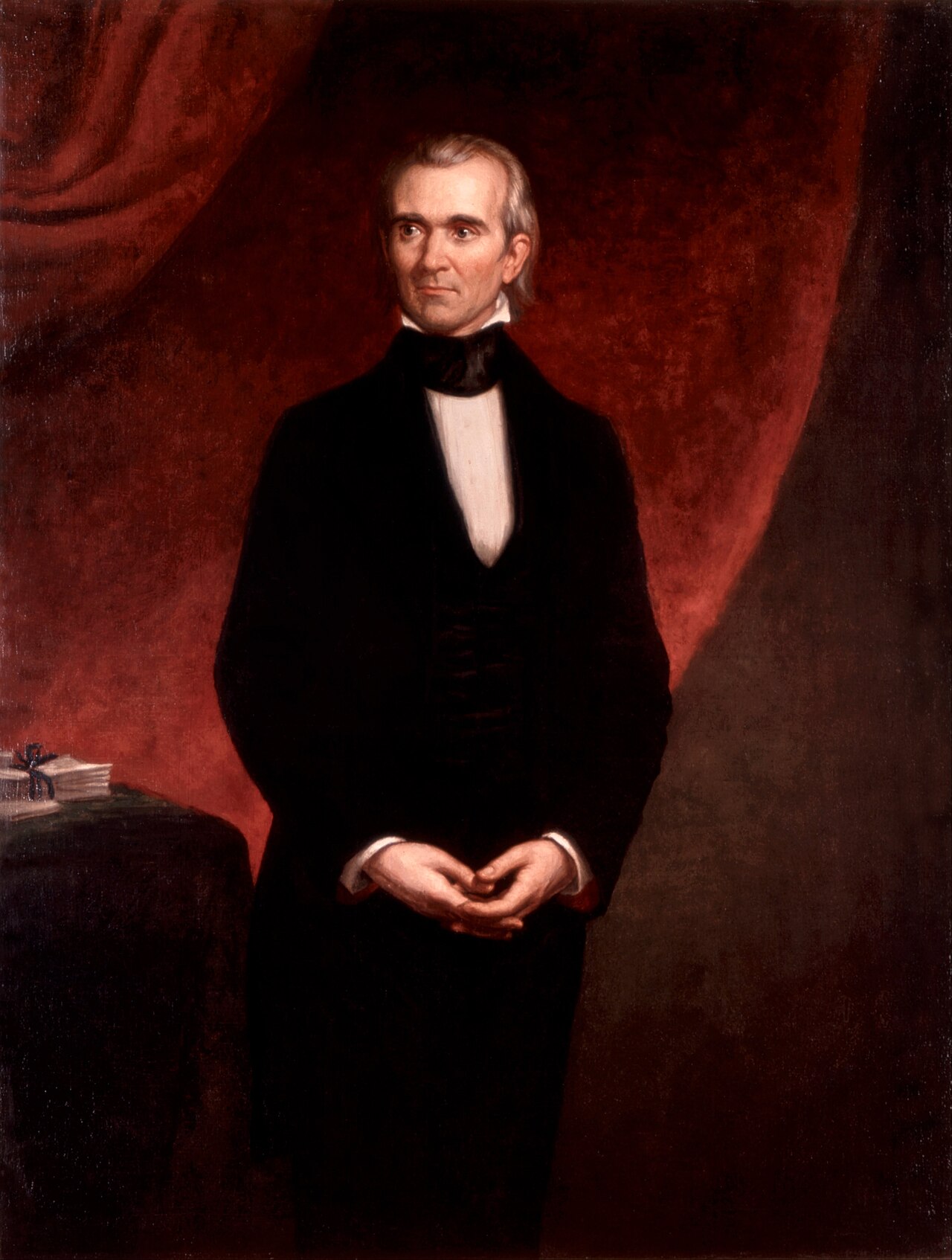
Oil portrait of an older man with gray hair, standing in a dark suit with a black cravat and white shirt. He holds his hands clasped in front of him. Red drapery forms the background, and a stack of books tied with a ribbon rests on a table at left.Painting

Primary source

James Knox Polk (White House Portrait)

George Peter Alexander Healy · 1858

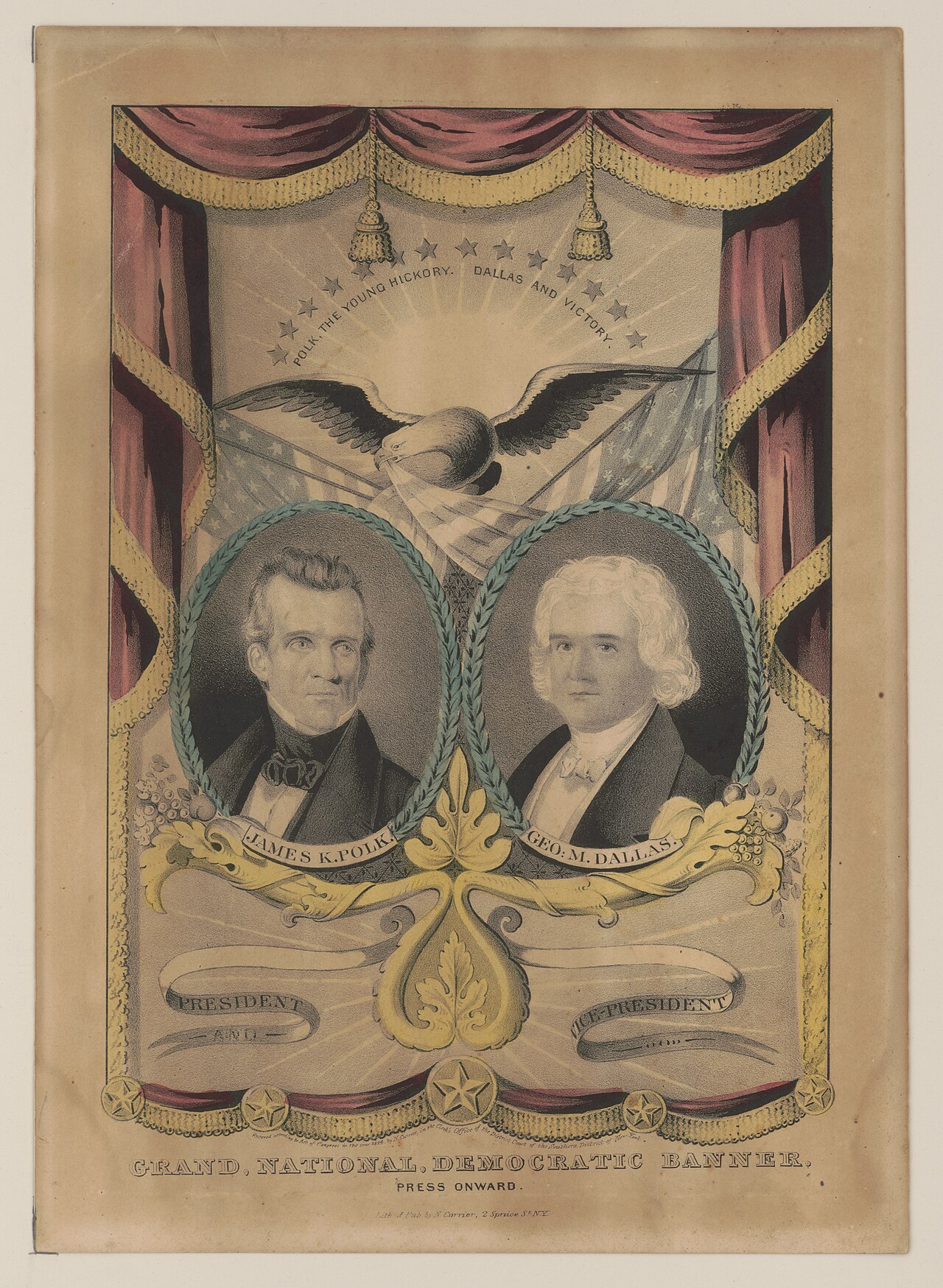
Colored lithograph campaign banner with red and gold drapery, an eagle over American flags, and oval laurel-wreathed portraits of James K. Polk (left) and Geo. M. Dallas (right). Text reads Grand National Democratic Banner, Press Onward.Painting

Primary source

Grand National Democratic Banner

Nathaniel Currier · 1844

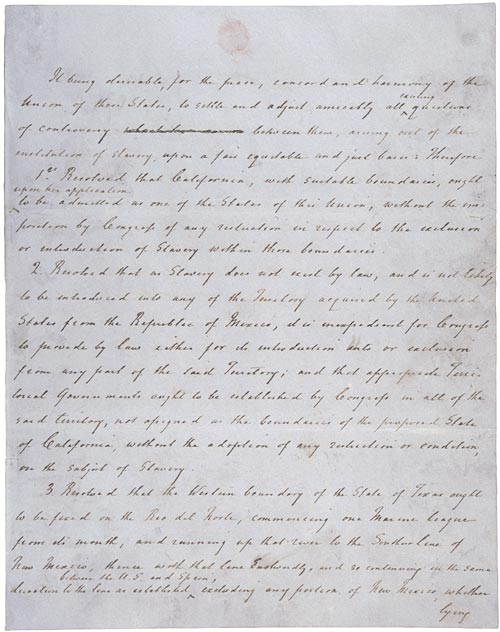
Handwritten manuscript on aged paper with cursive text and crossed-out words, showing the resolutions of the Compromise of 1850, including provisions on California statehood and slavery in the territories.Document

Primary source

Compromise of 1850

Henry Clay · 29 January 1850 (resolutions); statutes enacted September 1850

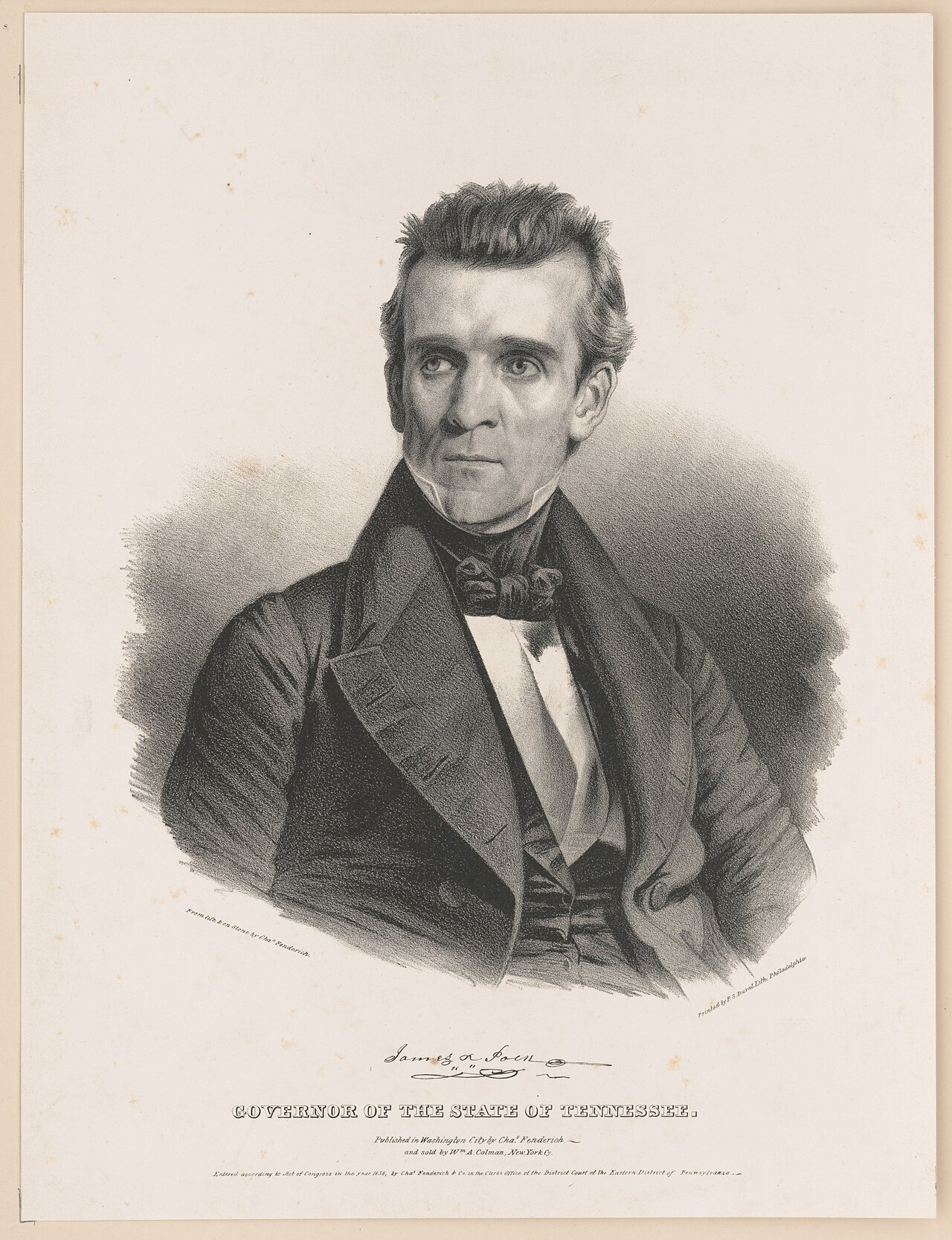
Black and white lithographic portrait of a man with short swept-back hair, wearing a dark coat, high white collar, dark cravat and white waistcoat, shown from the chest up. Printed caption below reads 'Governor of the State of Tennessee' with a handwritten-style signature above.Painting

Primary source

James K. Polk, Governor of the State of Tennessee

Charles Fenderich

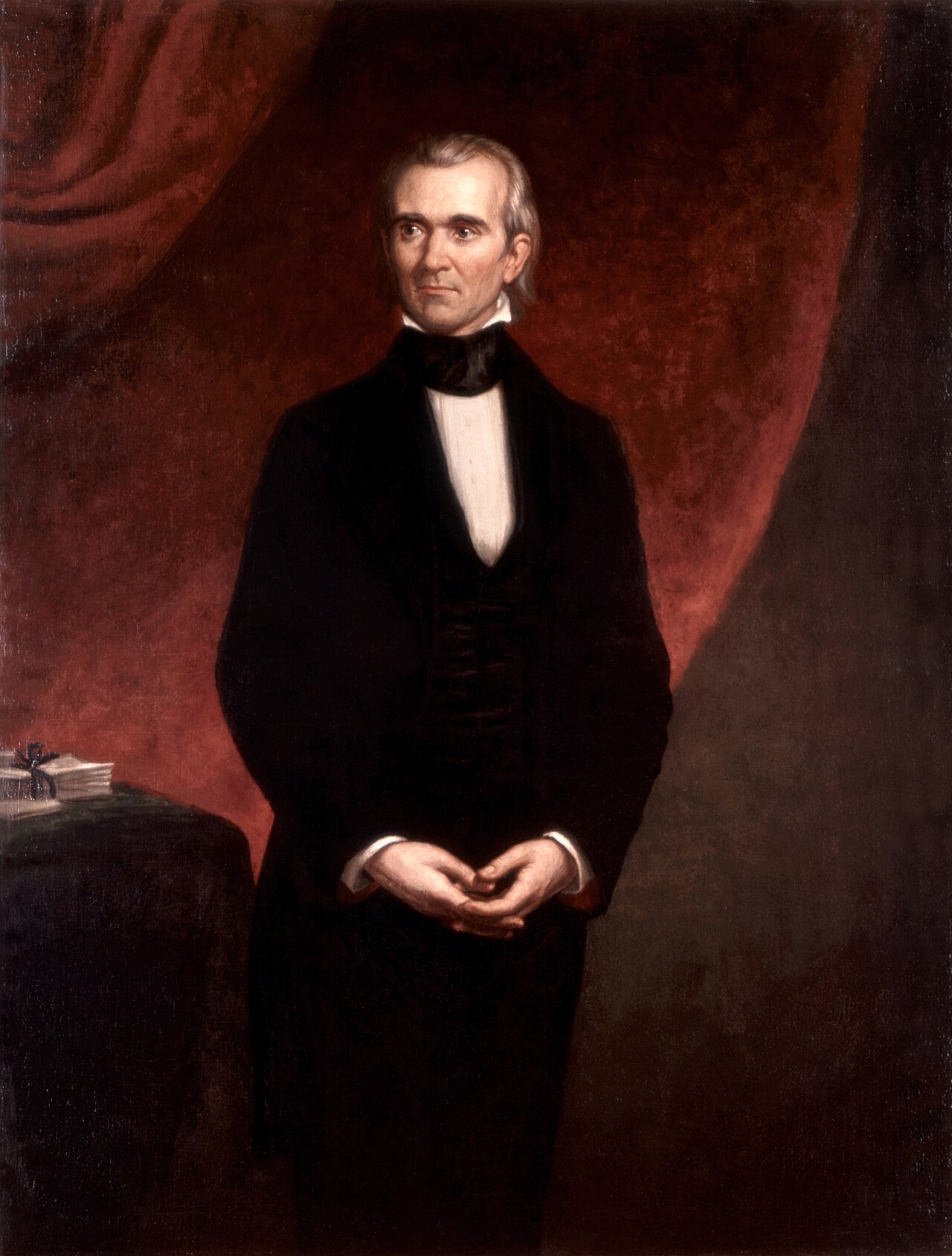
Full-length oil portrait of a standing man with gray hair, dark formal black suit, white shirt and black cravat, hands clasped in front. Dark red drape behind him and a small table with books and a ribbon at left.Painting

Primary source

Portrait of James K. Polk by George P. A. Healy (Full-Length)

George Peter Alexander Healy · 1846 (sittings); 1858 (White House version)

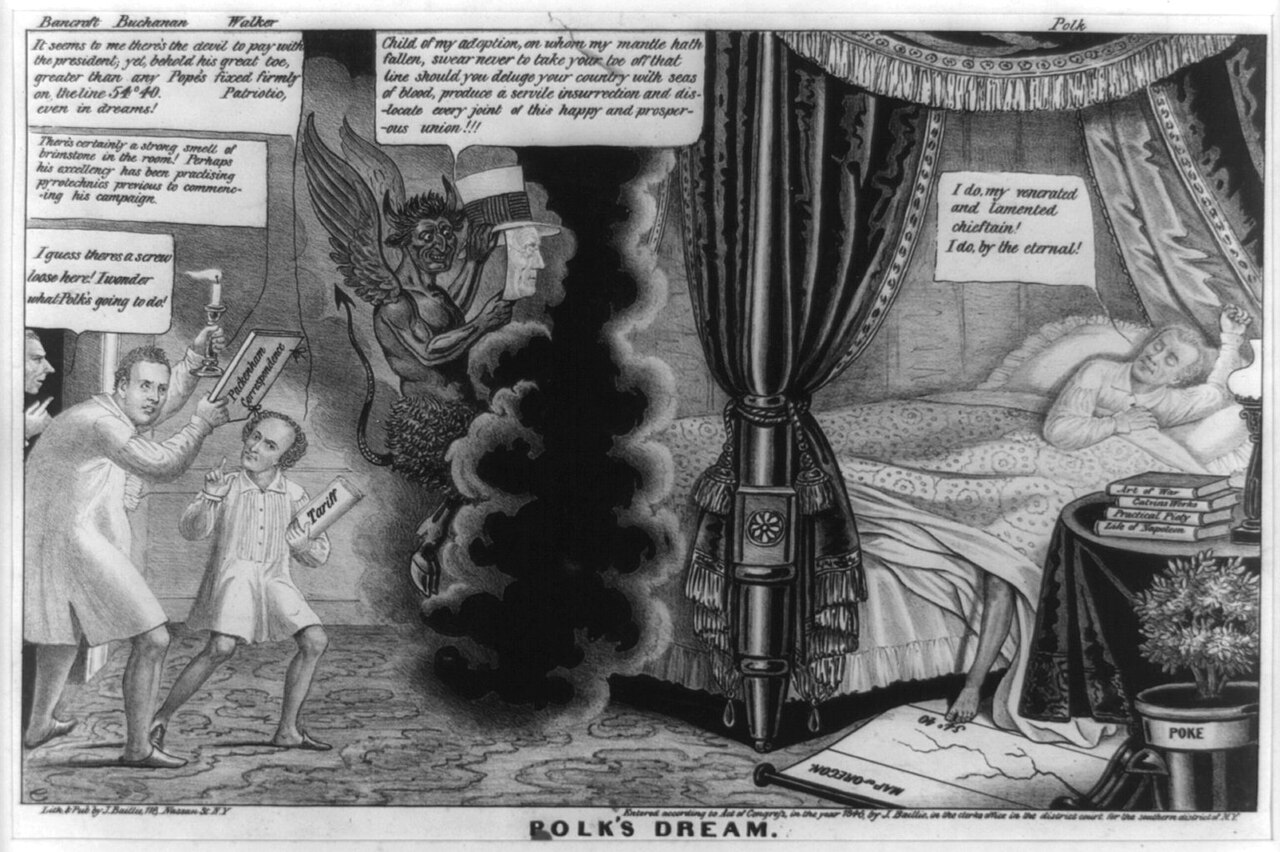
Black-and-white lithograph titled Polk's Dream. A sleeping man in a canopy bed dreams while a horned devil with wings and a top-hatted, Uncle Sam-like figure hovers over a dark smoky pit. At left, two men in nightclothes hold a book labeled Tariff and a book labeled Constitution, with speech bubbles on the top and left. Speech bubbles include quotes about the devil, war, and the Union. A map on the floor and a pot labeled Poke appear at lower right.Painting

Primary source

Polk's Dream

Edward Williams Clay (attributed) · 1846

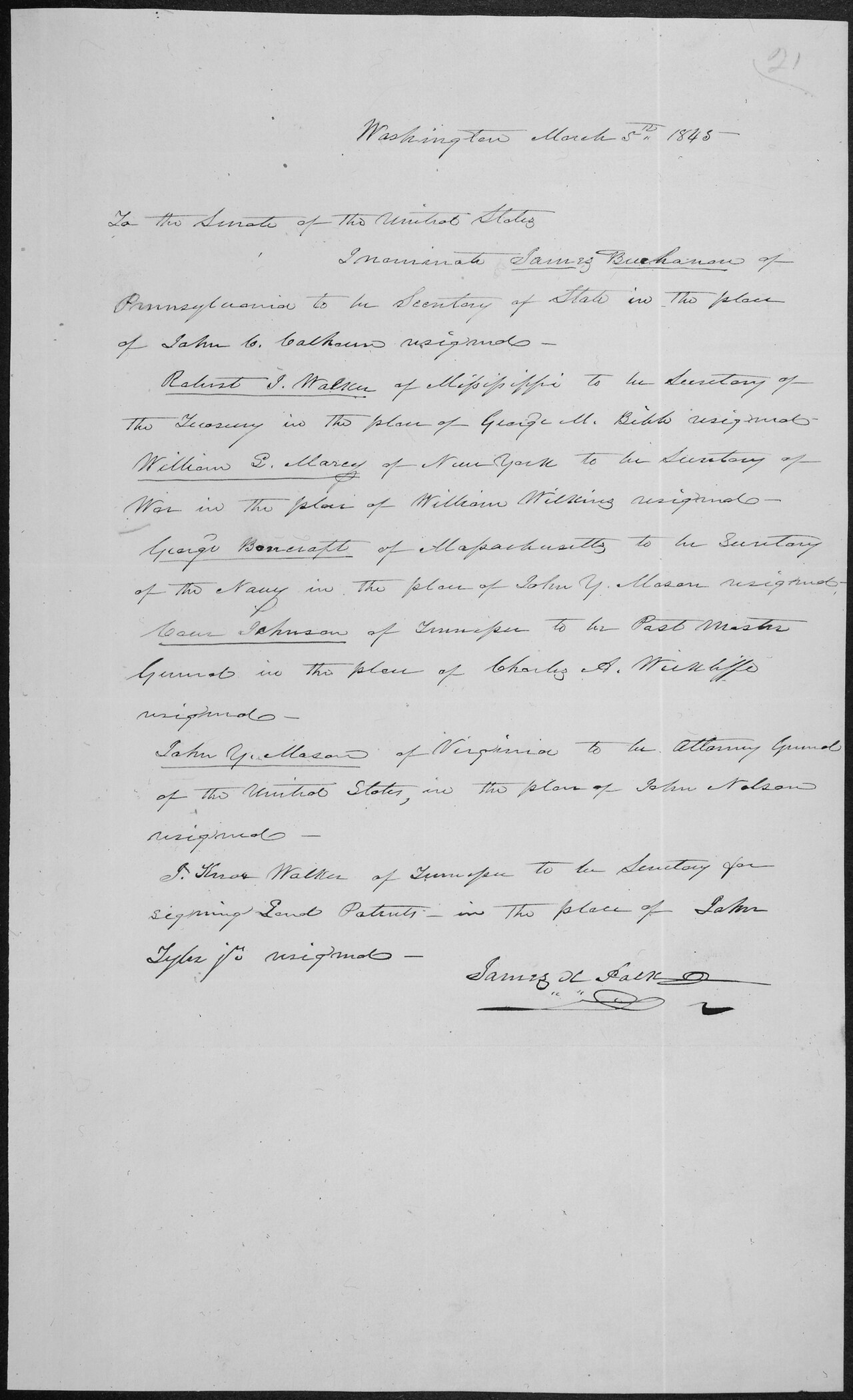
Scan of a handwritten nomination letter dated Washington, March 5th, 1845, addressed to the Senate of the United States, nominating cabinet members including James Buchanan, Robert J. Walker, William L. Marcy, George Bancroft, Isaac Johnson, John Y. Mason, and J. Knox Walker, signed by James K. Polk. Page number 21 appears in the upper right corner.Document

Primary source

Message of President James Polk Nominating His Cabinet

James K. Polk · March 5, 1845

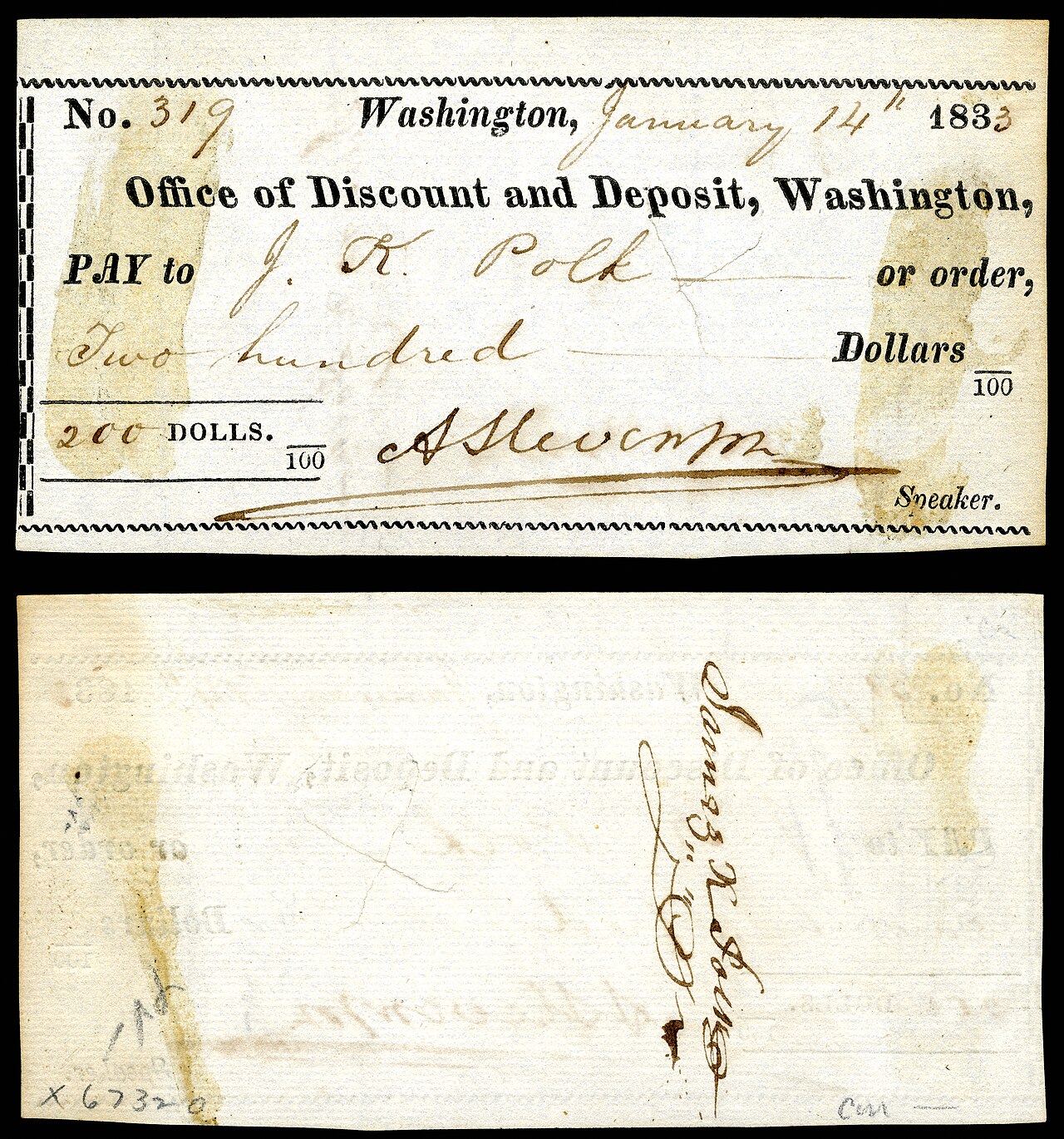
Scan of a front and back of a signed bank check dated Washington, January 14, 1833, made out to J. K. Polk for two hundred dollars, signed by the Speaker. The back shows a faint printed design and a handwritten signature.Document

Primary source

Signed Check by James K. Polk

James K. Polk · January 14, 1833

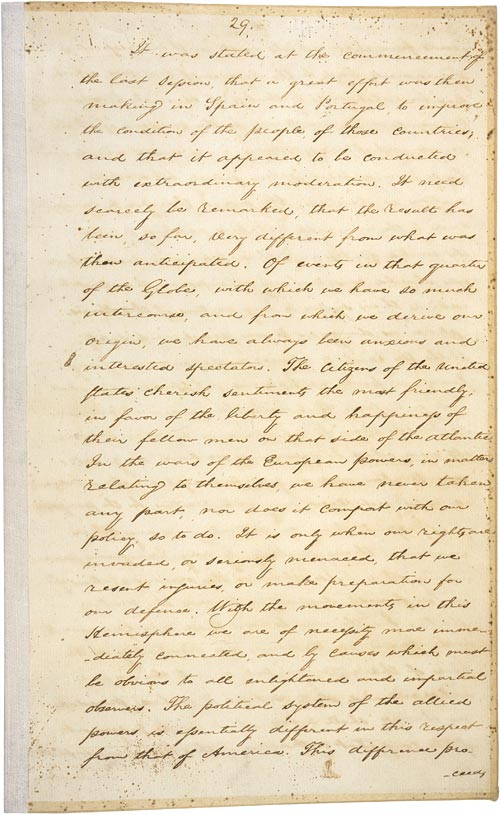
Handwritten manuscript page numbered 29 in brown ink on aged, yellowed paper, in cursive script. The text discusses events in Spain and Portugal, the independence of the Americas, and non-interference by European powers. A small signature 'Adams' appears at the bottom right.Speech

Primary source

Monroe Doctrine

James Monroe · 2 December 1823

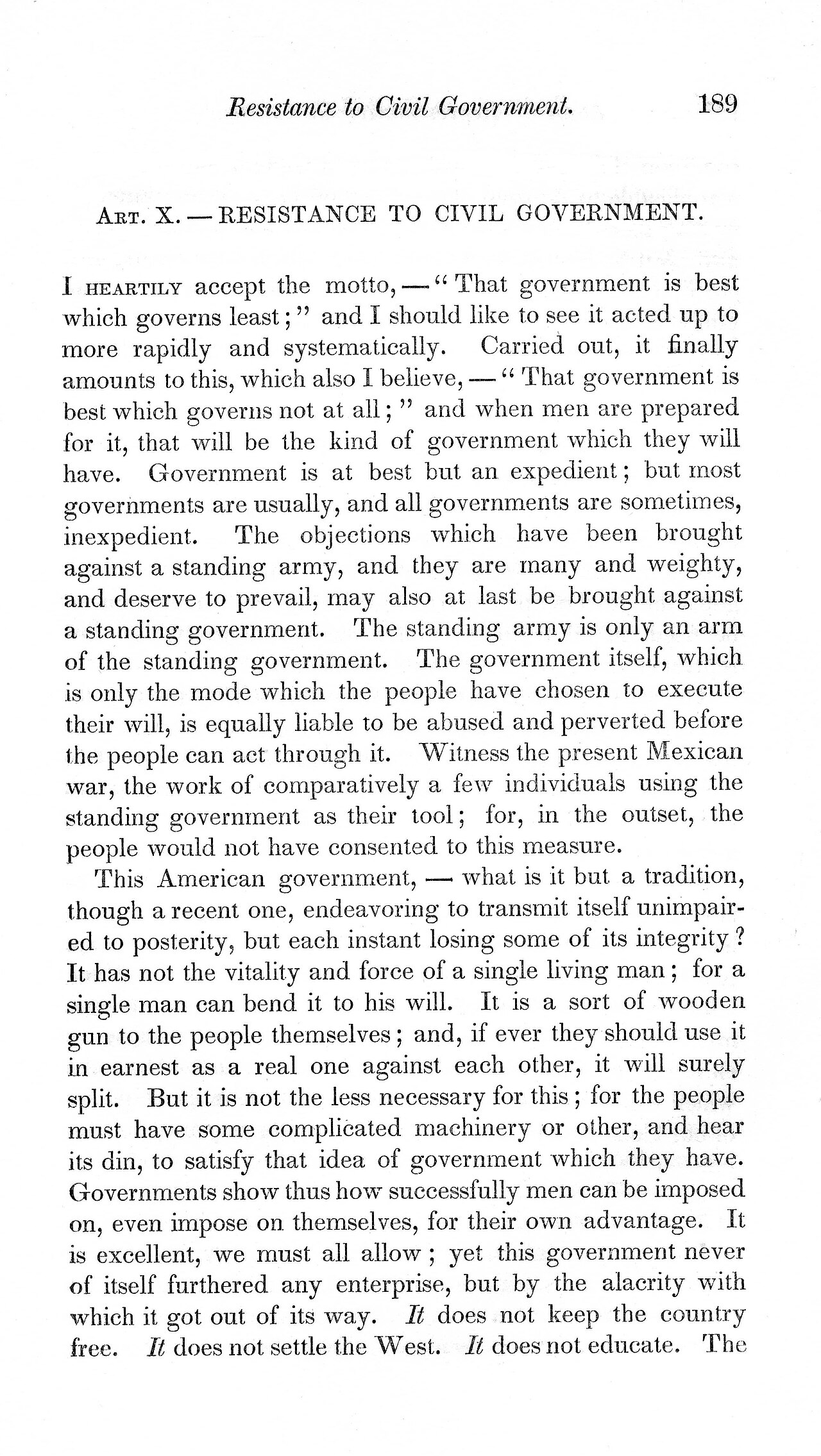
Scanned printed page 189 from 1849 Aesthetic Papers, headed 'Art. X. Resistance to Civil Government' with running head 'Resistance to Civil Government.' Body text is an essay opening: 'I heartily accept the motto, That government is best which governs least.' The page is dense serif text in two columns of prose, with no images.Book

Primary source

Civil Disobedience

Henry David Thoreau · 1849

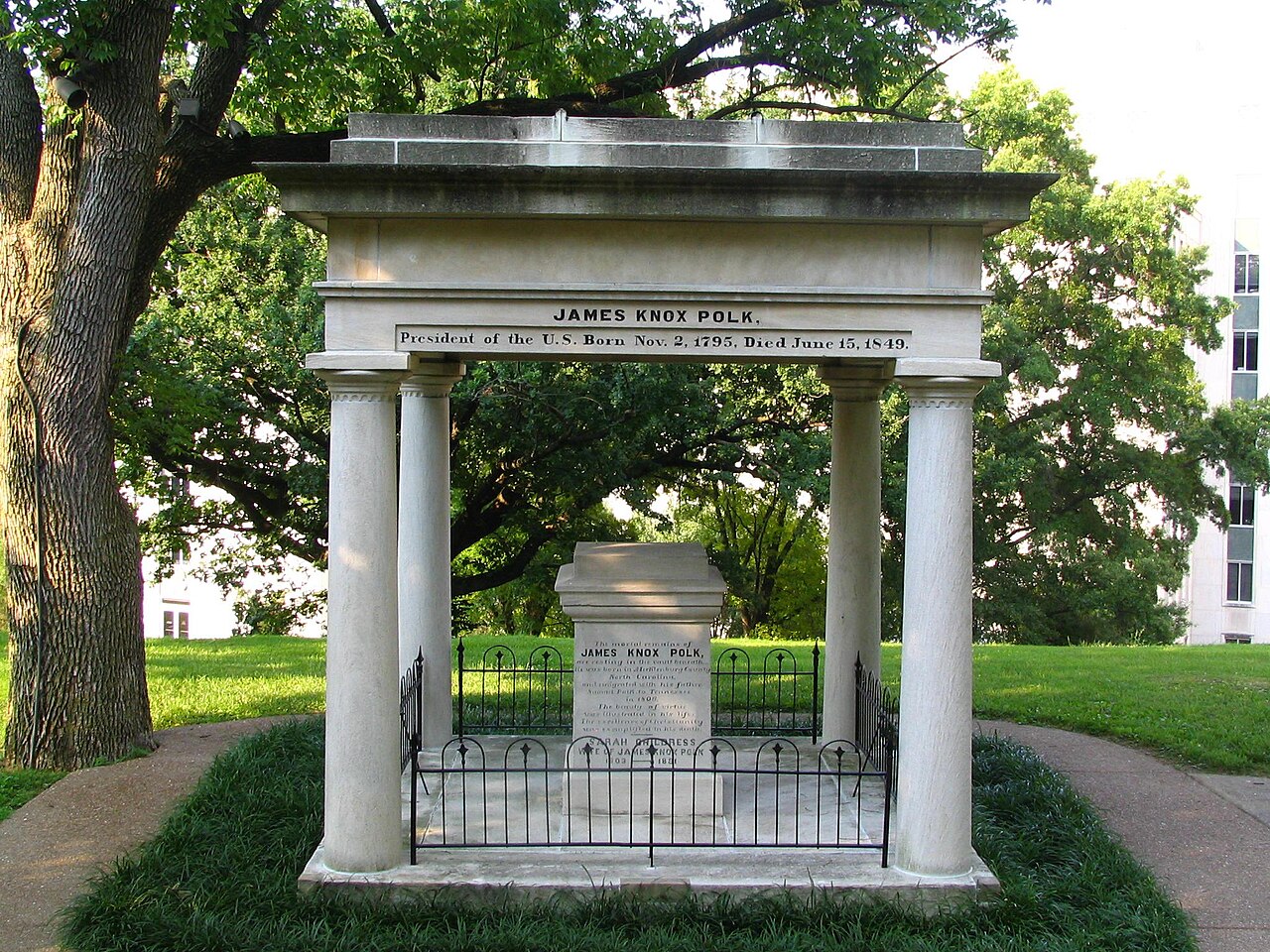
Photo of the Polk tomb: a white stone open-sided canopy with four columns and an inscribed frieze reading 'James Knox Polk, President of the U.S. Born Nov. 2, 1795, Died June 15, 1849'. Inside a black iron fence sits a stone monument with a plaque, on a green lawn with trees.Artifact

Secondary source

Grave of James K. Polk

William Strickland

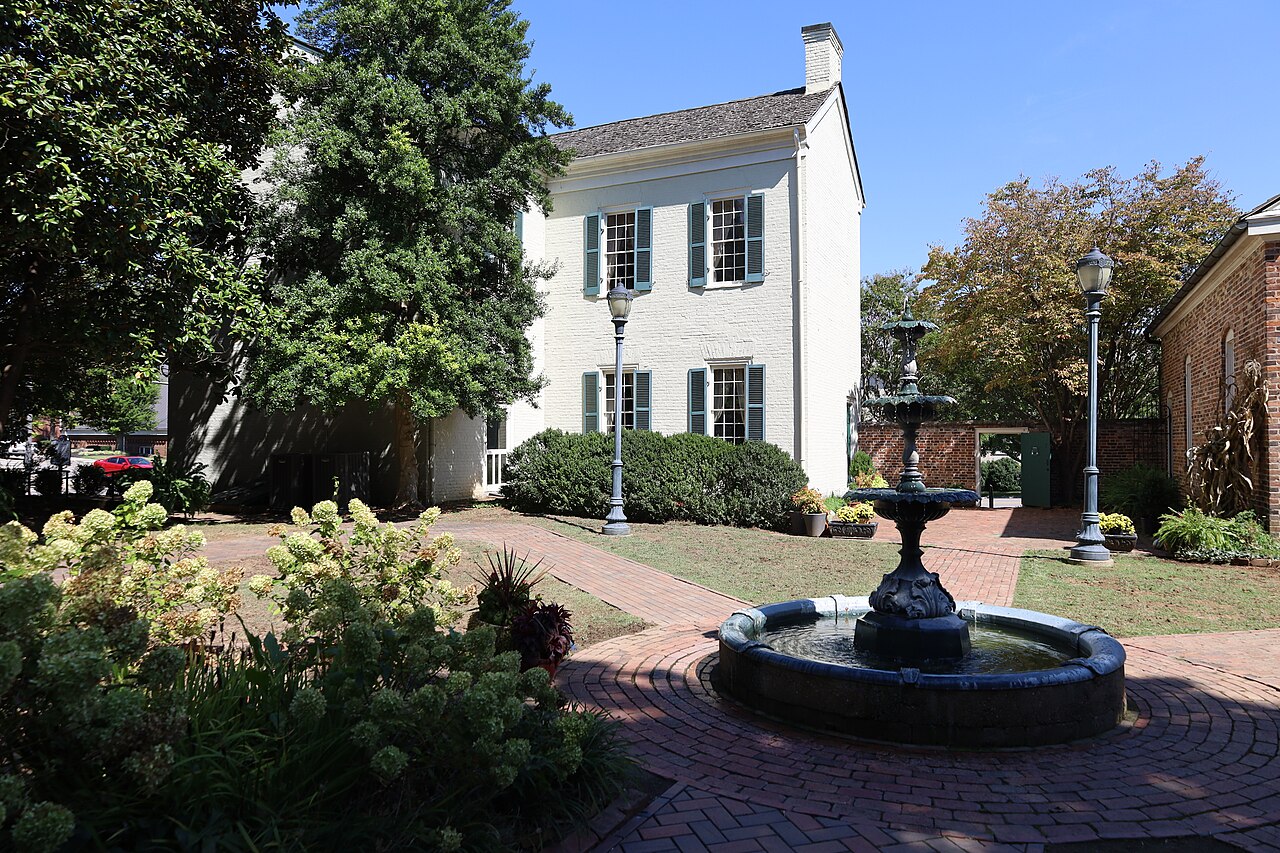
Two-story white brick house with black shutters and a chimney, set behind trees, with a brick courtyard, a round tiered iron fountain, and two black lamp posts in the foreground.Artifact

Primary source

James K. Polk Home

Samuel Polk · 1816

Black ink cursive signature reading 'James K. Polk' drawn with a single continuous stroke on a white background.Document

Primary source

Signature of James K. Polk

James K. Polk

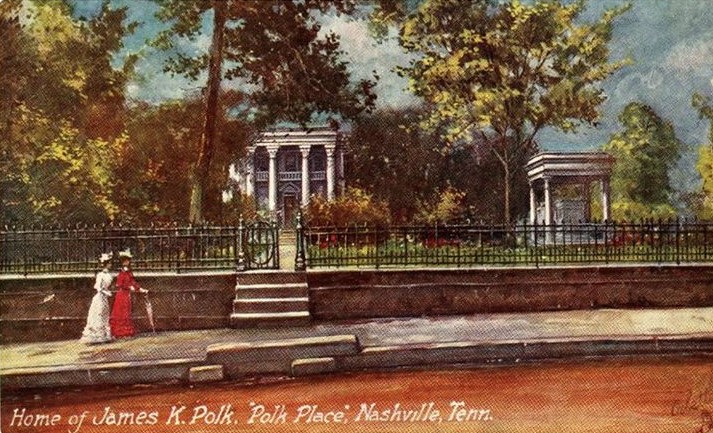
Painted postcard of Polk Place in Nashville, Tennessee. A white-columned, two-story house stands behind an iron fence, with a small white gazebo to the right. Two women in long Victorian dresses walk on the sidewalk in front, and a caption reads Home of James K. Polk, Polk Place, Nashville, Tenn.Photograph

Secondary source

Polk Place

1849 (acquired); postcard 1890s

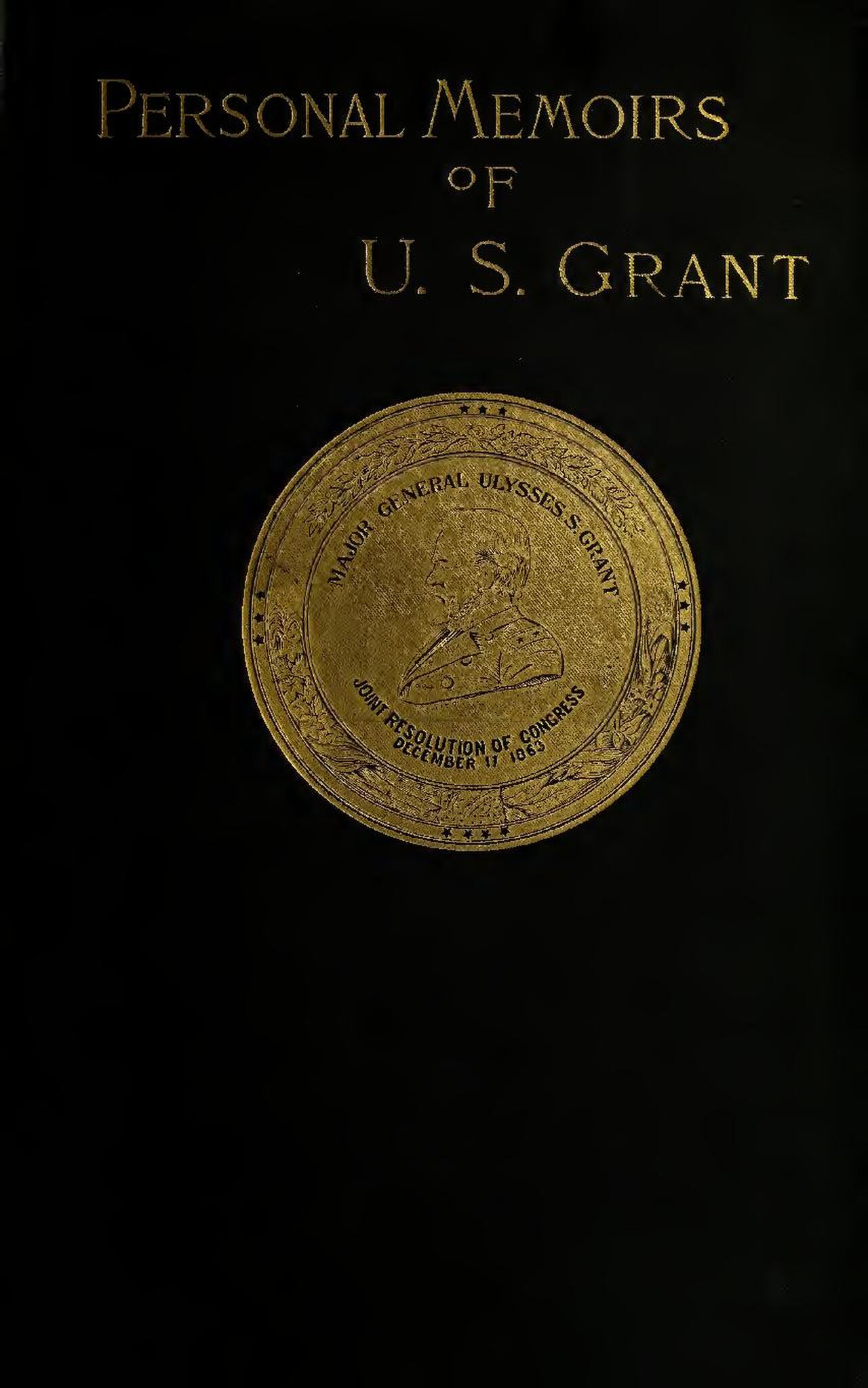
Front cover of a black book titled 'Personal Memoirs of U. S. Grant' in gold lettering, with a gold medallion in the center bearing a profile portrait of Major General Ulysses S. Grant and the text 'Joint Resolution of Congress December 17 1863'.Book

Primary source

Personal Memoirs of U. S. Grant

Ulysses S. Grant · 1885

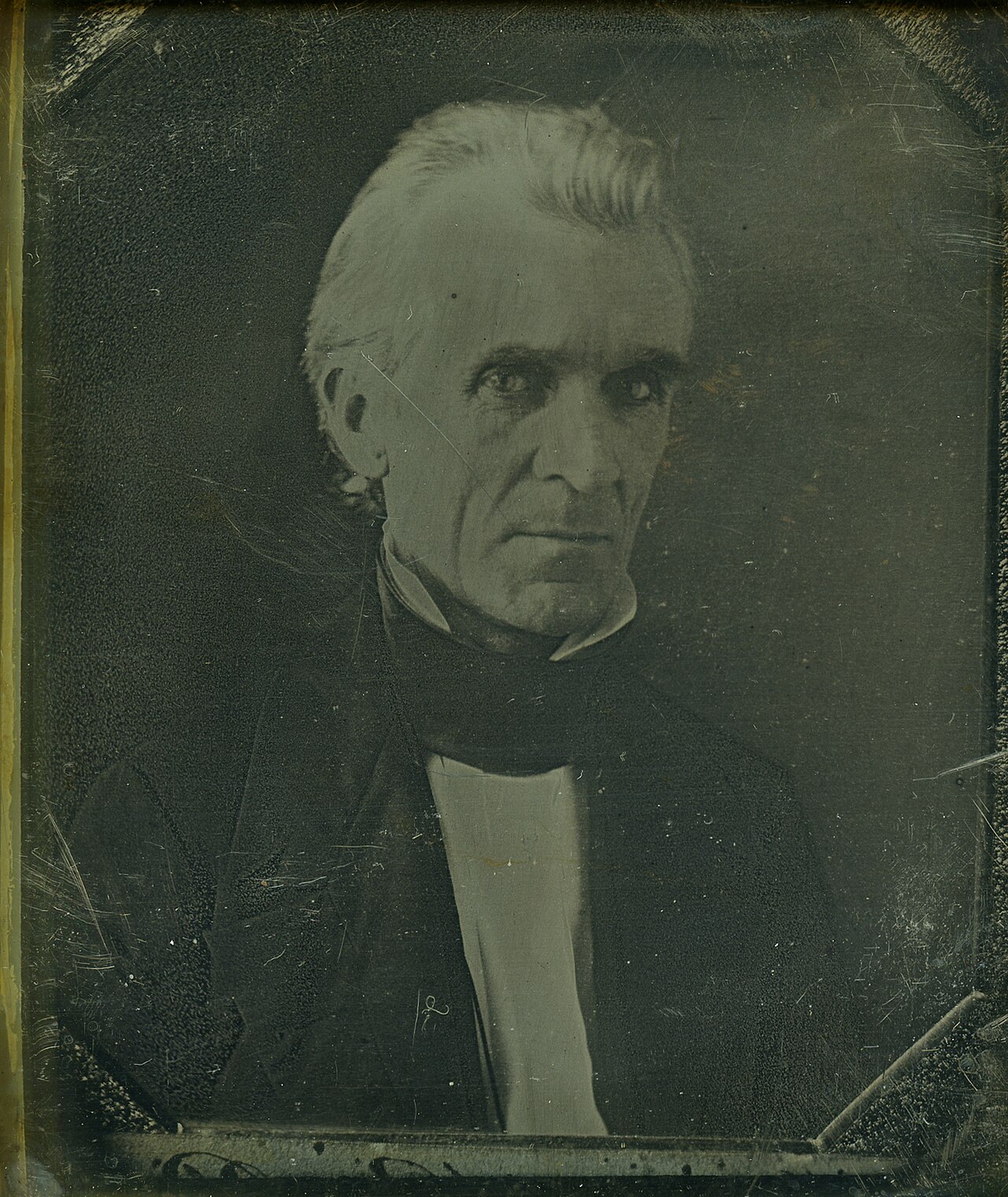
Sepia-toned daguerreotype portrait of an older man with swept-back gray hair, dark high-collared coat and cravat, white shirt front, looking directly at the viewer against a dark background. Scratches and tarnish visible.Photograph

Primary source

Daguerreotype Portrait of James K. Polk

Unknown

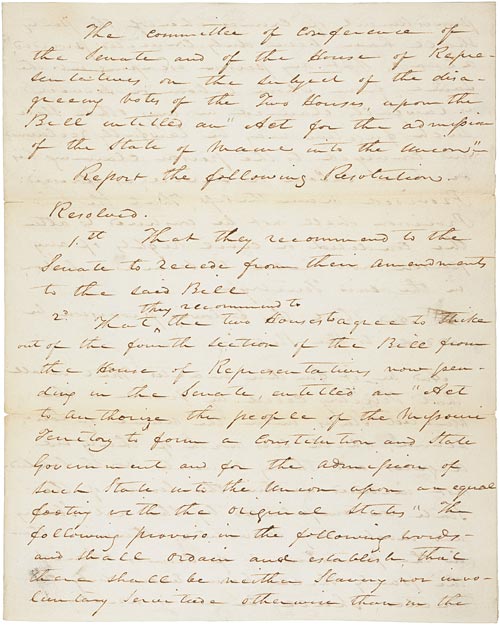
Handwritten manuscript page in brown ink on aged paper, the conference committee report on the Missouri Compromise. Text begins 'The committee of conference of the Senate and of the House of Representatives' and continues with resolutions about the Missouri bill and Maine statehood.Document

Primary source

Missouri Compromise Conference Committee Report

1 March 1820

Document

Primary source

Messages of the President, with War Department Correspondence

James K. Polk · 1848

Speech

Primary source

Polk's Message to Congress, December 7, 1847

James K. Polk · December 7, 1847

Book

Primary source

History of the Polk Administration

Lucien B. Chase · 1850

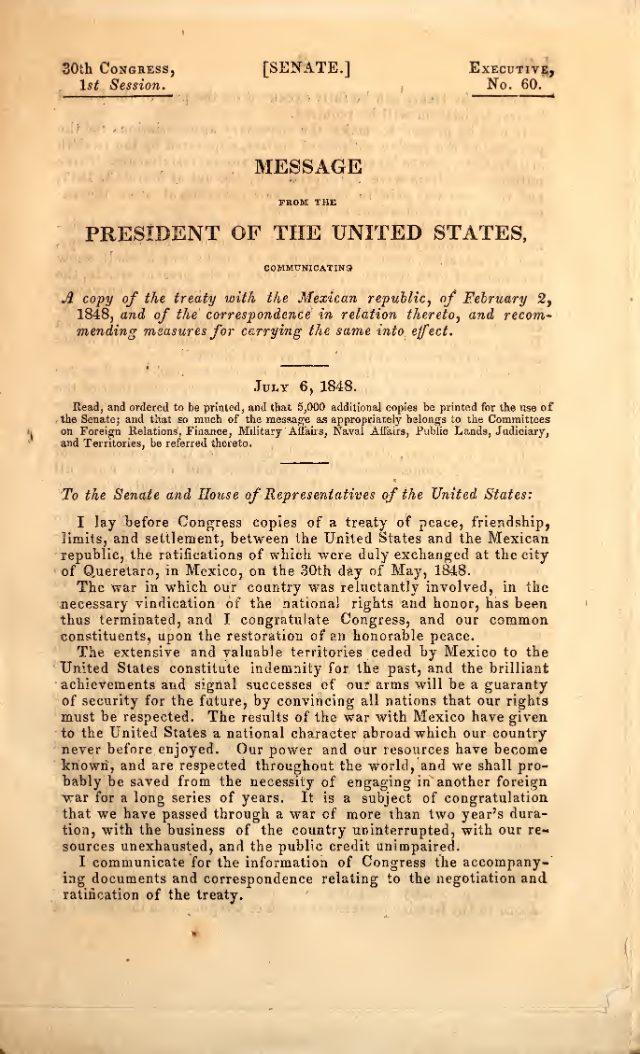
Message Transmitting the Mexican Treaty of February 2, 1848Document

Primary source

Message Transmitting the Mexican Treaty of February 2, 1848

James K. Polk · 6 July 1848 (treaty dated 2 February 1848)

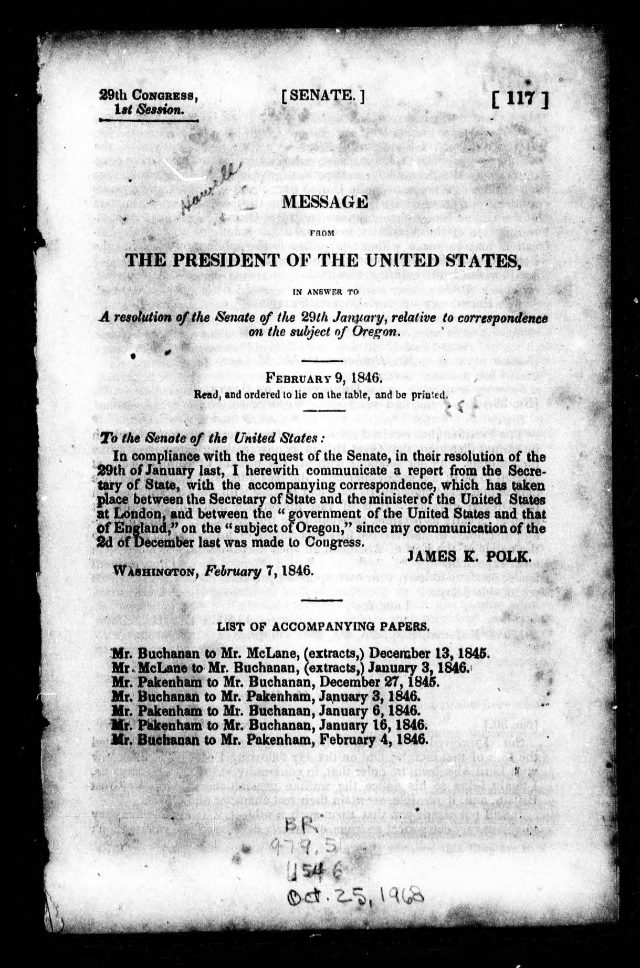
Message on Oregon Question CorrespondenceDocument

Primary source

Message on Oregon Question Correspondence

James K. Polk · 7 February 1846

Message Approving the Oregon BillDocument

Primary source

Message Approving the Oregon Bill

James K. Polk · 6 December 1848

Sepia-toned daguerreotype portrait of an older man with light, swept-back hair, seated three-quarters turned to the right, wearing a dark coat, white shirt collar, and dark cravat. His hands rest in his lap and on the arm of a chair. The surface shows scratches and specks.Photograph

Primary source

James Polk, Daguerreotype by Mathew Brady

Mathew Brady · 14 February 1849

Sepia-toned daguerreotype-style group portrait of five men in 19th-century formal dress. Seated on the left and center-right, standing in the middle, with dark backgrounds and white cravats and shirt collars.Photograph

Primary source

President Polk and His Cabinet

Mathew Brady · 17 February 1849

The Life of James Knox PolkBook

Secondary source

The Life of James Knox Polk

John S. Jenkins · 1850

Front cover of a book bound in dark blue-gray cloth with a dark olive-green spine strip along the left edge. No text or lettering is visible on the cover.Book

Primary source

The Diary of James K. Polk During His Presidency, Volume 3

James K. Polk · 1910 (written 1845-1849)

Document

Primary source

Message of President Polk on Cherokee Internal Feuds

James K. Polk · 13 April 1846

Speech

Primary source

Second State of the Union Address

James K. Polk · 8 December 1846

Book

Primary source

James K. Polk, sketch by George Bancroft

George Bancroft · 1914 (written by someone who knew Polk personally)

Black-and-white portrait of an older man with swept-back light hair, turned three-quarters to the right, wearing a dark coat, high white collar, and dark cravat. His expression is stern and serious against a dark background.Photograph

Primary source

Portrait of James K. Polk by Mathew Brady

Mathew Brady · 14 February 1849

Black-and-white group photograph of six men in 19th-century dress. Five are seated or standing in a formal interior with a dark backdrop; one older man stands at the back center, and a younger man stands at the upper right. Some men wear high collars and cravats.Photograph

Primary source

James K. Polk and His Cabinet in the White House Dining Room

John Plumbe · 1846

Eulogy on the Life and Public Services of PolkSpeech

Primary source

Eulogy on the Life and Public Services of Polk

Levi Woodbury · 25 July 1849

Message on Indian Difficulties in OregonDocument

Primary source

Message on Indian Difficulties in Oregon

James K. Polk · 29 March 1848

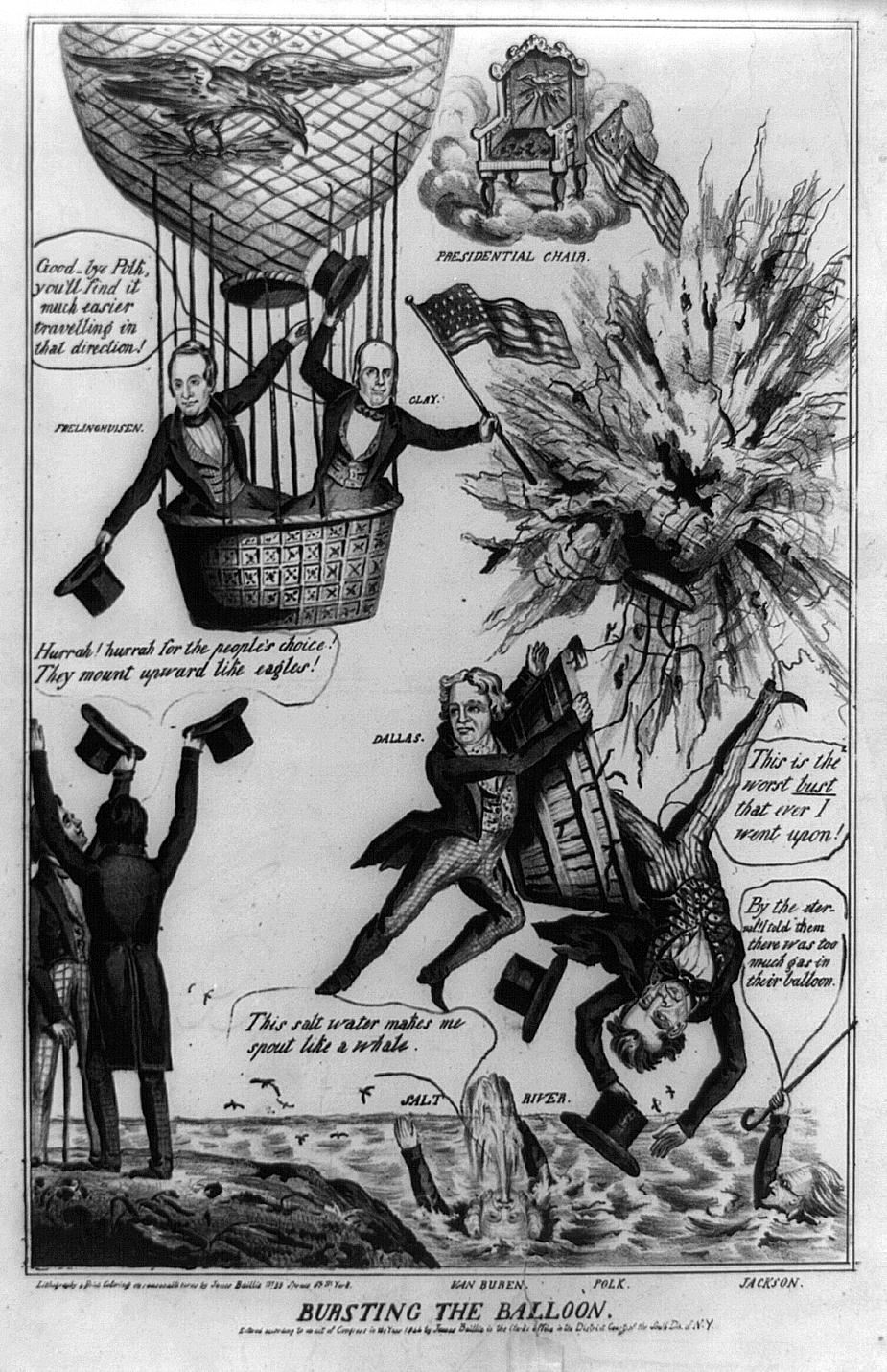
Black-and-white lithograph titled 'Bursting the Balloon'. Upper left: a balloon basket carries two men, one labeled Frelinghuysen, one labeled Clay, with a hat raised. Upper right: an explosion bursts the balloon, with a presidential chair and flag above. Lower right: a man falls headfirst from the wreckage, labeled Polk, saying 'This is the worst bust that ever I went upon.' Lower center: a man in water labeled Salt River. Left: crowd cheering with hats in the air. Bottom labels: Van Buren, Polk, Jackson.Painting

Primary source

Bursting the Balloon

H. Bucholzer · 1844

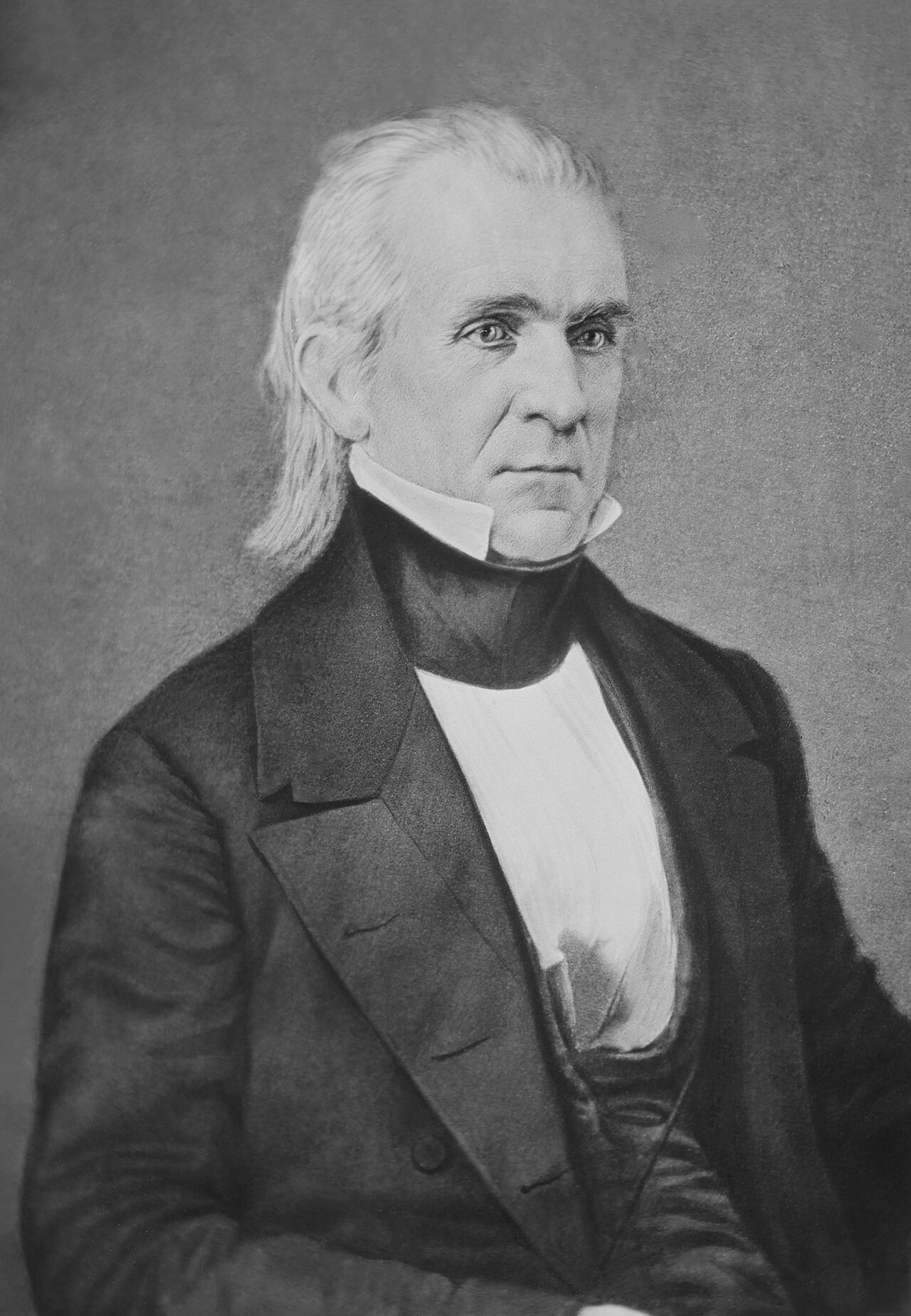
Black-and-white restored portrait of a man with light, swept-back hair and a high white collar with a dark cravat, wearing a dark double-breasted coat over a white waistcoat, seated and looking to the viewer's left with a steady expression.Photograph

Primary source

James Knox Polk, Restored Photographic Portrait

National Archives and Records Administration · c. 1845-1849

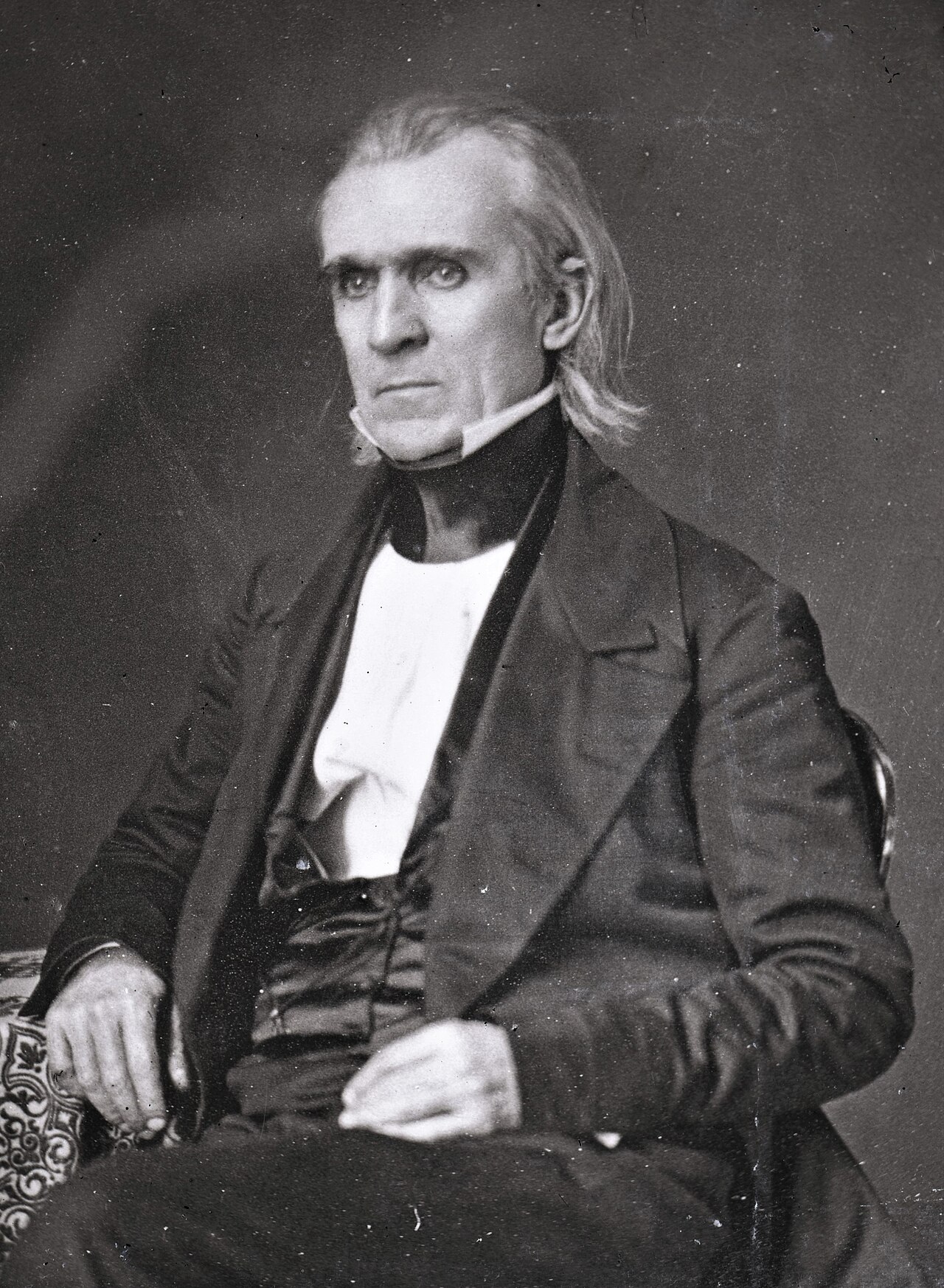
Black-and-white photograph of an older man with long light hair, seated in a dark suit with a white shirt and high dark collar, one hand resting on a patterned chair arm and the other on his lap, gazing to the left.Photograph

Primary source

James Knox Polk, 1849 Photograph

Possibly Mathew Brady · 1849

Message Transmitting the Constitution of WisconsinDocument

Primary source

Message Transmitting the Constitution of Wisconsin

James K. Polk · 1848

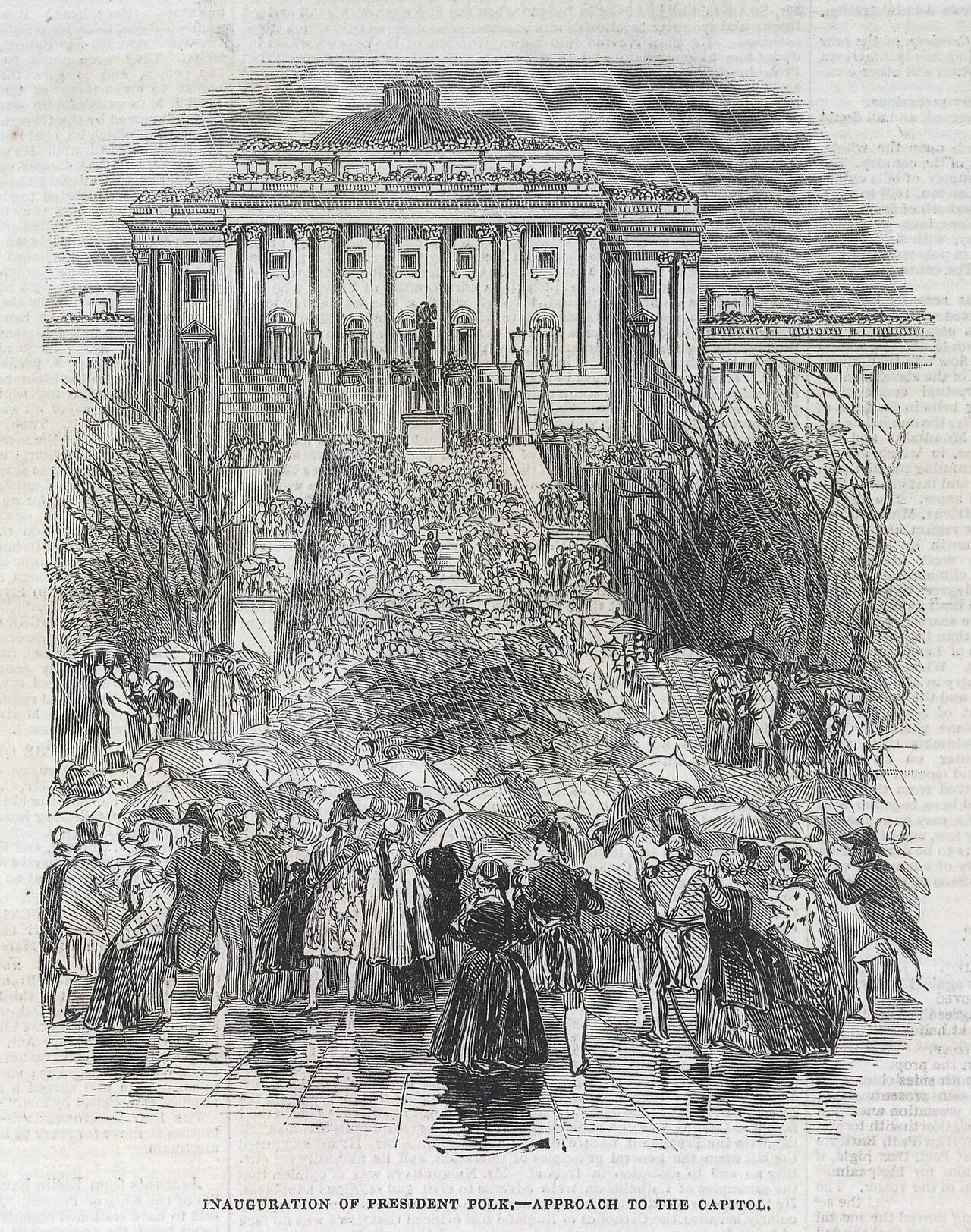
Engraved illustration from a newspaper showing a crowd of people with umbrellas approaching the Capitol building's steps on a rainy day for the inauguration of President Polk. Caption reads Inauguration of President Polk, Approach to the Capitol.Newspaper article

Primary source

Illustrated London News Page on Polk's Inauguration

19 April 1845

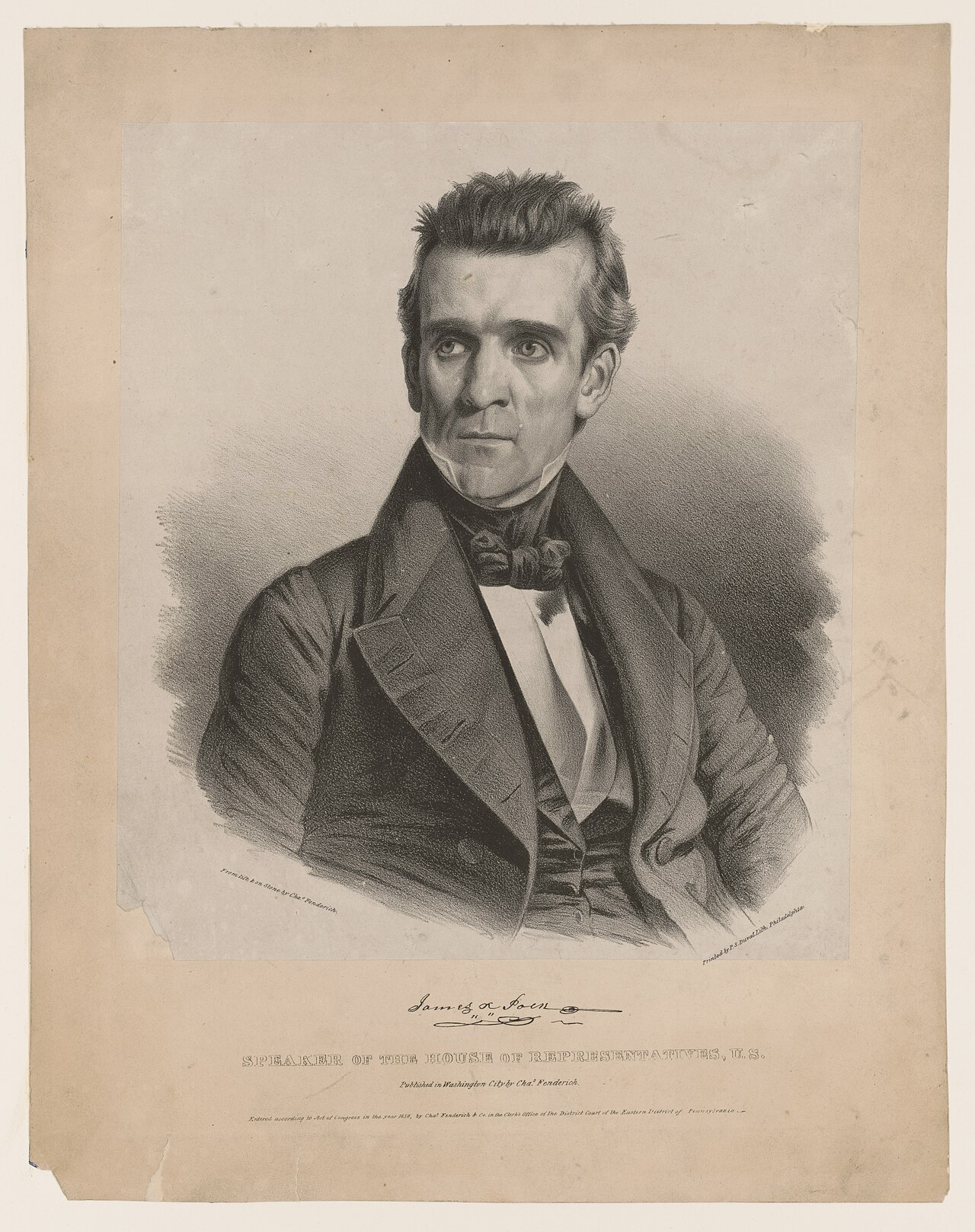
Lithograph portrait of a man with swept-back dark hair, wearing a high-collared shirt, bow tie, and dark coat with wide lapels, shown from the chest up. Printed title and signature appear on the mat below.Painting

Primary source

James K. Polk, Speaker of the House

Charles Fenderich · 1838

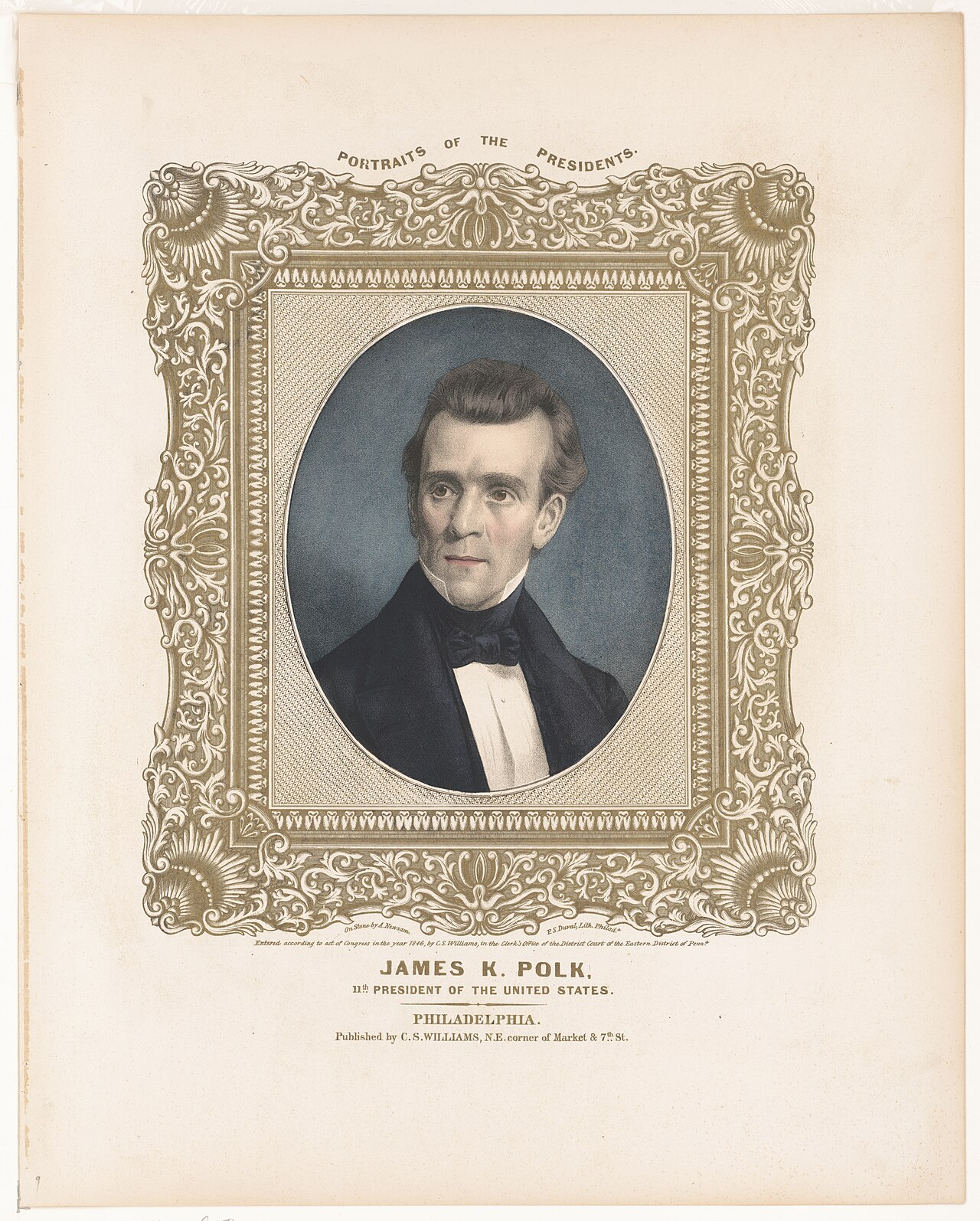
Color lithograph print titled 'Portraits of the Presidents' framed by an ornate scrollwork border, showing an oval portrait of James K. Polk with dark swept-back hair, dark coat, bow tie, and white shirt against a blue background. Caption below reads James K. Polk, 11th President of the United States, Philadelphia.Painting

Primary source

James K. Polk, 11th President, color lithograph

Albert Newsam · 1846

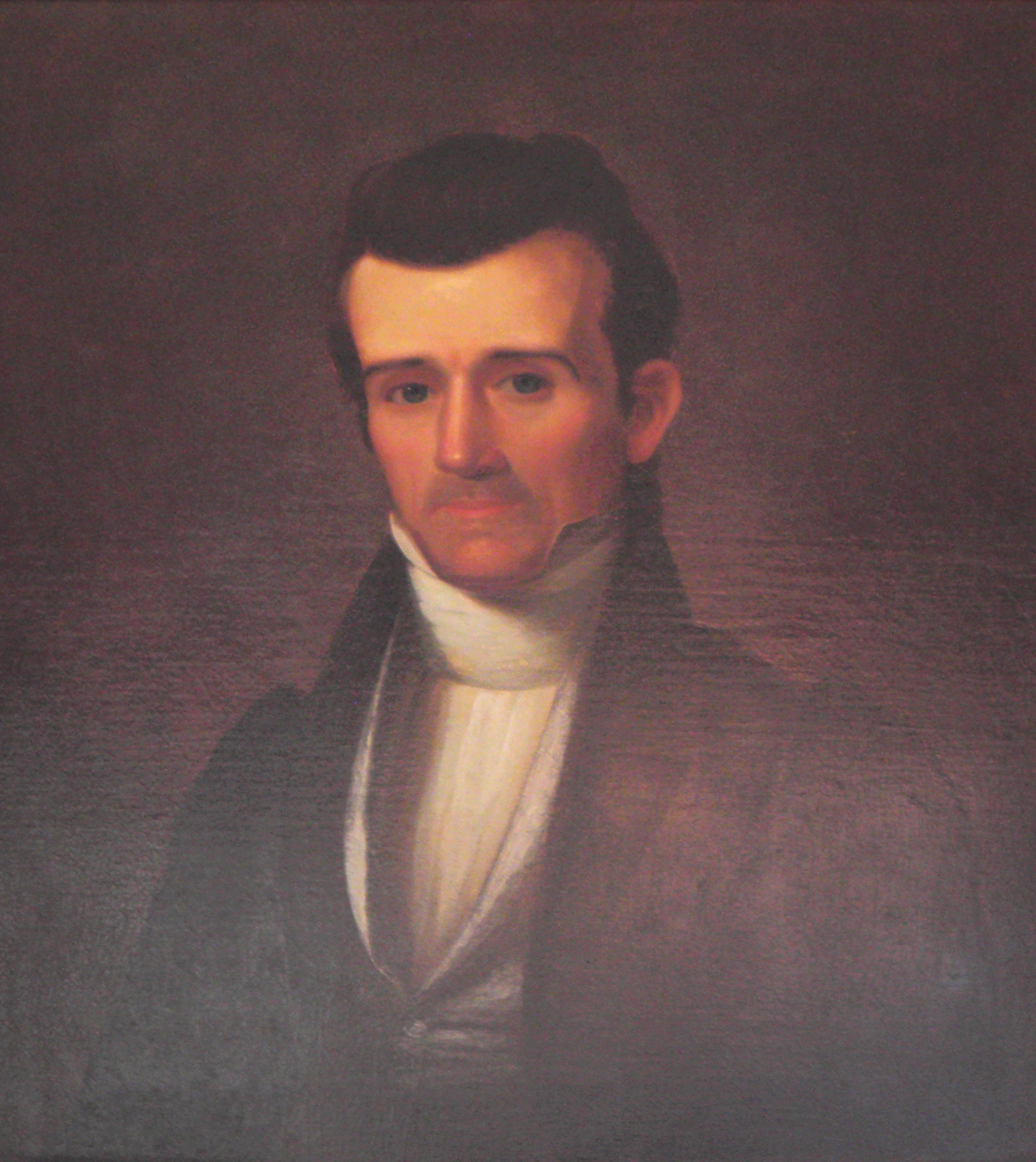
Oil painting portrait of a man with dark hair, brown eyes and a serious expression, wearing a dark jacket and high white collar with a white cravat, against a dark reddish-brown background.Painting

Primary source

Portrait of James K. Polk

Ralph Eleaser Whiteside Earl · c. 1829

Black-and-white portrait of an older man with light, swept-back hair, wearing a dark jacket, dark cravat, and white shirt collar, looking toward the viewer with a serious expression.Photograph

Primary source

Photograph of James K. Polk by Mathew Brady

Mathew Benjamin Brady · 14 February 1849

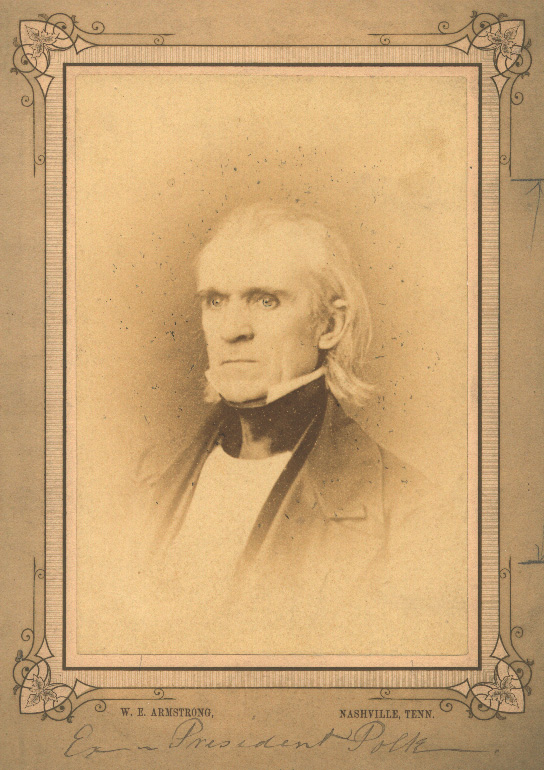
Sepia albumen portrait of an older man with long, light hair and a bare chin, shown from the chest up, turned slightly to the right, in a dark coat and white shirt. The print sits in a decorative border and bears the photographer's imprint 'W. E. Armstrong, Nashville, Tenn.' and a handwritten inscription 'Ex-President Polk' at the bottom.Photograph

Primary source

Albumen Print of James Knox Polk by W. E. Armstrong

W. E. Armstrong · 1849

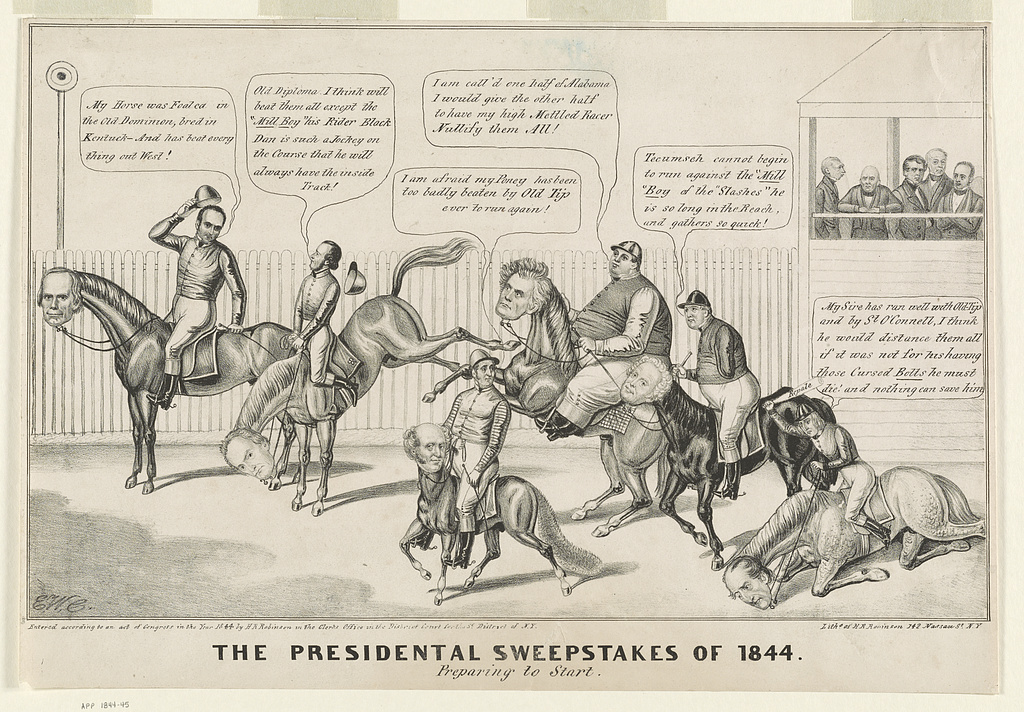
Lithograph cartoon titled The Presidential Sweepstakes of 1844, Preparing to Start. Caricatured politicians appear as horses and riders lining up on a racetrack before a grandstand, with speech balloons containing satirical text. Printed by Henry R. Robinson.Painting

Primary source

The Presidential Sweepstakes of 1844, Preparing to Start

Henry R. Robinson · 1844

Newspaper article

Primary source

The Result of the Election

February 1845

Oregon: The Claim of the United StatesDocument

Primary source

Oregon: The Claim of the United States

John C. Calhoun · 1846

Document

Secondary source

Polk, James Knox, entry in The American Cyclopaedia

1879

Document

Secondary source

Polk, James Knox, Encyclopaedia Britannica, 9th edition

1885

Book

Secondary source

Compilation of Messages and Papers of the Presidents, Volume 4: Polk

James D. Richardson

Book

Primary source

Thirty Years' View, Volume 2

Thomas Hart Benton

Oil painting of a man with dark hair, seen from the chest up, turned slightly to the left and looking toward the viewer. He wears a black coat, white shirt collar, and dark cravat, against a deep red-brown background. His right hand rests at the lower left edge.Painting

Secondary source

Portrait of James K. Polk

Rebecca Polk · 1911

Black-and-white photograph of an older man with light, shoulder-length hair, wearing a dark jacket, white shirt, and high white collar. He gazes directly toward the viewer with a serious expression. The background is dark with scratches and specks visible.Painting

Secondary source

James K. Polk, 11th President

Nashville Public Library · 1840s

Engraved oval portrait of a man with swept-back hair, dark coat, high white collar and black cravat, shown in three-quarter view looking left, set within an ornate scrolled frame topped by an eagle. Below is a small street scene and a signature.Painting

Secondary source

James K. Polk engraving by Dubourjal

Savinien Edme Dubourjal · circa 1856

Book

Primary source

Memoirs of John Quincy Adams, Vol. 12

John Quincy Adams · 1877

Book

Secondary source

The Annexation of Texas

Justin Harvey Smith · 1911

Book

Tertiary source

Polk, James Knox (New International Encyclopaedia)

1905

Document

Tertiary source

Mozart entry, The Nuttall Encyclopaedia

James Wood · 1900

Book

Tertiary source

Polk, James Knox (Encyclopaedia Britannica, 11th edition)

William Robertson Smith · 1911

Book

Tertiary source

James K. Polk (New Student's Reference Work)

1914

Book

Tertiary source

Polk, James Knox (Encyclopedia Americana)

William E. Dodd · 1920

Book

Tertiary source

Polk, James Knox (Collier's New Encyclopedia)

1921

Memorials of Sarah Childress PolkBook

Secondary source

Memorials of Sarah Childress Polk

Anson Nelson and Fanny Nelson · 1892

Book

Secondary source

Centennial History of Oregon, Chapter 9

1912

Scanned page 804 of the Congressional Globe, dated May 12, 1846, printed in dense two-column text. It records Senate debate and the roll call on the bill declaring war against Mexico, including lists of yeas and nays and the names of senators such as Clayton and Dayton.Document

Primary source

Senate Roll Call on the Declaration of War against Mexico

US Senate · 12 May 1846

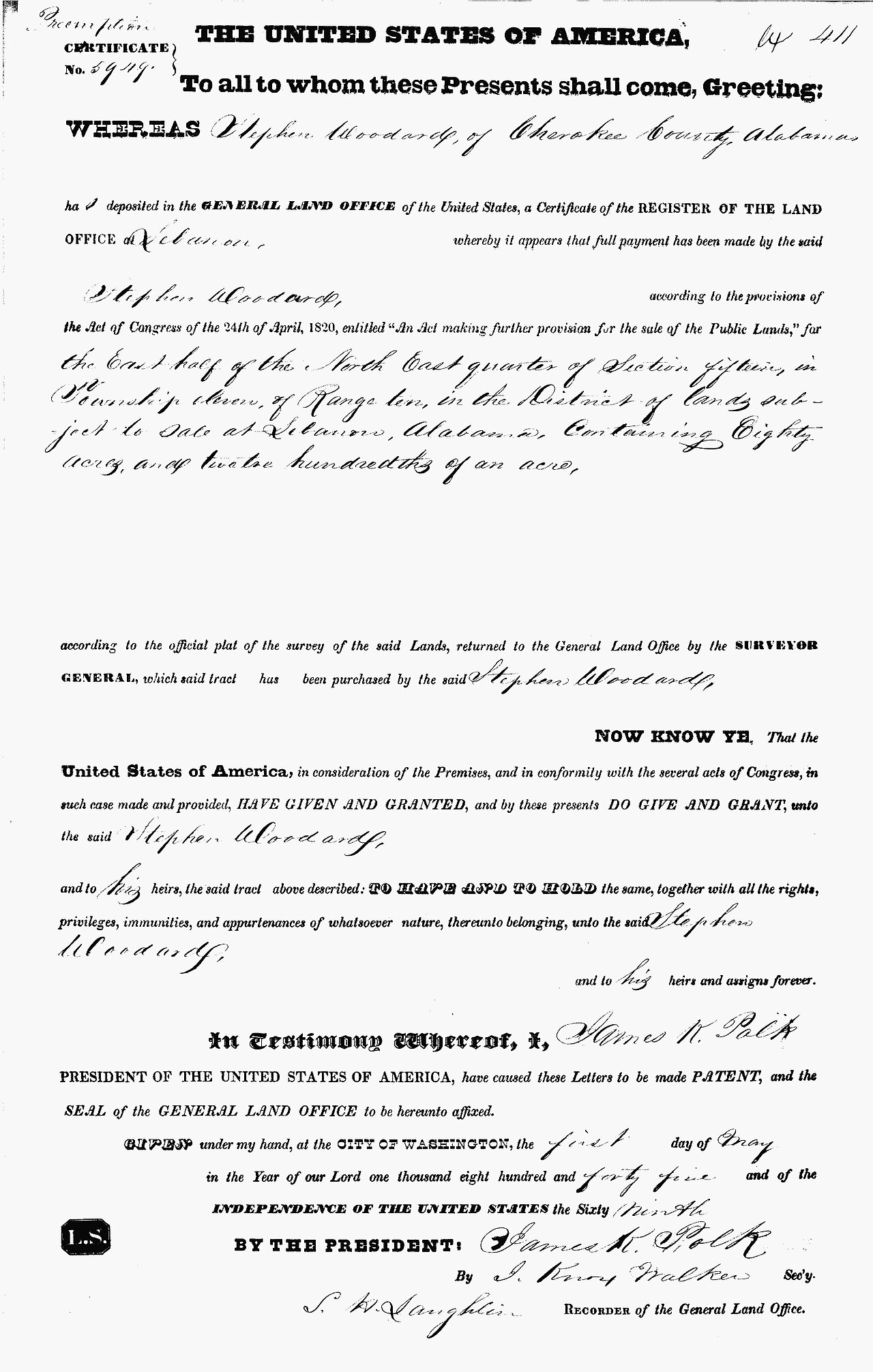
Scanned black-and-white land patent certificate titled 'The United States of America', dated 1 May 1845, granting Stephen Woodard of Cherokee County, Alabama, 80 acres. Signed by President James K. Polk, secretary J. Knox Walker, and the General Land Office recorder.Document

Primary source

General Land Office Land Patent Certificate, 1845

General Land Office · 1 May 1845

Document

Primary source

Statutes at Large Vol. 5, 25th Congress

1837-1838

Document

Secondary source

Oregon Historical Quarterly: Accessions Including Polk-Signed Land Patent

1900s

Book

Secondary source

History of Iowa: Polk County

1903

Want the full shelf? Chat with James K. Polk in the app and open the Sources panel — every quote links back to the original.

Use James K. Polk in class

1 collection

A ready-made collection from the Humy team that features James K. Polk. Preview it, then try it free.

Trusted by educators worldwide

Conversations
375,000+
Real exchanges between students and historical figures
Messages exchanged
4,142,000+
Across every figure, classroom and language
Historical figures
100,000+
Each informed by a curated biography and selected sources
Languages supported
50+
From English and Spanish to Arabic and Korean

Paying customers

Used by 98 schools and universities

Partner school logo
Tecnológico de Monterrey logo
Hyper Island logo
Partner school logo
Chambersburg Area School District logo
Broward County Public Schools logo
Nebo School District logo
National Louis University logo
South Florida PBS logo
Punahou School logo
University of Wisconsin–River Falls logo
Partner school logo
Partner school logo
Archbishop Mitty High School logo
Kingsburg High School logo
Norwalk Public Schools logo
Partner school logo
Connections logo
Partner school logo
Moore Public Schools logo
Partner school logo
Partner school logo
Partner school logo
Partner school logo
Robbinsville Public Schools logo
Partner school logo
Partner school logo
Partner school logo
Tecnológico de Monterrey logo
Hyper Island logo
Partner school logo
Chambersburg Area School District logo
Broward County Public Schools logo
Nebo School District logo
National Louis University logo
South Florida PBS logo
Punahou School logo
University of Wisconsin–River Falls logo
Partner school logo
Partner school logo
Archbishop Mitty High School logo
Kingsburg High School logo
Norwalk Public Schools logo
Partner school logo
Connections logo
Partner school logo
Moore Public Schools logo
Partner school logo
Partner school logo
Partner school logo
Partner school logo
Robbinsville Public Schools logo
Partner school logo
Partner school logo

What educators are saying

“We enjoyed the program last year and used it frequently.”
“My students say it’s a welcome change of pace. I’m not a fan of the “sage on the stage” model, so I try to incorporate research-oriented and self-paced activities. With Humy, students have to take charge of their learning. They’ve become more adept at critical thinking, forming better questions, and improving their reading comprehension. The interview feature has been my go-to tool. I create assignments where students must ask historical figures a set number of questions, then summarize the responses to ensure they’re truly absorbing the material. This approach lets them actively explore the past rather than passively consuming information.”
“Humy has helped me bring historical figures, sometimes long past, to life. When my students interact with these figures in real-time, it eliminates some of the perceived “ancient” characteristics of my curriculum. This has shifted my students’ thinking away from viewing history as abstract or irrelevant. Real-time interactions make historical figures relatable, even allowing students to ask off-topic questions that help put historical lives in a more relevant context for 13-year-olds. The feature I use the most is the interview feature. After teaching a topic, most recently Gandhi and Joan of Arc, I have the students ask pointed, focused questions. We practice good conversation techniques beforehand, teaching them to listen (or read) carefully and formulate thoughtful follow-up questions rather than just interrogating. It helps students practice effective conversation skills.”

FAQ

Frequently asked questions

Who is James K. Polk?
11th President of the United States who expanded the country's territory through the annexation of Texas, the Oregon Treaty, and the Mexican–American War. On Humy.ai you can chat with an AI version of James K. Polk that draws on a short biography and 87 historical sources during the conversation — by text or voice, in 42 languages.
Is James K. Polk AI free?
James K. Polk is part of Humy's full library of more than 100,000 figures, which comes with a paid plan. A free account (no credit card) includes 20 messages a month with the free library's figures, so you can try how the conversations work first.
What sources does the James K. Polk AI use?
It draws on a short biography and 87 historical sources (documents, books and paintings), including “Diary of James K. Polk”, “Inaugural Address of James K. Polk” and “James K. Polk's First State of the Union Address”. Each source has its own page on Humy.ai.
How historically accurate is the AI version of James K. Polk?
Each figure uses a short biography and a small set of selected historical sources as context (retrieval-augmented generation), so answers stay closer to known material than the model's general knowledge alone. It isn't a citation-grade research tool — like any LLM, the AI can get details wrong or extrapolate. Treat it as a strong starting point for inquiry and cross-reference important claims.
Can I talk to James K. Polk by voice?
Yes. In addition to text chat, you can call James K. Polk and hear their voice respond in real time — useful for auditory learners, interview practice and Socratic dialogue.
Is Humy.ai safe and compliant for schools?
Yes. Humy.ai is used by more than 100 schools, universities and organisations. The platform is FERPA- and GDPR-aligned, supports SSO, and offers an IT-approval pack tailored for school procurement teams.

Ready when you are

Start chatting with James K. Polk now.

20 messages free · No credit card · Available in 50+ languages.