


Primary sourceArtifact1719
1719 George I farthing
1719
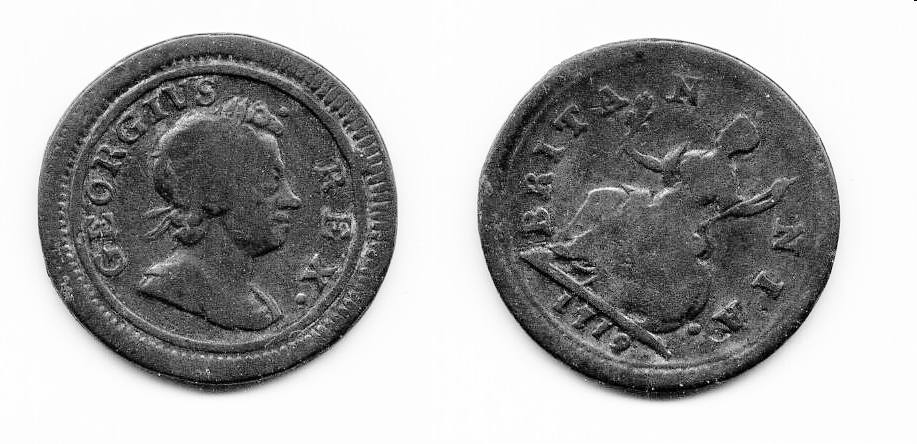
A small bronze farthing coin issued in the reign of George I, showing his bust on one side and Britannia on the other. It is dated 1719.
A coin issued during George I's reign that carries his bust, showing how his image reached everyday money.
About this source
What it is
This is a photograph of a small, worn bronze farthing dated 1719. The front shows a bust of George I facing right, with the inscription GEORGIUS REX. The back shows Britannia seated to the right, holding a spear, with the word BRITANNIA and the date 1719 in the exergue. The image is a black-and-white photograph of a real coin, not the coin itself. The record notes it is listed in the Standard Catalogue of British Coins under ID 3662.
Why it matters
Coins carried a ruler's image into everyday hands. Used in daily trade, the farthing showed ordinary people the king whose government they lived under. Britannia on the reverse stood for the nation, a figure that became common on British money in this period. Together the two sides link the king to the country he ruled.
Look closer
- What does the king's bust suggest about how he wanted to be seen, and what does the Latin inscription say?
- Why might Britannia have been chosen to appear on the back of a coin?
- How might a worn coin have been used by people who could not read the inscriptions?
This artifact is part of the curated material that grounds the AI version of George I on Humy.ai — when students ask about related events, the AI can quote it and cite it.
More George I sources
Meet the AI George I →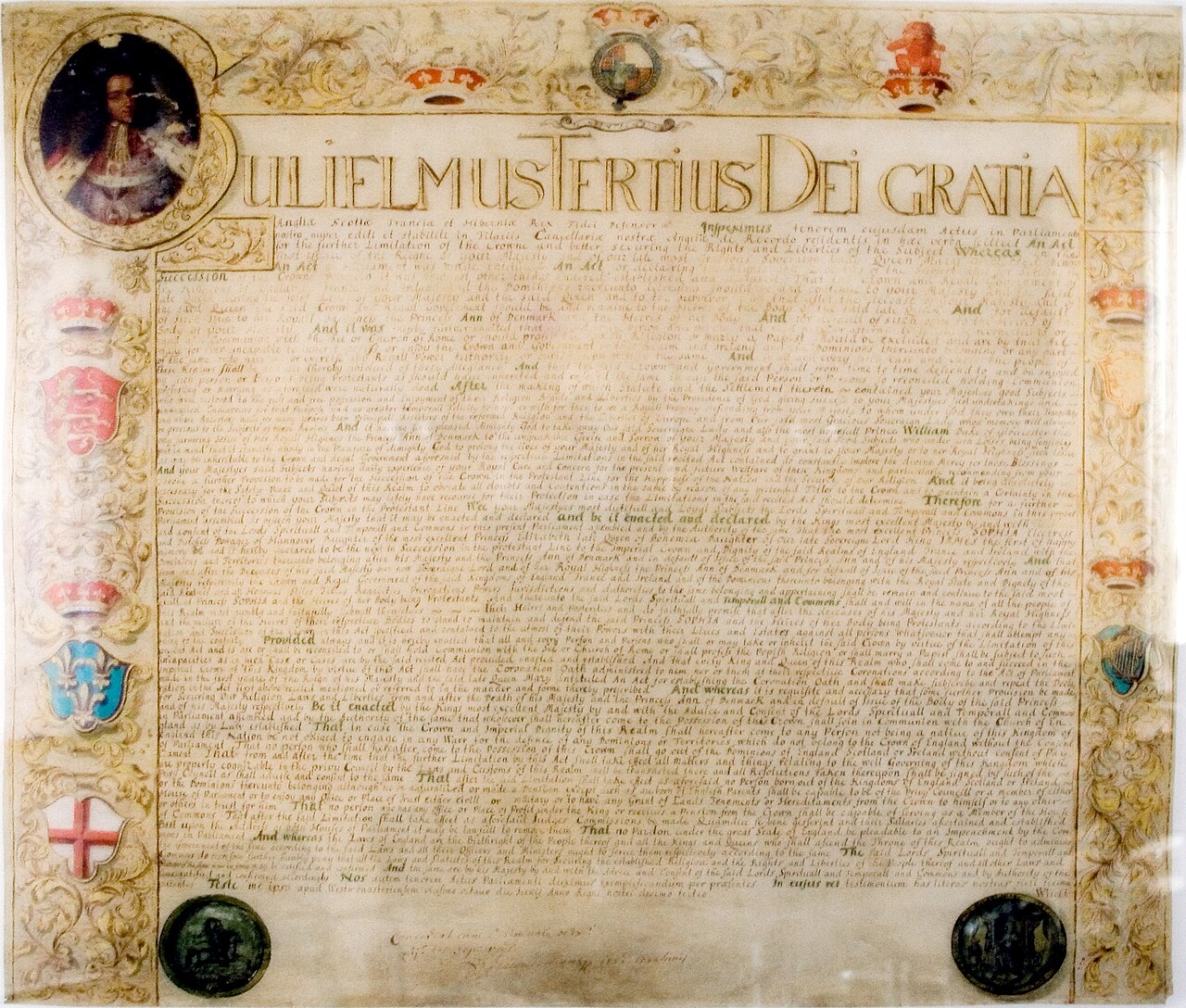 Document
Primary source
Act of Settlement 1701
1701
 Painting
Primary source
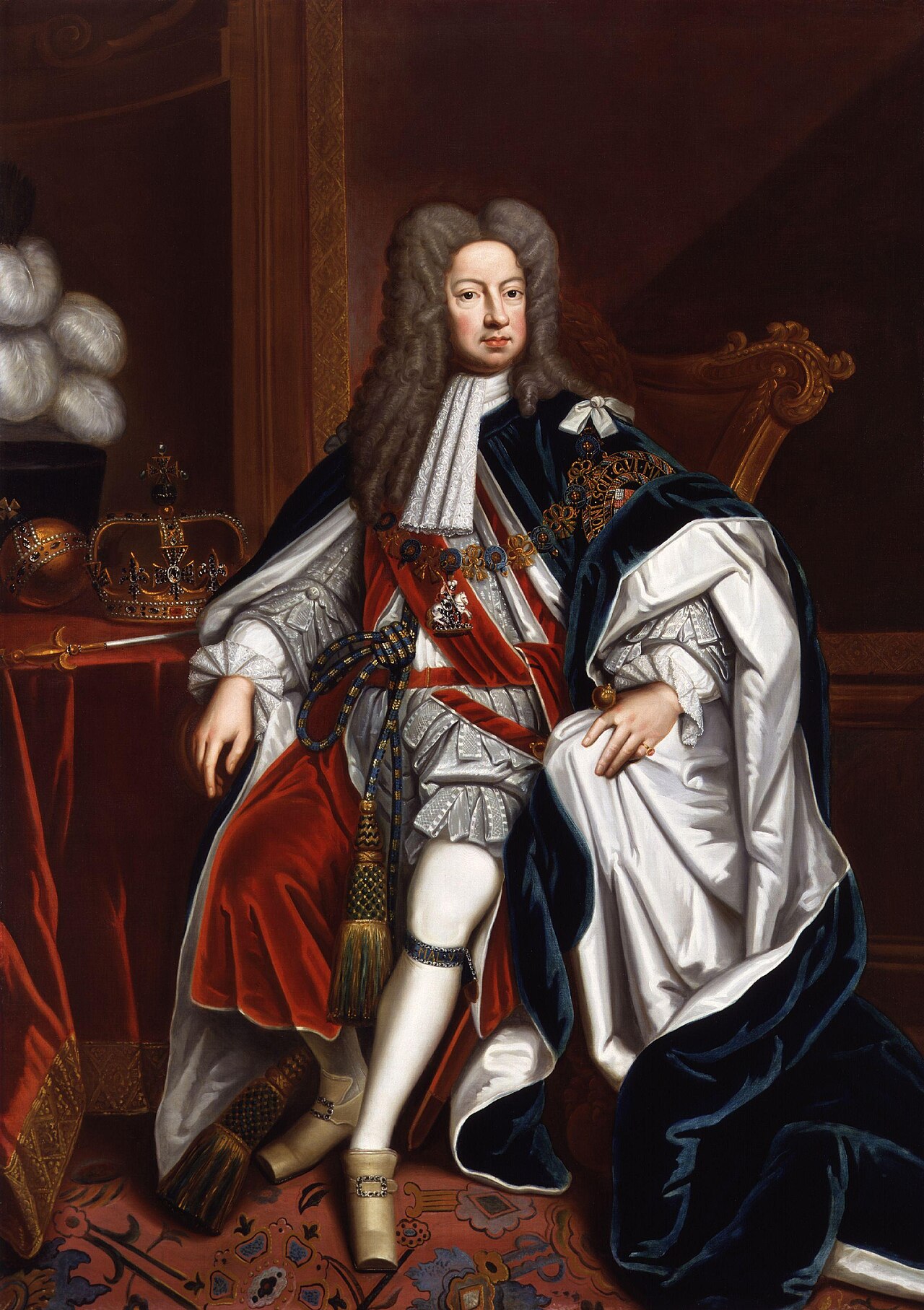
Portrait of George I of Great Britain
Godfrey Kneller
Secondary source
Water Music
George Frideric Handel · 1717
Primary source
Septennial Act 1715
1716
 Document
Primary source
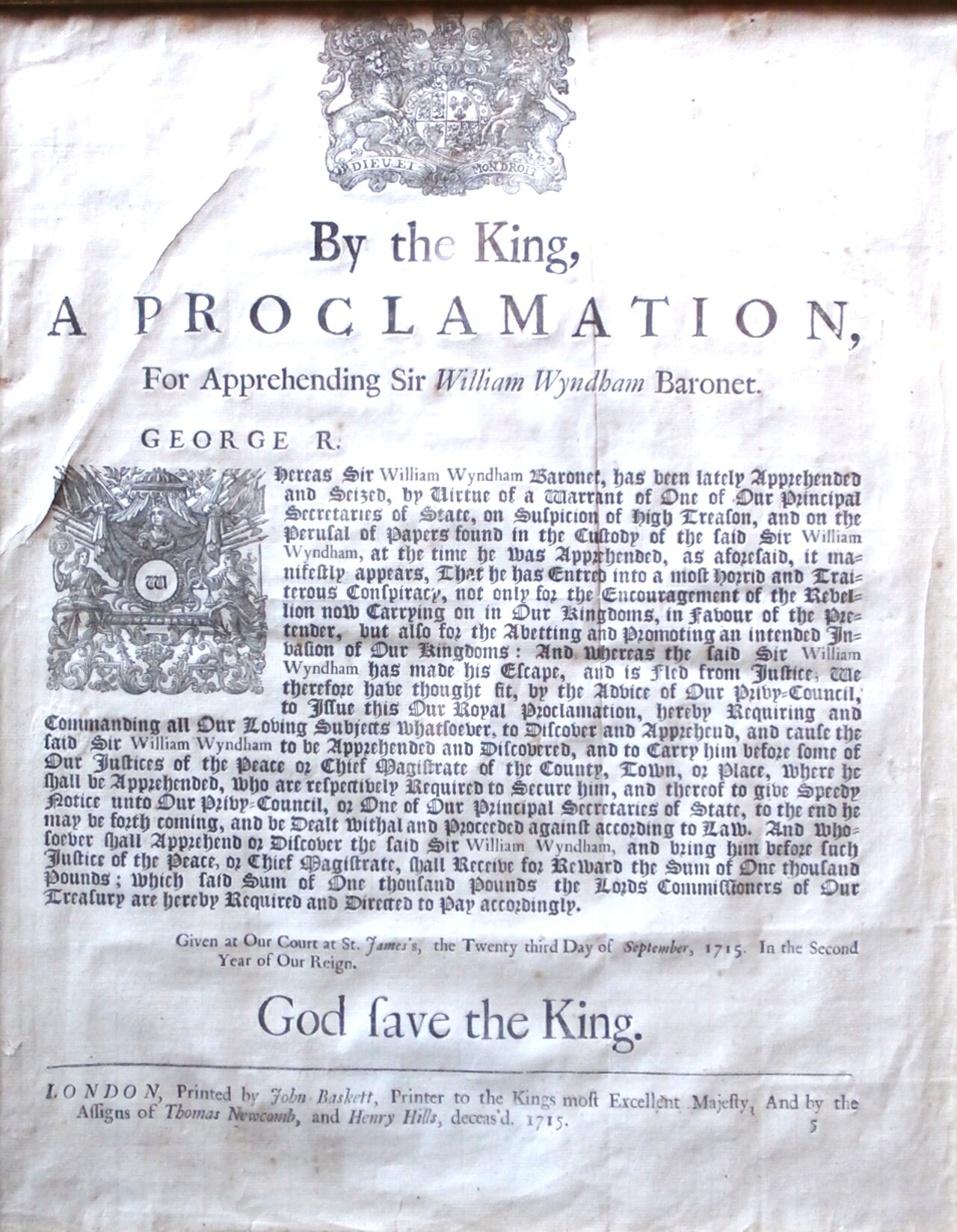
Royal Proclamation for the Arrest of Sir William Wyndham
23 September 1715
Ready when you are
Start chatting with George I now.
20 messages free · No credit card · Available in 50+ languages.