


Secondary sourcePainting19th century
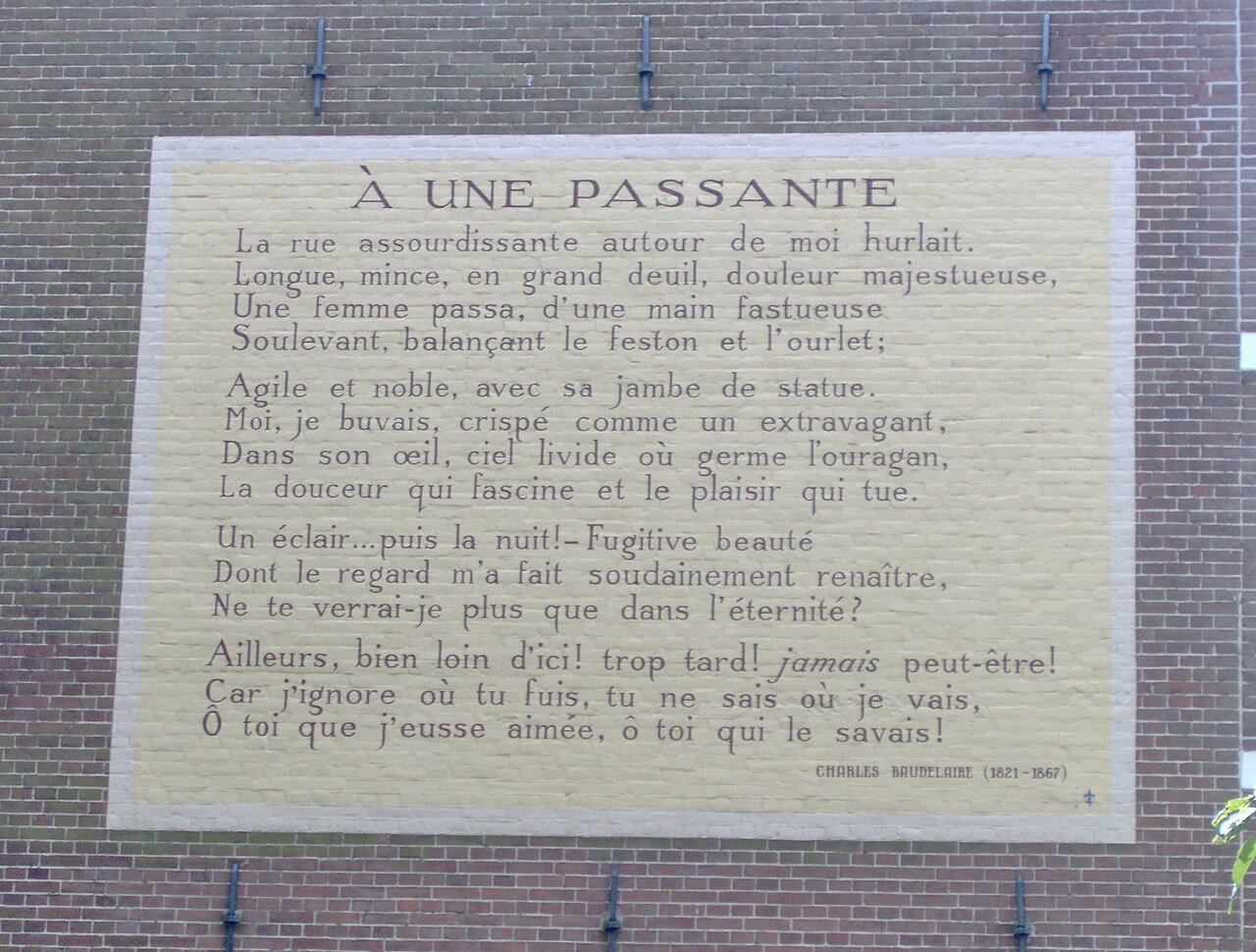
À une passante
Charles Baudelaire · 19th century
A sonnet by Baudelaire describing a fleeting encounter with a passing woman in the noise of a Paris street.
This poem, written by Baudelaire, is a celebrated example of his treatment of fleeting beauty in the modern city.
Free Humy account · No credit card · 120,912 sources to read
About this source
What it is
"À une passante" (To a Passer-by) is a sonnet by Charles Baudelaire describing a brief, intense moment when the poet glimpses a mourning woman in a loud city street, their eyes meeting before she disappears forever. Shown here is a photograph of the poem's full French text displayed on a tiled wall plaque in Leiden, the Netherlands.
Why it matters
The poem captures Baudelaire's fascination with the modern city as a place of chance encounters and lost connections between strangers. It is often cited as a key example of his poetics of urban modernity, where beauty appears suddenly and vanishes just as fast, leaving only longing behind.
Look closer
- What details in the poem suggest the speaker will never see this woman again?
- Why might a crowded, noisy street be an important setting for this kind of poem?
- What does it mean that this poem has been placed as public art on a building wall, far from Paris?
This painting is part of the curated material that grounds the AI version of Charles Baudelaire on Humy.ai — when students ask about related events, the AI can quote it and cite it.
More Charles Baudelaire sources
Browse all 97 →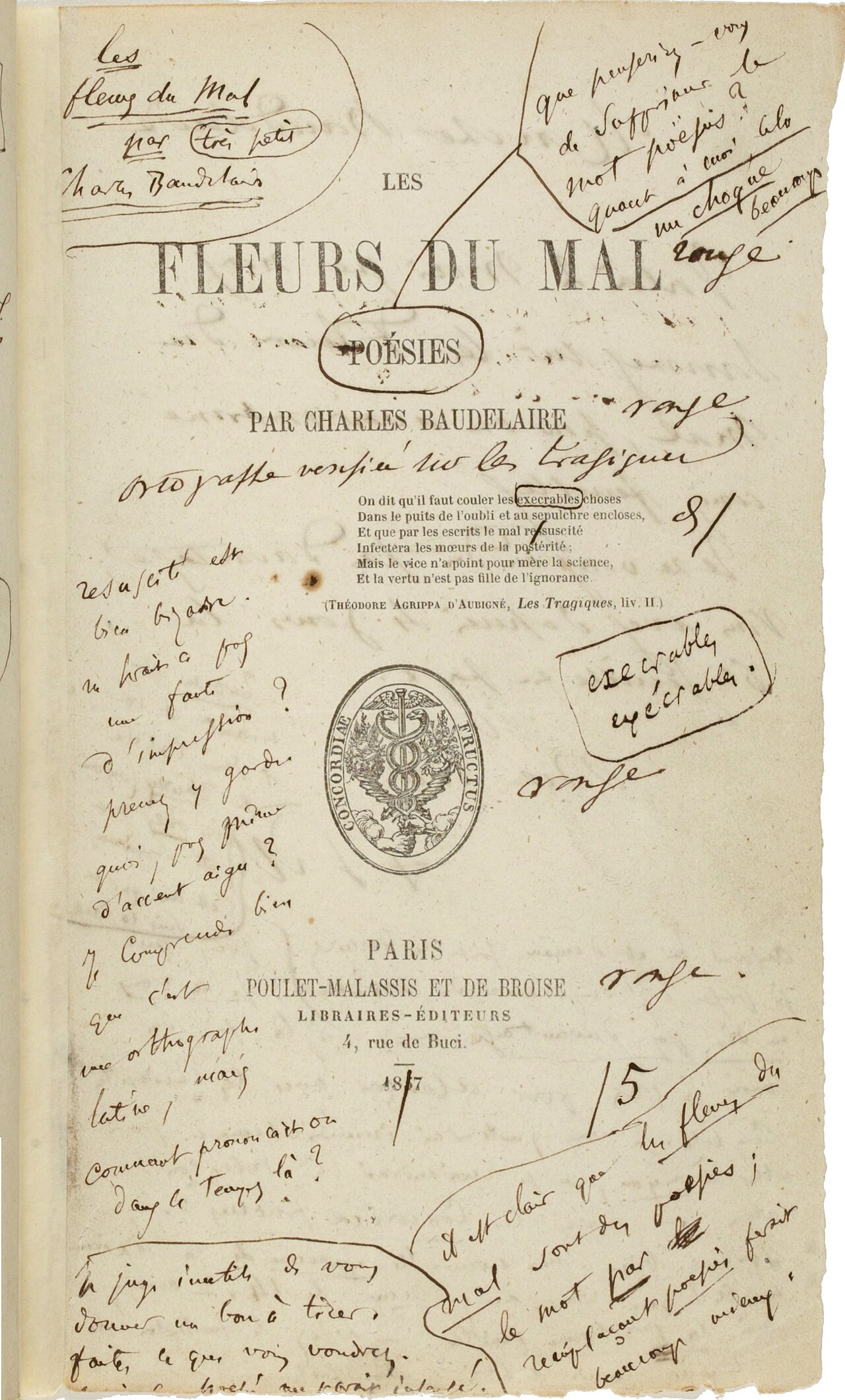 Book
Primary source
Les Fleurs du mal
Charles Baudelaire · 1857 (proof); written 1840–1867
Primary source
Le Peintre de la vie moderne
Charles Baudelaire · 1863 (written c. 1859–1860)
 Book
Primary source
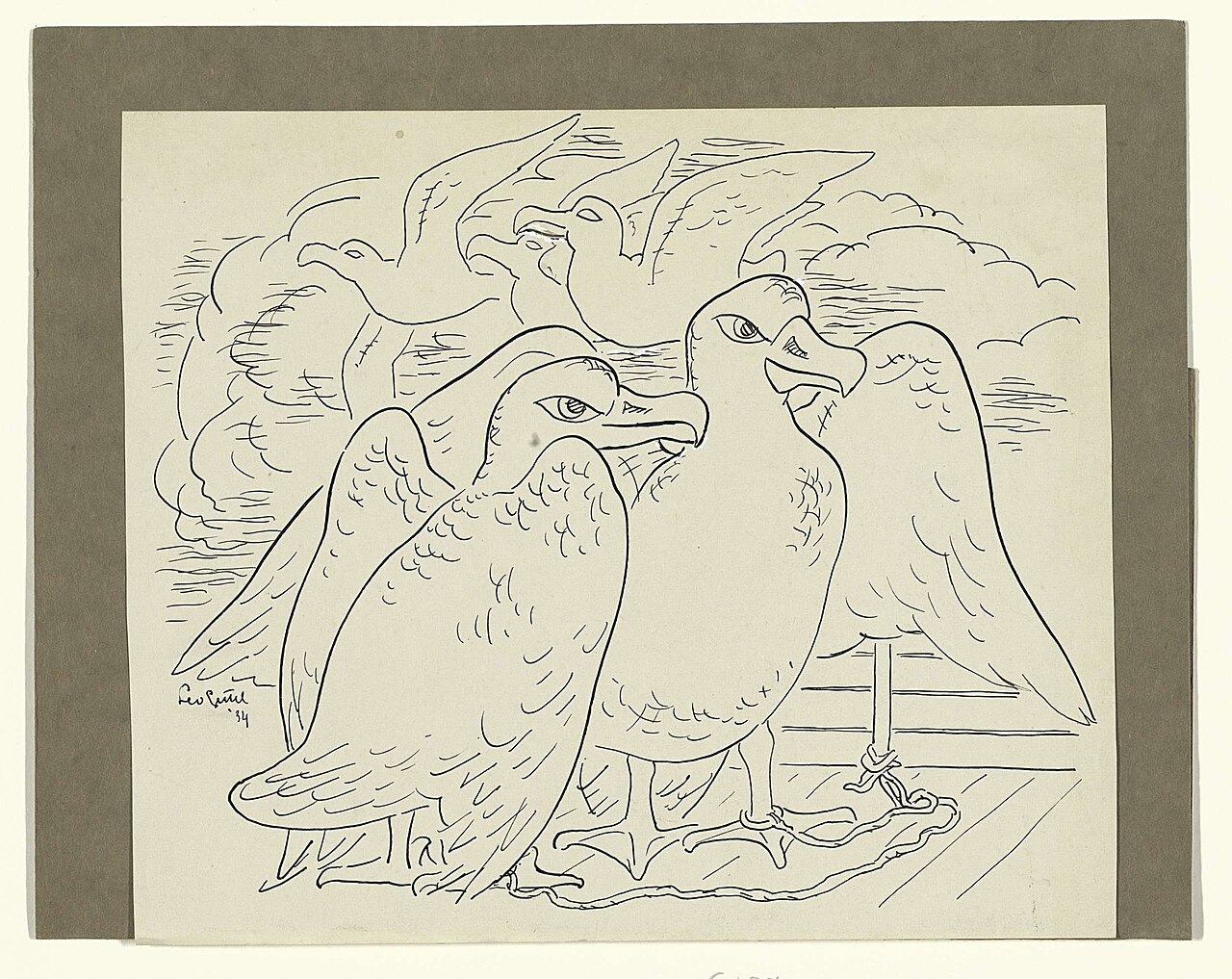
The Albatross
Charles Baudelaire · 1842–1859
Primary source
Correspondences
Charles Baudelaire · 19th century
Free account
Read every Charles Baudelaire source
Sign up free →
Ready when you are
Start chatting with Charles Baudelaire now.
20 messages free · No credit card · Available in 50+ languages.