


Primary sourceArtifact790s
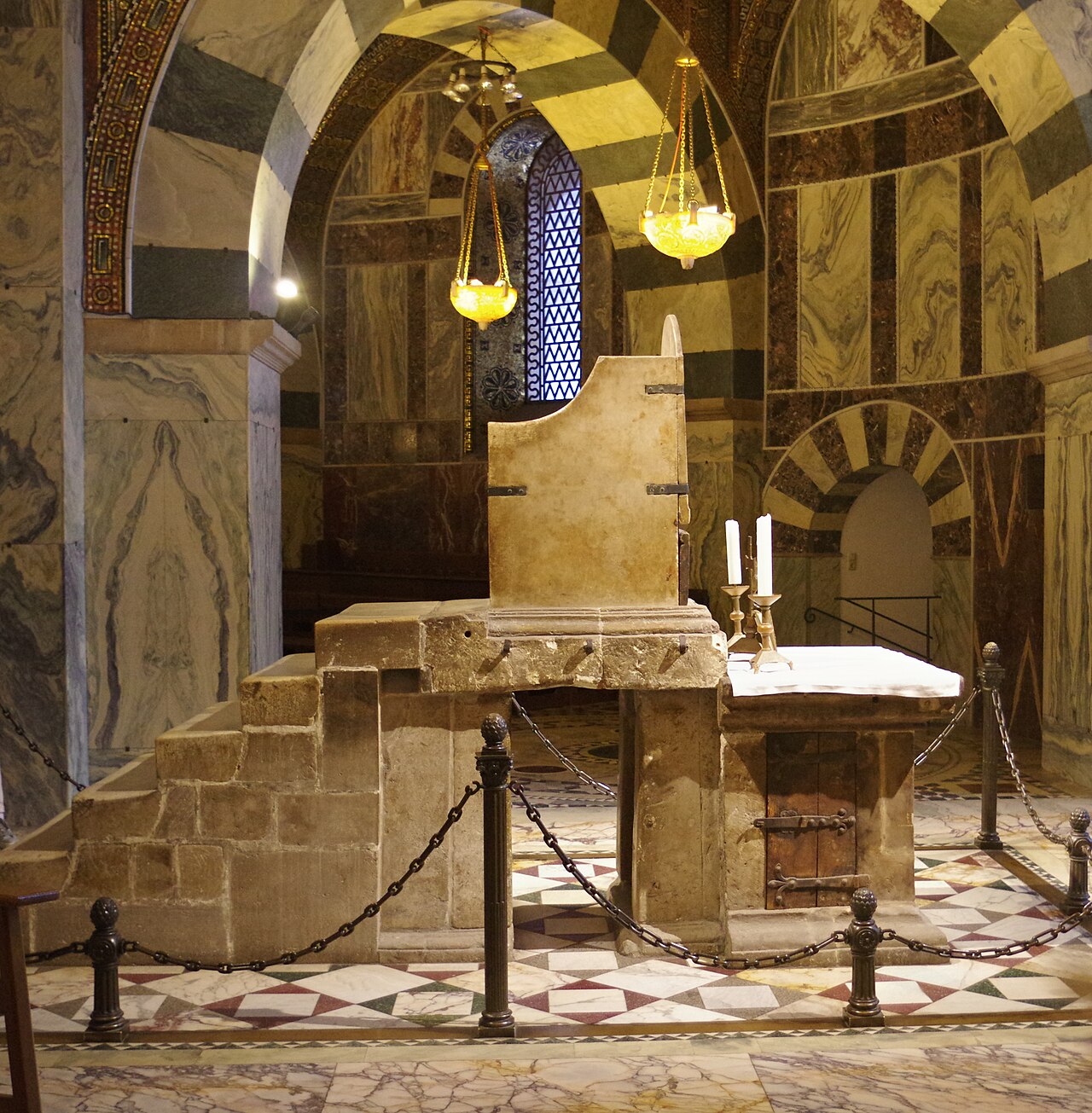
Aachen Throne
790s
The plain marble throne Charlemagne had built in his palace chapel at Aachen, later used to crown German kings.
Charlemagne had this throne built for his palace chapel, and it became a lasting symbol of his rule and later of imperial coronation.
About this source
What it is
This stone throne stands in the upper gallery of Charlemagne's palatine chapel at Aachen, built in the 790s from reused Roman and other marble slabs. It later served as the coronation throne for the King of the Romans for centuries.
Why it matters
Though Charlemagne himself was crowned in Rome, not on this throne, its placement and plainness carried deep symbolism, linking his rule to the biblical throne of Solomon and presenting him as a Christian ruler mediating between heaven and earth. The reused marble steps, said by tradition to come from the Holy Land, tied his new empire to ancient and sacred history.
Look closer
- Why might a ruler choose a plain, undecorated throne instead of a richly decorated one?
- What does reusing old Roman and holy-site materials suggest about how Charlemagne wanted his rule to be seen?
- Why do you think people later crawled beneath the throne, and what does that ritual tell you about belief and power?
This artifact is part of the curated material that grounds the AI version of Charlemagne on Humy.ai — when students ask about related events, the AI can quote it and cite it.
More Charlemagne sources
Meet the AI Charlemagne →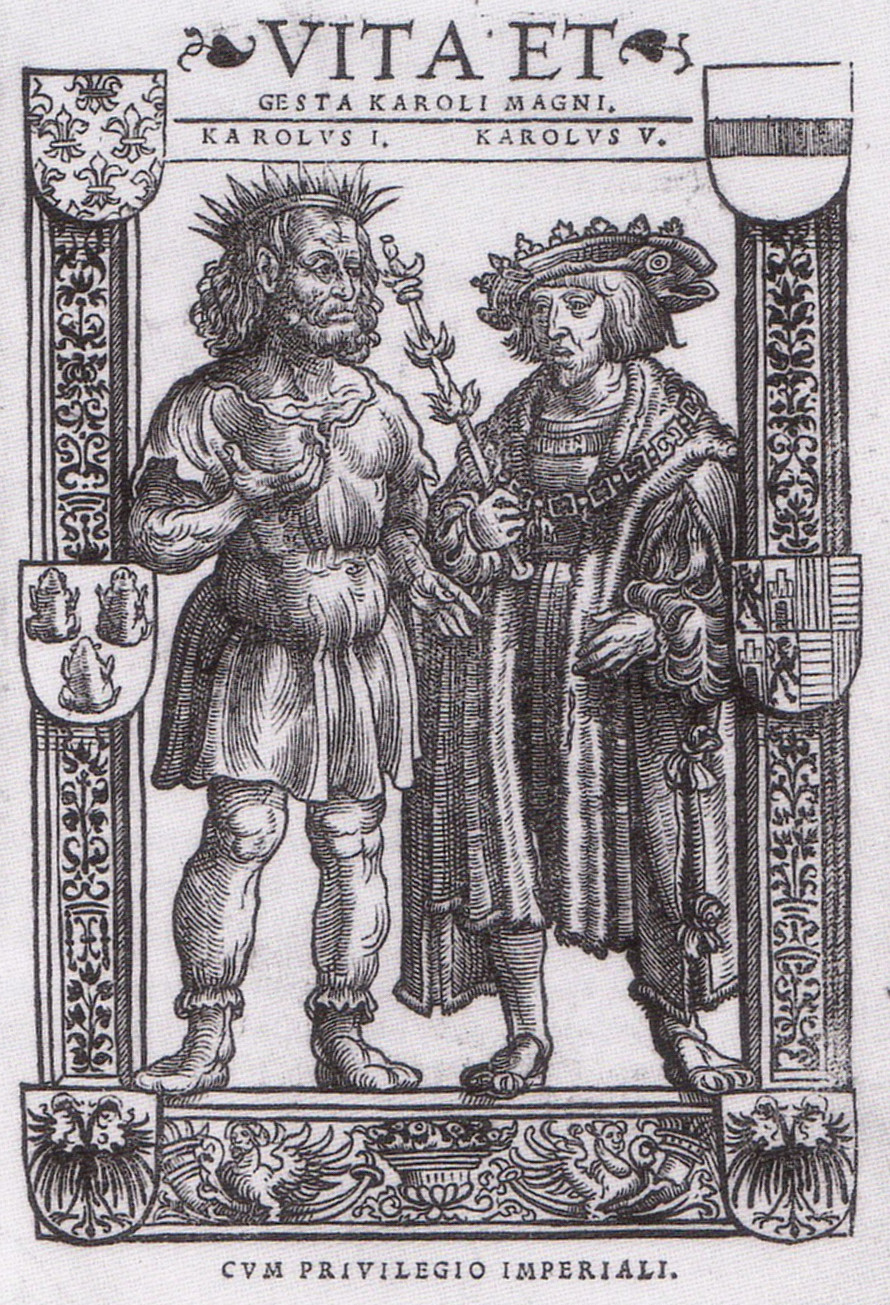 Book
Secondary source
Vita Karoli Magni
Einhard · c. 817-833
 Document
Primary source
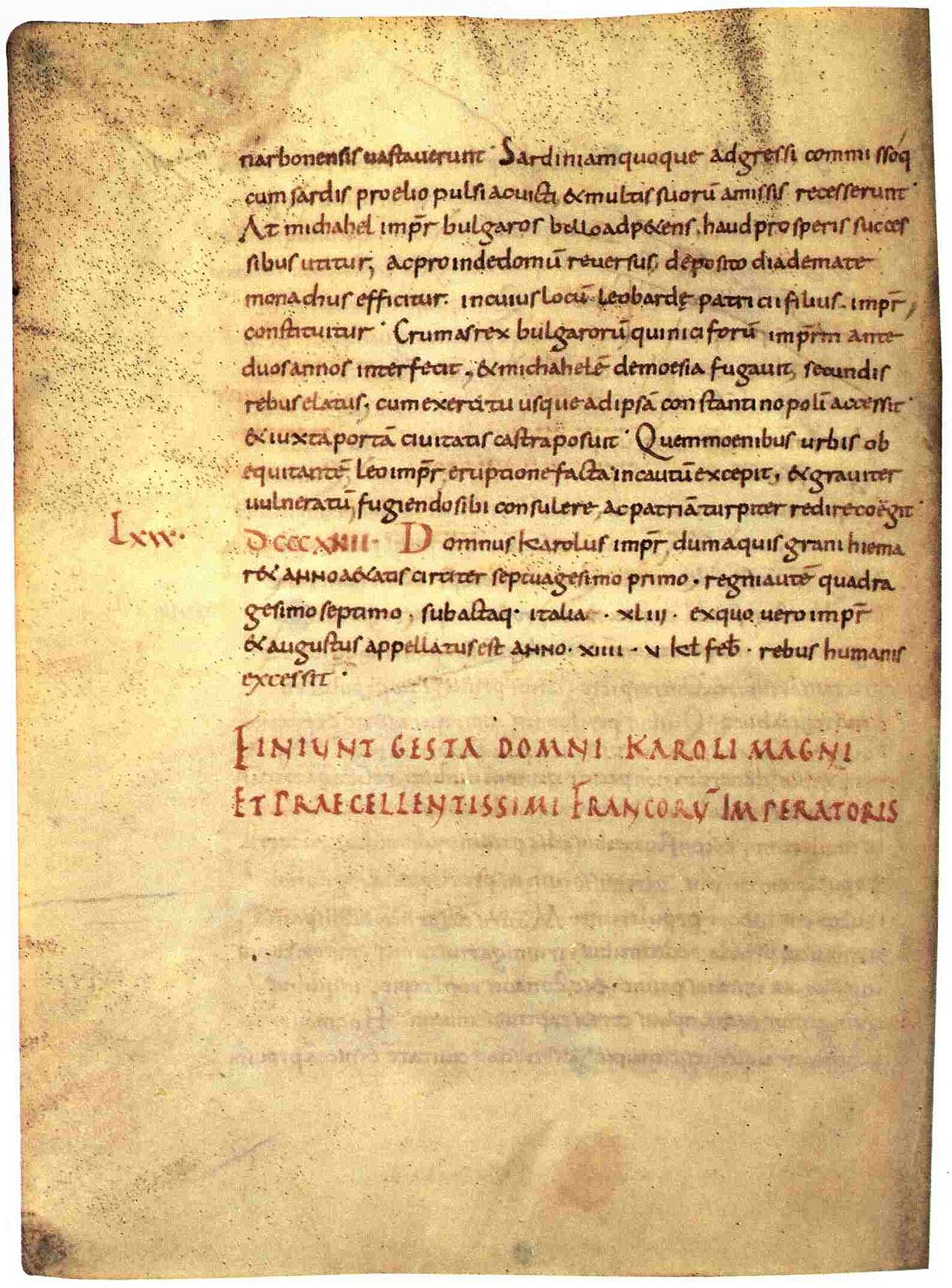
Royal Frankish Annals
741-829, this manuscript c. 900
Primary source
De litteris colendis
Charlemagne · late 780s-800s
 Document
Primary source
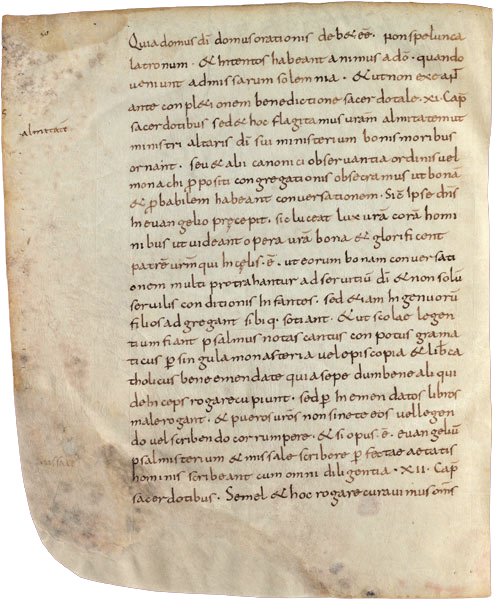
Admonitio generalis
Charlemagne · 23 March 789
 Document
Primary source
Capitulare de villis
c. 771-800
Ready when you are
Start chatting with Charlemagne now.
20 messages free · No credit card · Available in 50+ languages.