


Secondary sourcePhotograph1851–52
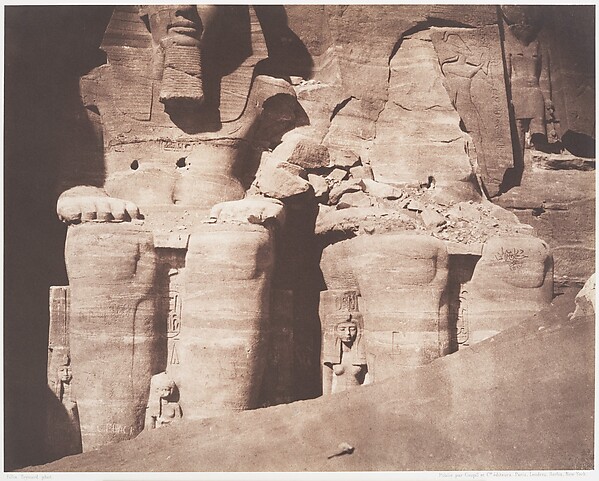
Abu Simbel Great Temple Colossi Seen from the Front
Félix Teynard · 1851–52
A photograph from 1851–52 by Félix Teynard showing the colossal statues of Ramesses II at Abu Simbel.
Depicts the colossal statues of Ramesses II at Abu Simbel, monuments built to celebrate his reign.
About this source
What it is
This salted-paper photograph was taken by Félix Teynard between 1851 and 1852. It shows the facade of the Great Temple at Abu Simbel, with its colossal seated statues of Ramesses II carved into the rock. The photograph is held by The Metropolitan Museum of Art.
Why it matters
The image preserves the appearance of the temple in the mid-1800s, showing the statues partly broken and surrounded by rubble and sand. It reveals how later explorers and photographers documented the monuments Ramesses II built to glorify himself, and how time and nature had already begun to affect them.
Look closer
- What does the broken condition of the statues suggest about the passage of time?
- Why might a photographer choose to show a person standing between the statues' legs?
- What can you tell about the scale of the monument from this photograph?
This photograph is part of the curated material that grounds the AI version of Ramses II (Ramses the Great) on Humy.ai — when students ask about related events, the AI can quote it and cite it.
More Ramses II (Ramses the Great) sources
Meet the AI Ramses II (Ramses the Great) →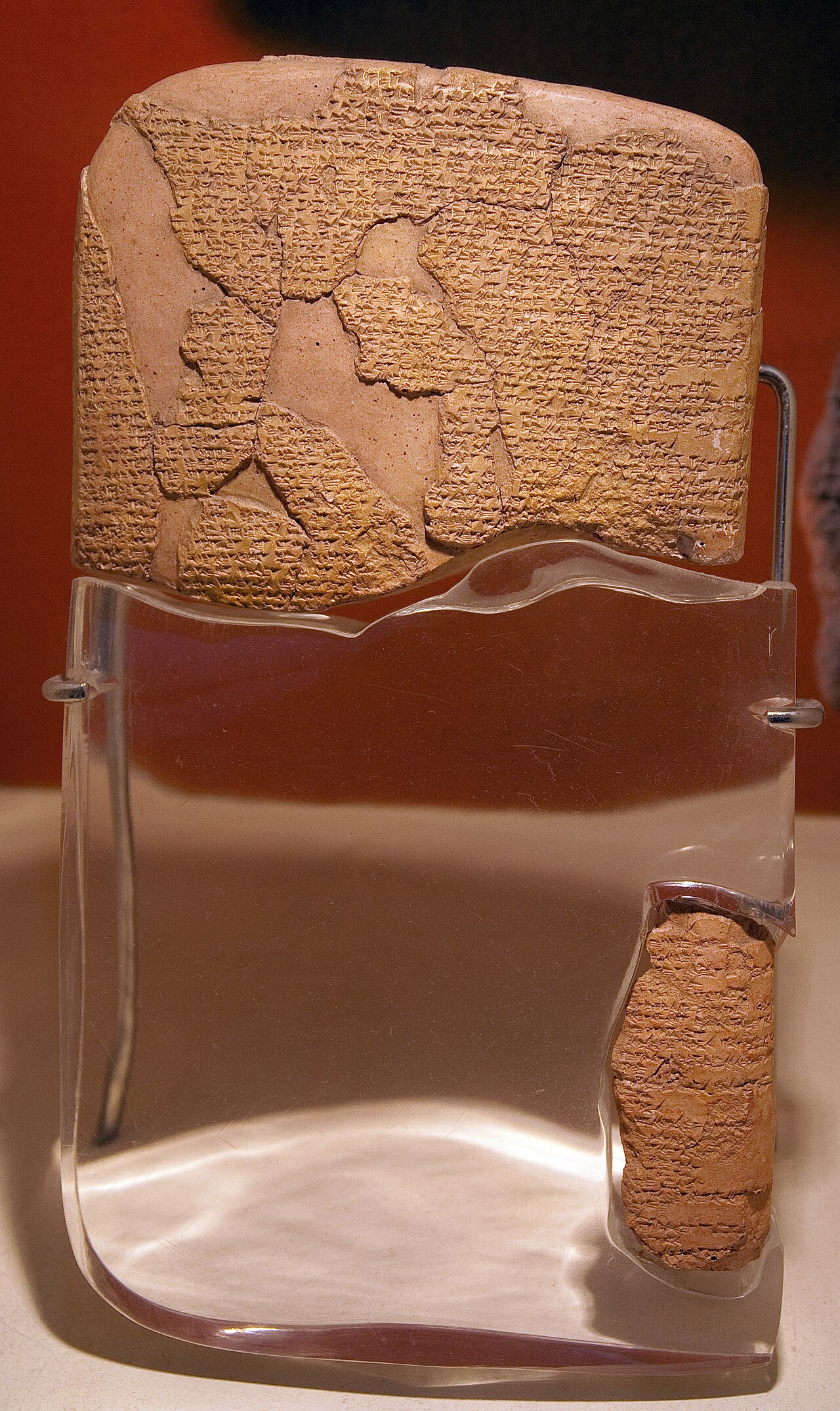 Document
Primary source
Egyptian–Hittite Peace Treaty
c. 1258 BCE
 Photograph
Secondary source
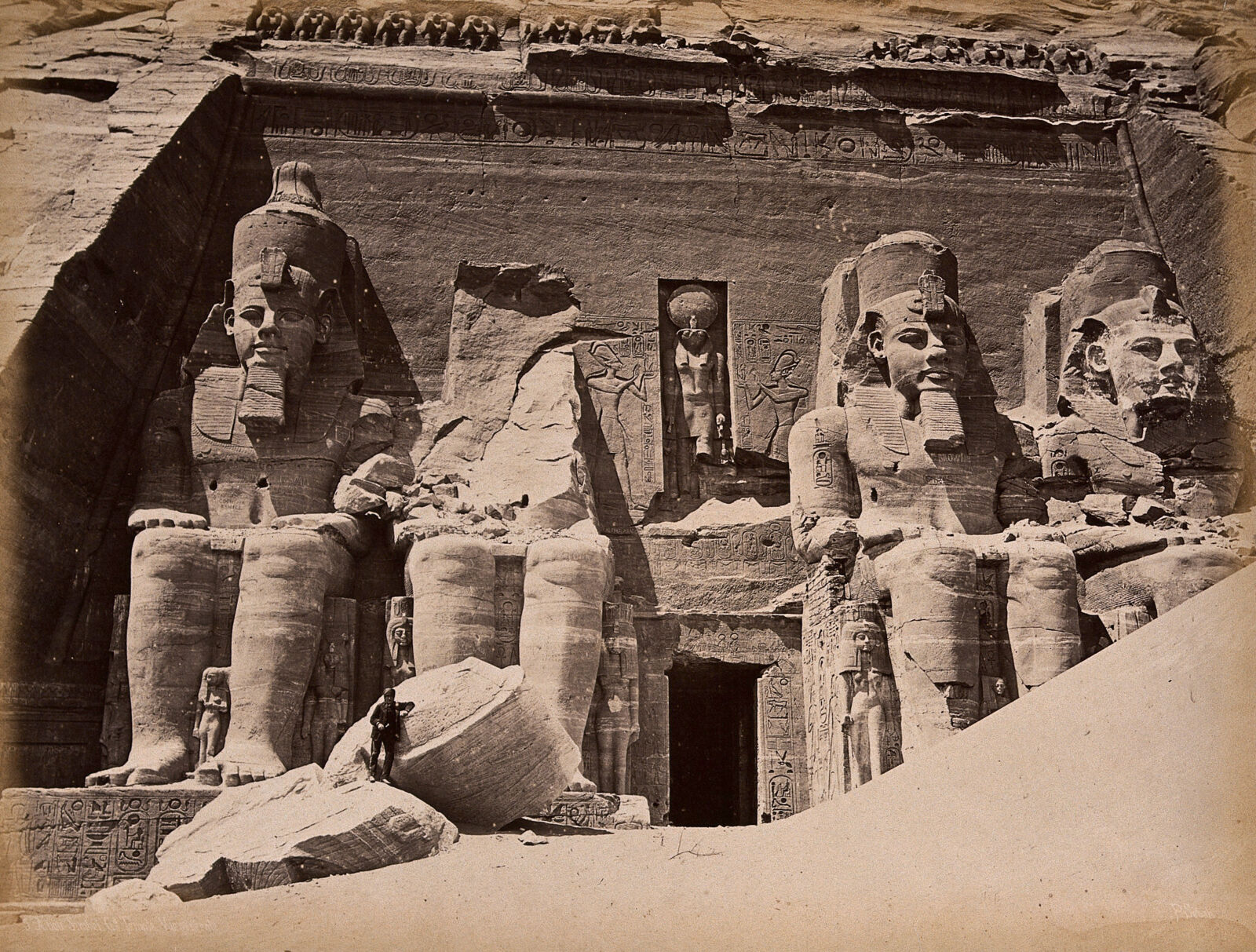
Abu Simbel Temple Colossi
Pascal Sébah · 1875
 Artifact
Primary source
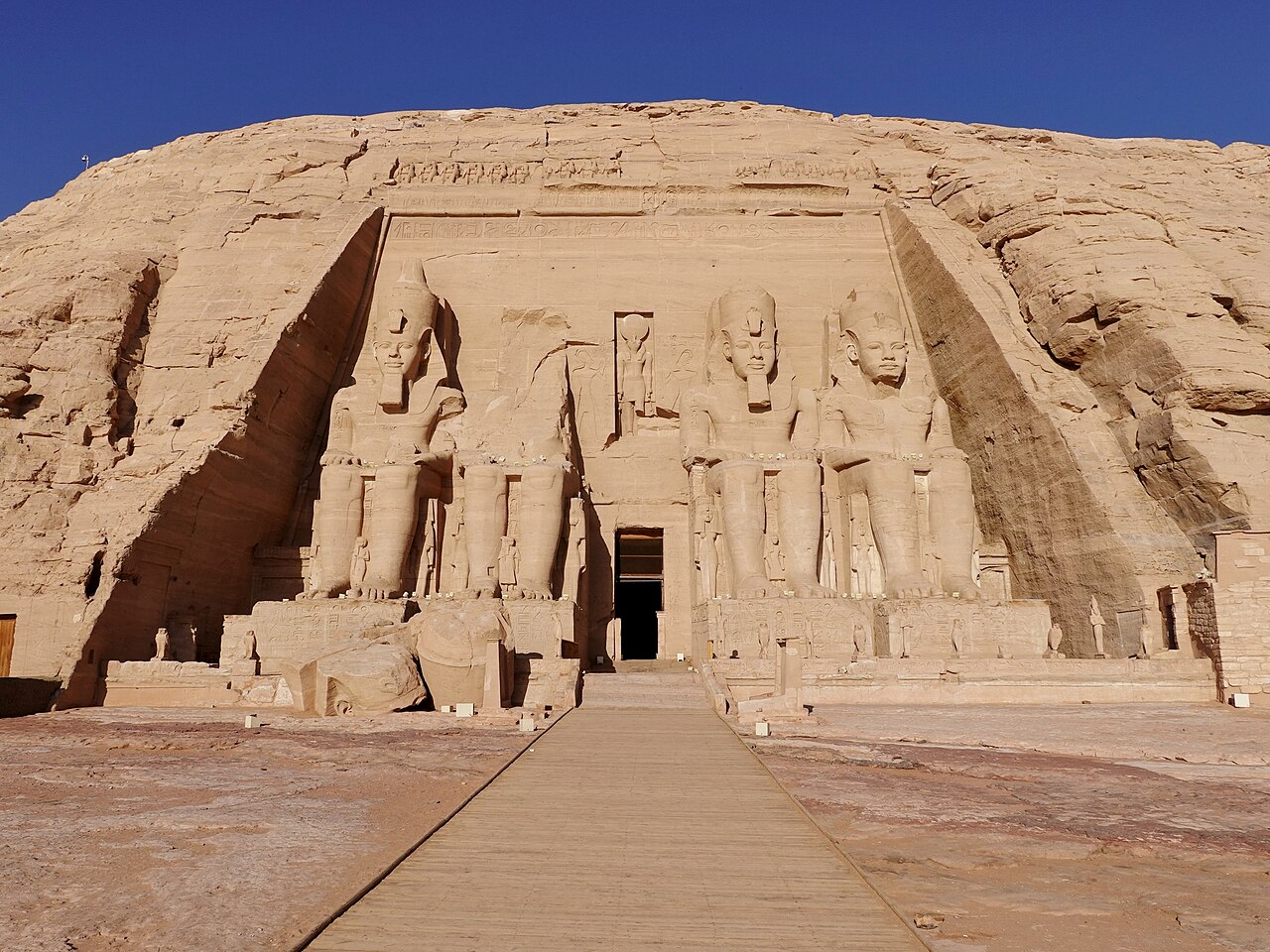
Abu Simbel
Ramesses II · c. 1273 BCE
 Photograph
Secondary source
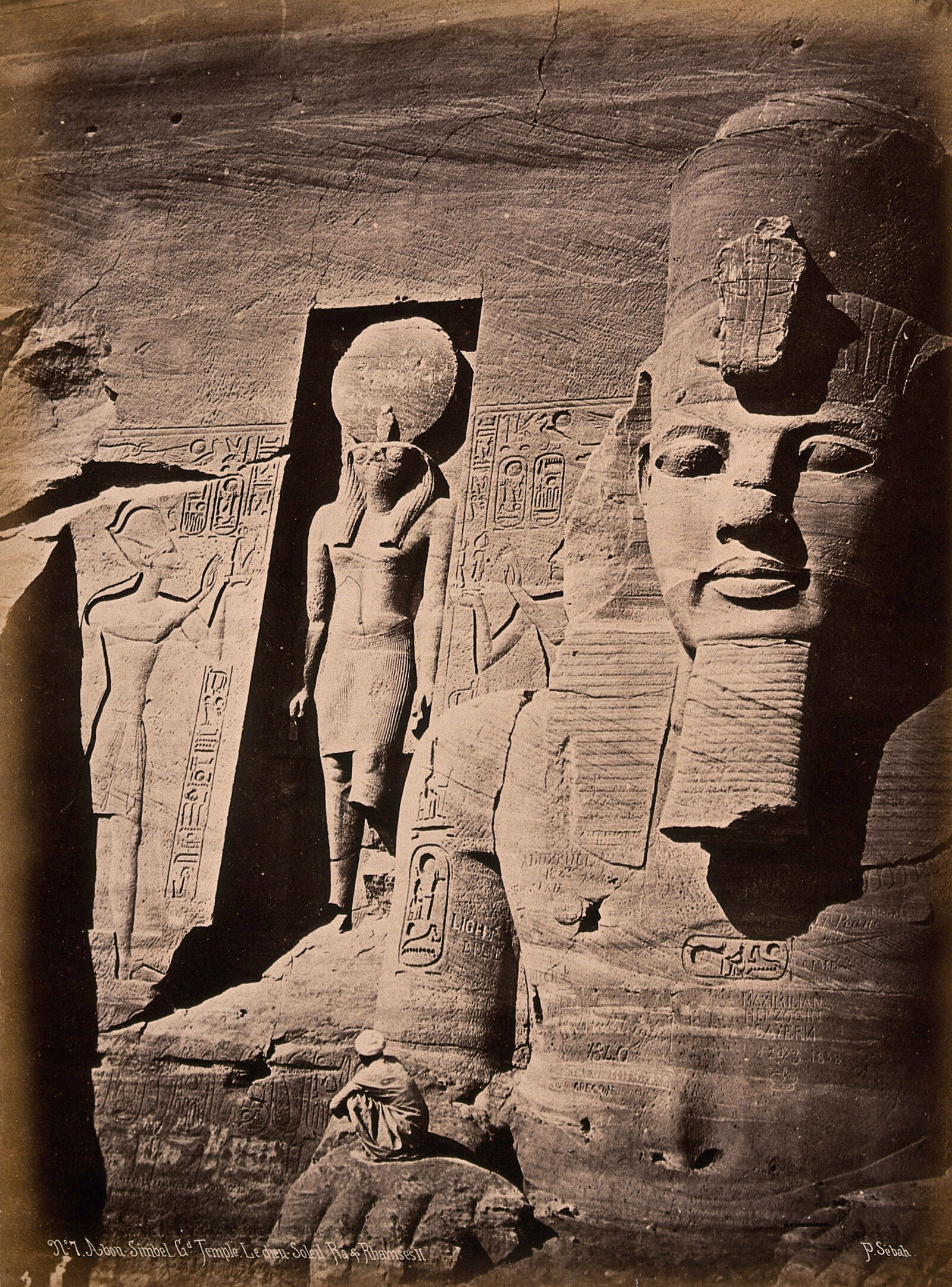
Facade Detail of Abu Simbel Showing Ramesses II and Ra
Pascal Sébah · 1875
 Photograph
Secondary source
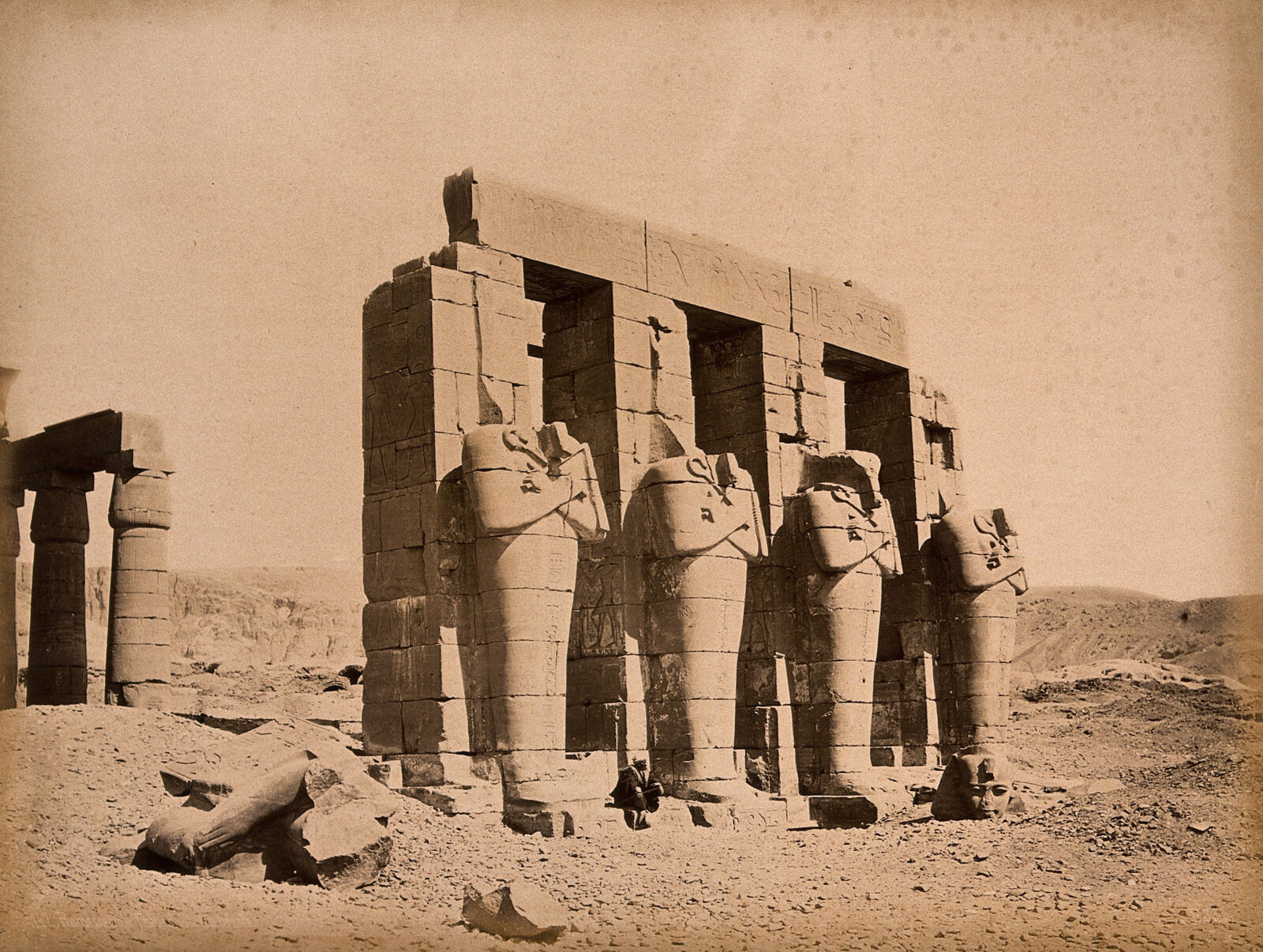
Ramesseum Colossi in Ruins
Pascal Sébah · c. 1875
Ready when you are
Start chatting with Ramses II (Ramses the Great) now.
20 messages free · No credit card · Available in 50+ languages.