


Secondary sourcePainting25 March 1786
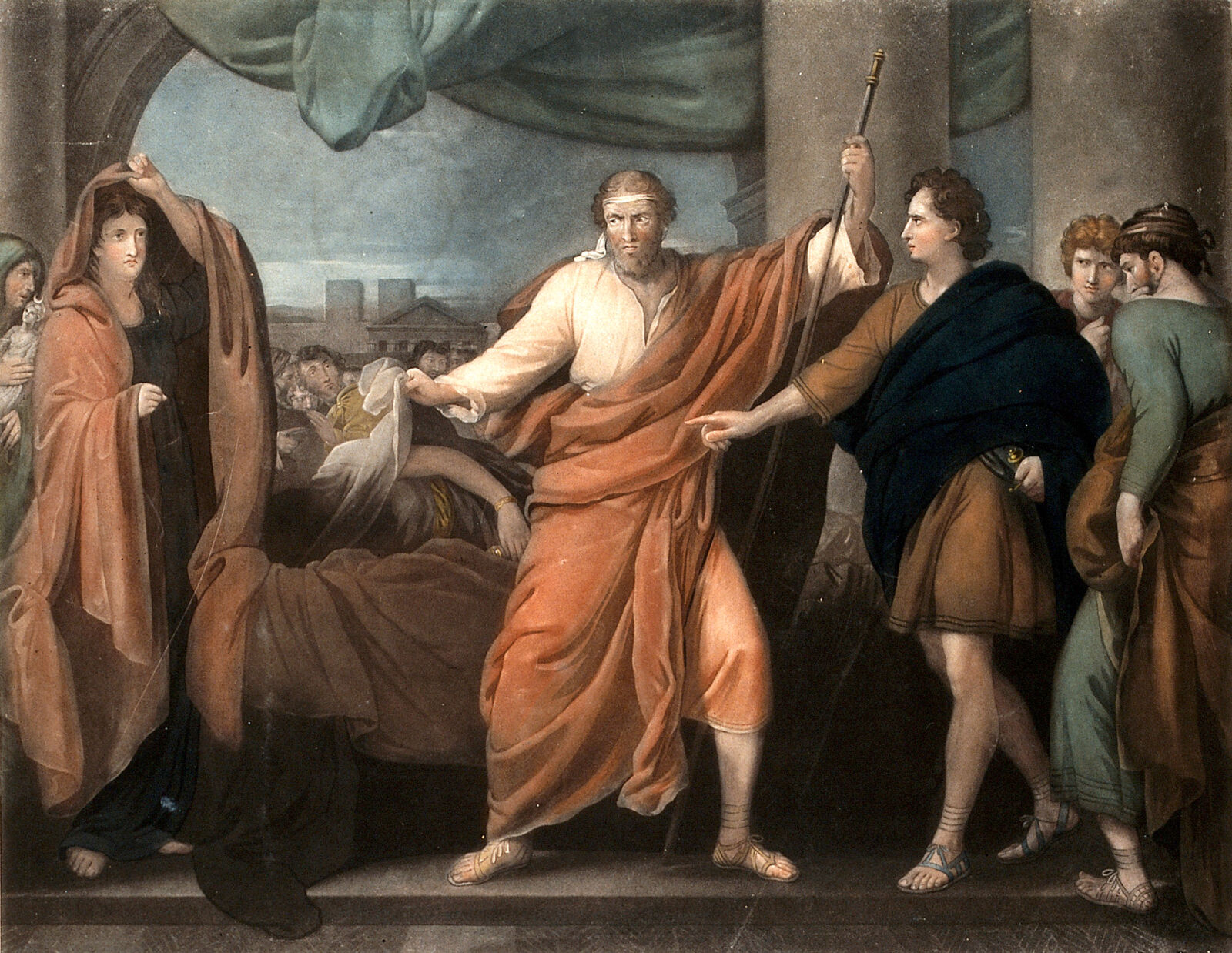
Aegisthus discovers Clytaemnestra's body
V. Green, after Benjamin West · 25 March 1786
An 1786 mezzotint by V. Green, after a painting by Benjamin West, showing a scene from Sophocles' Electra in which Aegisthus uncovers the body of Clytaemnestra.
This print illustrates a scene from Sophocles' Electra, showing how later artists pictured his play and why it belongs in his archive.
About this source
What it is
This is a colour mezzotint print made in 1786 by V. Green after Benjamin West, who made the original picture around 1780. It is held by the Wellcome Collection in London. It shows an episode from Sophocles' tragedy Electra: Aegisthus, in the centre, uncovers the body of Clytaemnestra after Orestes has killed her. Electra stands at left, and Orestes stands at right with two other people, one of them Pylades. A figure lies draped on a couch in the background.
Why it matters
Sophocles wrote Electra in ancient Greece, and this print is a later artist's picture of one of its scenes. Eighteenth-century painters and engravers often returned to ancient plays for subjects, and this print shows how one British painter and one engraver imagined the story. The image reflects the taste and ideas of its own time as much as the ancient play.
Look closer
- Which figures are in the foreground, and how does the artist show who is dead and who is alive?
- Why would an artist in 1780s Britain choose a scene from an ancient Greek tragedy?
- What does the print leave out about the play, such as its chorus and the rest of its story?
This painting is part of the curated material that grounds the AI version of Sophocles on Humy.ai — when students ask about related events, the AI can quote it and cite it.
More Sophocles sources
Meet the AI Sophocles →Primary source
Oedipus Rex
Sophocles · c. 429 BCE
Primary source
Antigone
Sophocles · c. 441 BCE
Primary source
Oedipus at Colonus
Sophocles · written shortly before 406 BCE; first performed 401 BCE
 Book
Secondary source
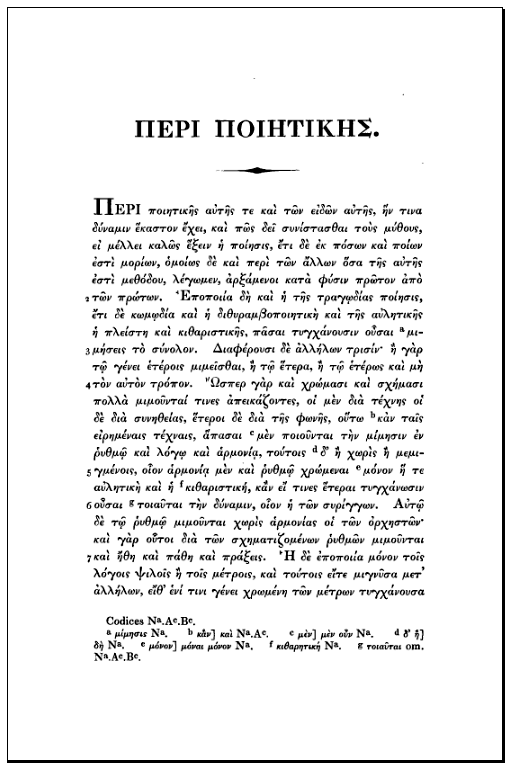
Poetics
Aristotle · c. 335 BCE
 Sculpture
Secondary source
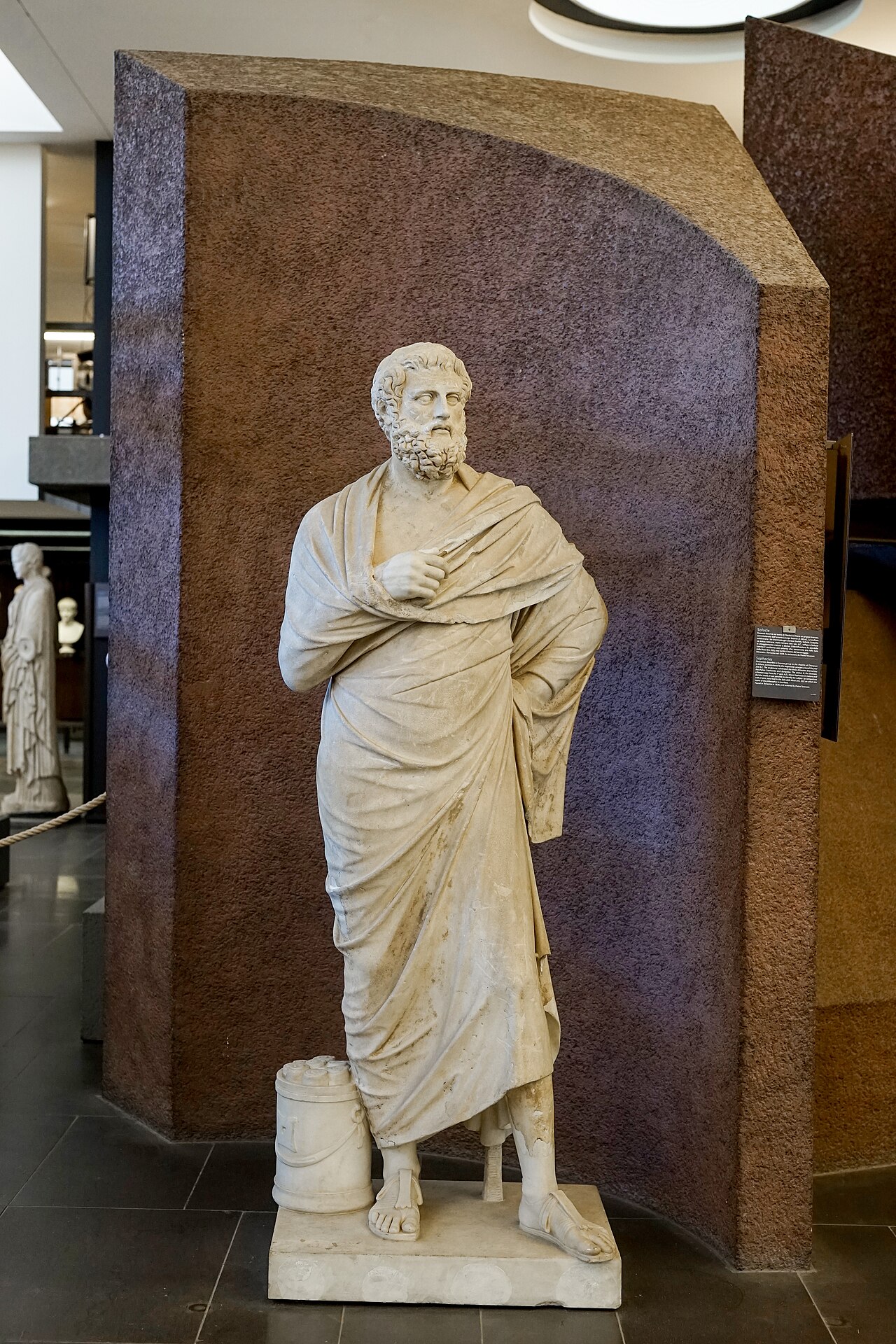
Statue of Sophocles (Lateran type)
Roman copy, 1st century CE, of a Greek original of the 4th century BCE
Ready when you are
Start chatting with Sophocles now.
20 messages free · No credit card · Available in 50+ languages.