Portrait of Sophocles

AI Historical Figure

Sophocles

Ancient Greek tragedian playwright.

Chat with Sophocles via text or voice — in 42 languages, drawing on a curated biography and 78 historical sources. Available 24/7.

Start chatting with Sophocles20 messages free · No credit card
Lived
c. 497–406 BCE
From
Greece
Known for
Literature & writing
Sophocles

Sophocles

Online · responds in seconds

Hello — I'm Sophocles. Ancient Greek tragedian playwright. What would you like to ask me?

20 messages free · No credit card · Powered by Humy.ai

Live preview · Switch between 42 languages above · Send a message to continue in the app

Multilingual

Talk to Sophocles in 42 languages

Ask Sophocles questions in any language below, and the rest of Humy's app speaks it too. Pick yours to open the chat in that language.

Also in German (Austria), German (Switzerland), English (UK), English (Australia), English (Canada).

The sources behind this AI

78 sources · 48 books · 11 documents · 7 paintings · 5 photographs · 3 sculptures · 3 artifacts · 1 speech

Sophocles doesn’t improvise from thin air. The AI is grounded in 78 curated historical sources students can inspect. Open any of them to see what informs the conversation.

Book

Primary source

Oedipus Rex

Sophocles · c. 429 BCE

Book

Primary source

Antigone

Sophocles · c. 441 BCE

Book

Primary source

Oedipus at Colonus

Sophocles · written shortly before 406 BCE; first performed 401 BCE

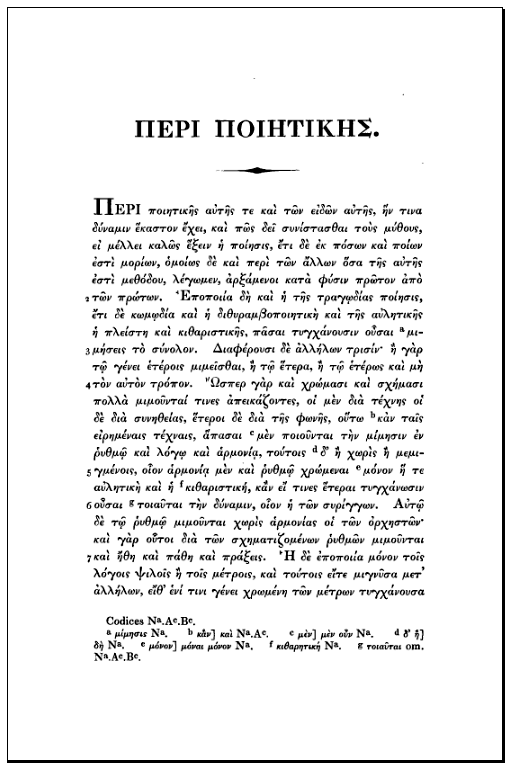
Scanned first page of Aristotle's Poetics in Greek, titled 'ΠΕΡΙ ΠΟΙΗΤΙΚΗΣ' in large capitals, with a decorative rule below and a dense block of italic Greek text, with critical footnotes at the bottom.Book

Secondary source

Poetics

Aristotle · c. 335 BCE

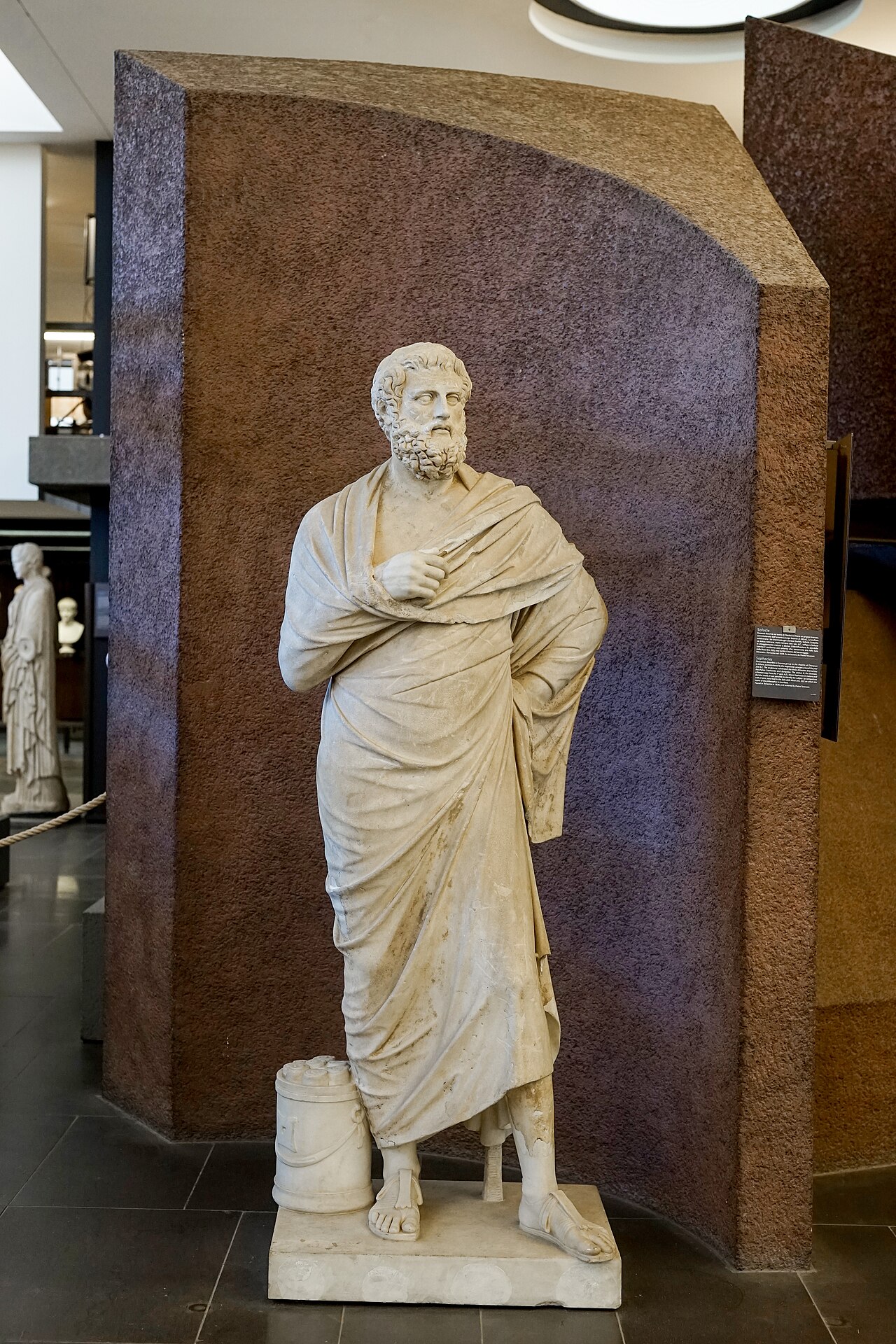
Marble statue of a bearded man in a draped cloak, standing with one arm bent across his chest and the other at his side, with a cylindrical container at his left foot. The statue stands on a rectangular base in a museum gallery, in front of a brown textured wall.Sculpture

Secondary source

Statue of Sophocles (Lateran type)

Roman copy, 1st century CE, of a Greek original of the 4th century BCE

Dark maroon book cover with a faint embossed emblem in the center. A gray Stack Annex label with call number S 052 994 is at top left, and a white barcode label reading A 000 114 435 1 is on the left edge. A light blue label with partial text reading 'nia' is at bottom left.Book

Primary source

The Frogs

Aristophanes · 405 BCE

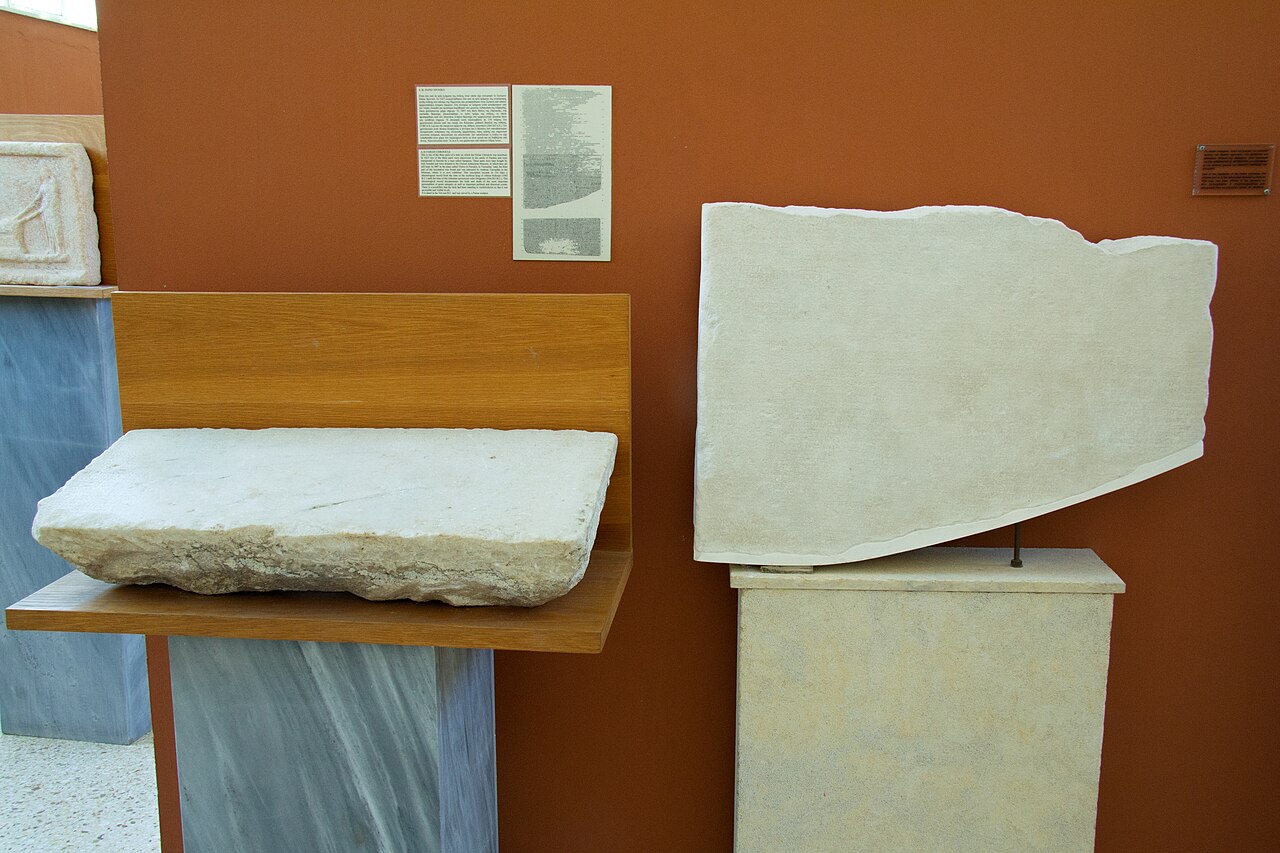
Museum display of two marble stone slabs against an orange wall. On the left, an irregular white marble fragment rests on a wooden shelf over a grey marble pedestal. On the right, a larger pale marble slab with a rough upper edge sits on a tall pale pedestal. Small information placards are mounted on the wall above.Document

Secondary source

Parian Chronicle

c. 264/263 BCE

Book

Secondary source

Life of Pericles

Plutarch · c. 100 CE

Book

Primary source

Electra

Sophocles · c. 420-414 BCE (exact date disputed)

Book

Primary source

Philoctetes

Sophocles · 409 BCE

Book

Primary source

Ajax

Sophocles · c. 450s-440s BCE

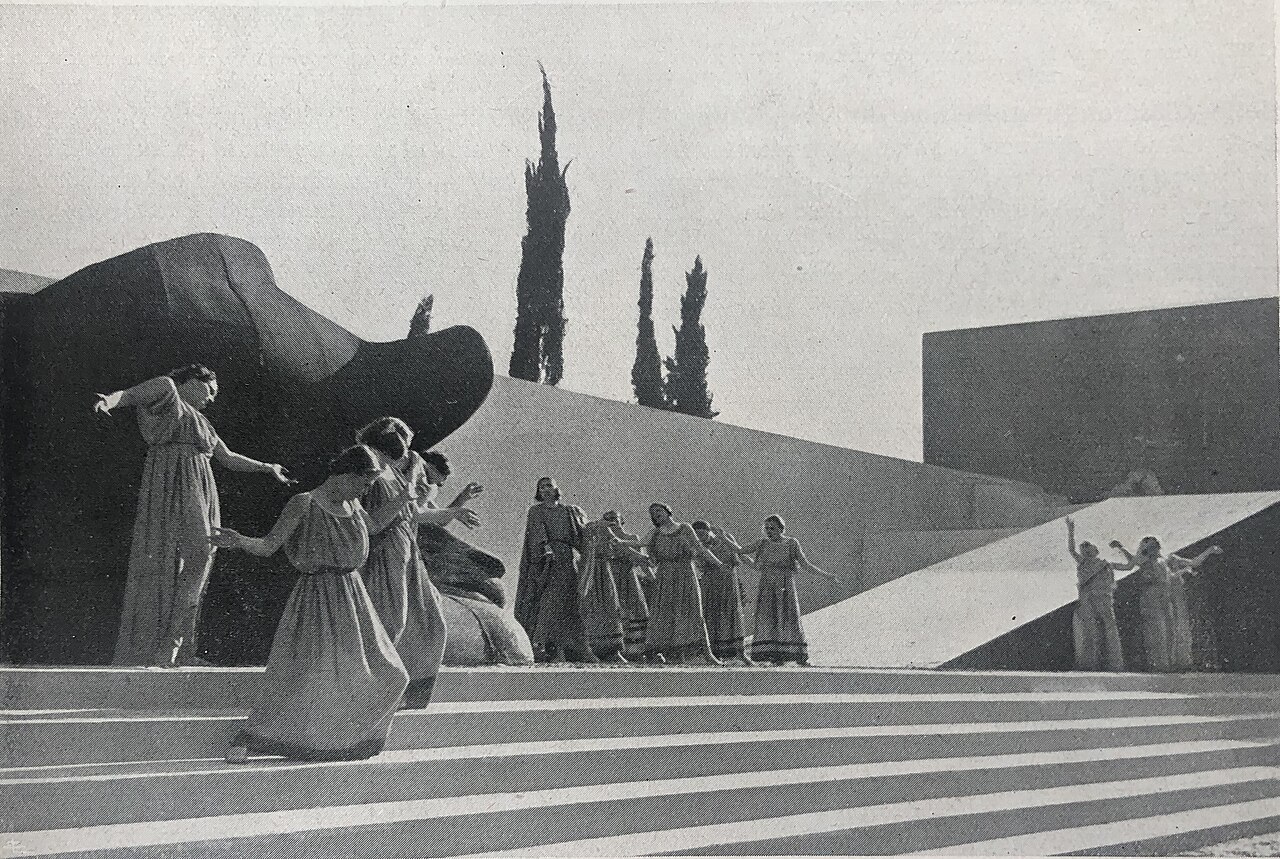
Black and white photo of a 1933 stage production: women in long draped robes move across wide striped stone steps before a large dark abstract sculpture, with tall cypress trees and a modern wall behind.Book

Primary source

Women of Trachis

Sophocles · c. 450-425 BCE

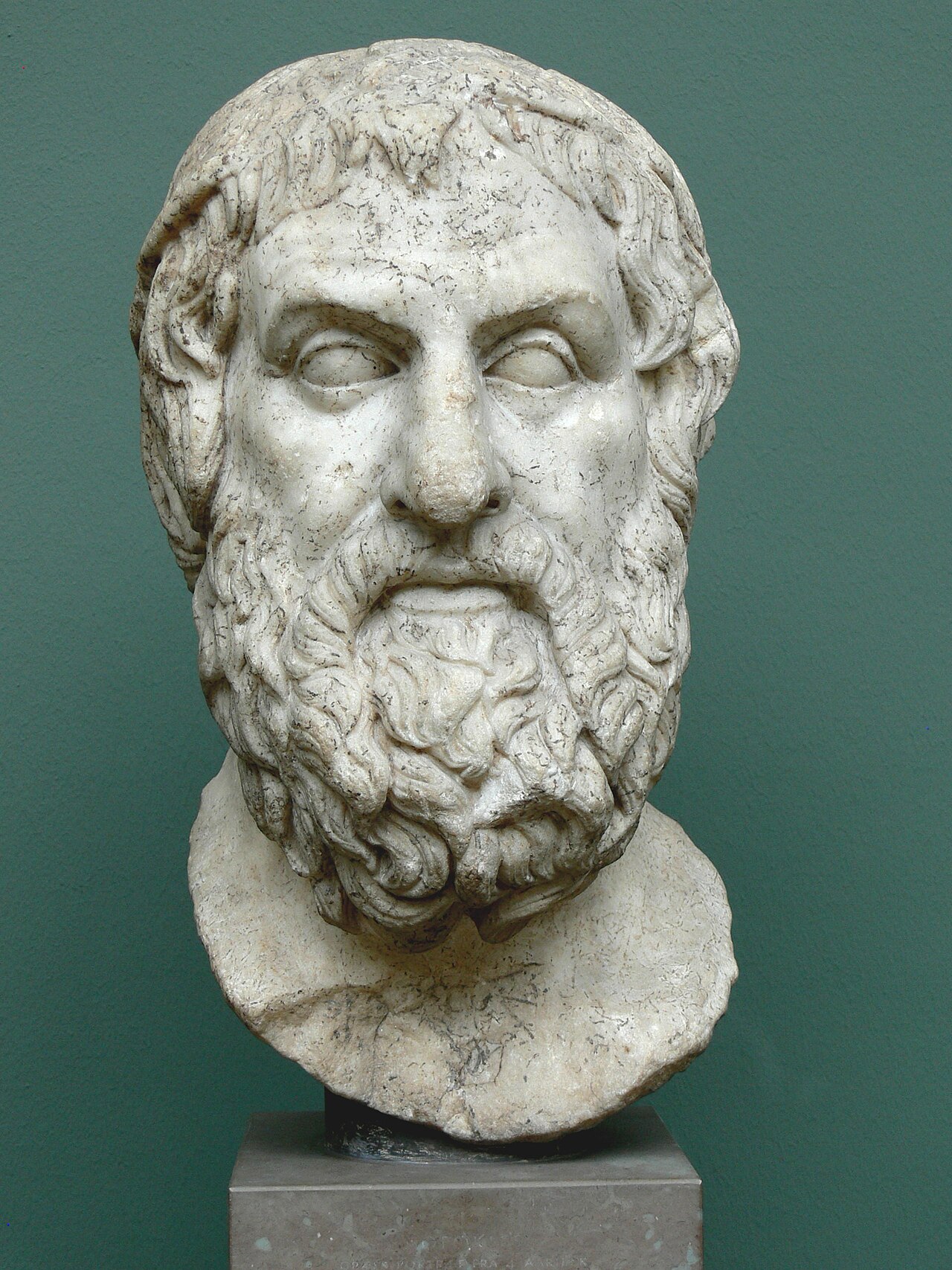
Marble bust of a bearded man with curly hair and deeply carved eyes, set against a green wall on a stone pedestal. The bust shows the head, neck and upper chest.Sculpture

Secondary source

Portrait of Sophocles

Roman copy after a Greek original of c. 270 BC

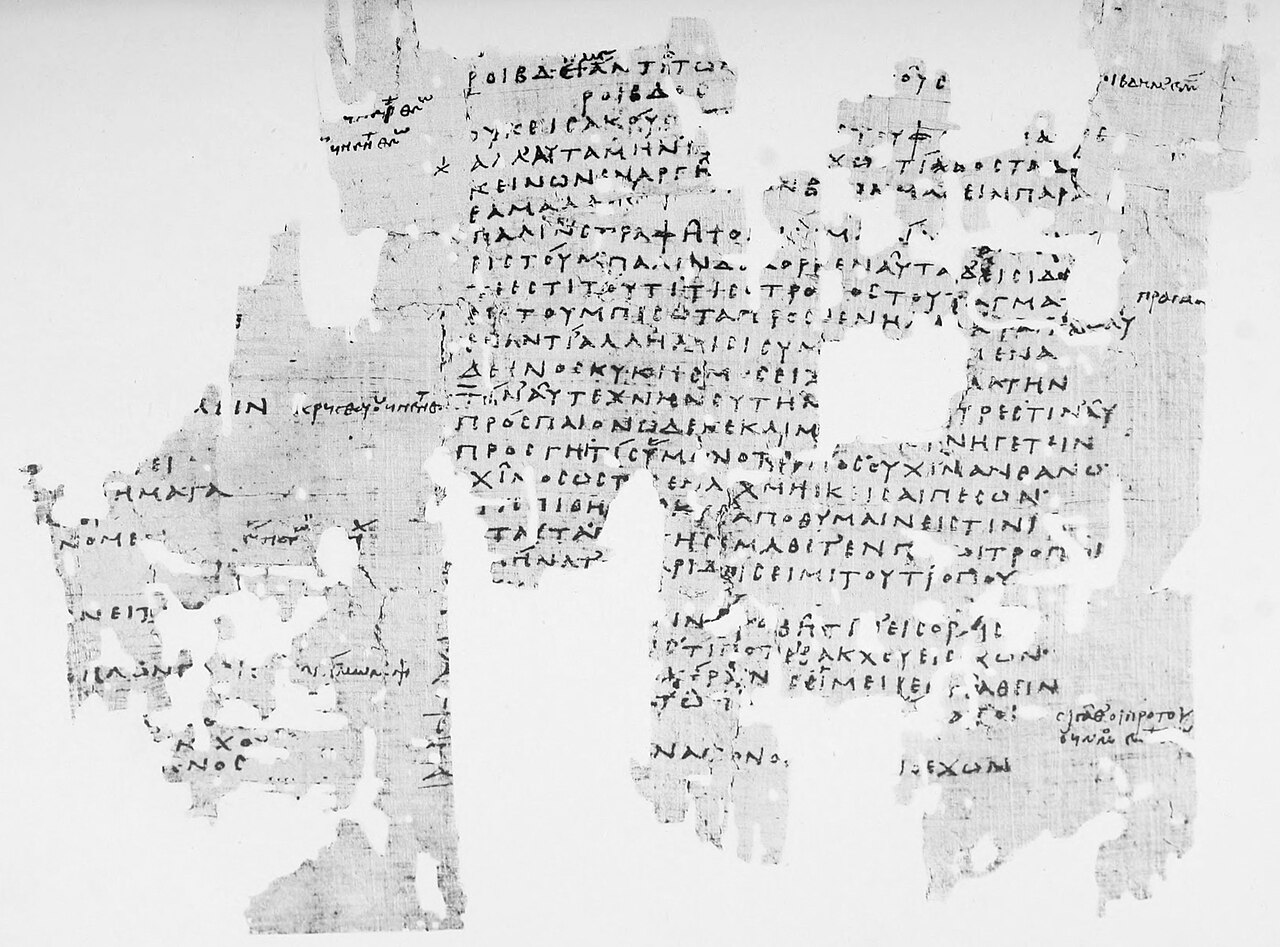
Black-and-white scan of a fragmentary papyrus with several columns of ancient Greek uncial text in dark ink on a pale background. Torn and damaged edges, with gaps in the surface.Document

Primary source

Ichneutae

Sophocles · 2nd century CE (copy of a 5th-century BCE play)

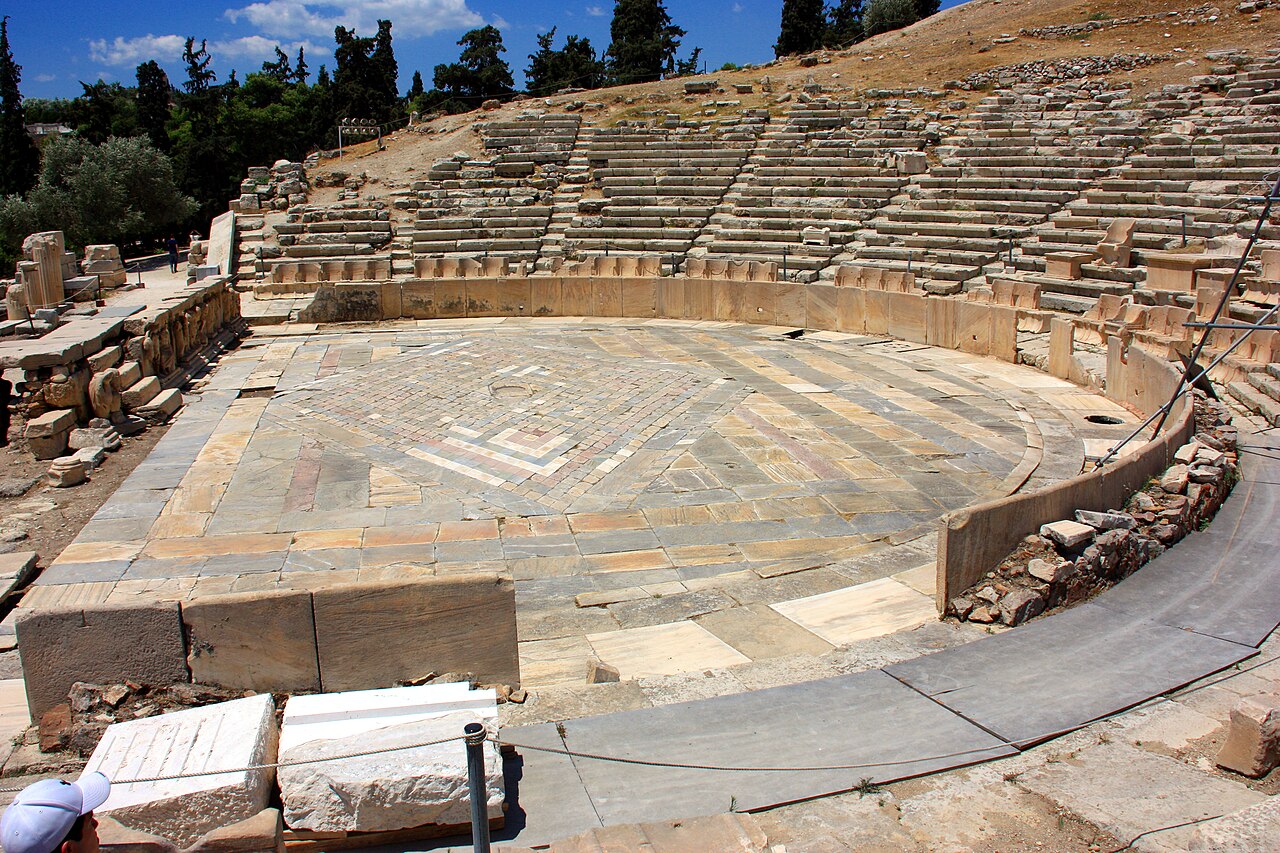
Stone-tiered seating rising up a hillside above a circular stone-paved orchestra with a mosaic-like patterned floor. A low curved stone wall encloses the orchestra, and a few carved stone blocks lie in the foreground under blue sky with trees.Artifact

Primary source

Theatre of Dionysus

6th century BCE onward

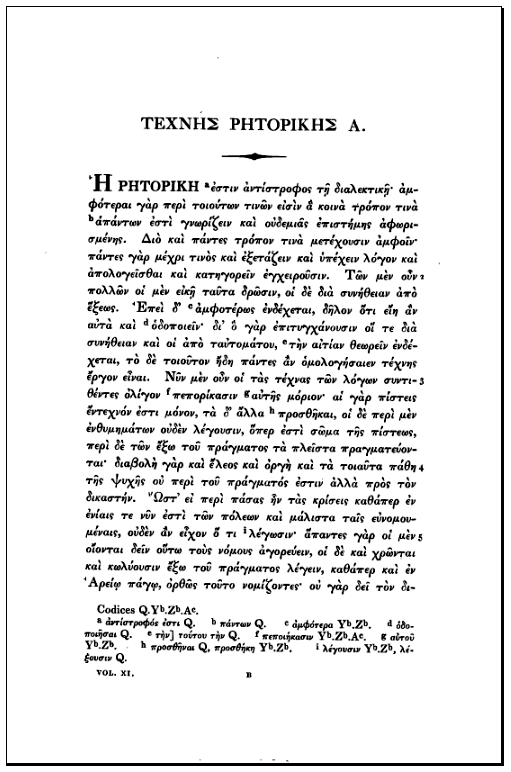
Printed page of Aristotle's Rhetoric in Greek, titled ΤΕΧΝΗΣ ΡΗΤΟΡΙΚΗΣ Α, with the opening paragraph in Greek type, footnotes listing variant readings at the bottom, and 'VOL. XI' and page number 8 at the foot.Book

Secondary source

Rhetoric

Aristotle · 4th century BCE

Book

Secondary source

Peace

Aristophanes · 421 BCE

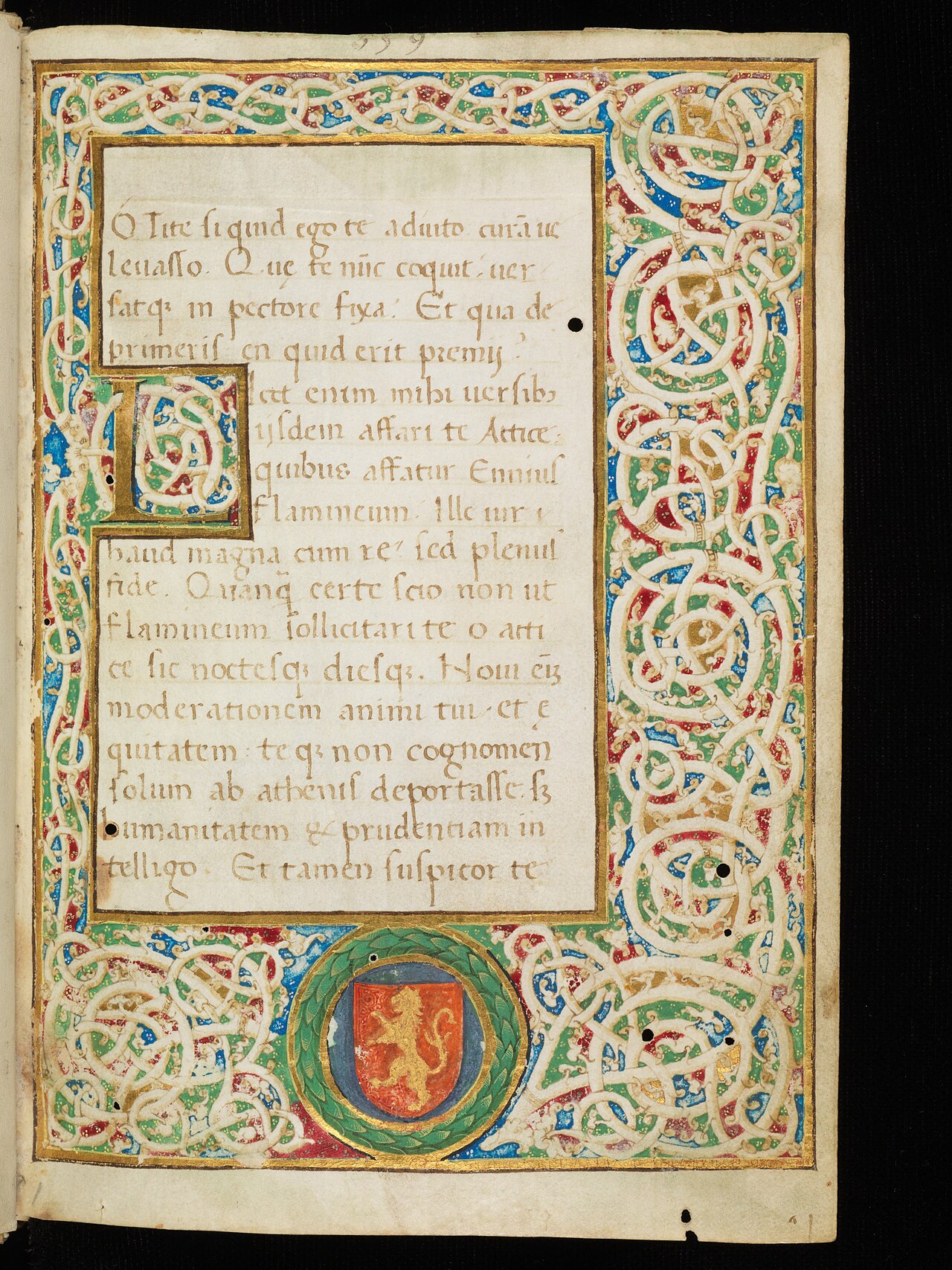
Manuscript page with handwritten Latin text in brown ink inside a gold-ruled text block. The page has green, red, blue and gold interlace borders, a decorated initial letter, and a shield with a gold lion on red at the bottom.Book

Primary source

Cato Maior de Senectute

Cicero · 44 BCE

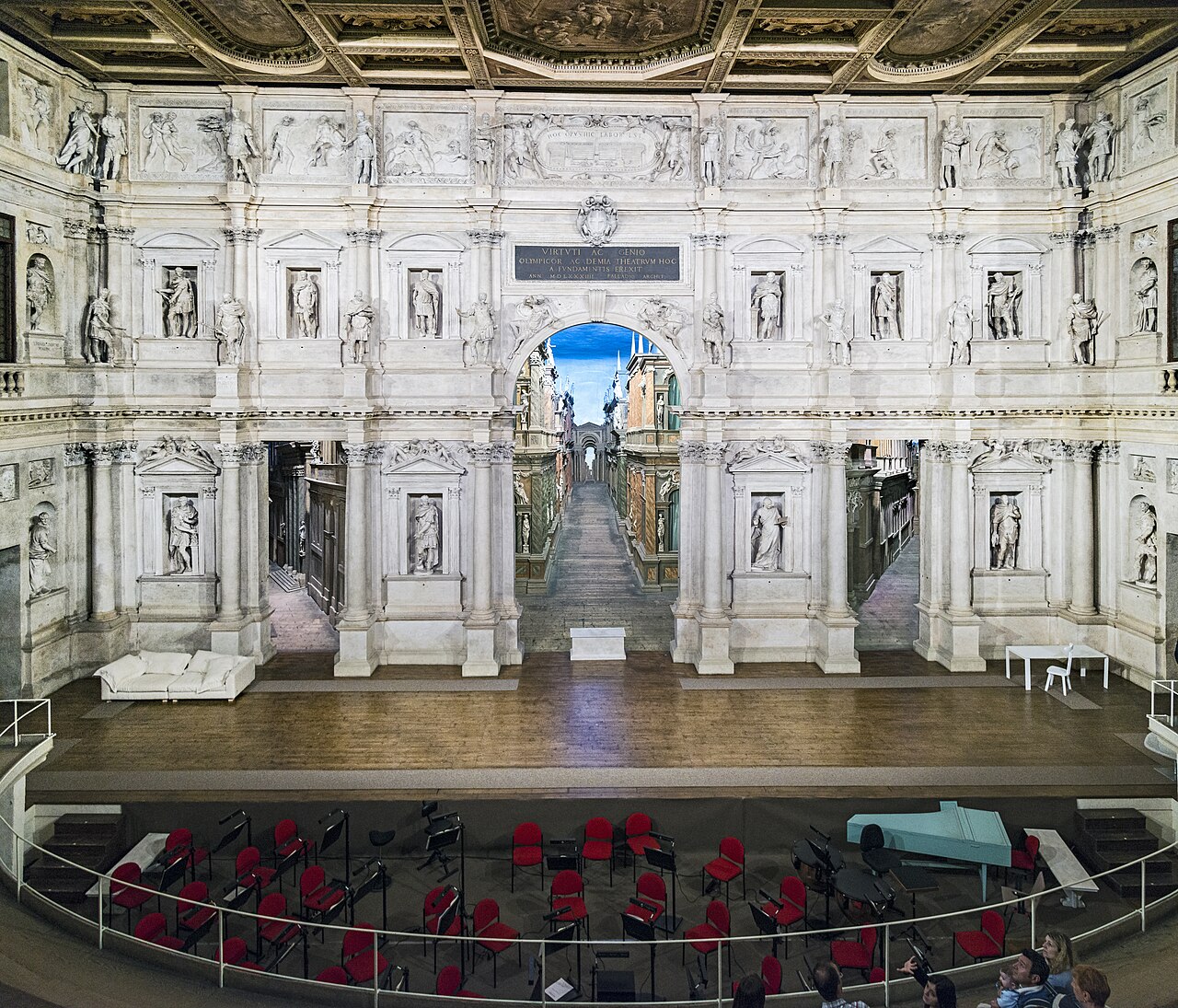
Interior of the Teatro Olimpico in Vicenza: a tiered stone stage wall with statues, niches, and a central arch opening onto painted street perspectives, with an empty wooden stage and red-seated orchestra area below.Artifact

Secondary source

Olympic Theatre

Andrea Palladio · 1580-1585 (opened 1585)

Book

Secondary source

Life of Cimon

Plutarch

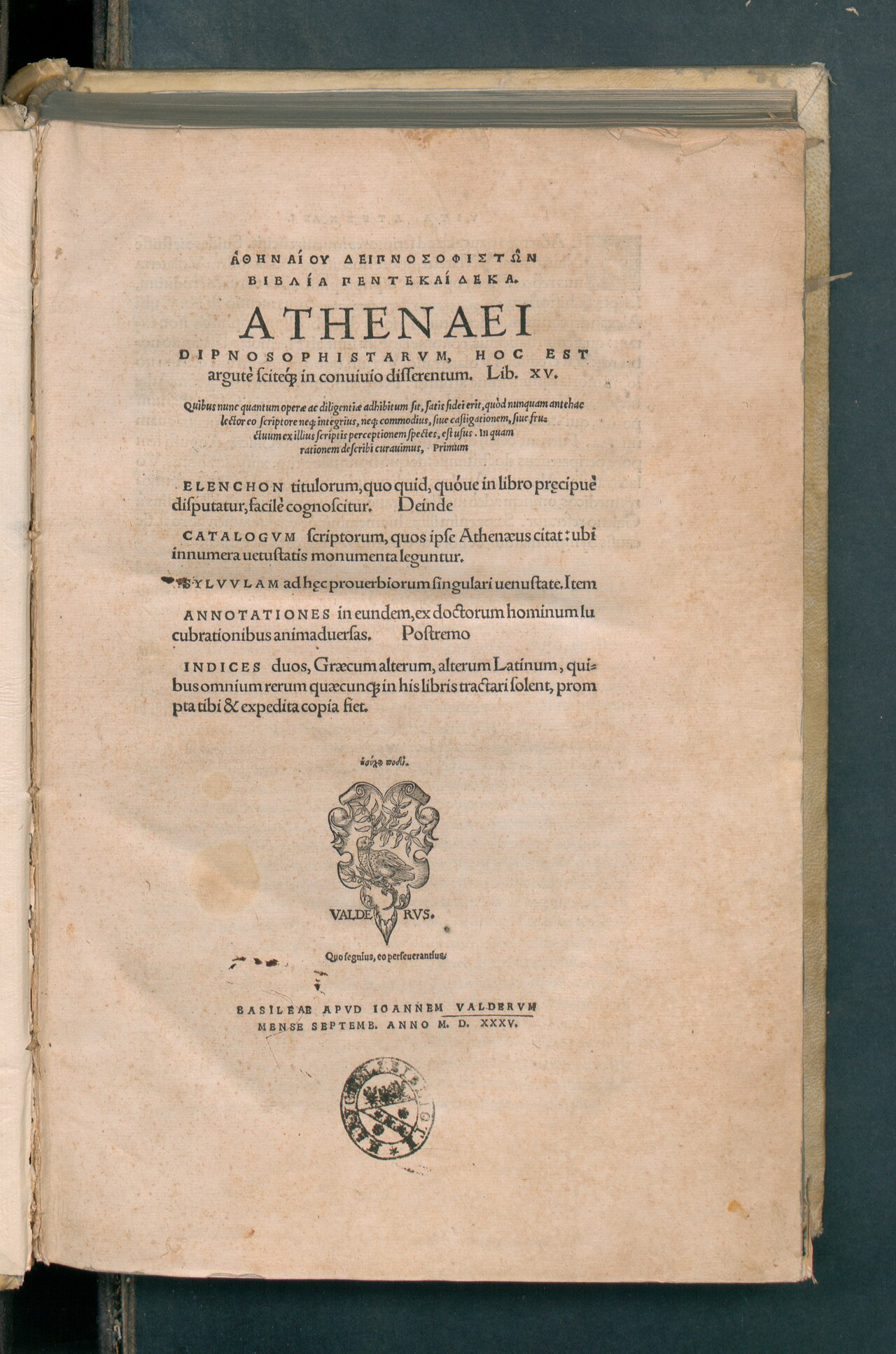
Title page of a 1535 Basel printed edition of Athenaeus's Deipnosophistae, Book XV. Greek and Latin title text in black letter and roman type, a publisher's woodcut device with the name Valderus, and a round ink stamp at lower center.Book

Secondary source

Deipnosophistae

Athenaeus · c. 228

Book

Secondary source

Antigonae

Friedrich Hölderlin · 1804

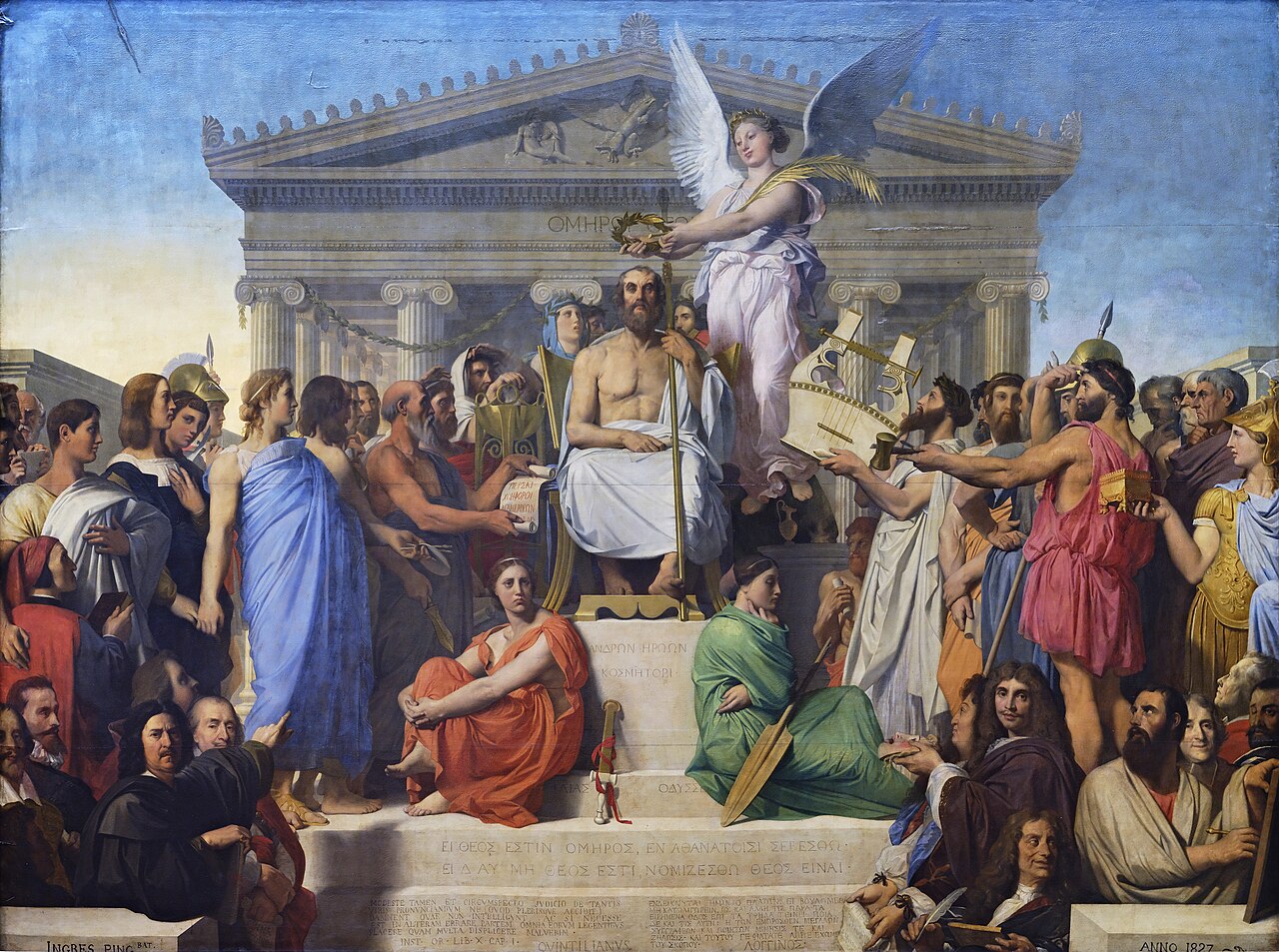
Ingres's painting The Apotheosis of Homer: a seated, bare-chested figure of Homer with a scepter at center, crowned by a winged Victory on a temple facade, surrounded by a crowd of figures from antiquity and later eras, with inscriptions on a stone pedestal below.Painting

Secondary source

The Apotheosis of Homer

Jean-Auguste-Dominique Ingres · 1827

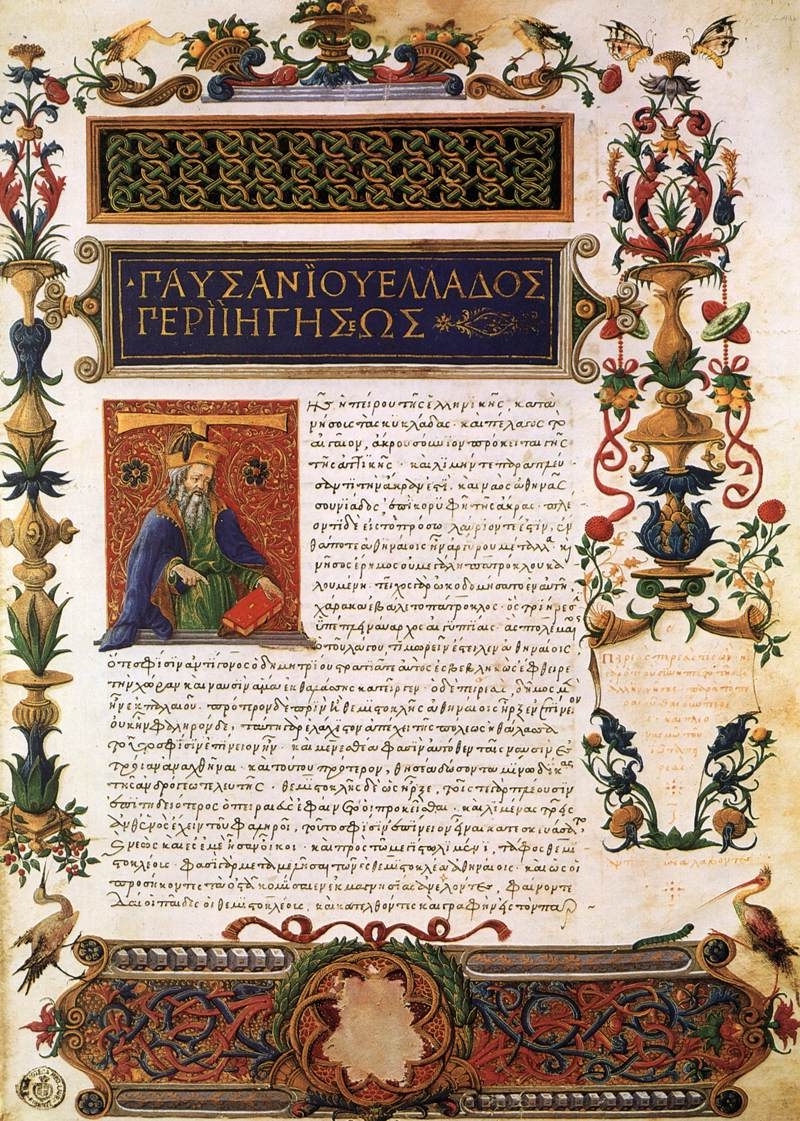
Illuminated manuscript page with ornate painted borders, a dark blue title panel in gold Greek capitals reading Pausanias' Description of Greece, a painted portrait of a bearded old man in a blue robe holding a red book, and columns of Greek text.Book

Secondary source

Description of Greece

Pausanias · c. 2nd century AD

Scan of a page from a printed Greek book with two columns of dense Greek text, a centered heading at top left and right, and section headings with entries in bold-like lettering. The page appears aged with a black-and-white, slightly grainy scan.Document

Secondary source

Suda

various authors · c. 1000

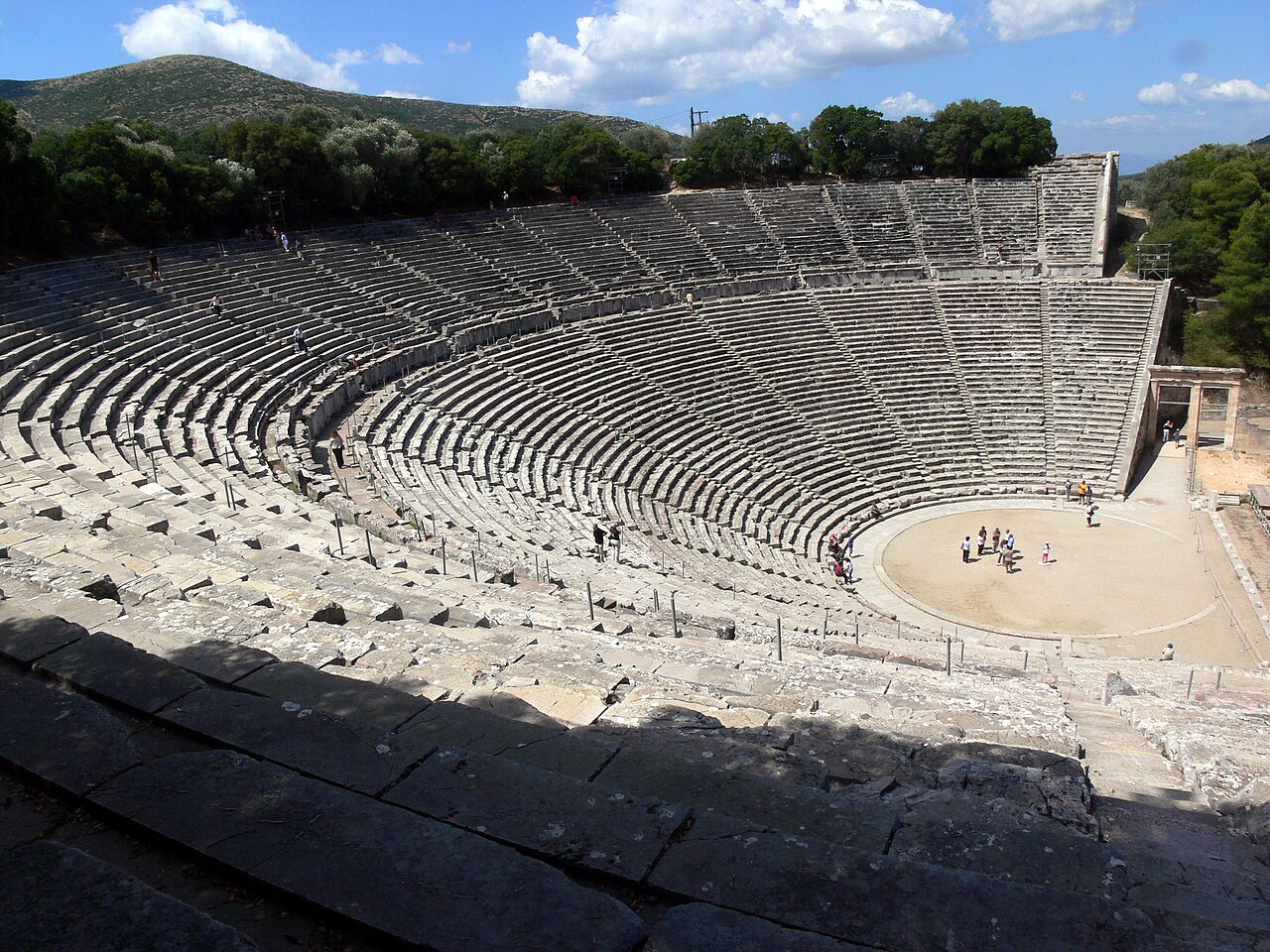
Wide view of the ancient Theatre of Epidaurus: tiers of weathered stone seating curve around a circular orchestra floor where a few visitors stand. Green hills and trees lie beyond the seats under a blue sky.Artifact

Secondary source

Ancient Theatre of Epidaurus

Polykleitos the Younger · c. 340-300 BCE

Book

Secondary source

Antigone

Sophocles · 1527 (translation)

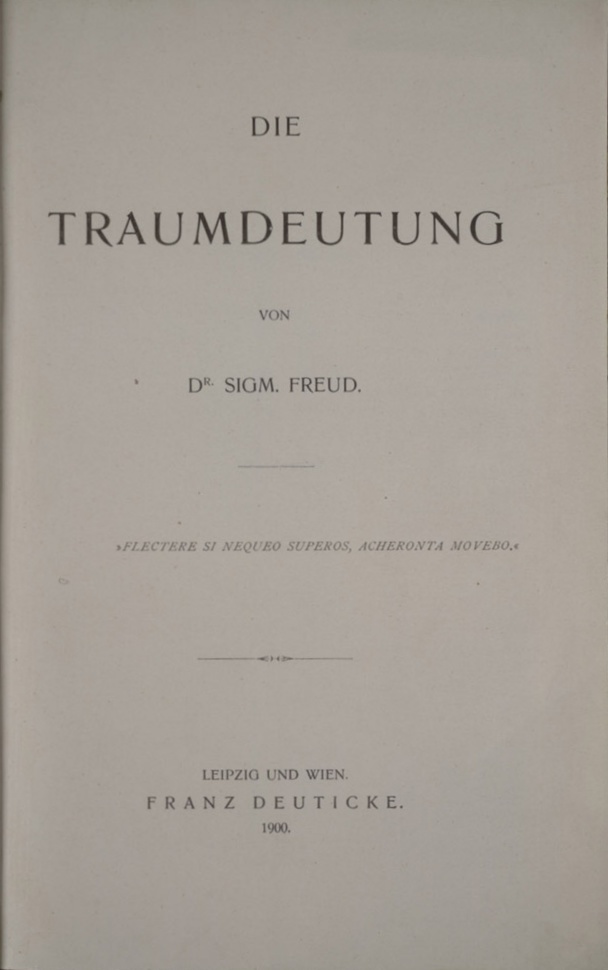
Title page of the German book Die Traumdeutung by Dr. Sigm. Freud, printed in Leipzig und Wien by Franz Deuticke, dated 1900. Includes a Latin epigraph in italics: Flectere si nequeo superos, Acheronta movebo.Book

Secondary source

The Interpretation of Dreams

Sigmund Freud · 1900

Book

Primary source

The Ajax of Sophocles, English and Greek

Sophocles · 1896 (edition)

Oedipus, King of ThebesBook

Primary source

Oedipus, King of Thebes

Sophocles · 1911

Book

Primary source

Oedipus Tyrannus (Οιδίπους Τύραννος)

Sophocles · c. 428 BCE

Book

Primary source

Oedipus at Colonus (Οιδίπους επί Κολωνώ)

Sophocles · before 406 BCE, performed 401 BCE

Book

Primary source

Antigone

Sophocles · 441 BCE

Book

Primary source

Ajax

Sophocles · c. 450-440 BCE, performed c. 442 BCE

Book

Primary source

Electra

Sophocles · 420-406 BCE

Book

Primary source

Trachiniae (Women of Trachis)

Sophocles · c. 450-425 BCE

Book

Primary source

Philoctetes

Sophocles · 409 BCE

Book

Secondary source

The Seven Plays in English Verse

Lewis Campbell (translator); Sophocles (original author) · 1906 (translation)

Book

Secondary source

Antigone (Greek text, Chrestomanos edition)

Sophocles; translated by Konstantinos Chrestomanos · 1912 (edition)

Book

Secondary source

Sophocles: Life of Sophocles

Lewis Campbell · 1879

Book

Secondary source

Sophocles: Introduction

Clifton Wilbraham Collins · 1871

Book

Secondary source

Sophocles: Introduction

Francis Storr · 1912

Oedipus Coloneus, Shuckburgh EditionBook

Primary source

Oedipus Coloneus, Shuckburgh Edition

Sophocles · 1903

ElectraBook

Primary source

Electra

Sophocles · 1870

Book

Secondary source

Life of Socrates

Diogenes Laertius

Book

Secondary source

Sophocles

Clifton Wilbraham Collins · 1871

Book

Secondary source

The Life and Writings of Sophocles

E. H. Plumptre · 1878

Book

Secondary source

Sophocles

Lewis Campbell · 1879

Book

Secondary source

Sophocles, chapter in A History of Ancient Greek Literature

Gilbert Murray · 1901

Document

Tertiary source

Sophocles entry, Dictionary of Greek and Roman Biography

Philip Smith · 1870

Document

Secondary source

On a Passage of the Philoctetes of Sophocles

Friedrich Gottlieb Welcker · 1833

Speech

Secondary source

The Genius of Sophocles, in Essays and Addresses

Richard Jebb · 1907

Book

Primary source

Ajax

Sophocles

Book

Primary source

Philoctetes

Sophocles · first performed 409 BC

Book

Primary source

Women of Trachis

Sophocles

Book

Secondary source

On the Irony of Sophocles

Connop Thirlwall · 1833

Book

Secondary source

The Genius of Sophocles

Richard Claverhouse Jebb · 1907

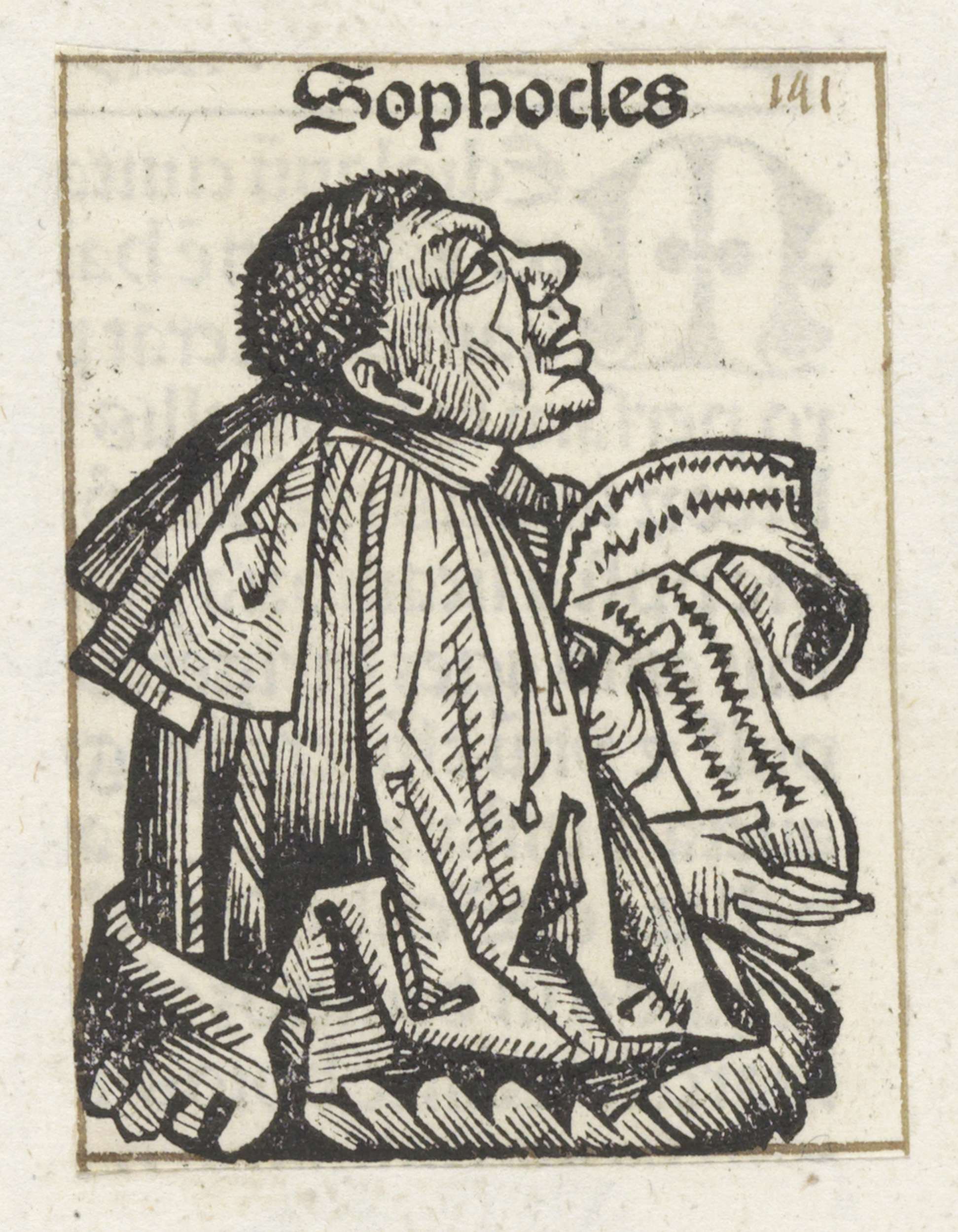
Woodcut print of a bearded old man in a long robe and cloak, shown in profile facing right, holding a large rolled scroll. The label 'Sophocles' is printed above, with the number 141 in the upper right corner.Painting

Secondary source

Sophocles Portrait Print in a 1493 Album

1493

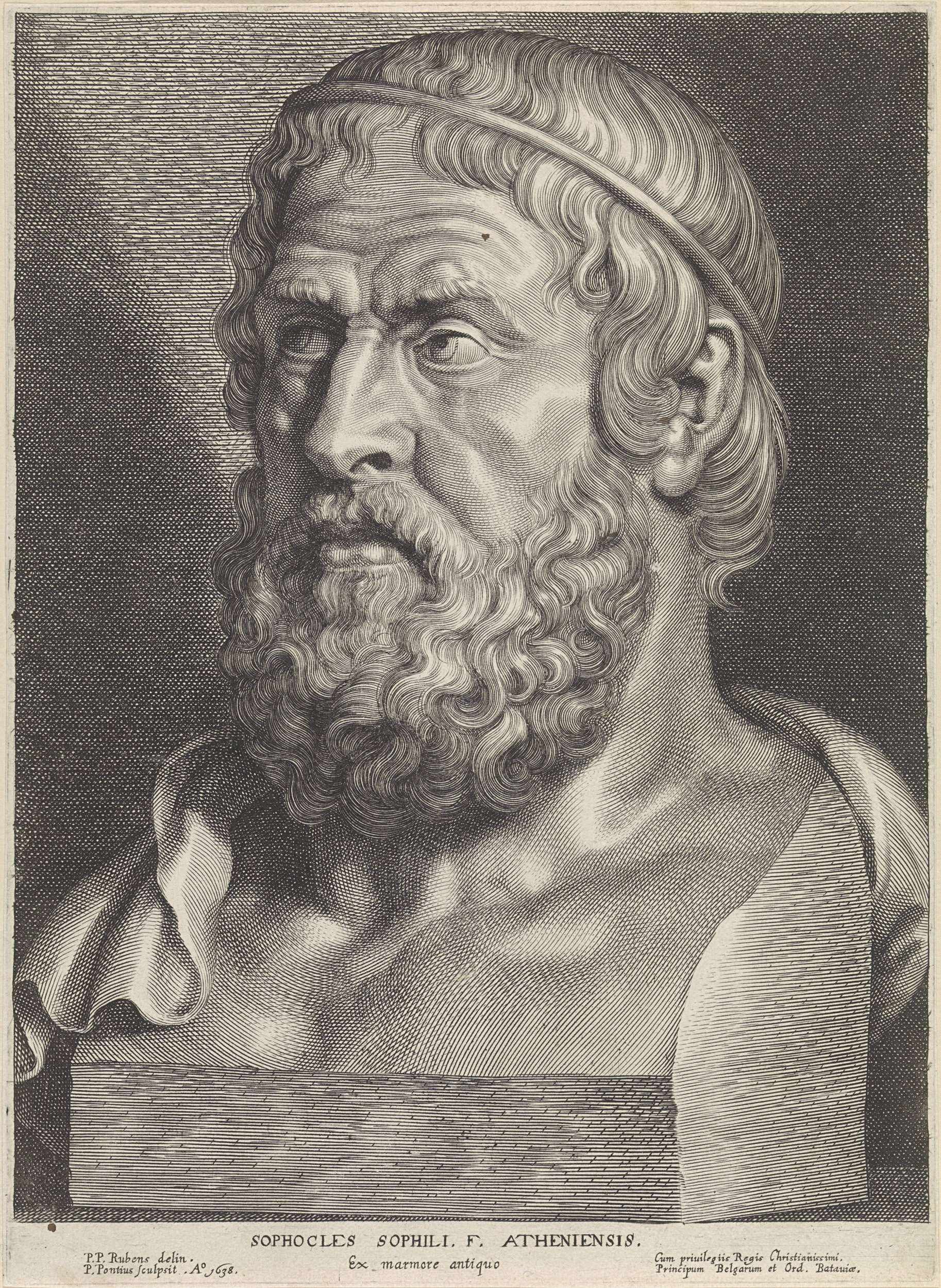
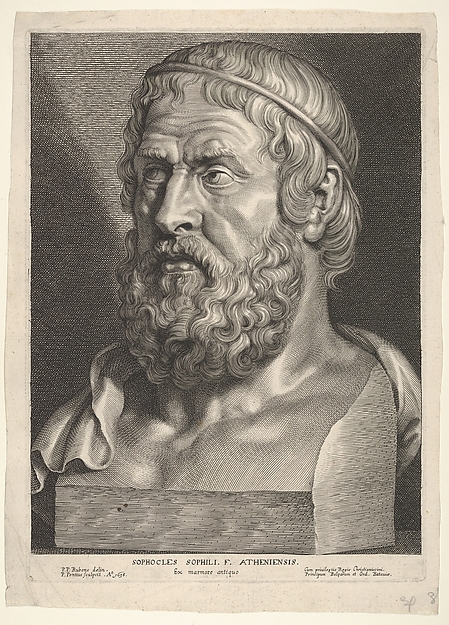
Engraving of a bearded, curly-haired man in profile-turned bust form, wearing a headband and draped garment, set against dark hatched background. Caption reads 'SOPHOCLES SOPHILI F. ATHENIENSIS' with 'Ex marmore antiquo' and credits P.P. Rubens delin. and P. Pontius sculpsit, 1638.Painting

Secondary source

Print of an Antique Bust of Sophocles

Paulus Pontius · 1638

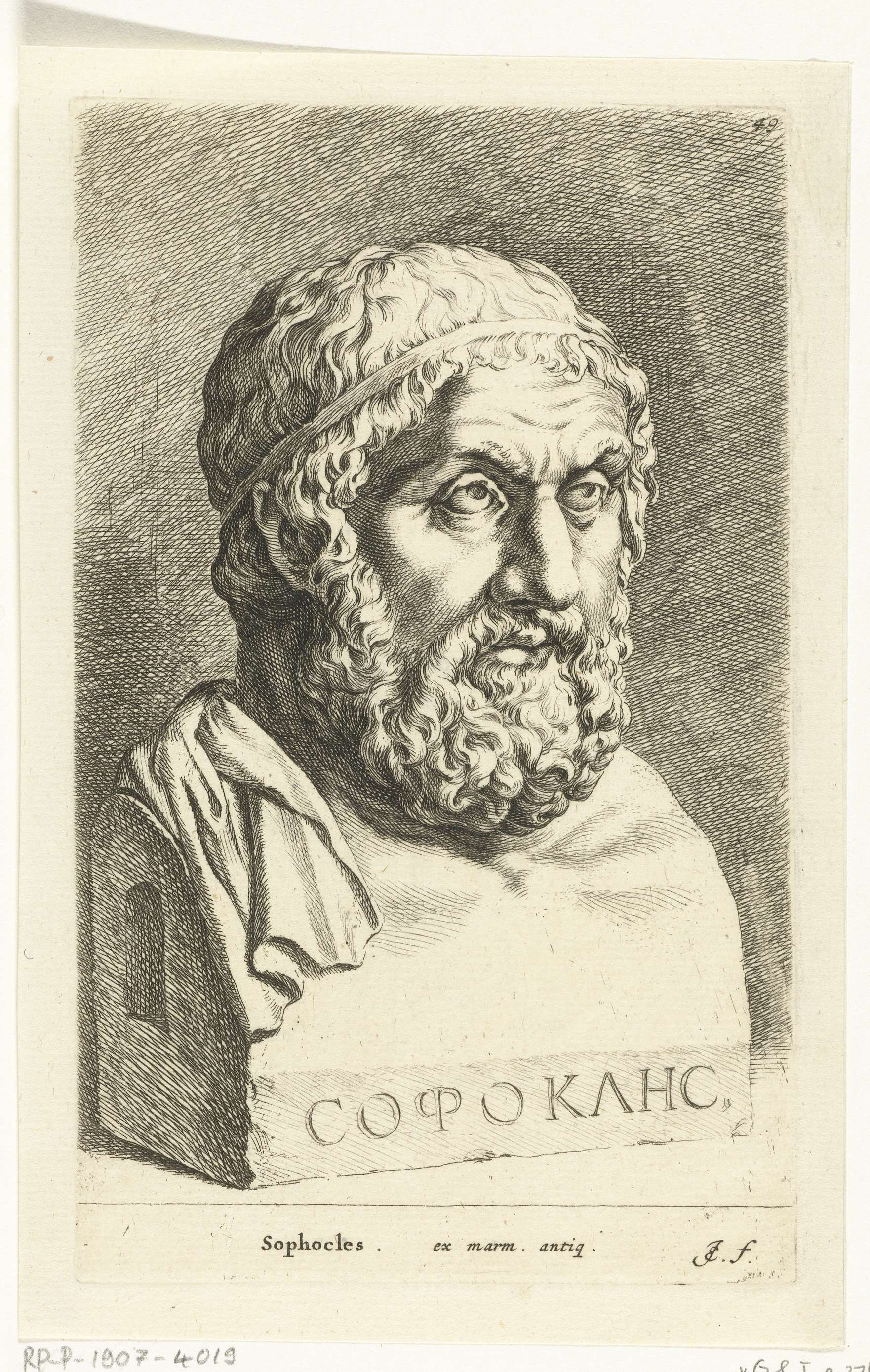
Black and white etching of a bearded man's bust in profile-turned-three-quarter view, with curly hair and a bound headband, draped garment on shoulder. Inscribed Greek letters on the plinth read ΣΟΦΟΚΛΗΣ. Caption below reads Sophocles, ex marm. antiq.Painting

Secondary source

Print of a Portrait Bust of Sophocles

Engraved print of a bearded man's head and shoulders in profile-to-front view, with curly hair bound by a fillet, set on a stone bust base. Inscription below reads SOPHOCLES SOPHILI F. ATHENIENSIS.Painting

Secondary source

Sophocles, Engraving by Paulus Pontius

Paulus Pontius · 1638

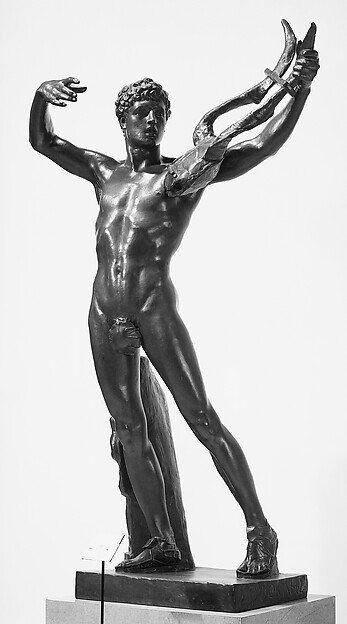
Black and white photo of a dark bronze statue of a nude young man standing on a rectangular base, one arm raised high holding a curved lyre-like object, the other arm extended outward, head turned upward, against a plain light background.Sculpture

Secondary source

The Young Sophocles Leading the Chorus

John Talbott Donoghue · 1885, cast 1927

Document

Secondary source

Sophocles entry, New International Encyclopaedia

Paul Shorey · 1905

Document

Tertiary source

Mozart entry, The Nuttall Encyclopaedia

James Wood · 1900

Document

Secondary source

Sophocles entry, Encyclopaedia Britannica, 11th edition

1911

Document

Tertiary source

Sophocles entry, The New Student's Reference Work

1914

Document

Secondary source

Sophocles entry, The Encyclopedia Americana

1920

Document

Secondary source

Sophocles entry, Collier's New Encyclopedia

1921

Book

Secondary source

Sophocles

John Henry Wright · 1902

Book

Secondary source

Suidas on the Change Ascribed to Sophocles in Regard to Trilogies

Richard Claverhouse Jebb · 1907

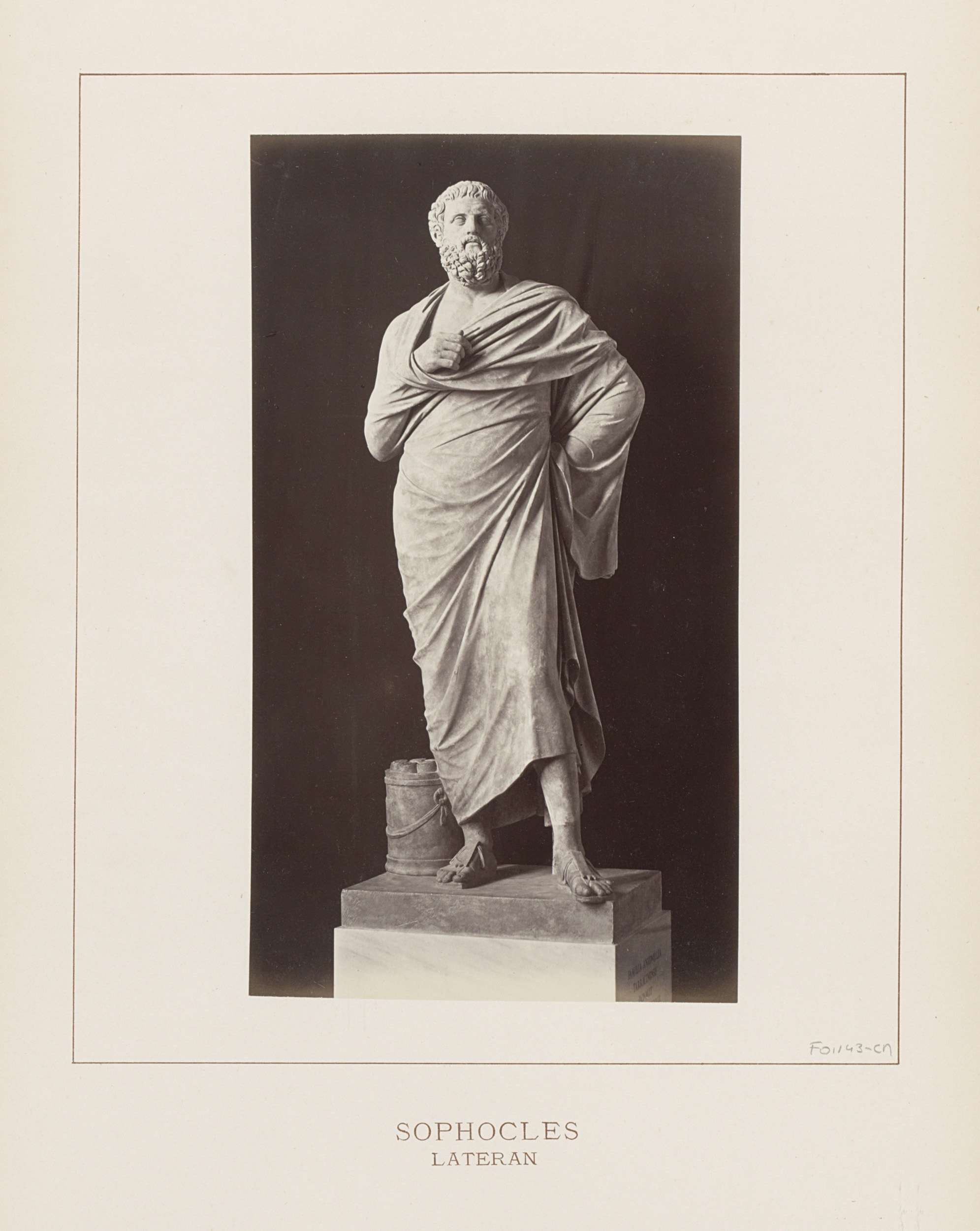
Black-and-white photograph of a marble statue of the ancient Greek playwright Sophocles, standing on a pedestal with a draped cloak, bearded and curly-haired, with a small urn at his feet. Caption below reads SOPHOCLES LATERAN.Photograph

Secondary source

Sophocles statue in Rome (Lateran), photograph from a Rome album

Illustrations of the Tragedies of Aeschylus and SophoclesBook

Secondary source

Illustrations of the Tragedies of Aeschylus and Sophocles

John Frederick Boyes · 1844

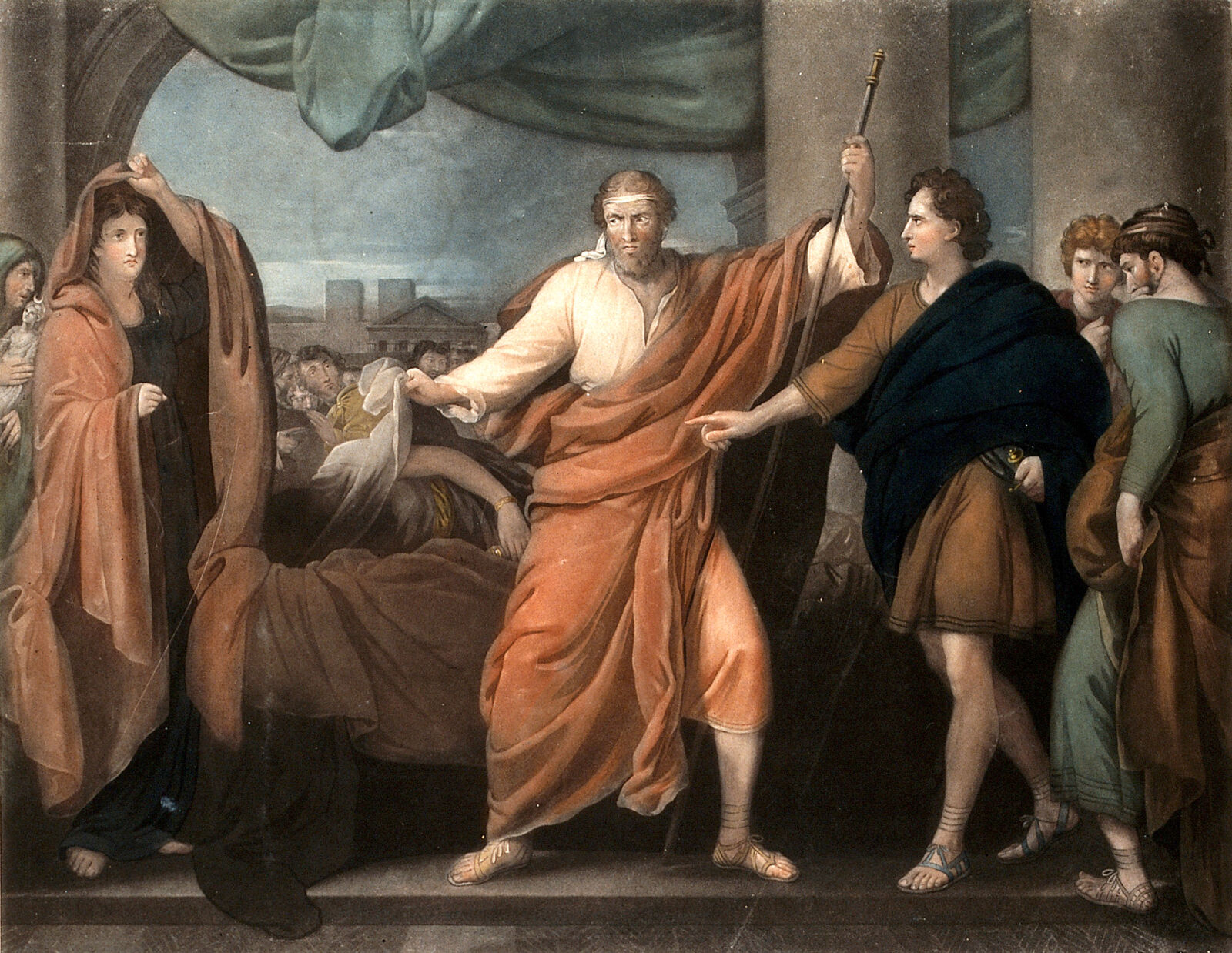
Colour mezzotint print of a classical scene: a bearded man in a white tunic and orange cloak, with a white headband and staff, gestures toward a young man in a blue cloak and brown tunic. A veiled woman in a red cloak stands at left, and a figure lies draped on a couch behind them, with columns and a city in the background.Painting

Secondary source

Aegisthus discovers Clytaemnestra's body

V. Green, after Benjamin West · 25 March 1786

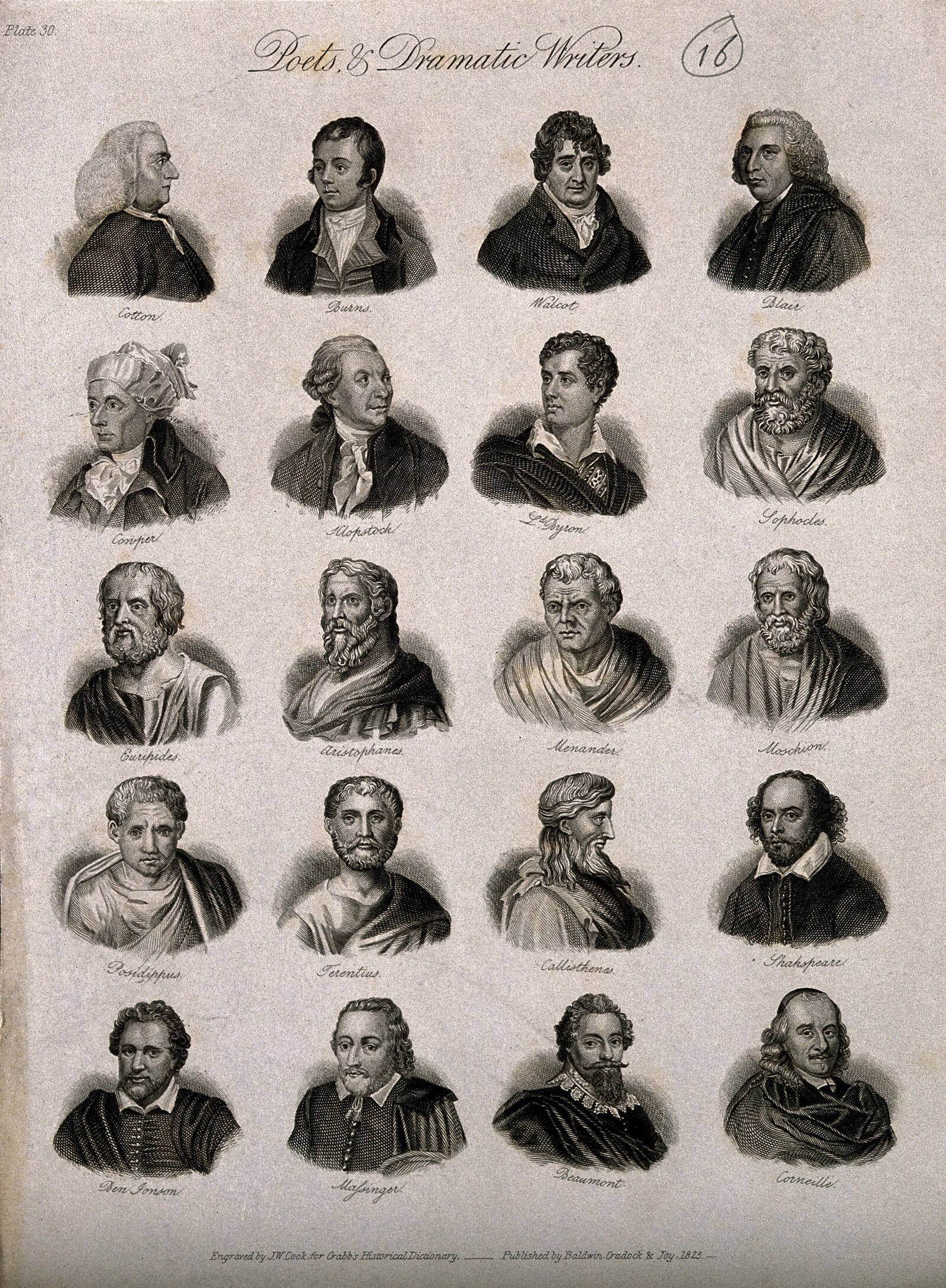
Engraved plate titled 'Poets & Dramatic Writers', labeled Plate 30, showing twenty oval portrait busts of poets and dramatists in four rows, each captioned with a name, including Sophocles in the second row at right. Printed credit lines appear at the bottom.Painting

Secondary source

Poets and dramatists: twenty portraits

John William Cook · 1825

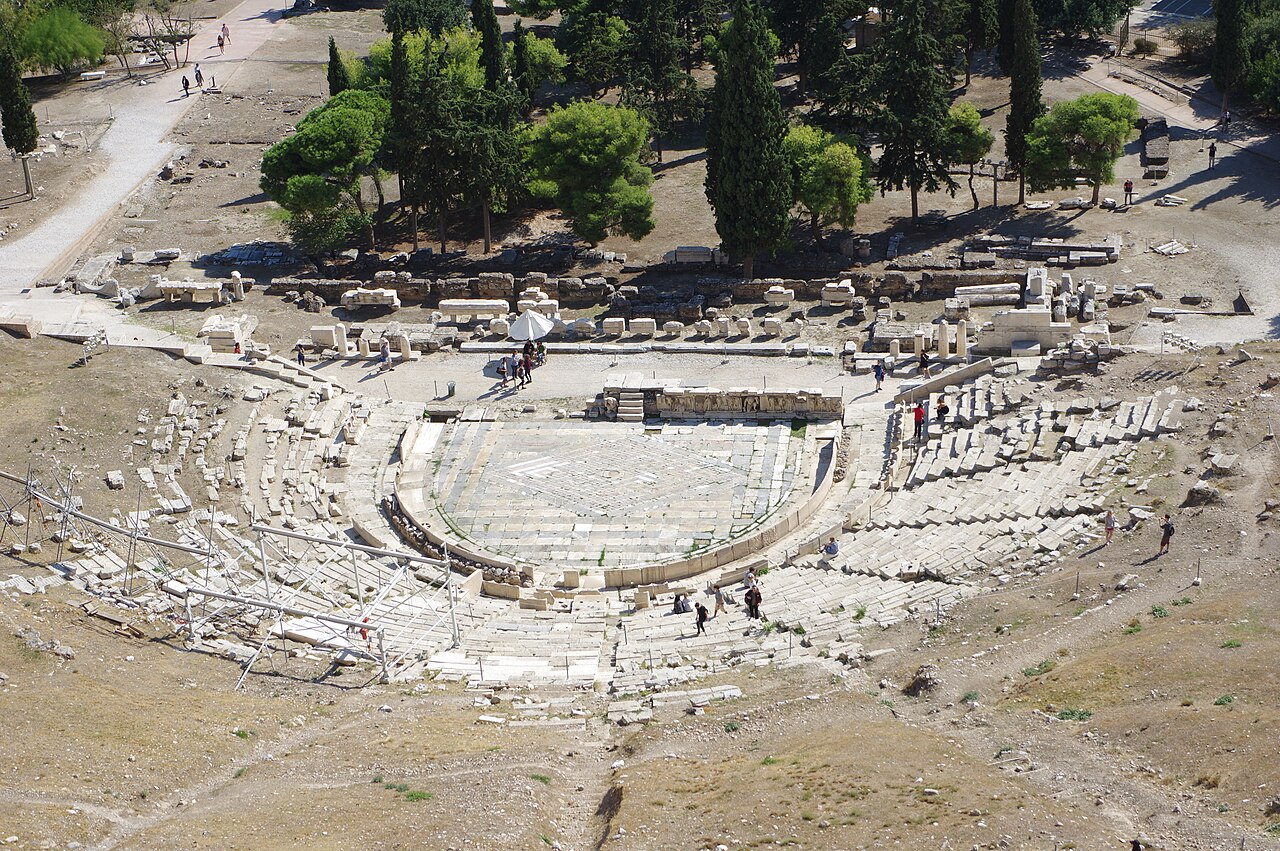
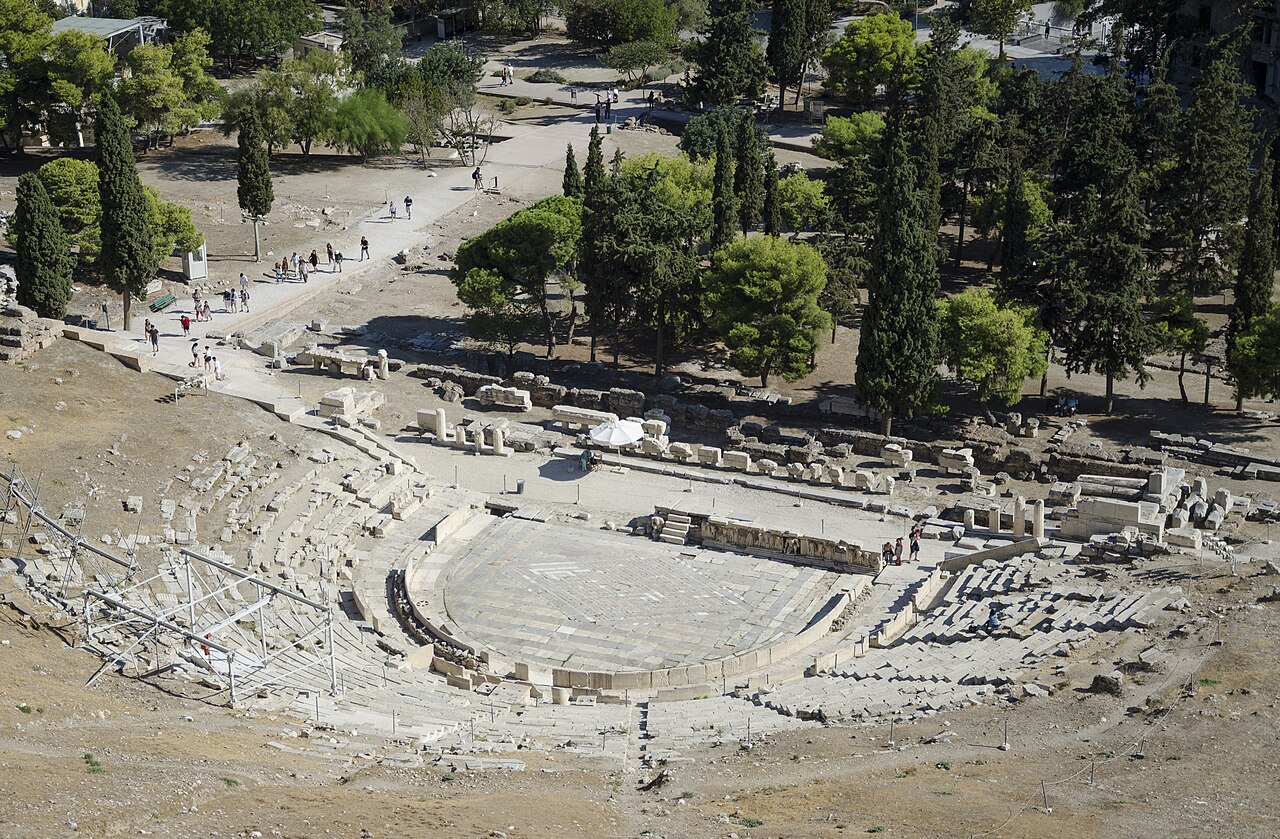
Color aerial view of the ancient Theatre of Dionysus in Athens. Rows of stone tiered seats curve around a circular orchestra with a stage building at the back. Pine and cypress trees, scattered ruins, and small visitors on the steps are visible.Photograph

Tertiary source

Theatre of Dionysus, Athens

Berthold Werner · 9 October 2017

Aerial view of the ancient Theatre of Dionysus on the southern slope of the Acropolis in Athens. Semicircular stone tiers of seats curve around a flat circular orchestra floor, with ruined stone foundations and a paved stage area. Cypress and pine trees, grass, and a gravel path surround the site, and visitors walk among the seats.Photograph

Tertiary source

Theatre of Dionysus on the Southern Slope of the Acropolis

Jebulon · 26 October 2015

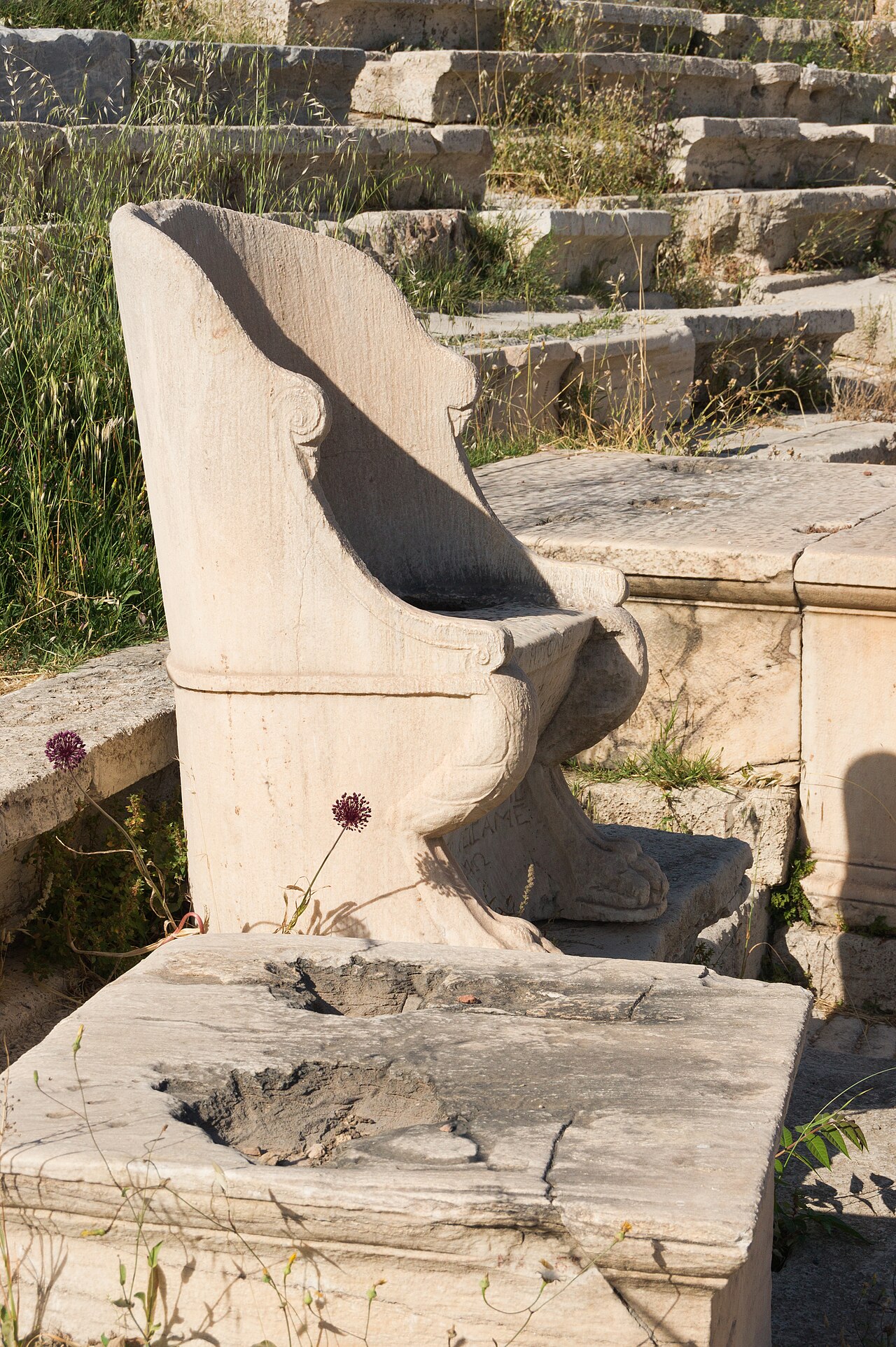
A carved white marble seat with a high curved back, scroll-shaped side arms, and a lion-paw style base, standing in the ancient stone seating area of a theatre, with grass and weeds around it. In front is a large marble block with a hollow recess. Sunlight casts shadows.Photograph

Tertiary source

Marble Seat at the Theatre of Dionysus

Jebulon · 17 May 2015

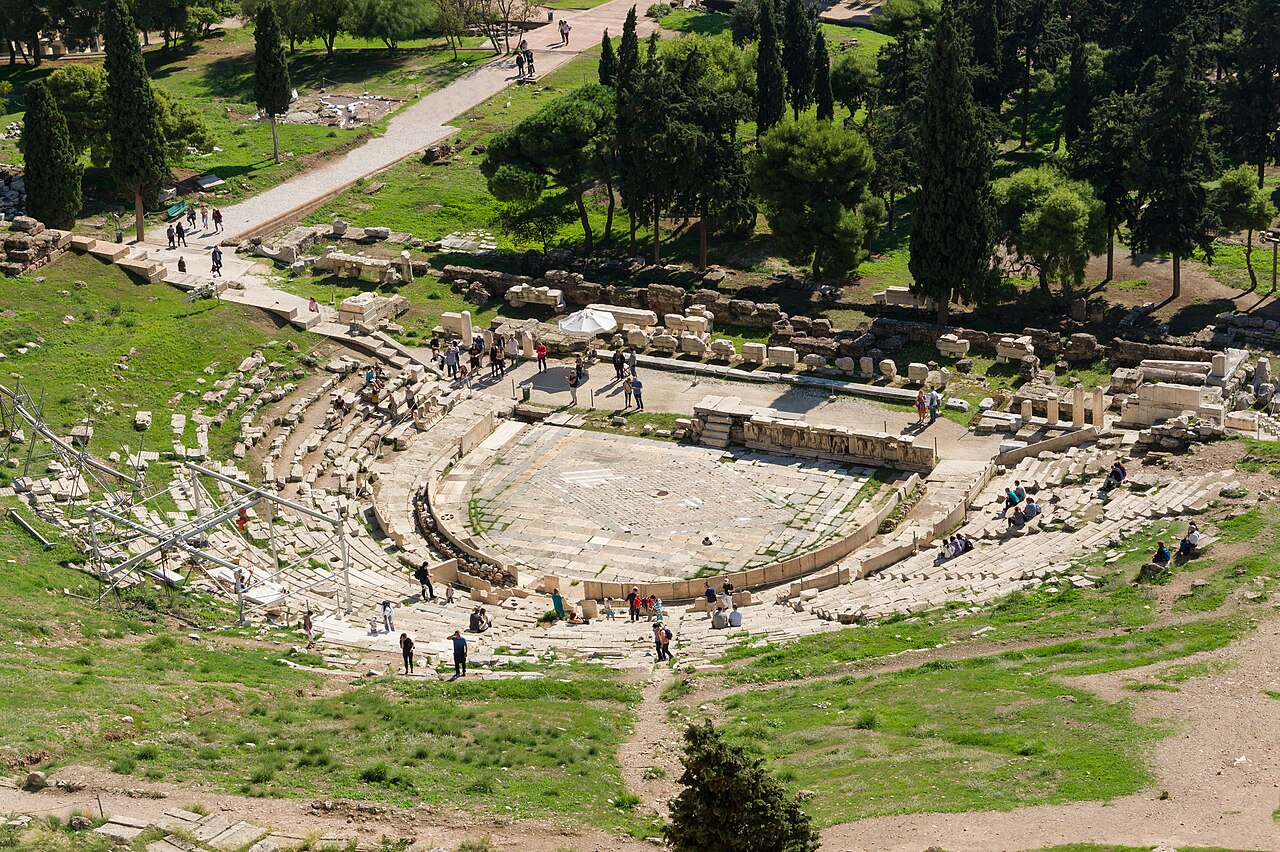
Aerial view looking down on the ancient Theatre of Dionysus in Athens. Stone tiered seating curves around a flat circular stage area, with ruined stone blocks and foundations scattered around. Tall cypress and green trees line the upper site, and visitors walk along paths nearby.Photograph

Tertiary source

The Theatre of Dionysus Seen from the Acropolis

Petter Ulleland · 22 September 2017

Want the full shelf? Chat with Sophocles in the app and open the Sources panel — every quote links back to the original.

Use Sophocles in class

1 collection

A ready-made collection from the Humy team that features Sophocles. Preview it, then try it free.

Trusted by educators worldwide

Conversations
375,000+
Real exchanges between students and historical figures
Messages exchanged
4,142,000+
Across every figure, classroom and language
Historical figures
100,000+
Each informed by a curated biography and selected sources
Languages supported
50+
From English and Spanish to Arabic and Korean

Paying customers

Used by 98 schools and universities

Partner school logo
Tecnológico de Monterrey logo
Hyper Island logo
Partner school logo
Chambersburg Area School District logo
Broward County Public Schools logo
Nebo School District logo
National Louis University logo
South Florida PBS logo
Punahou School logo
University of Wisconsin–River Falls logo
Partner school logo
Partner school logo
Archbishop Mitty High School logo
Kingsburg High School logo
Norwalk Public Schools logo
Partner school logo
Connections logo
Partner school logo
Moore Public Schools logo
Partner school logo
Partner school logo
Partner school logo
Partner school logo
Robbinsville Public Schools logo
Partner school logo
Partner school logo
Partner school logo
Tecnológico de Monterrey logo
Hyper Island logo
Partner school logo
Chambersburg Area School District logo
Broward County Public Schools logo
Nebo School District logo
National Louis University logo
South Florida PBS logo
Punahou School logo
University of Wisconsin–River Falls logo
Partner school logo
Partner school logo
Archbishop Mitty High School logo
Kingsburg High School logo
Norwalk Public Schools logo
Partner school logo
Connections logo
Partner school logo
Moore Public Schools logo
Partner school logo
Partner school logo
Partner school logo
Partner school logo
Robbinsville Public Schools logo
Partner school logo
Partner school logo

What educators are saying

“We enjoyed the program last year and used it frequently.”
“My students say it’s a welcome change of pace. I’m not a fan of the “sage on the stage” model, so I try to incorporate research-oriented and self-paced activities. With Humy, students have to take charge of their learning. They’ve become more adept at critical thinking, forming better questions, and improving their reading comprehension. The interview feature has been my go-to tool. I create assignments where students must ask historical figures a set number of questions, then summarize the responses to ensure they’re truly absorbing the material. This approach lets them actively explore the past rather than passively consuming information.”
“Humy has helped me bring historical figures, sometimes long past, to life. When my students interact with these figures in real-time, it eliminates some of the perceived “ancient” characteristics of my curriculum. This has shifted my students’ thinking away from viewing history as abstract or irrelevant. Real-time interactions make historical figures relatable, even allowing students to ask off-topic questions that help put historical lives in a more relevant context for 13-year-olds. The feature I use the most is the interview feature. After teaching a topic, most recently Gandhi and Joan of Arc, I have the students ask pointed, focused questions. We practice good conversation techniques beforehand, teaching them to listen (or read) carefully and formulate thoughtful follow-up questions rather than just interrogating. It helps students practice effective conversation skills.”

FAQ

Frequently asked questions

Who is Sophocles?
Ancient Greek tragedian playwright. On Humy.ai you can chat with an AI version of Sophocles that draws on a short biography and 78 historical sources during the conversation — by text or voice, in 42 languages.
Is Sophocles AI free?
Sophocles is part of Humy's full library of more than 100,000 figures, which comes with a paid plan. A free account (no credit card) includes 20 messages a month with the free library's figures, so you can try how the conversations work first.
What sources does the Sophocles AI use?
It draws on a short biography and 78 historical sources (books, documents and paintings), including “Oedipus Rex”, “Antigone” and “Oedipus at Colonus”. Each source has its own page on Humy.ai.
How historically accurate is the AI version of Sophocles?
Each figure uses a short biography and a small set of selected historical sources as context (retrieval-augmented generation), so answers stay closer to known material than the model's general knowledge alone. It isn't a citation-grade research tool — like any LLM, the AI can get details wrong or extrapolate. Treat it as a strong starting point for inquiry and cross-reference important claims.
Can I talk to Sophocles by voice?
Yes. In addition to text chat, you can call Sophocles and hear their voice respond in real time — useful for auditory learners, interview practice and Socratic dialogue.
Is Humy.ai safe and compliant for schools?
Yes. Humy.ai is used by more than 100 schools, universities and organisations. The platform is FERPA- and GDPR-aligned, supports SSO, and offers an IT-approval pack tailored for school procurement teams.

Ready when you are

Start chatting with Sophocles now.

20 messages free · No credit card · Available in 50+ languages.