


Secondary sourceSculptureRoman copy after a Greek original of c. 270 BC
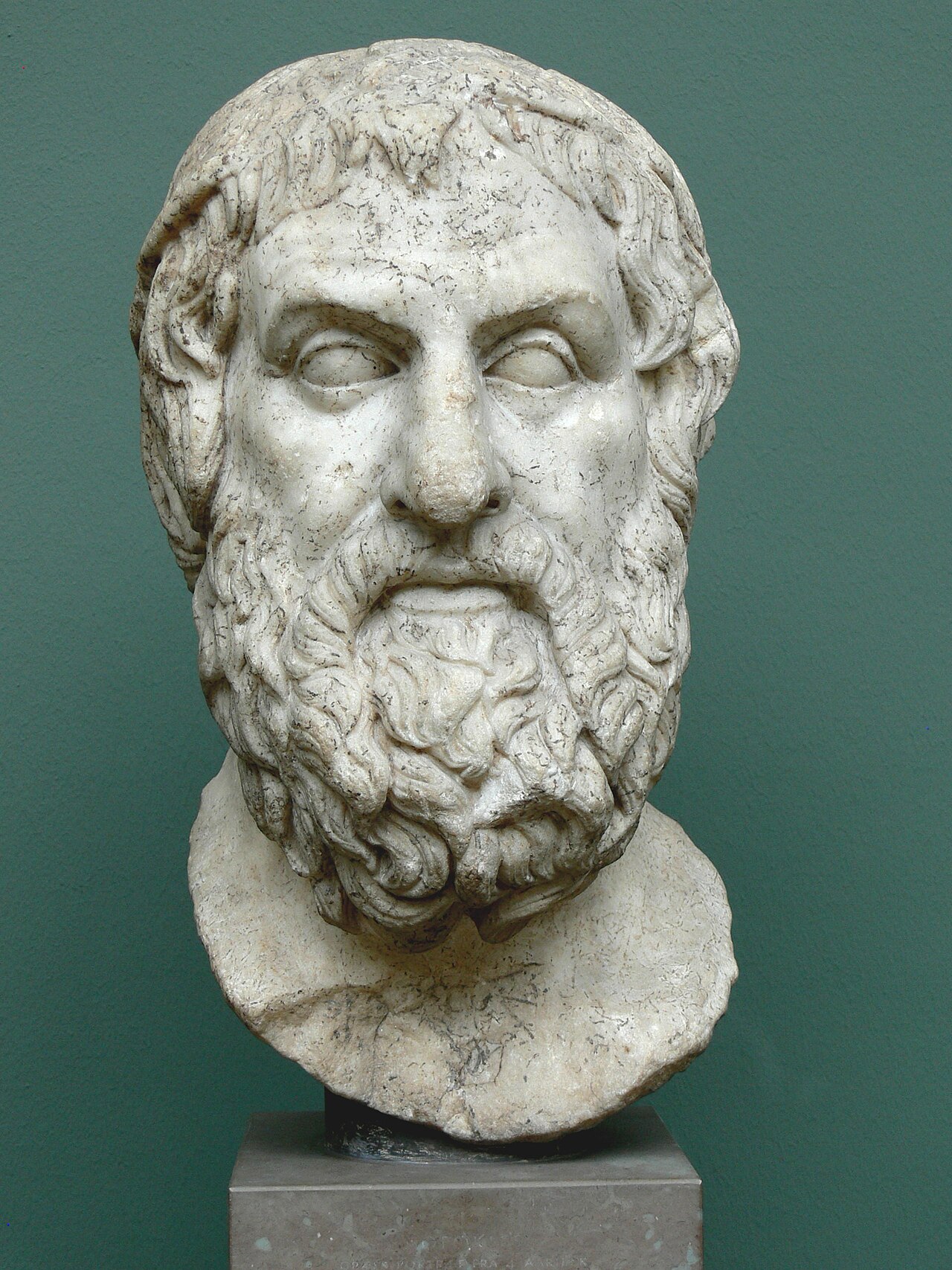
Portrait of Sophocles
Roman copy after a Greek original of c. 270 BC
A marble bust showing an older bearded man, a Roman copy of a Greek portrait type that became the standard image of Sophocles.
This bust represents the standard portrait type used to visualize Sophocles in later antiquity.
About this source
What it is
This marble bust depicts a bearded man with curly hair and deeply carved eyes. It is a Roman copy made after an earlier Greek original, now held in the Ny Carlsberg Glyptothek in Copenhagen.
Why it matters
No portrait of Sophocles survives from his own lifetime, so images like this one, copied centuries later, shaped how people imagined the great tragedian for generations. It tells us less about Sophocles' actual appearance and more about how later Greeks and Romans wanted to remember him: as a dignified, thoughtful elder.
Look closer
- What does the sculptor emphasize about the man's face and expression?
- Why might copies of famous portraits have been popular in Roman times?
- What can and can't a sculpture like this tell us about a real historical person?
This sculpture is part of the curated material that grounds the AI version of Sophocles on Humy.ai — when students ask about related events, the AI can quote it and cite it.
More Sophocles sources
Meet the AI Sophocles →Primary source
Oedipus Rex
Sophocles · c. 429 BCE
Primary source
Antigone
Sophocles · c. 441 BCE
Primary source
Oedipus at Colonus
Sophocles · written shortly before 406 BCE; first performed 401 BCE
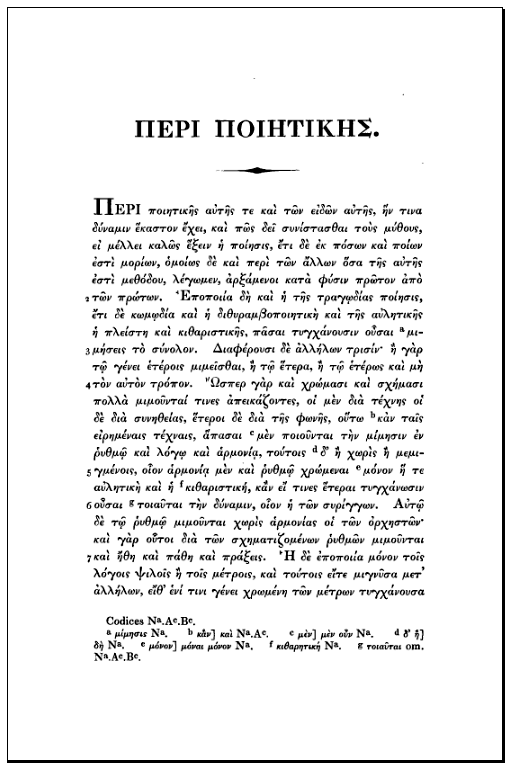 Book
Secondary source
Poetics
Aristotle · c. 335 BCE
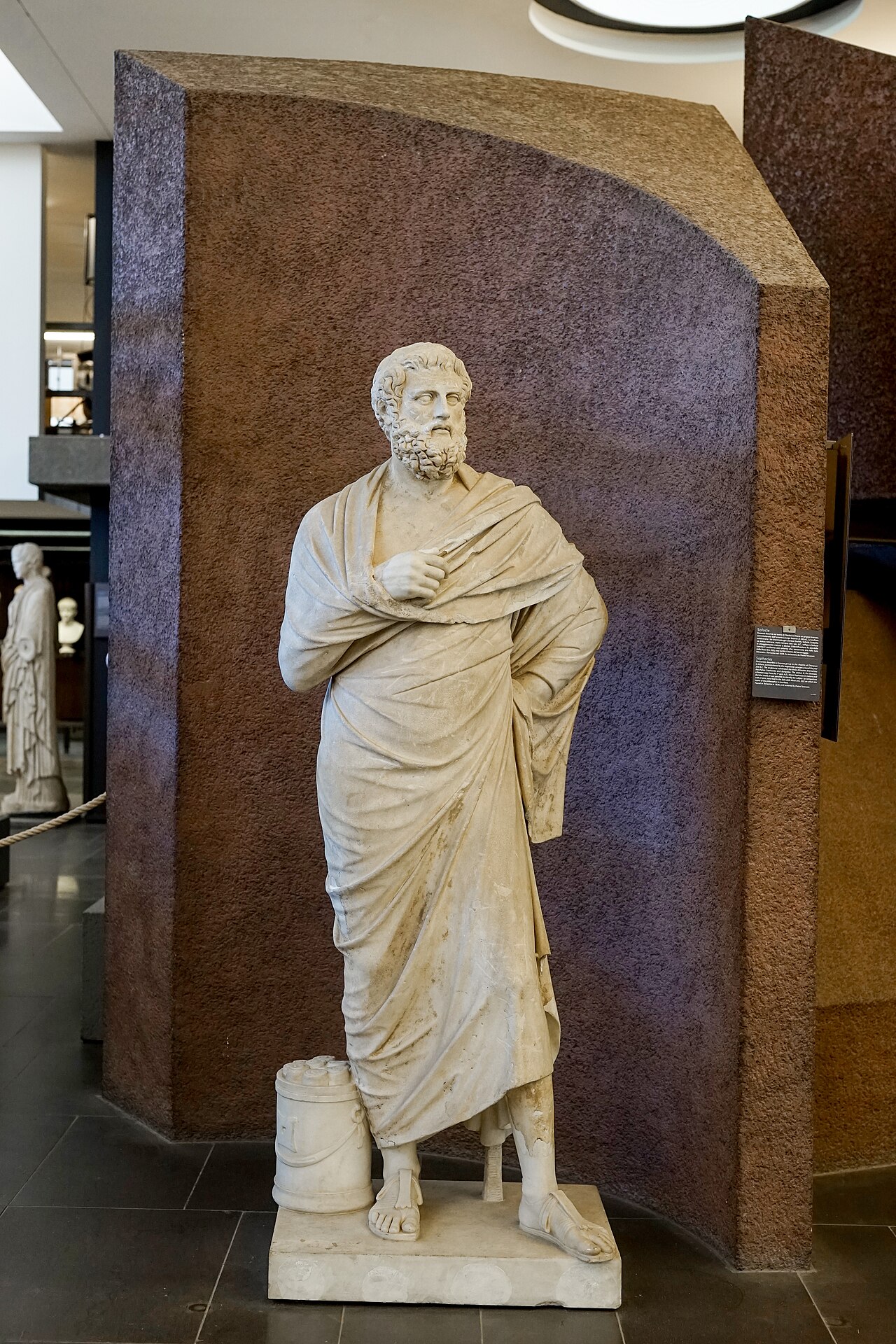 Sculpture
Secondary source
Statue of Sophocles (Lateran type)
Roman copy, 1st century CE, of a Greek original of the 4th century BCE
Ready when you are
Start chatting with Sophocles now.
20 messages free · No credit card · Available in 50+ languages.