


Primary sourceBook44 BCE
Cato Maior de Senectute
Cicero · 44 BCE
Cicero's essay on old age, presented as a speech by Cato the Elder, written in his own sixty-third year and dedicated to Atticus.
Cicero wrote this essay on aging in his own sixty-third year, reflecting on his life through the voice of Cato.
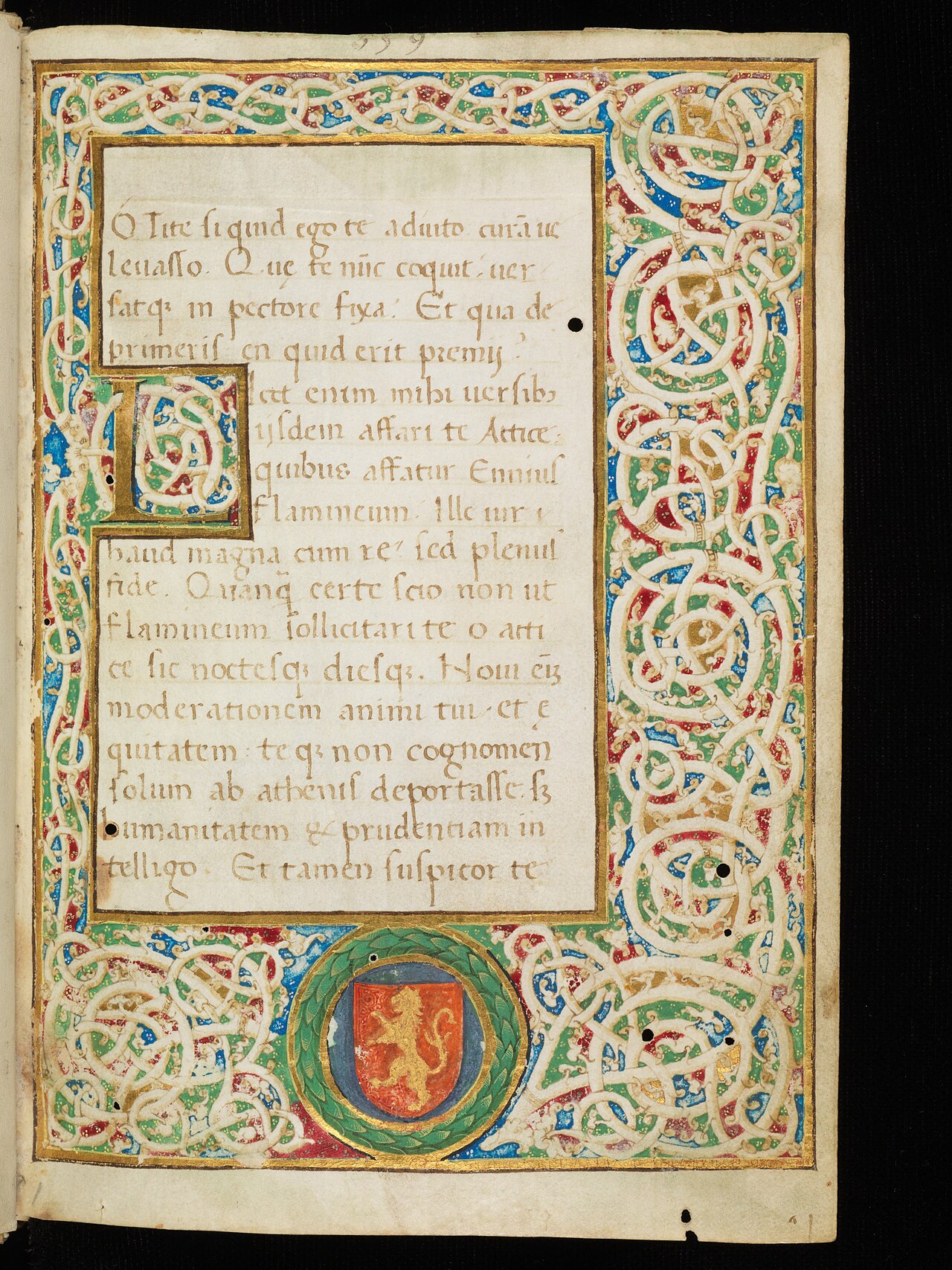
About this source
What it is
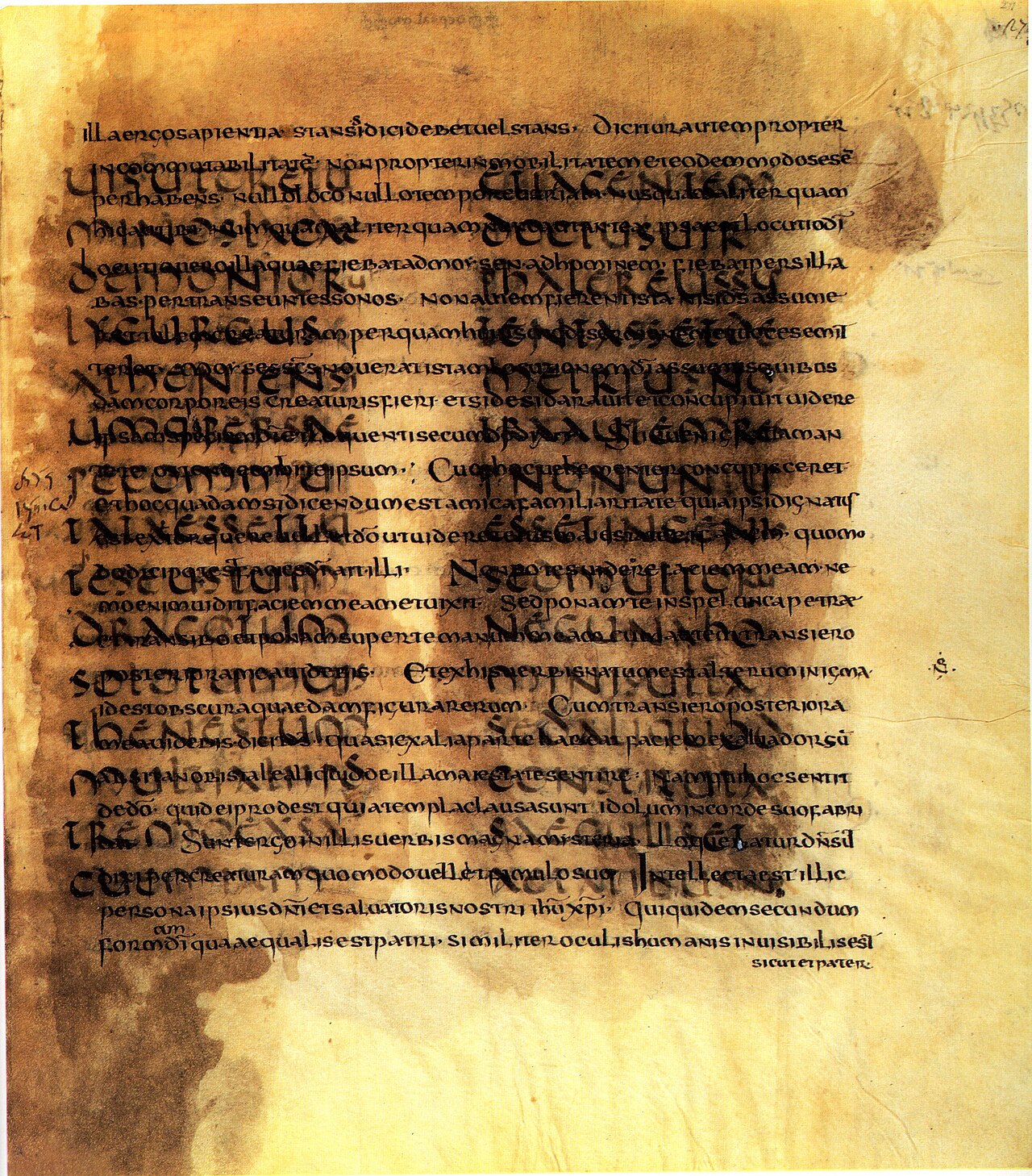
Cato Maior de Senectute is an essay on aging written by Cicero in 44 BC. Cicero puts his own thoughts into the mouth of the elderly statesman Cato the Elder, who is shown discussing old age with the younger Scipio and Laelius. Cicero wrote it in his sixty-third year and dedicated it to his friend Atticus. The manuscript page shown is from a 15th-century Italian codex of Cicero's works.
Why it matters
Written as Cicero's own political career was ending and his life nearing its close, the essay argues old age can be a time of calm and wisdom rather than loss. It was later admired by figures such as Benjamin Franklin, who printed an early American translation, and John Adams, showing its long influence on how people thought about aging.
Look closer
- Why might Cicero have chosen Cato the Elder, rather than himself, to voice these ideas?
- What arguments does the text give against seeing old age as only a loss?
- Why do you think this essay stayed popular with readers many centuries later?
This book is part of the curated material that grounds the AI version of Cicero and Sophocles on Humy.ai — when students ask about related events, the AI can quote it and cite it.
More Cicero sources
Meet the AI Cicero →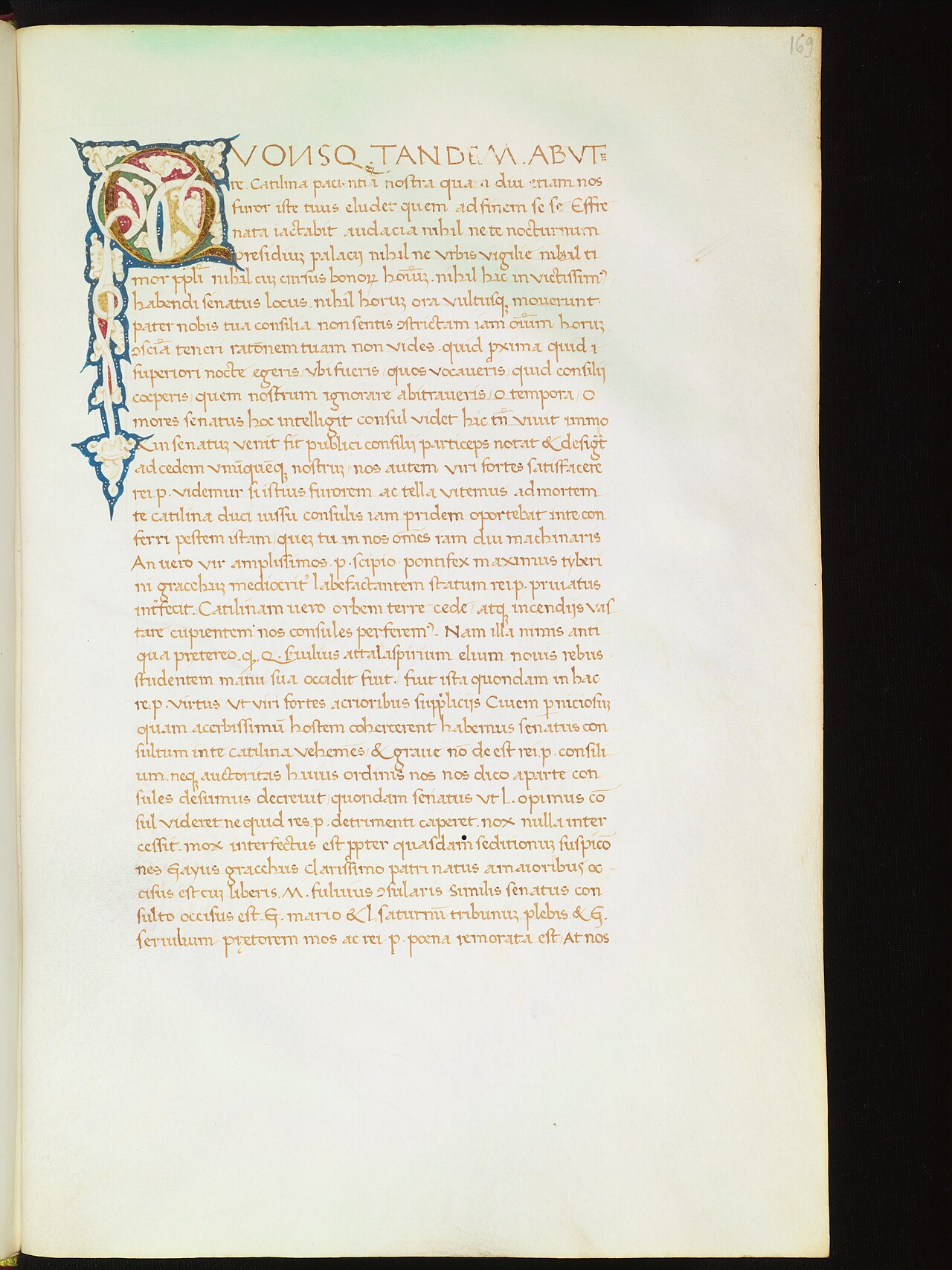 Speech
Primary source
Catiline Orations
Cicero · 63 BCE
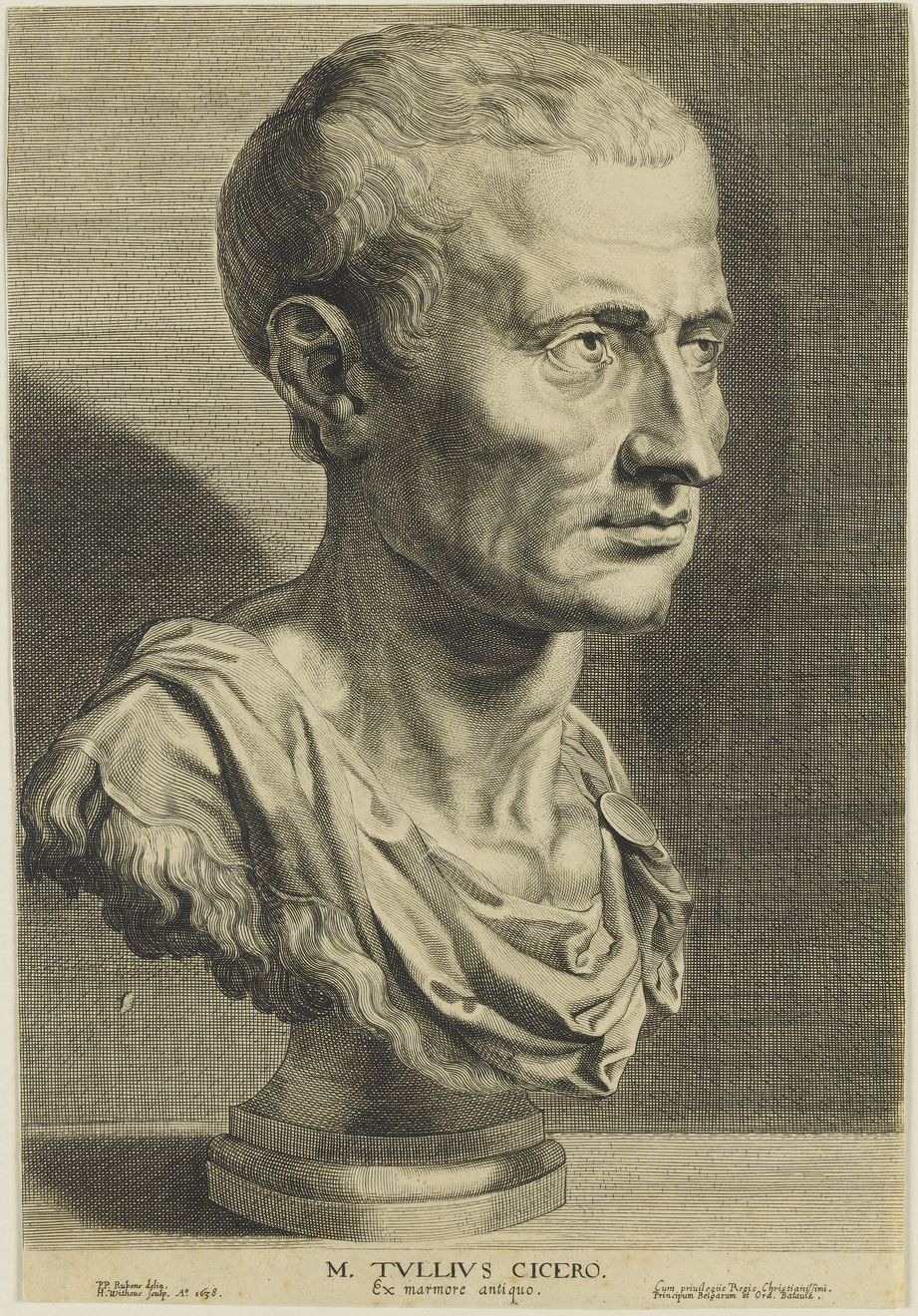 Painting
Secondary source
Marcus Tullius Cicero, engraved after antique marble busts
Jan Witdoeck
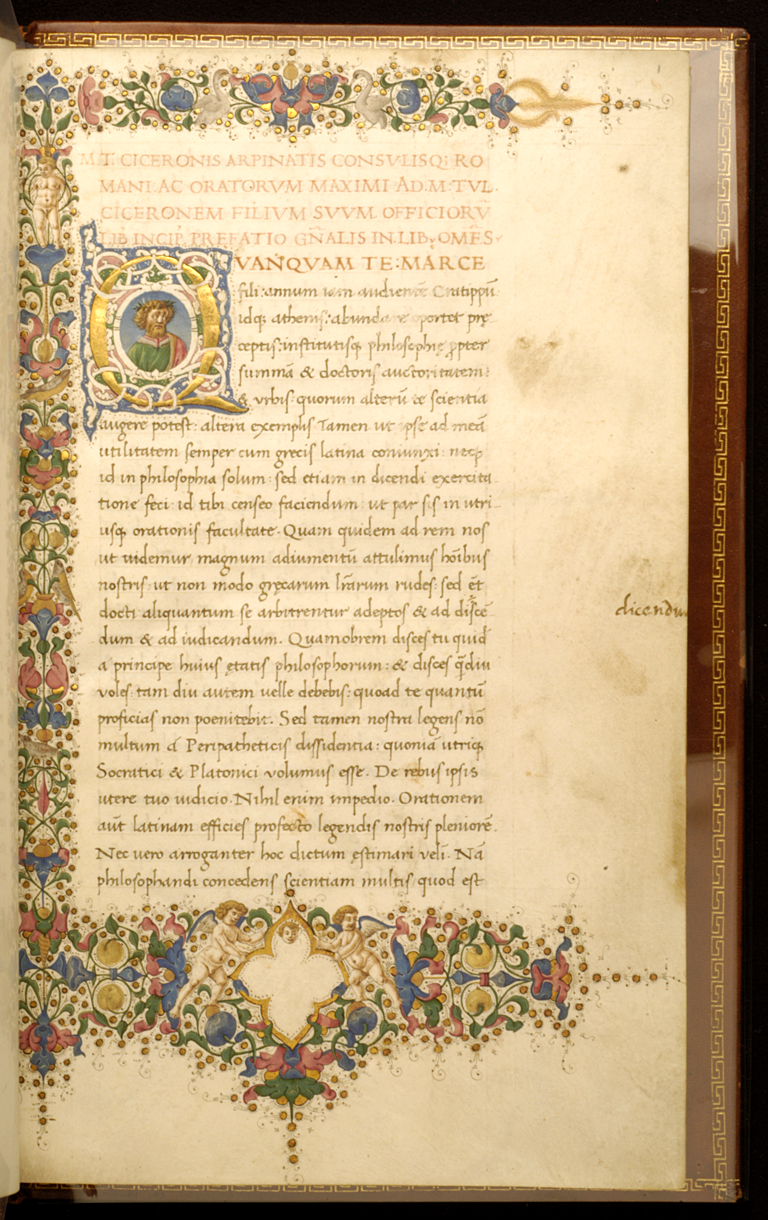 Book
Primary source
De Officiis
Cicero · 44 BC
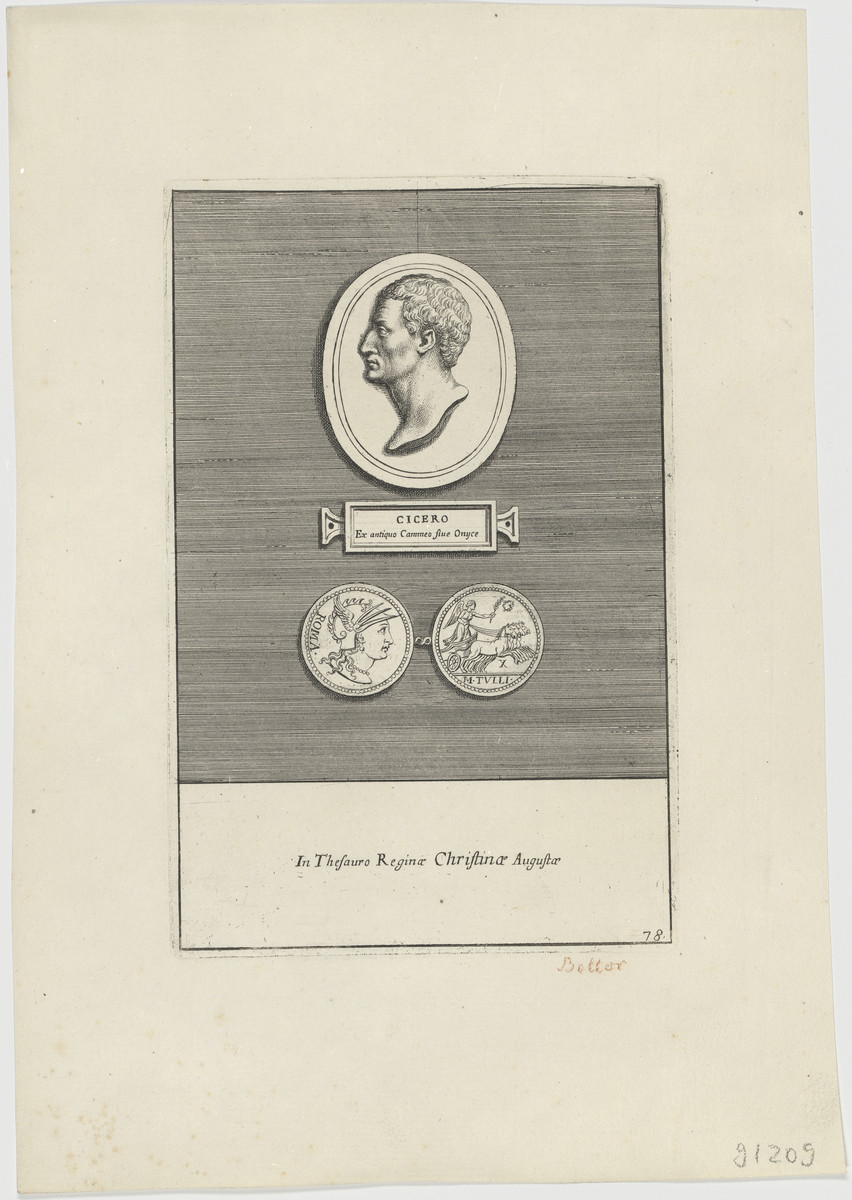 Painting
Secondary source
Portrait of Cicero (Bildnis des Cicero)
 Book
Primary source
De re publica
Cicero · c. 54–51 BC
Ready when you are
Start chatting with Cicero now.
20 messages free · No credit card · Available in 50+ languages.