


Secondary sourceArtifactc. 450 BCE
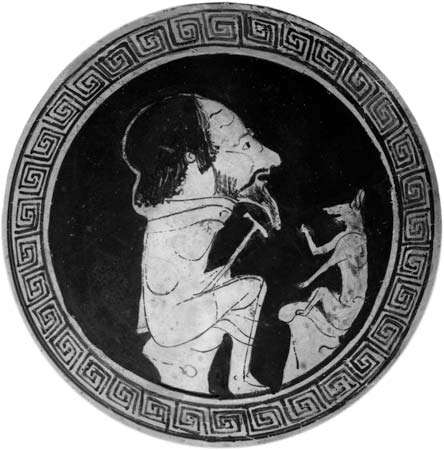
Aesop and the Fox (Red-Figure Kylix)
Unknown Greek artist · c. 450 BCE
An ancient Greek drinking cup from around 450 BCE showing a man and a fox, believed since the 19th century to depict Aesop.
This cup is presumed to be the earliest surviving image of Aesop, shown listening to a fox from his fables.
About this source
What it is
This is an Attic red-figure kylix (a wine-drinking cup) made by an unknown Greek artist around 450 BCE, now in the Vatican Museums. It shows a seated, bearded man listening to a fox standing before him. In 1843 the archaeologist Otto Jahn proposed that the man represents Aesop.
Why it matters
If the identification is correct, this is the earliest surviving image connected to Aesop, made about a century after he is said to have lived. The figure is shown as physically unattractive, which matches ancient Athenian legends describing Aesop as an unusual-looking storyteller. It reveals how the Greeks imagined him more as a character of legend than a precisely recorded historical person.
Look closer
- What details make this figure look like a 'storyteller' rather than a hero or god, as Greek art often depicted?
- Why might an artist choose to show Aesop as unattractive and awkward?
- Why can we never be fully certain this image is really Aesop?
This artifact is part of the curated material that grounds the AI version of Aesop on Humy.ai — when students ask about related events, the AI can quote it and cite it.
More Aesop sources
Browse all 96 →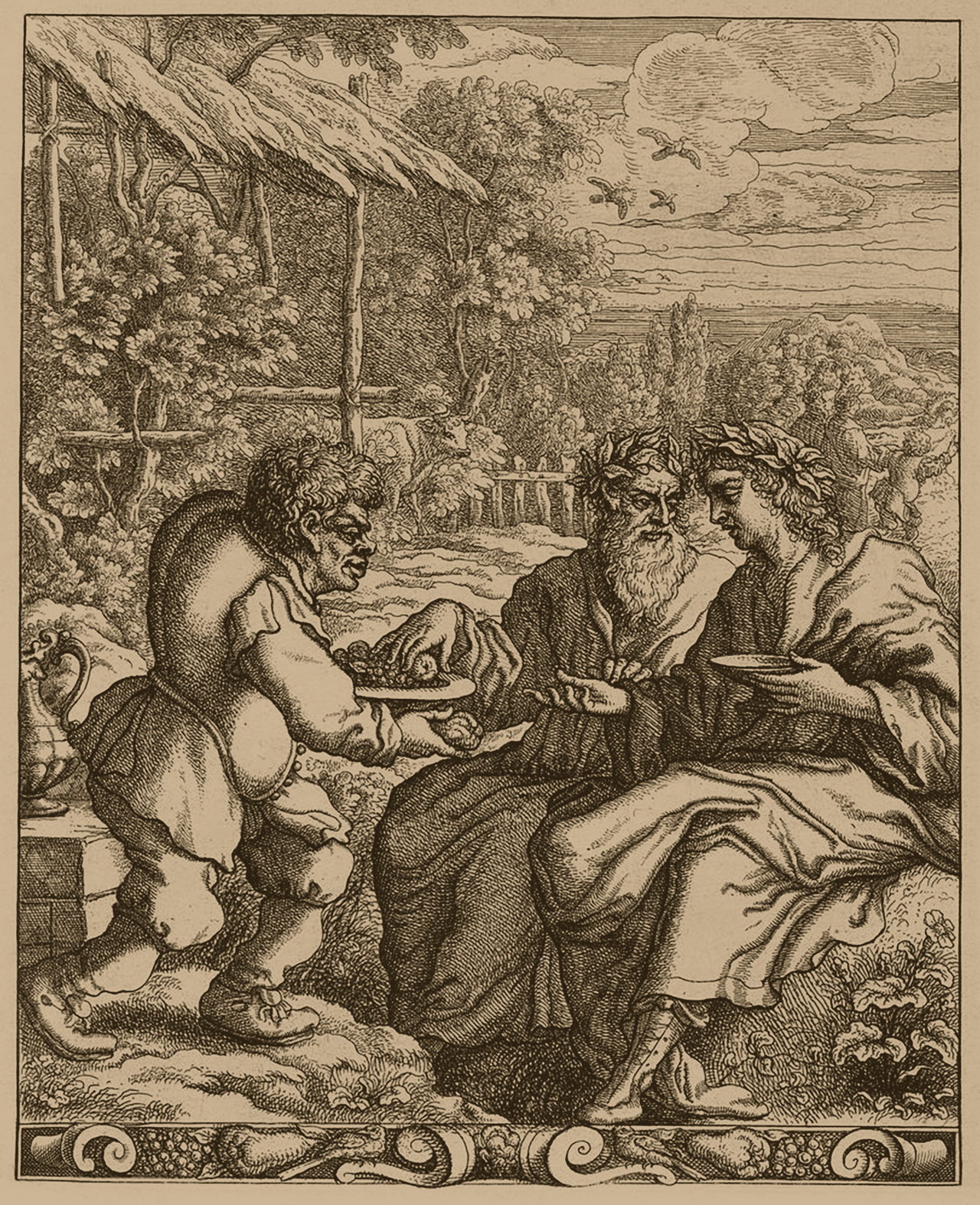 Book
Secondary source
Aesop's Fables
Aesop (attributed) · compiled from the 3rd century BCE onward
 Book
Secondary source
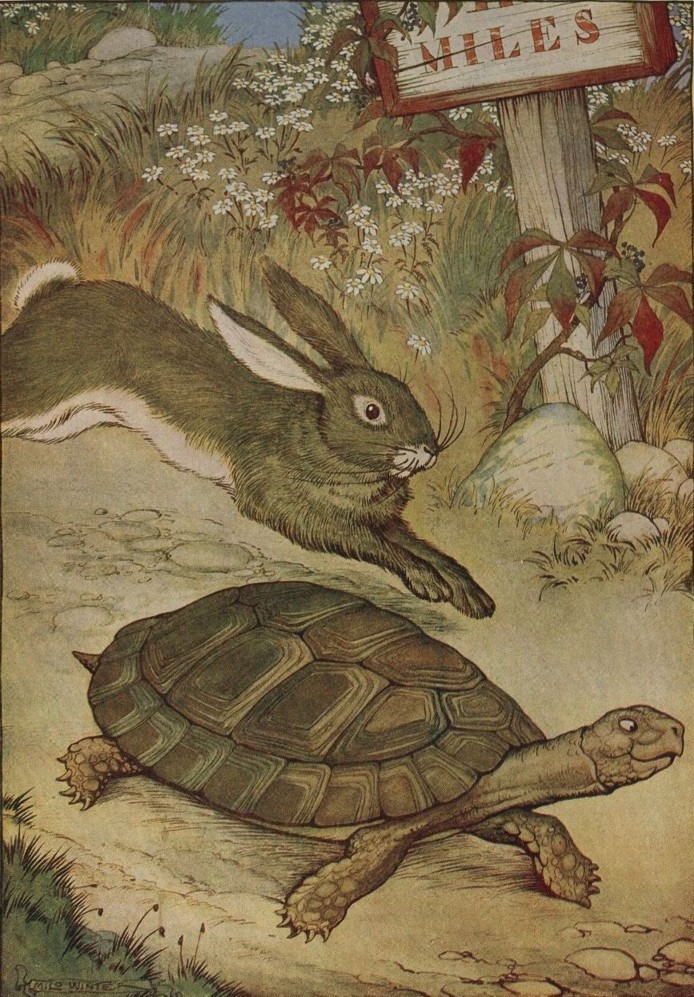
The Tortoise and the Hare
Aesop (attributed) · ancient Greek origin, no early Latin version; printed from 16th century
 Book
Secondary source
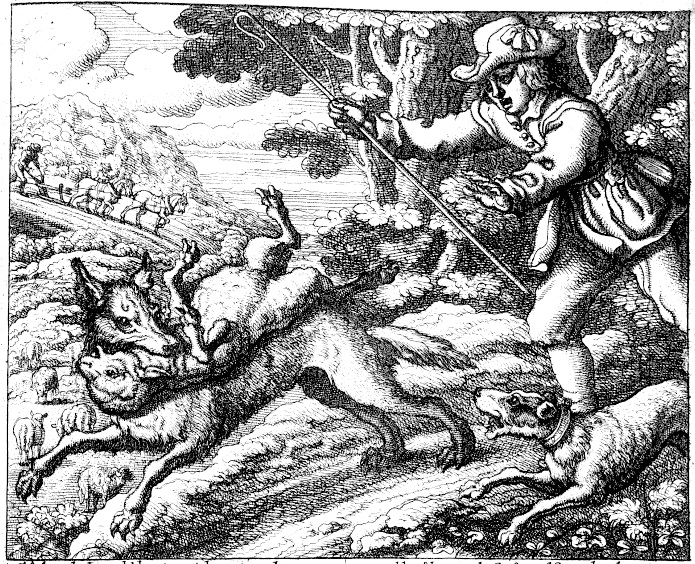
The Boy Who Cried Wolf
Aesop (attributed) · ancient Greek origin; translated into Latin in the 15th century
 Book
Secondary source
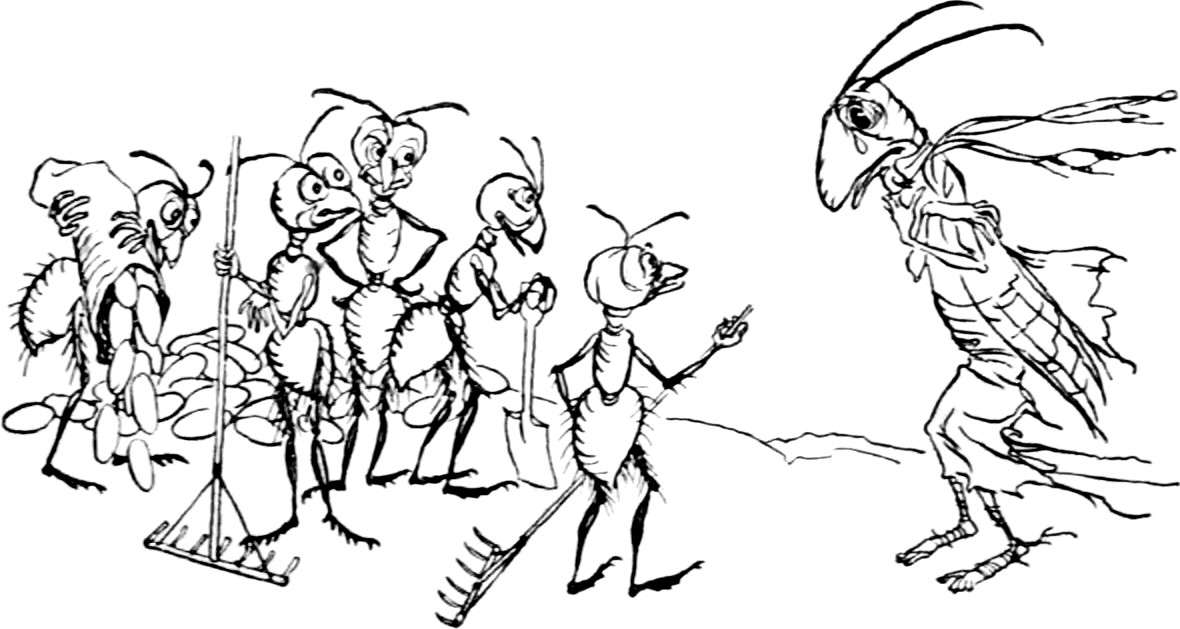
The Ant and the Grasshopper
Aesop (attributed) · ancient Greek origin
Free account
Browse every Aesop source
Sign up free →
Ready when you are
Start chatting with Aesop now.
20 messages free · No credit card · Available in 50+ languages.