


Secondary sourceBook
Aigyptiaka
Manetho
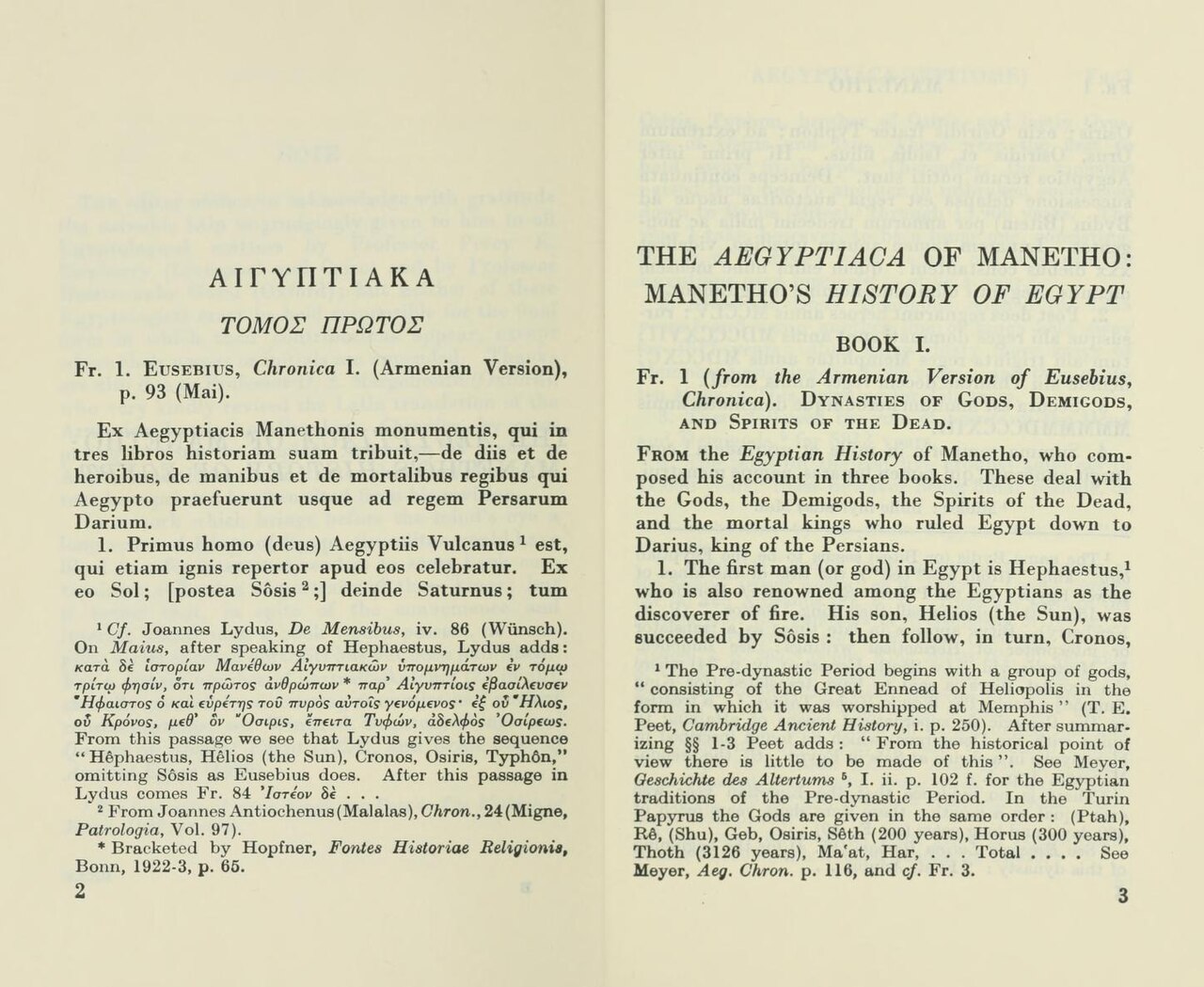
A Greek history of Egypt by Manetho that preserves the memory of a female ruler named 'Amessis', likely a later tradition about Hatshepsut.
Preserves a later tradition of a female ruler 'Amessis', likely reflecting the historical memory of Hatshepsut.
About this source
What it is
The Aegyptiaca was a history of ancient Egypt written in Greek by Manetho around the early Ptolemaic period. The complete text has been lost, and it survives only through later fragments quoted by other writers, such as this excerpt preserved by Eusebius.
Why it matters
Manetho organized Egyptian history into dynasties still used by modern historians, and his work preserves a record of a female ruler called 'Amessis' who reigned about 21 years — likely a later memory of Hatshepsut. This shows how her rule survived, even if distorted, in historical tradition long after her death.
Look closer
- Why might a ruler's name or memory change or become distorted over centuries of being passed down?
- What problems arise from studying a text that survives only in fragments quoted by later writers?
- What does the existence of 'Amessis' in this later source suggest about Hatshepsut's lasting reputation?
This book is part of the curated material that grounds the AI version of Hatshepsut and Pharaoh Khufu (Cheops) on Humy.ai — when students ask about related events, the AI can quote it and cite it.
More Hatshepsut sources
Meet the AI Hatshepsut →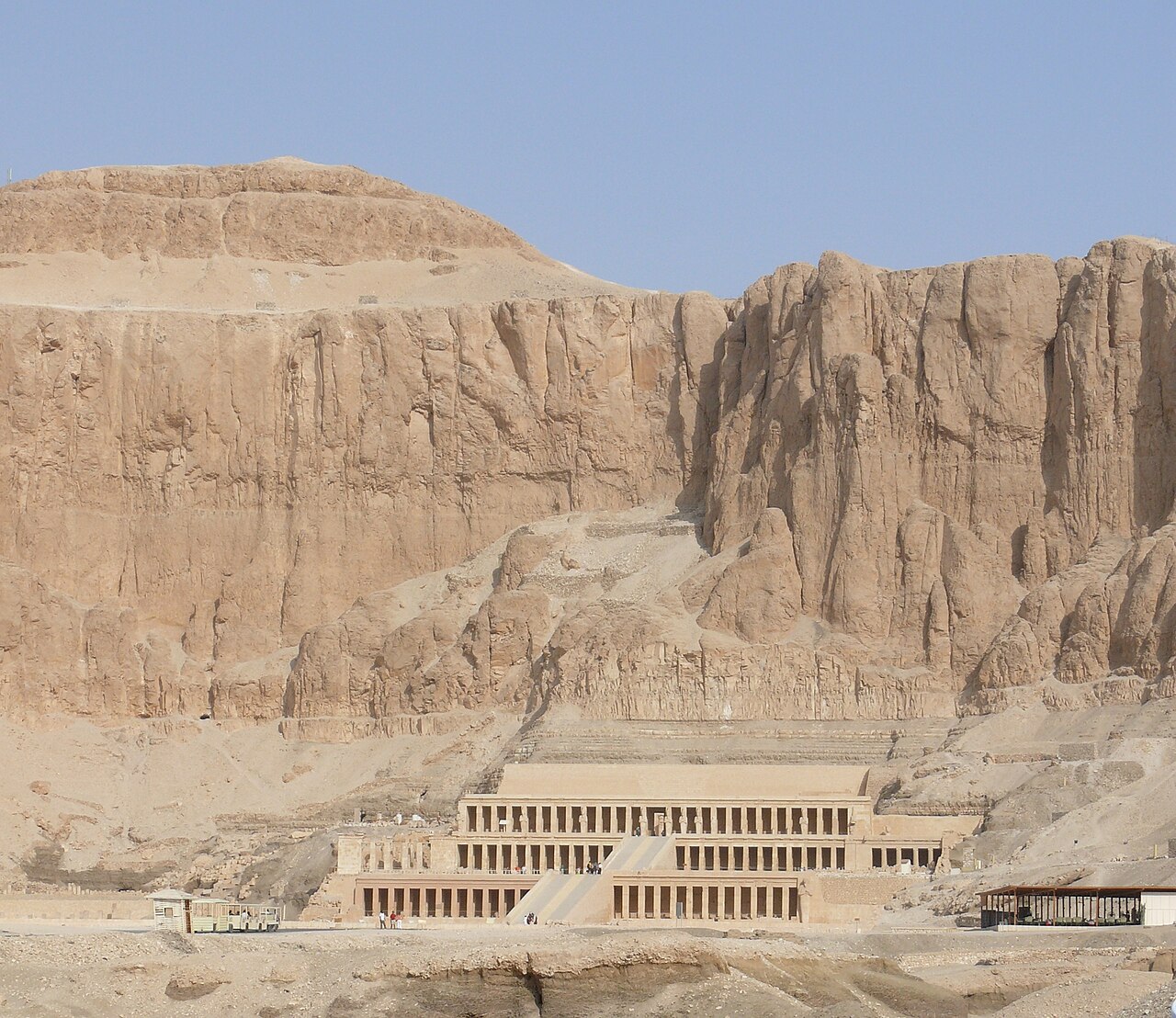 Artifact
Primary source
Mortuary Temple of Hatshepsut
Senenmut and/or Hapuseneb (attributed) · c. 1479–1458 BCE
 Photograph
Secondary source
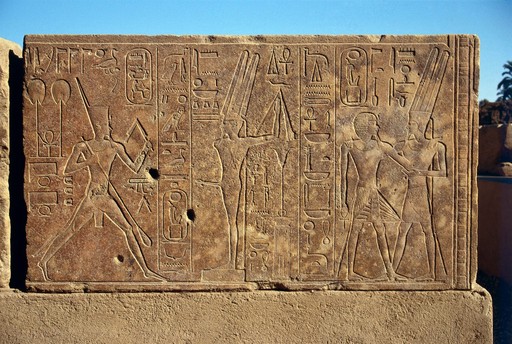
Hatshepsut Dancing Before Min, Karnak Relief
Carole Reeves · 1989
 Sculpture
Primary source
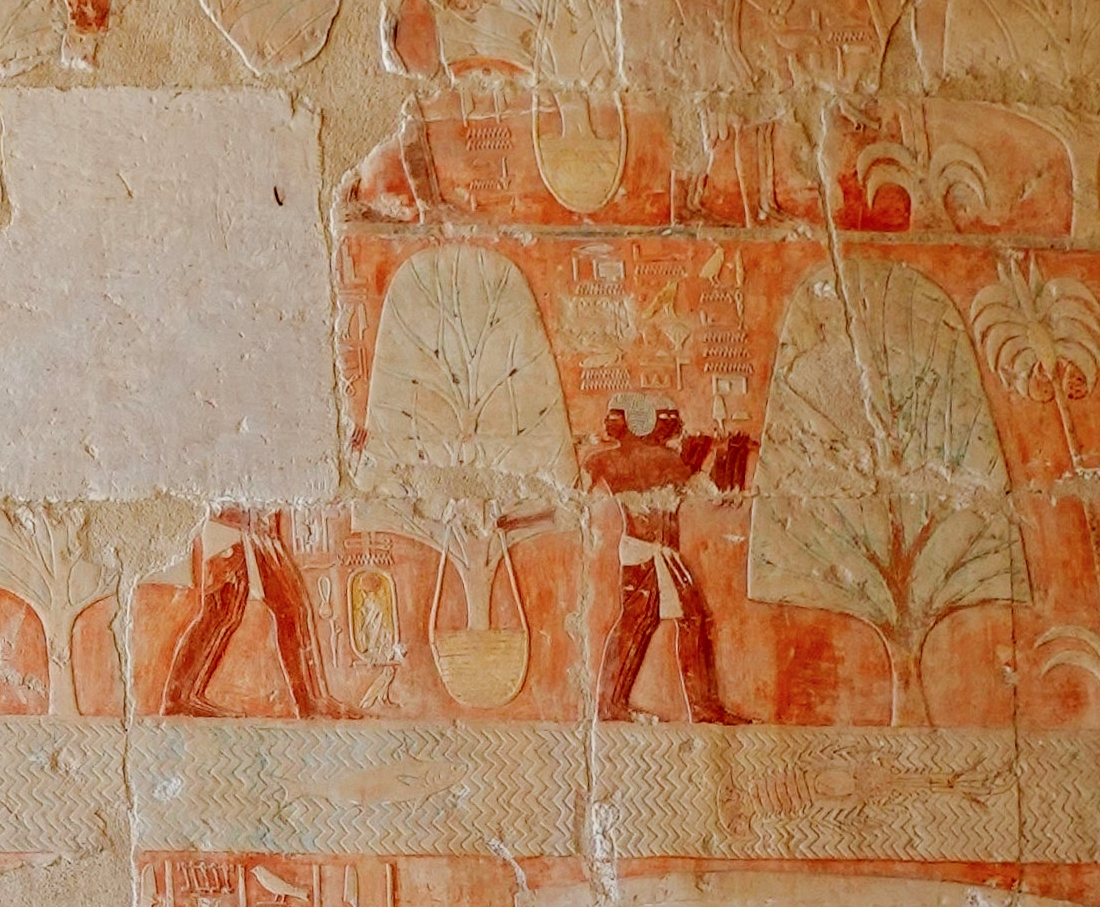
Punt Expedition Reliefs
Royal workshops of Hatshepsut · c. 1470 BCE
 Sculpture
Primary source
Sculpture Head Probably of Hatshepsut
 Sculpture
Primary source
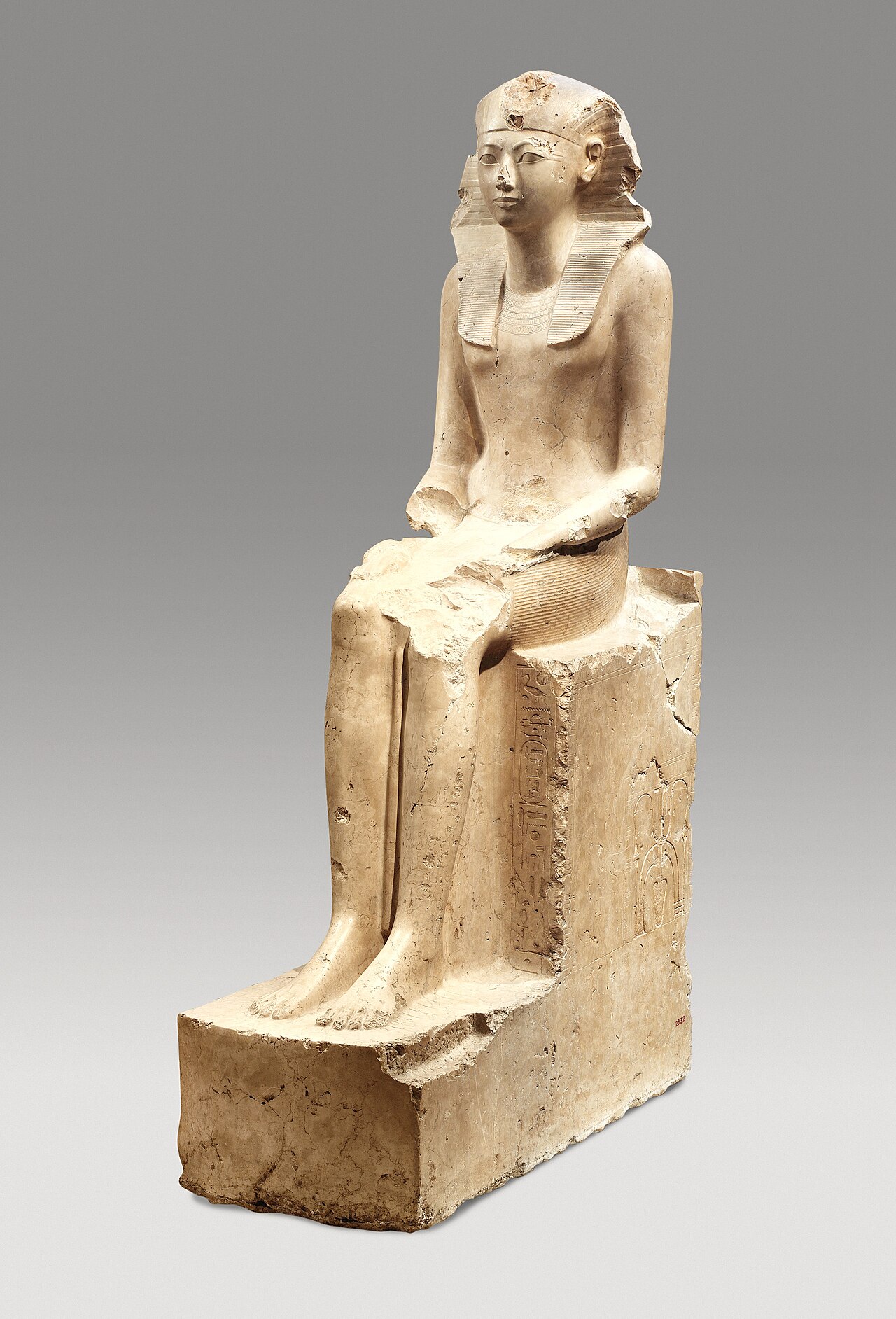
Seated Statue of Hatshepsut
c. 1466 BCE
Ready when you are
Start chatting with Hatshepsut now.
20 messages free · No credit card · Available in 50+ languages.